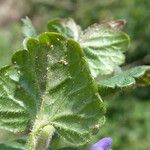
Glechoma hederacea
Ground ivy · Creeping Charlie · Gill-over-the-ground · Haymaids · Field Balm
Description
Source: leafsnapGlechoma hederacea, commonly known as ground ivy or creeping Charlie, is a low-growing perennial plant from the mint family. Although native to Europe and Asia, it has become naturalized in North America. This plant has a creeping growth habit, spreading rapidly through its stems, which root at the nodes. Ground ivy features kidney-shaped leaves with scalloped edges and small purple-blue flowers that bloom in the spring. When crushed, the leaves emit a distinct aroma similar to that of mint or thyme. Preferring moist soils, ground ivy can thrive in both sunny and shaded conditions. It is frequently found in lawns, gardens, meadows, woodlands, and along roadsides. Historically, ground ivy has been used for medicinal purposes due to its anti-inflammatory properties. Additionally, it has served as an herbal remedy for respiratory ailments such as coughs and colds. However, ground ivy can also be considered an invasive species because of its ability to spread rapidly via underground stems called rhizomes. This makes it difficult to control once established in an area. Overall, Glechoma hederacea is a versatile plant with notable medicinal properties, but it also has invasive tendencies if not properly managed within ecosystems. Its introduction by humans into new areas around the world has further complicated its management.
💡 Various species of wild bees, including Anthophora furcata, Anthidum manicatum, Anthophora plumipes, and Osmia aurulenta, gather pollen from ground ivy. Despite being a favorite among bees, ground ivy is considered an invasive weed in areas where it is not native, such as the United States.
🌳 Ground ivy has been recognized as a possible bioindicator for certain metals in soil, such as copper. Its broad distribution and particular uptake of metals can reflect the level of pollutants in an area. This role emphasizes ground ivy's potential for environmental monitoring and as a means to remediate contaminated soils, showing the condition of an ecosystem without requiring complex equipment.
🎭 Marital Love, Loyalty, Companionship, Fondness, Reliance, divination
Care Guide
💧 Water Every 3 days
Ground ivy thrives in moist, shaded woodlands, and it requires evenly moist soil. It's best to water it weekly to prevent waterlogging. Once established, ground ivy becomes moderately drought-tolerant. As an evergreen plant, it retains its foliage throughout the year and can efficiently use dew and light rain for hydration.
When Should I Water My Ground Ivy?
The ideal time to water Ground Ivy (Glechoma hederacea) is when the top 1 to 2 inches of soil around the plant's base feel dry to the touch. You can assess soil moisture by inserting a finger into the soil or using a moisture meter. Signs that indicate the need for watering include wilted, limp, or droopy leaves, a change in leaf color to yellow, stunted growth, or the first inch of soil being dry. However, be cautious of overwatering, as it can lead to root rot and other diseases, and always check for soil dampness to avoid both over and underwatering.
How Should I Water My Ground Ivy?
Ground Ivy should be watered using a bottom-watering method, where the plant pot is placed in a tray of water, allowing the plant to absorb moisture from the bottom up. This technique prevents excessive moisture on the foliage, reducing the risk of fungal diseases. A watering can with a narrow, targeted spout can help direct water to the base of the plant and minimize leaf wetness. Utilizing a moisture meter can aid in determining the appropriate watering times, and a spray bottle may be used to mist the leaves lightly without over-saturating the soil. Focus on watering near the plant base and ensure the soil is not wet before adding more water.
How Much Water Does Ground Ivy Really Need?
Ground Ivy requires a consistently moist soil environment, but the amount of water needed varies depending on factors like pot size and plant size. As a general rule, water when the top inch of soil feels dry, which might mean using about 1/2 to 1 cup (120 to 240 ml) of water per session for a plant in a 6-inch pot. Proper hydration results in healthy, vibrant leaves. Overwatering can cause yellowing leaves and root rot, while underwatering results in dull, dry leaves. Ensure good drainage to support moist but not waterlogged soil conditions.
What Kind of Water is Best for Ground Ivy?
Ground Ivy does best with water that is free of contaminants and harsh chemicals. Distilled water is optimal as it's pure, but rainwater is also beneficial due to its natural properties and balanced pH. Tap water can be used if it's been dechlorinated by sitting out for 24 hours. Filtered water is another suitable option, especially if it removes harmful contaminants. Ground Ivy is sensitive to chlorine and fluoride, which can stress the plant. Ensure water is at moderate temperature, around 68-72°F (20-22°C), to avoid shocking the plant.
How Do Ground Ivy's Watering Needs Change with the Seasons?
In spring, as Ground Ivy enters active growth and soil evaporation increases, moderate the watering to keep the soil evenly moist, taking advantage of spring showers to naturally water the plant while avoiding waterlogging. During the summer's higher temperatures and longer daylight hours, ensure the soil stays consistently moist to meet the plant's peak watering needs without becoming saturated. In autumn, reduce manual watering as the plant's growth slows, and its water requirements decrease, relying more on natural moisture. In winter, decrease watering further, allowing the soil to partially dry out between sessions, but preventing complete dryness to maintain a healthy balance during the plant's dormant phase.
☀️ Light Full sun
Ground ivy prefers to grow under full sun exposure, which is essential for its ideal development. It also grows reasonably well in less sunny parts or in complete shade, although the growth may be slower. Its health may be compromised by either excessive or insufficient light. The environment it naturally grows in embodies these traits.
What are the sunlight requirements for ground ivy?
Ground ivy thrives best with ample sunlight exposure, requiring above 6 hours of direct sunlight daily to be classified as 'full sun'. It can also grow in conditions of partial sun or full shade, which equates to about 3-6 hours of sunlight. However, the plant's health could be impeded by both too much and too little light. Its natural habitat tends to offer a balance of light and shade, hinting at the plant's flexible sunlight needs for effective growth.
What should I do if natural sunlight is not enough for my indoor ground ivy?
If your indoor ground ivy isn't receiving sufficient natural sunlight, especially during winter or in less sunny spaces, artificial lighting can be a beneficial solution. Optimal growth requires choosing the right type of artificial light, such as LED lights, which can be adjusted to provide specific wavelengths needed by plants. Full sun plants typically need 30-50W per square foot of artificial light, partial sun plants require 20-30W per square foot, and full shade plants should have 10-20W per square foot. The artificial light source should be placed 12-36 inches above the plant to mimic natural sunlight conditions, and most plants will need 8-12 hours of light per day.
What symptoms indicate my ground ivy is not receiving enough light?
Symptoms that your ground ivy is suffering from insufficient light include small or immature leaves, leggy or sparse growth with elongated spaces between leaves or stems, early shedding of older leaves, delayed or halted growth, paler new leaves, and symptoms of chlorosis, where leaves lose their green color. Excess sunlight can lead to sunscald, leaf curling, wilting, and leaf scorching, which damage the plant's tissue and impair its health.
How can I improve the sunlight exposure for my ground ivy?
To enhance sunlight exposure for ground ivy, gradually move the plant to a sunnier location, allowing it to adapt to the increased light without experiencing shock. For indoor plants, utilize a south-facing window and consider additional artificial lighting if moving the plant isn't feasible. Outdoor plants should be moved gradually to avoid sunburn. Removing obstructions such as overhanging branches can increase sunlight penetration. For smaller plants, consider transplanting during their dormant period to a location with better sunlight and drainage. Keep in mind, parts of the plant already affected by insufficient light might not recover, but new growth should be healthy with improved light conditions.
🌡️ Temperature 10–35°C
Ground ivy naturally thrives in a moderately temperate climate. Its optimal temperature lies between 50 and 95 ℉ (10 to 35 ℃), and it can withstand fluctuations in temperature. During the hotter summer period, this plant may necessitate some shade as well as additional hydration to cope with the increased temperatures.
What is the optimal growing environment for ground ivy?
Ground ivy, or Glechoma hederacea, thrives best in moderately temperate environments with a preferred temperature range of 50 to 95°F (10 to 35°C). It can adapt to various temperatures and has strong cold resistance, eliminating the need for special frost protection in winter. During the summer, ground ivy may require partial shade and additional watering to cope with higher temperatures. To prepare for winter, especially if temperatures are expected to drop significantly, it’s recommended to cover the plant with soil or straw and water it abundantly before the first freeze, ensuring the soil is moist when it freezes. This helps prevent the plant from drought and water scarcity during the colder months.
How does ground ivy respond to low temperatures, and what are the recommended care steps?
Ground ivy exhibits strong cold tolerance and performs best when temperatures are kept above its minimum suitable growth temperature. Despite its resilience, if winter temperatures fall below its critical limit, the plant may show a reduced rate of sprouting or fail to sprout at all in spring. To mitigate these effects, it's advisable to remove any parts of the plant that have not sprouted as spring arrives. This helps maintain the health and aesthetics of the ground ivy.
What should be done if ground ivy experiences high temperatures?
During the hotter months, it’s crucial to ensure that the ground ivy's temperature does not exceed its maximum suitable growth temperature. Excessive heat can cause the leaves to lighten, curl, become prone to sunburn, and in severe cases, the plant might wilt and dry out. To prevent heat stress, prune away any sunburned or dried parts of the plant. Relocating the plant to a shaded area or using a shade cloth can protect it from the intense midday and afternoon sun. Additionally, watering the plant in the morning and evening will help keep the soil adequately moist and reduce the risk of heat damage.
💨 Humidity
🪴 Soil 6-7
🌱 Fertilizer
Applying fertilizer to Ground ivy once in the spring is typically enough, but to optimize growth, you might want to nourish it multiple times. It's recommended to feed every one to one and a half months. This supplementation not only improves the look and functionality of the leaf, ensuring a uniform color and robust texture, but also encourages the development of roots and the plant's uptake of nutrients, contributing to the lasting wellness of the plant.
Why do I have to put fertilizer on my Ground ivy?
Ground ivy relies heavily on its leaves, making proper fertilization crucial for maintaining their appearance and functionality. Fertilization contributes to consistent leaf color and a healthy texture, while also promoting root development and maintenance. By fertilizing your Ground ivy, you not only ensure its current health, but also enhance its ability to absorb nutrients from the soil in the long term.
When should I fertilize my Ground ivy?
Ground ivy, a perennial plant, shows new growth in early spring, signaling the start of the fertilization season. Generally, one round of fertilization in spring is sufficient for the well-being of the Ground ivy. However, if you aim to optimize its growth, you can fertilize it multiple times during spring and early summer. In this case, you can feed the plant approximately once every month to a month and a half.
When is the best time to not fertilize my Ground ivy?
During late fall and winter, Ground ivy goes into a dormant phase and stops growing. It's best not to fertilize it during this time. In spring and summer, you can choose to fertilize multiple times, but reduce the rate as summer approaches since the growth rate of Ground ivy will slow down. It is always a bad idea to fertilize Ground ivy when the weather is unseasonably hot or the soil is extremely dry. Fertilizing in these conditions can stress the plant and cause it to die prematurely.
What kind of fertilizer should I use for my Ground ivy?
Choosing the best fertilizer for a Ground ivy is a straightforward task. These plants flourish with a general-purpose garden fertilizer that has equal amounts of nitrogen, phosphorus, and potassium, like a 10-10-10 ratio. It's important to avoid fertilizers with high nitrogen amounts when uncertain. Granular fertilizers, which are slow-release and easy to apply to the soil, are ideal for Ground ivy. Additionally, it can be beneficial to feed the plant with organic compost as a soil amendment.
How can I add fertilizer to my Ground ivy?
To ensure optimal growth of your Ground ivy, wait until its first leaves emerge in early spring. Once you notice this sign, apply a granular slow-release fertilizer with a balanced formula to the soil surrounding the base of the plant. If desired, you can repeat this process later in the season. Remember to apply the fertilizer to the soil at the base of the plant, not directly onto the plant itself. Sometimes, you may need to move some leaves aside to access the soil above the roots. Additionally, it's beneficial to water your Ground ivy before and after applying the fertilizer.
🪴 Pot & Repot Every 12 months
✂️ Pruning
Ground ivy is a creeping perennial that benefits from spring pruning. To manage its growth and prevent it from becoming invasive, focus on trimming long runners and removing any dead stems. This not only curbs its spread but also encourages healthy growth. Make sure to use clean tools to minimize the risk of disease. Pruning before the vigorous growth of spring ensures the best results.
🌿 Propagating
🐛 Diseases & pets
☠️ Toxicity
Characteristics
- Plant Type
- Herb
- Life Cycle
- Perennial
- Genus
- Glechoma
- Family
- Lamiaceae
- Hardiness Zone
- 6-10
- Mature Height
- 20 cm
- Mature Spread
- 91 cm
- Leaf Color
- Green
- Leaf Type
- Evergreen
- Flower Color
- Purple, Lavender
- Flower Size
- 2.54 cm
- Bloom Time
- Mid spring, Late spring, Early summer
- Planting Time
- Spring
- Harvest Time
- Early summer, Mid summer
- Native Area
- Turkey, Sweden, Austria, Slovakia, Slovenia, Croatia, Belarus, Germany, Estonia, Romania, Latvia, Belgium, Moldova, Netherlands, Portugal, France, Tajikistan, Bulgaria, Poland, Greece, Ukraine, China, Lithuania, Norway, Italy, Kazakhstan, Spain, Switzerland, Denmark, Japan, Finland, Albania, Ireland, United Kingdom, Hungary, Azerbaijan