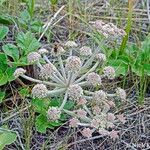
Glehnia littoralis
American silvertop · Beach silvertop · Corkwing
Description
Source: leafsnapGlehnia is a genus of plants in the carrot family, Apiaceae. It is monotypic, being represented by the single species, Glehnia littoralis, commonly known as beach silvertop and American silvertop. The genus was named after Russian botanist Peter von Glehn.
Care Guide
💧 Water
The American silvertop flourishes in coastal environments with steady moisture, yet it can also withstand occasional dry spells. It needs to be watered weekly and adapts well to sandy, fast-draining soils. Additionally, it handles salt spray effectively, making it an excellent choice for seaside gardens.
☀️ Light Full sun
The American silvertop thrives in sun-rich conditions. Its fondness for sunlight boosts its vigorous growth, as the presence of intense light ramps up photosynthetic action, thereby improving the plant's health. Although it stems from a habitat that enjoys an abundance of sunlight, it has not demonstrated any known tolerance for more shaded conditions. Too much or too little sunlight can negatively impact its growth.
What are the sunlight requirements for American Silvertop?
American Silvertop (Glehnia littoralis) requires full sun conditions, characterized by exposure to more than 6 hours of sunlight daily. It's crucial to observe the movement of sunlight through your garden to identify spots that offer an optimal balance of light and shade, ensuring the plant's well-being. This plant thrives in environments with abundant sunshine, which is pivotal for its growth and health as sunlight boosts photosynthetic activity. However, both excessive and inadequate sunlight can negatively impact its growth, demonstrating no known tolerance for low-light conditions.
How can artificial lighting be used for American Silvertop growth indoors?
When natural sunlight is insufficient, especially during winter or in less sunny spaces, artificial lighting becomes crucial for indoor plants like American Silvertop. It promotes healthier and faster growth by providing necessary light wavelengths. LED lights are recommended for their ability to cater to specific plant needs, with full sun plants requiring 30-50 watts per square foot, partial sun plants needing 20-30 watts per square foot, and full shade plants needing 10-20 watts per square foot. Positioning the light source 12-36 inches above the plant and ensuring it receives 8-12 hours of light daily mimics natural sunlight conditions effectively.
What are the symptoms of improper lighting for American Silvertop?
American Silvertop exhibits several symptoms when exposed to inadequate lighting, including reduced leaf size, leggy or sparse growth, premature leaf drop, halted growth, and pale new leaves. Excessive sunlight exposure can cause chlorosis (leaf yellowing), sunscald (damage from intense light), leaf curling (to minimize water loss), wilting (due to excessive water loss), and leaf scorching (brown or crispy leaf edges). These symptoms highlight the plant's struggle in unsuitable light conditions, underscoring the importance of providing optimal sunlight or artificial lighting.
What solutions are recommended for American Silvertop experiencing sunlight-related issues?
For indoor American Silvertop struggling with light, gradually transitioning the plant to sunnier spots to achieve at least 6 hours of direct light daily is recommended, using south-facing windows or adding artificial light if necessary. Outdoors, adapt plants to brighter conditions carefully to prevent sunburn, while ground-planted specimens might require pruning of nearby obstructions or transplanting for better light access. Remember, parts of the plant affected by light deficiency may not recover, but new growth should thrive under improved lighting conditions.
🌡️ Temperature 10–32.2°C
The American silvertop can adjust to a broad spectrum of temperature situations, although its dispersion may be constrained by various mixes of water and heat conditions. It flourishes most favorably in hot climates throughout the summer with sufficient rain or irrigation. Extended durations of cloudy, rainy weather or consistently high temperatures can elevate the chances of the American silvertop's demise. During the winter, appropriate shielding from the cold can enhance the survivability of the plant.
What is American silvertop?
American silvertop, known botanically as Glehnia littoralis, is a plant species. Unfortunately, no additional information about its essentials or symptoms is provided in the data.
💨 Humidity
🪴 Soil 6-7
🌱 Fertilizer
Typically, American silvertop requires only one application of fertilizer in the spring, although multiple treatments can optimize its growth. The optimal feeding frequency is every 30 to 45 days. The application of fertilizer improves the aesthetics and functionality of leaves, encouraging a uniform color and a robust texture. Furthermore, it boosts root development and the absorption of nutrients, contributing to the overall wellbeing of the plant over time.
🪴 Pot & Repot
✂️ Pruning
The American silvertop is characterized by its silver-topped leaves and thrives in sandy coastal environments. To maintain its health, prune the plant from early to late spring, cutting dead stems at a 45-degree angle. Additionally, thin out dense areas to improve air circulation, but be careful not to over-prune, as the foliage is essential for energy production.
🌿 Propagating
🐛 Diseases & pets
☠️ Toxicity
Characteristics
- Plant Type
- Herb
- Life Cycle
- Perennial
- Genus
- Glehnia
- Family
- Apiaceae
- Hardiness Zone
- 6-8
- Mature Height
- 30 cm
- Mature Spread
- 15 cm to 30 cm
- Leaf Color
- Green, Dark Green
- Leaf Type
- Deciduous
- Flower Color
- White, Yellow, Green
- Flower Size
- 3.05 cm to 6.35 cm
- Bloom Time
- Early summer, Mid summer
- Planting Time
- Spring
- Harvest Time
- Late summer, Early fall
- Native Area
- Russia, Japan, Koppen, South Korea, China