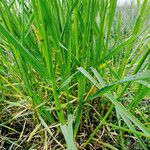
Glyceria declinata
Small Sweet-grass · Waxy Manna Grass · Waxy mannagrass · Small Flote-Grass · Low glyceria
Description
Source: leafsnapGlyceria declinata, commonly known as declining mannagrass, is a perennial grass species in the Poaceae family. Native to North America, it thrives in wetlands, marshes, and along stream banks. This plant grows in clumps, featuring long green leaves that can reach up to 60 cm in length. Its inflorescence is composed of spikelets arranged in a panicle, blooming from June to August. Declining mannagrass is crucial for wetland ecosystems as it provides habitat for various wildlife, including waterfowl and amphibians. Its extensive root system also helps in stabilizing soil and preventing erosion along stream banks. Historically, indigenous peoples have utilized Glyceria declinata for medicinal purposes, such as treating diarrhea and fever. Additionally, its high nutritional value makes it a valuable grazing resource for livestock. However, in some regions, Glyceria declinata can become invasive, outcompeting native vegetation and reducing biodiversity. Therefore, proper management practices are essential when dealing with this species. In summary, Glyceria declinata plays a significant role in wetland ecosystems and holds cultural importance due to its medicinal uses in indigenous traditions and its agricultural value for farmers.
Care Guide
💧 Water Every 7 days
Small sweet-grass flourishes in moist environments and prefers wetter soils. Weekly watering is recommended to ensure proper hydration. Its root system is well-adapted to occasional flooding, making small sweet-grass an excellent choice for rain gardens or planting near water.
☀️ Light Partial sun
🌡️ Temperature 5–35°C
Small sweet-grass can tolerate a broad range of temperatures, but its distribution may still be restricted by different combinations of water and heat conditions. It performs best in warm summer climates with sufficient rainfall or watering. Extended periods of cloudy, rainy weather, as well as prolonged high temperatures, raise the likelihood of Small sweet-grass dying. In winter, appropriate protection from cold can enhance the plant's chances of survival.
💨 Humidity
🪴 Soil
🌱 Fertilizer
To improve the soil quality and promote the growth of small sweet-grass, apply mulch or compost as fertilizer. Use this method twice a year, taking care to use moderate amounts to avoid nitrogen burn. Adjust the quantity according to the plant's growth stages. Distribute the materials evenly using gloves to protect your hands. This approach helps maintain the health of small sweet-grass and respects its natural habitat needs, making it suitable for gardeners of all experience levels.
🪴 Pot & Repot
✂️ Pruning
Small sweet-grass is a perennial grass characterized by arching leaves and delicate flowers. To promote dense growth, it is best to prune it in early spring. This will remove dead stems and help minimize the risk of disease. Pruning also encourages healthy regrowth and maintains a compact form, ensuring a lush appearance throughout the growing season.
🌿 Propagating
🐛 Diseases & pets
☠️ Toxicity
Characteristics
- Plant Type
- Grass
- Life Cycle
- Perennial
- Genus
- Glyceria
- Family
- Poaceae
- Hardiness Zone
- 5-9
- Mature Height
- 10 cm to 46 cm
- Mature Spread
- 20 cm to 49 cm
- Leaf Color
- Light Green, Pale Green
- Leaf Type
- Deciduous
- Flower Color
- Yellow, Green, Purple, Brown
- Flower Size
- 4.06 cm to 30.48 cm
- Bloom Time
- Late spring, Early summer, Mid summer
- Planting Time
- Spring, Summer
- Harvest Time
- Mid summer, Late summer, Early fall
- Native Area
- Turkey, Sweden, Austria, Czech Republic, Slovakia, Poland, Croatia, Morocco, Belarus, Ukraine, Russia, Lithuania, Norway, Hungary, Germany, Portugal, Italy, Spain, Switzerland, Denmark, Finland, France, Ireland, United Kingdom, Romania, Latvia, Belgium, Netherlands