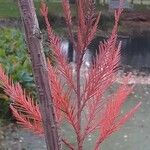
Glyptostrobus pensilis
Chines swamp cypress · Chinese swamp-cypress · Chinese water-fir · Chinese water-pine · Asian Swamp Cypress
Description
Source: leafsnapGlyptostrobus pensilis, known in Chinese as 水松 (Shuǐ sōng), and also Chinese swamp cypress, is the sole living species in the genus Glyptostrobus. It is native to subtropical southeastern China, from Fujian west to southeast Yunnan, and also very locally in northern Vietnam and Laos.
Care Guide
💧 Water Every 2 weeks
The Chinese water fir flourishes in wet, swampy conditions and prefers a consistently moist environment. For optimal health, water it every two weeks. Although it has moderate drought tolerance, its water requirements decrease during the colder months when it enters dormancy. This plant is typically grown outdoors.
☀️ Light Full sun
Chinese water fir performs best with consistent daily sunlight. During its various growth stages it shows moderate tolerance to locations with reduced light. Native to places that receive abundant daily sunlight, the plant adjusts well to changing light levels. However, extended periods of insufficient light can slow its development, while too much sun may cause sunburn.
What are the sunlight requirements for Chinese water fir?
Chinese water fir requires continuous exposure to sunlight each day to thrive best. It has moderate adaptability to areas with less sunlight exposure, but prolonged inadequate light or excessive sunlight can hinder its development or cause potential sunburn. The plant originates from regions with ample daily solar radiation and adapts well to fluctuating light conditions.
How does artificial lighting benefit indoor Chinese water fir plants?
Indoor Chinese water fir plants require adequate lighting for optimal growth, especially when natural sunlight is insufficient, such as during winter or in less sunny spaces. Artificial lights, including LED lights that provide specific wavelengths needed by plants, offer a solution by promoting healthier, faster growth. The right type of artificial light should provide 30-50W/sq ft for full sun plants, 20-30W/sq ft for partial sun plants, and 10-20W/sq ft for full shade plants. The light source should be placed 12-36 inches above the plant and turned on for 8-12 hours per day to mimic natural daylight.
What are the signs of light-related issues in Chinese water fir?
When Chinese water fir gets inadequate light, it may show signs like small or pale new leaves, leggy or sparse growth, faster leaf drop, slower or no new growth, and symptoms of chlorosis or sunscald. Excessive sunlight can cause issues like leaf curling, wilting, leaf scorching, indicating the plant's struggle with too much light or insufficient hydration.
What solutions can mitigate light-related issues for Chinese water fir?
To optimize light conditions for Chinese water fir, gradually move the plant to a sunnier location, ensuring it gets at least 6 hours of direct sunlight daily. Use south-facing windows for indoor plants and keep curtains open during the day. Consider using artificial light if the plant is large or hard to move, keeping it on for at least 8 hours a day. For outdoor plants, avoid sudden changes in light intensity to prevent sunburn. Addressing obstructions, like pruning obstructive tree branches, or transplanting smaller plants during their dormant period to sunnier locations, can also help improve light exposure.
🌡️ Temperature 15–37.8°C
Chinese water fir naturally thrives in temperatures ranging from 59 to 100.4 °F (15 to 38 ℃). It favors moderate to high temperature environments. Monitor seasonal changes and adjust the Chinese water fir's surroundings accordingly to maintain its optimal temperature.
What are the optimal temperature conditions for Chinese water fir?
Chinese water fir thrives best in conditions with temperatures ranging between 59 to 100.4 °F (15 to 38 °C). It prefers environments that offer moderate to high temperatures, reflecting its natural aptitude for thriving under such conditions. During winter, the Chinese water fir shows strong cold resistance, meaning special frost protection measures are not usually necessary. However, precautions should be taken if winter temperatures are expected to plummet below -15°C, including wrapping the trunk and branches with insulating materials like non-woven fabric or cloth. Additionally, it's recommended to water the plant abundantly before the first freeze of autumn to ensure the soil remains moist and enters a frozen state, which helps in preventing drought and water scarcity for the plant during winter and early spring.
What should be done if a Chinese water fir is exposed to temperatures below its cold tolerance or above its heat tolerance?
For Chinese water fir, the onset of low temperatures below its cold tolerance, specifically under -15°C, could result in branches becoming brittle and dry by spring, with no new shoots emerging. The remedy involves pruning away any dead branches that have failed to produce new leaves come spring. Conversely, in the case of exposure to high temperatures beyond its heat tolerance (above 38°C, and especially over 43°C), the plant's leaves may lighten in color, tips might dry and wither, and it may become prone to sunburn. The solution includes trimming away the sunburned and dried parts, relocating the plant to a shaded area during the midday and afternoon sun, or using a shade cloth. Additionally, watering the plant in the morning and evening to maintain soil moisture is advised.
💨 Humidity
🪴 Soil 5-7
🌱 Fertilizer
Chinese water fir has specific nutrient needs and does not require heavy fertilization. Spring is the best time to fertilize for optimal growth. Supplying nutrients improves its health, strengthens its resistance to pests and diseases, and helps maintain its long lifespan.
🪴 Pot & Repot
✂️ Pruning
The Chinese water fir is a fast-growing conifer with needle-like leaves. For optimal pruning, it is best to carry out the process from early to late winter. Focus on thinning the tree to allow more light and air to penetrate, and remove any unhealthy branches. This maintenance encourages healthy growth, helps the tree maintain its shape, and increases its resistance to pests and diseases.
🌿 Propagating
🐛 Diseases & pets
☠️ Toxicity
Characteristics
- Plant Type
- Tree
- Life Cycle
- Perennial
- Genus
- Glyptostrobus
- Family
- Cupressaceae
- Hardiness Zone
- 7-11
- Mature Height
- 18.29 m to 27.43 m
- Mature Spread
- 4.57 m to 6.1 m
- Leaf Color
- Light Green
- Leaf Type
- Evergreen, Deciduous
- Flower Color
- Yellow, Green
- Bloom Time
- Mid spring, Late spring
- Planting Time
- Spring, Summer, Autumn
- Harvest Time
- Late summer, Early fall, Mid fall
- Native Area
- Vietnam, Laos, China