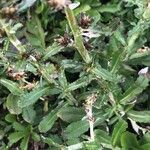
Gnaphalium americanum
American Everlasting
Description
Source: leafsnapGnaphalium americanum, commonly known as Cudweed or American Cudweed, is a perennial herbaceous plant belonging to the Asteraceae family. Native to North America, it thrives in various habitats such as fields, meadows, and disturbed areas. The plant can grow up to 60 cm tall and features a basal rosette of lance-shaped leaves with toothed margins. Its erect stem bears small, alternately arranged leaves. The flowers of Gnaphalium americanum are small and range in color from white to yellowish-white. They bloom from June to September in clusters at the top of the stem. Native Americans have traditionally used Gnaphalium americanum for its medicinal properties to treat a variety of ailments, including coughs, colds, fever, wounds, and skin infections. Overall, Gnaphalium americanum is an interesting herbaceous perennial with notable medicinal properties, commonly found throughout the fields, meadows, and disturbed areas of North America.
Care Guide
💧 Water Every 7 days
☀️ Light Full sun
The purple cudweed grows vigorously when it receives plentiful sunlight, especially throughout all stages of development. Native to well-lit habitats, the plant weakens if it does not get enough light, exhibiting stunted growth or a pale appearance. Excessive light does not appear to harm it.
🌡️ Temperature 0–32.2°C
Purple cudweed can tolerate a broad range of temperatures, but its range may still be restricted by particular mixes of moisture and heat. It does best in warm summer climates with sufficient rainfall or regular watering. Extended periods of cloudy, rainy weather or prolonged high temperatures can raise the chance that Purple cudweed will die. In winter, protecting the plant from cold can increase its survival.
💨 Humidity
🪴 Soil 6-7
🌱 Fertilizer
Purple cudweed benefits from regular, light feedings of fertilizer to encourage healthy leaf growth. You should fertilize Purple cudweed about once a month during the summer. Nitrogen is essential for foliage, and adding nitrogen-rich sources helps Purple cudweed thrive.
🪴 Pot & Repot
✂️ Pruning
🌿 Propagating
🐛 Diseases & pets
☠️ Toxicity
Characteristics
- Plant Type
- Herb
- Life Cycle
- Annual, Biennial, Perennial
- Genus
- Gnaphalium
- Family
- Compositae
- Hardiness Zone
- 8-11
- Mature Height
- 10 cm to 49 cm
- Mature Spread
- 5 cm to 15 cm
- Leaf Color
- Green, Blue
- Leaf Type
- Evergreen
- Flower Color
- White, Yellow, Brown
- Flower Size
- 2.54 cm
- Bloom Time
- Mid spring, Late spring, Early summer
- Planting Time
- Spring, Summer, Autumn
- Harvest Time
- Early summer, Mid summer
- Native Area
- Colombia, Bahamas, Cuba, Honduras, Mexico, Guatemala, Bolivia, Venezuela, Peru, El Salvador, Nicaragua, Ecuador, Costa Rica, Panama, Jamaica