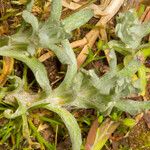
Gnaphalium uliginosum
Marsh cudweed · Mouse-ear · Cudweed · Low cudweed · Mud Cudweed
Description
Source: leafsnapGnaphalium uliginosum, the marsh cudweed, is an annual plant found on damp, disturbed ground and tracks. It is very widespread across much of Europe, Asia, and North America. It is very common on damp, arable grasslands, paths, and on acid soils.
🌳 Marsh Cudweed has received little recognition for its potential to yield natural dyes, which might serve as an environmentally friendly alternative to synthetic options in the textile industry. When its pigments are extracted, the plant can produce a variety of subtle hues that are sought after in sustainable fashion markets. This unexploited application adds a novelty element and could spark greater interest and further investigation into the plant’s dyeing qualities.
Care Guide
💧 Water
Marsh cudweed, which originates from moist environments, thrives best in conditions of high humidity and consistent moisture. To ensure its health, it requires watering once a week. As an herbaceous plant, it grows well in well-draining soil, helping it maintain a delicate water balance without becoming waterlogged. Additionally, it has a moderate tolerance for drought.
How should I water my Marsh Cudweed?
There are various ways to water Marsh Cudweed, such as using a garden hose with a spray nozzle or a watering can. This plant is not too particular about how it receives water and can thrive with rainwater, tap water, or filtered water. However, it is generally recommended to avoid watering from overhead to prevent damage to the leaves and flowers and reduce the risk of disease. Using a drip irrigation system is often the best approach as it delivers water evenly and directly to the soil. For Marsh Cudweed in a container, you can use a cup, watering can, or tap water to water it directly into the soil.
What should I do if I give my Marsh Cudweed too much or too little water?
If you notice that your Marsh Cudweed plant is lacking moisture, the solution is simple: water it more frequently. On the other hand, overwatering can be a more serious issue, especially if you don't catch it early. When your Marsh Cudweed is overwatered, it can develop diseases that may cause it to decline and eventually die. To prevent this, it's important to choose a suitable location for growth, one that receives plenty of sunlight to dry out the soil and has good drainage to allow excess water to drain away instead of collecting and causing waterlogged soil. If your Marsh Cudweed in a pot is overwatered, you may need to transfer it to a new pot. The previous container may not have had good drainage or enough drainage holes. When repotting your overwatered Marsh Cudweed, be sure to use loose soil and a pot with efficient drainage.
How frequently should I give water to my Marsh Cudweed?
Marsh Cudweed requires regular watering throughout the growing season. In spring, water once a week. As the season gets warmer, increase watering to two or three times a week, but avoid excessive watering. Keep the soil moist but not too wet. When watering a Marsh Cudweed in a pot, increase the frequency to a few times a week, as the soil in pots dries out faster than in the ground. In comparison, an in-ground plant only needs watering once a week.
How much water does my Marsh Cudweed require?
Determining how much water to give your Marsh Cudweed can be done in a few different ways. One approach is to feel the soil to gauge its moisture level. If you water until the first six inches of soil feel moist, that can be a good indication of the correct amount. Another method is to use a specific measurement. Typically, giving your Marsh Cudweed about two gallons of water per week is recommended, adjusting for temperature and soil dryness. However, be cautious not to overwater if your plant needs less. If you have your Marsh Cudweed in a container, a different approach is needed. You should aim to moisten all layers of dry soil, which can be checked by sticking your finger into the soil or by observing excess water coming out of drainage holes when watering.
How can I know if I am giving enough water to my Marsh Cudweed plant?
Avoiding overwatering your Marsh Cudweed can be a bit challenging. These plants have deep roots that need weekly watering, but they are also prone to root rot and browning if overwatered. Underwatering is less of a concern as the plants can survive without much water, but if left too long without watering, they may wilt and exhibit dry leaves.
☀️ Light Full sun
Marsh Cudweed requires plenty of sunlight to grow well but can tolerate moderately lit conditions. Native to areas with unshaded sunlight, it performs best in places with consistent light. Both too much and too little sun can harm the plant's health.
What are the sunlight requirements for Marsh Cudweed?
Marsh Cudweed requires full sun exposure, which means it needs above 6 hours of sunlight daily, but it can also tolerate partial sun, receiving about 3-6 hours of sunlight. For optimal growth, it's essential to ensure the plant gets sufficient daily sunlight. Inadequate sunlight exposure might hinder its growth and health. Observing the movement of sunlight through your garden helps in choosing locations that provide the right balance of light and shade, catering to the needs of your plants.
How do I ensure my indoor Marsh Cudweed gets enough light?
When natural sunlight is not enough, especially during winter or in less sunny spaces, artificial lighting becomes crucial for indoor plants like Marsh Cudweed. It's advisable to use LED lights, which can be customized to provide specific light wavelengths needed for plant growth. For full sun plants, you need 30-50W/sq ft of artificial light, for partial sun plants, it's 20-30W/sq ft, and for full shade plants, 10-20W/sq ft. Ensure the light source is placed 12-36 inches above the plant and keep it on for 8-12 hours a day to mimic natural daylight hours.
What are some common symptoms of improper light conditions in Marsh Cudweed?
Marsh Cudweed can show several symptoms when light conditions are not ideal. These include small or lighter-colored new leaves, indicating insufficient light. Meanwhile, excessive light might cause chlorosis, sunscald, leaf curling, wilting, or leaf scorching. Each of these symptoms hints at the plant struggling with its light environment, whether it's adapting to lower light indoors or suffering from too much direct sunlight outdoors.
How can I solve lighting problems for my indoor and outdoor Marsh Cudweed plants?
To optimize light exposure for Marsh Cudweed, gradually increase sunlight by moving the plant to a sunnier spot each week until it receives at least 6 hours of direct sunlight. For indoor plants that can't be moved easily, consider using artificial lighting, like grow lights, for at least 8 hours daily. Outdoors, find the best spot with gradual light increase to avoid sunburn. Minimizing obstructions, such as pruning trees, or transplanting to better locations can also ensure your plants receive ample sunlight. Remember, affected parts may not recover, but new growth will be healthier with improved light exposure.
🌡️ Temperature 0–21.1°C
Marsh Cudweed naturally occurs in habitats with temperatures ranging from 68 to 95 °F (20 to 35 ℃). It favors these warmer conditions and, in cooler seasons, needs adjustment to maintain optimal growing conditions.
What is the native environment for Marsh Cudweed?
Marsh Cudweed, scientifically known as Gnaphalium uliginosum, thrives in environments where temperatures range between 68 to 95 °F (20 to 35 °C). It prefers warmer conditions and requires adjustments to maintain optimal growing conditions during cooler seasons.
Is Marsh Cudweed cold-tolerant?
Yes, Marsh Cudweed is highly cold-tolerant and does not need additional frost protection measures during winter. However, to prepare for the first freeze in autumn, it's recommended to water the plant generously. This ensures the soil remains moist and enters a frozen state, helping to prevent drought and water scarcity for the plant during winter and early spring.
How does Marsh Cudweed react to low temperatures?
Marsh Cudweed is extremely cold-tolerant, with the winter temperature ideally being maintained above -45°C. If temperatures drop below this threshold, there might not be any noticeable changes during winter, but there could be a decrease in sprouting or even instances of no sprouting during springtime. It’s suggested to remove any parts that have failed to sprout in spring.
What should be done if Marsh Cudweed experiences high temperatures?
Marsh Cudweed is not tolerant of high temperatures exceeding 35°C, as its growth will stop, and it becomes more susceptible to rot. In such conditions, you should trim away the sunburned and dried-up parts of the plant. Moving the plant to a location that provides shade during midday and afternoon sun, or using a shade cloth, can also be beneficial. Additionally, watering the plant in the morning and evening keeps the soil moist and supports its health under high temperature conditions.
💨 Humidity
🪴 Soil 6-6
🌱 Fertilizer
Marsh Cudweed benefits from frequent, weak fertilizer applications to encourage healthy leaf growth. You should fertilize Marsh Cudweed about once a month during the summer months. Nitrogen is crucial for foliage, and supplementing with nitrogen-rich sources helps Marsh Cudweed thrive.
🪴 Pot & Repot
✂️ Pruning
🌿 Propagating
🐛 Diseases & pets
☠️ Toxicity
Characteristics
- Plant Type
- Herb
- Life Cycle
- Annual
- Genus
- Gnaphalium
- Family
- Asteraceae
- Hardiness Zone
- 1
- Mature Height
- 3 cm to 25 cm
- Mature Spread
- 20 cm
- Leaf Color
- Green, Blue
- Leaf Type
- Deciduous
- Flower Color
- White
- Flower Size
- 0.25 cm to 0.51 cm
- Bloom Time
- Early summer, Mid summer
- Planting Time
- Spring, Summer, Autumn
- Harvest Time
- Mid summer
- Native Area
- Egypt, Turkey, Sweden, Austria, Slovakia, Montenegro, Slovenia, Croatia, Belarus, Russia, Germany, Iceland, Estonia, Koppen, Romania, Latvia, South Korea, Belgium, Moldova, Portugal, Netherlands, France, Czech Republic, Bulgaria, Armenia, Poland, Greece, Ukraine, Lebanon, Serbia, Lithuania, Norway, China, Italy, Kazakhstan, Spain, Switzerland, Denmark, Japan, Mongolia, Finland, Albania, Ireland, United Kingdom, Hungary, Algeria