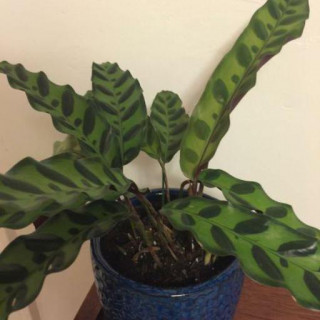
Goeppertia insignis
Rattlesnake plant · Prayer plant · Spotty green thing · Distinguished Goeppertia
Description
Source: wikipedia (CC BY-SA)Goeppertia insignis, the rattlesnake plant, is a species of flowering plant in the Marantaceae family, native to Rio de Janeiro state in Brazil.
Care Guide
💧 Water
The rattlesnake plant is native to tropical rainforests, where it thrives in high humidity and consistent moisture. To mimic its natural habitat and promote vibrant foliage and healthy growth, water the rattlesnake plant weekly and mist it regularly. It is sensitive to drought and needs a stable environment for optimal care.
☀️ Light Partial sun
Rattlesnake-plant occurs naturally in habitats like forest understories or rocky areas, where it grows in natural shade. It prefers partial sun but can adapt to full sun or full shade, reflecting its versatile and hardy nature.
🌡️ Temperature 20–37.8°C
Rattlesnake-plant comes from tropical regions, where the weather is usually warm and humid. Consequently, it is adapted to high temperatures and moisture. It does not tolerate sudden temperature shifts and prefers a consistent thermal environment, so avoiding temperature fluctuations indoors is important. It generally cannot handle cold temperatures and needs warmer conditions for healthy growth. If the ambient temperature falls too low, the plant may stop growing or even die.
💨 Humidity
🪴 Soil 5-6
🌱 Fertilizer
Adequate feeding is essential for the Rattlesnake-plant's health and appearance. Feed the Rattlesnake-plant during summer, repeating the application monthly throughout the season. Nutrients provide energy for growth and help preserve the plant's structures. Fertilizing improves the Rattlesnake-plant's floral display, helping produce the best blooms.
🪴 Pot & Repot 3-4 years
When repotting a Rattlesnake-plant, select a pot slightly larger than the previous one that provides good drainage. Do the repotting in spring or fall and use a well-draining potting mix. Plant it at the same depth as before. Water thoroughly after repotting and place the pot in a warm spot with bright, indirect light. Avoid overwatering to prevent root rot.
✂️ Pruning
The Rattlesnake plant benefits from pruning in early spring to remove any yellow or damaged leaves. This promotes new growth and improves the plant's appearance. Pruning not only enhances aesthetics but also increases air circulation, reduces the risk of disease, and revitalizes the leaf patterns. To prevent infections, be sure to use clean, sharp tools when pruning.
🌿 Propagating
🐛 Diseases & pets
☠️ Toxicity
Characteristics
- Plant Type
- Herb
- Life Cycle
- Perennial
- Genus
- Goeppertia
- Family
- Marantaceae
- Hardiness Zone
- 10-12
- Mature Height
- 30 cm to 61 cm
- Mature Spread
- 40 cm to 76 cm
- Leaf Color
- Dark Green, Light Green
- Leaf Type
- Evergreen
- Flower Size
- 2.03 cm to 3.05 cm
- Bloom Time
- All year round
- Planting Time
- Spring, Summer, Autumn
- Harvest Time
- All year round
- Native Area
- Venezuela