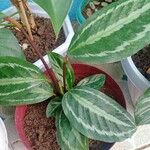
Goeppertia picturata
Calathea
Description
Source: wikipedia (CC BY-SA)Goeppertia picturata is a species of plant now classified as belonging to the genus Goeppertia in the family Marantaceae. It is native to northwest Brazil. and has been introduced to Colombia, Peru, the Leeward Islands, and the Windward Islands.
Care Guide
💧 Water
Calathea plants thrive in high humidity and need consistently moist soil, though it should not be waterlogged. To mimic their natural habitat, water them weekly. Additionally, mist the leaves regularly, especially during the growing season, to keep them healthy and enhance their vibrant foliage.
☀️ Light Full sun
Calathea thrives in full light but also tolerates partial illumination. Coming from areas with plentiful sunshine, proper light considerably benefits its health and growth. Nevertheless, both excessive and inadequate light can harm its well-being.
🌡️ Temperature 20–37.8°C
Calathea comes from tropical areas, where the weather is generally warm and humid. Consequently, it is well suited to high temperatures and moisture. It does not tolerate sudden temperature shifts and prefers a steady temperature, so avoiding fluctuations indoors is important. It usually cannot endure cold conditions and needs warmer temperatures for growth. If the surrounding temperature falls too low, the plant may stop growing or even die.
💨 Humidity
🪴 Soil 5-7
🌱 Fertilizer
Proper fertilization is essential for a Calathea's health and appearance. Fertilize Calathea in the summer, repeating the application monthly throughout the season. Nutrients provide energy for growth and help maintain the plant’s tissues. Regular fertilizing improves Calathea’s flowering, ensuring it produces the best blooms.
🪴 Pot & Repot 3-4 years
To repot a Calathea, pick a pot slightly larger than the previous one that provides good drainage. Repot during spring or fall, and use a well-draining potting mix. Plant it at the same depth as before. Thoroughly water the plant after repotting and place it in a warm spot with bright, indirect light. Avoid overwatering to prevent root rot.
✂️ Pruning
Calathea plants boast stunning foliage and are best pruned in early spring. To encourage healthy growth, trim any yellowing or damaged leaves using clean scissors. Be careful not to over-prune; avoid removing more than 20% of the leaves at a time. With consistent care, your Calathea will maintain a vibrant appearance throughout the year.
🌿 Propagating
🐛 Diseases & pets
☠️ Toxicity
Characteristics
- Plant Type
- Herb
- Life Cycle
- Perennial
- Genus
- Goeppertia
- Family
- Marantaceae
- Hardiness Zone
- 10-11
- Mature Height
- 30 cm to 61 cm
- Mature Spread
- 40 cm to 76 cm
- Leaf Color
- Green, Purple, White, Gray, Silver
- Leaf Type
- Evergreen
- Flower Color
- White, Purple
- Flower Size
- 2.03 cm to 3.05 cm
- Bloom Time
- Summer, Early fall
- Planting Time
- Winter, Spring
- Harvest Time
- Late summer, Fall
- Native Area
- Brazil, Colombia, Venezuela