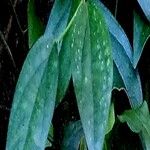
Goodyera foliosa
Care Guide
💧 Water
☀️ Light Partial sun
The Coral beak orchid is indigenous to habitats including forest undergrowth and rocky terrains, where it is naturally shaded. It thrives in environments with partial sunlight, however, it can adjust to either complete sunlight or full shade, showcasing its adaptable and resilient characteristics.
🌡️ Temperature 10–35°C
The coral beak orchid is capable of adjusting to various temperature conditions, however, its dispersal can potentially be restricted by certain combinations of moisture and heat levels. It flourishes optimally in warm climates when adequately watered during the summer period. The chances of the coral beak orchid perishing can be raised due to extended durations of overcast and wet weather, as well as continuous high temperatures. During the winter season, taking measures to protect the plant from the cold can enhance its chances of survival.
💨 Humidity
🪴 Soil 5-6
🌱 Fertilizer
The optimal period to fertilize the Coral beak orchid is at the onset of spring, during the formation of flowers. Proper fertilization enhances blossom quality and aids the Coral beak orchid in producing attractive flowers. If carried out at the beginning of spring, fertilizer application will guarantee exceptional flowers throughout the season while supplying energy for the dormant growth stages.
🪴 Pot & Repot
✂️ Pruning
🌿 Propagating
🐛 Diseases & pets
☠️ Toxicity
Characteristics
- Plant Type
- Herb
- Life Cycle
- Perennial
- Genus
- Goodyera
- Family
- Orchidaceae
- Hardiness Zone
- 6-9
- Mature Height
- 15 cm to 25 cm
- Mature Spread
- 10 cm to 20 cm
- Leaf Color
- Green
- Leaf Type
- Semi-evergreen
- Flower Color
- White
- Flower Size
- 1.52 cm
- Bloom Time
- Early summer, Mid summer
- Planting Time
- Spring, Summer, Autumn
- Harvest Time
- Late summer, Early fall
- Native Area
- Russia, Nepal, India, Vietnam, Japan, Myanmar, Bhutan, China