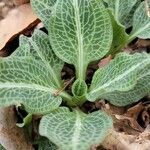
Goodyera pubescens
Downy Rattlesnake-plantain
Description
Source: leafsnapGoodyera pubescens, commonly known as the downy rattlesnake plantain, is a perennial orchid species native to North America. This small plant typically grows up to 20 cm in height and features broad, oval-shaped leaves that are dark green with striking white veins. The fine hairs covering the leaves give the plant its characteristic downy appearance. The flowers of Goodyera pubescens are small and white with greenish-yellow centers, blooming from June to August. They grow on tall spikes that can reach up to 30 cm in height. These flowers emit a sweet fragrance that attracts pollinators like bees and butterflies. This orchid species favors moist, shady habitats such as forests or wetlands. It is widely distributed across eastern North America, from Canada down to Florida. For centuries, Native American tribes have utilized Goodyera pubescens for its medicinal properties. The roots were used as an antiseptic for wounds and burns, while the leaves were brewed into a tea to treat coughs and colds. Overall, Goodyera pubescens is an attractive orchid species with interesting foliage and delicate flowers, enhancing its natural habitat's beauty. Additionally, it offers medicinal benefits through traditional use by indigenous peoples of North America.
🎭 Recovery, Defense, Power
Care Guide
💧 Water Every 7 days
Rattlesnake plantain thrives in the understory of temperate forests, preferring moist, well-drained soil and consistent moisture without becoming waterlogged. It's important to water it weekly, and it does well indoors if the humidity is kept stable. As an evergreen, this plant needs careful watering throughout the year to keep its foliage lush.
How should I water my Rattlesnake plantain?
The watering needs of your Rattlesnake plantain will depend on its growth phase. During active growth, water the soil and occasionally mist the leaves if it's warm outside. However, in winter or cool/wet weather, only water the soil directly. Signs that your plant needs more water include dry, discolored roots and leaves. Overwatering will make the plant mushy and limp. Plant your Rattlesnake plantain in a pot with good drainage. During the growing season, water it several times a week, ensuring the water drains quickly. The pot size will determine the frequency of watering, with larger pots needing less water. Use rainwater or distilled water that matches the air temperature as closely as possible.
What do I do if I give my Rattlesnake plantain too much or too little water?
To avoid killing your Rattlesnake plantain, it's important to avoid keeping its soil overly moist. Although these plants require regular watering during active growth, they also need well-draining soil. Overwatering can lead to mushiness and root rot. If this happens, remove any rotted roots with sterile pruning shears and repot the plant in a container with good drainage using fast-draining potting mix. However, excessive repotting may not be beneficial for this plant, so it's crucial to find the right watering balance. If your Rattlesnake plantain starts to shrivel and feels dry to the touch, it's likely underwatered. In this case, increase your watering frequency as the soil may be drying out faster than expected.
How frequently should I water my Rattlesnake plantain?
During the active growth stage in spring and summer, water your Rattlesnake plantain once or twice per week, increasing to three times per week or more during hot and dry weather. In winter, water your Rattlesnake plantain, but less frequently - two to three times per month should suffice. If you keep your Rattlesnake plantain indoors during winter, be aware that the soil may dry quicker, so you may need to water more often. In fall, gradually reduce watering from summer to winter schedule.
What do I need to think about when watering my Rattlesnake plantain in different seasons and stages of growth?
When planning the watering schedule for your Rattlesnake plantain, there are two important growth phases to consider. The first phase is the active growth period, which occurs in spring and summer. During this time, it is recommended to water the plant multiple times per week. The second growth phase is the rest period, which occurs during winter for about two to three months. During this period, the Rattlesnake plantain requires less water and fertilization than usual. It is suggested to water the plant about once or twice per month. To transition into the rest period, gradually reduce the frequency of watering from multiple times per week in the fall, until reaching the appropriate rate of once or twice per month for winter.
How should I water my Rattlesnake plantain if I grow it inside?
The Rattlesnake plantain needs a humid environment to grow well. However, indoor locations usually have less air moisture, causing the plant and soil to dry out faster than when grown outdoors. To combat this, you should consider adding a humidifier in the room and watering the plant more often. Although humidity is important, the plant also requires enough air circulation to prevent moisture build-ups and diseases. To maintain proper air flow, it is recommended to have a fan in the room where you grow the plant.
☀️ Light Partial sun
Rattlesnake plantain prefers spots that receive sufficient but not excessive sunlight. It thrives in conditions of moderate sun exposure and can tolerate places with only low light. At every phase of its growth, too much sun may damage the plant, while too little light can restrict proper development. Its native habitat consists of areas with moderate sunlight.
What type of sunlight requirements does the Rattlesnake plantain have?
Rattlesnake plantain favors areas that offer an appropriate balance of light, thriving under moderate sunlight exposure, and can even tolerate minimal illumination. It is essential that the plant does not receive too much or too little sunlight, with its ideal being about 3-6 hours of sunlight daily for 'partial sun' and less than 3 hours for 'full shade.' Understanding the movement of sunlight through your garden will help in selecting spots that ensure the plant's happiness by providing the perfect balance of light and shade.
How can artificial lighting be used for Rattlesnake plantain when natural sunlight is insufficient?
When natural sunlight is insufficient, artificial lighting becomes an essential solution for Rattlesnake plantain, especially during winter or in less sunny spaces. LED lights are recommended because they can be customized to provide specific wavelengths needed by the plant. The amount of artificial light required varies with plant type: full sun plants need 30-50W/sq ft, partial sun plants 20-30W/sq ft, and full shade plants 10-20W/sq ft of artificial light. The light source should be placed 12-36 inches above the plant to mimic natural sunlight, and most plants need 8-12 hours of light per day.
What are the symptoms of light deficiency in Rattlesnake plantain when grown indoors?
When Rattlesnake plantain is grown indoors and experiences insufficient light, several symptoms can manifest. These include smaller new leaves when compared to the older ones, leggy or sparse growth making the plant appear thin and stretched, faster leaf drop as older leaves are shed early to conserve resources, slower or no new growth indicating the plant is in survival mode due to poor light conditions, and lighter-colored new leaves signifying a lack of chlorophyll. Properly managing light exposure is crucial to prevent these signs of stress.
What can be done to address and prevent symptoms caused by improper sunlight exposure in Rattlesnake plantain?
To manage and prevent symptoms caused by improper sunlight exposure in Rattlesnake plantain, a gradual adaptation process is recommended. Indoor plants could be shifted to increasingly sunnier spots each week to receive 3-6 hours of direct sunlight daily. If moving the plant is not feasible, consider artificial lighting solutions such as desk or ceiling lamps for at least 8 hours daily or professional grow lights. Outdoors, gradually move the plants to sunnier locations each week to avoid sunburn. Pruning or transplanting may also be necessary to reduce obstructions and ensure the plant receives adequate sunlight.
🌡️ Temperature 0–32.2°C
Rattlesnake plantain can tolerate a wide range of temperatures, though its range may still be limited by different combinations of moisture and heat. It does best in warm summer conditions with sufficient rainfall or watering. Extended periods of cloudy, rainy weather or prolonged high temperatures can increase the chance of Rattlesnake plantain dying. In winter, adequate protection from cold can enhance the plant’s survival chances.
What is the botanical name of the Rattlesnake plantain?
The botanical name of the Rattlesnake plantain is Goodyera pubescens.
💨 Humidity
🪴 Soil 5-6
🌱 Fertilizer
The best time to fertilize a Rattlesnake plantain is in early spring, as it comes out of dormancy and begins active growth. Fertilizing supplies essential nutrients needed for healthy development. Although Rattlesnake plantain has relatively low fertilizer requirements, applying fertilizer annually can improve its survival and encourage better, longer-lasting flowers.
🪴 Pot & Repot Every 12 months
✂️ Pruning
Rattlesnake plantain has distinct veined leaves arranged in a rosette pattern and requires minimal pruning. For healthy growth, trim any dead or damaged leaves from early to late spring. Regular light pruning can help prevent disease and improve the plant's appearance. However, avoid heavy pruning to maintain its low-maintenance nature.
🌿 Propagating
🐛 Diseases & pets
☠️ Toxicity
Characteristics
- Plant Type
- Herb
- Life Cycle
- Perennial
- Genus
- Goodyera
- Family
- Orchidaceae
- Hardiness Zone
- 4-10
- Mature Height
- 5 cm to 46 cm
- Mature Spread
- 10 cm to 15 cm
- Leaf Color
- Green, Blue, White
- Leaf Type
- Evergreen
- Flower Color
- White
- Flower Size
- 0.25 cm to 0.51 cm
- Bloom Time
- Mid summer
- Planting Time
- Spring
- Harvest Time
- Mid summer
- Native Area
- Eastern North America