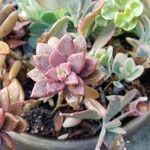
Graptopetalum mendozae
Ghost plant
Care Guide
💧 Water Every 2 weeks
Graptopetalum mendoza originates from arid regions, making it highly drought-tolerant and efficient at storing water. This plant requires minimal humidity and should be watered every two weeks. For optimal growth, it is best to plant graptopetalum mendoza in well-draining soil within containers. It thrives in drier conditions, which helps prevent root rot.
☀️ Light Full sun
Graptopetalum mendoza does best with plentiful sunshine and can achieve satisfactory growth when it gets a lot of sun. While it naturally prefers abundant light, it can withstand stretches of merely partial exposure. This toughness comes from its habitat in places that receive strong sunlight.
What are the sunlight requirements for Graptopetalum mendoza?
Graptopetalum mendoza thrives under an abundance of sunshine, requiring more than 6 hours of sunlight for full sun conditions but can also tolerate about 3 to 6 hours of sunlight, termed as partial sun. It's essential to observe how sunlight moves through your garden and select spots that ensure a balance of light and shade, catering to the happiness of your plants. This adaptability allows Graptopetalum mendoza to be a versatile choice for gardeners, flourishing in environments where sunlight is a significant factor.
How can artificial lighting benefit indoor Graptopetalum mendoza plants?
Indoor Graptopetalum mendoza plants benefit significantly from adequate lighting, especially when natural sunlight is insufficient, such as during winter or in less sunny spaces. Artificial lighting is a crucial solution, promoting faster, healthier growth. LED lights are recommended for their ability to provide specific wavelengths needed by plants. For full sun plants, 30-50W/sq ft of artificial light is needed, partial sun plants require 20-30W/sq ft, and full shade plants need 10-20W/sq ft. Positioning the light source 12-36 inches above the plant and mimicking natural daylight hours (8-12 hours per day) are essential strategies for optimal growth.
What are some common symptoms of inadequate lighting in Graptopetalum mendoza?
Inadequate lighting conditions can lead Graptopetalum mendoza to exhibit several symptoms, including smaller new leaves, leggy or sparse growth, faster leaf drop, halted growth, pale new leaves, chlorosis, sunscald, leaf curling, wilting, and leaf scorching. These symptoms reflect the plant's struggle with insufficient light, where it may develop irregular color patterns, extended spaces between leaves or stems, and reduced overall health. Recognizing these signs early can help in addressing the issue by adjusting light conditions.
What solutions can address light deficiency in indoor and outdoor Graptopetalum mendoza?
For indoor Graptopetalum mendoza, overcoming light deficiency involves gradually moving the plant to a sunnier location until it receives at least 6 hours of direct sunlight daily or using artificial light sources, such as desk or ceiling lamps for at least 8 hours daily. For outdoor plants, it's advised to gradually adapt them to sunnier spots to avoid shock and potential sunburn. If sunlight obstruction is an issue, consider pruning or transplanting smaller plants to areas with ample sunlight and good drainage. While parts affected by insufficient sunlight may not recover, new growth should exhibit improved health with adequate light exposure.
🌡️ Temperature 15–35°C
Graptopetalum mendoza originates from habitats where temperatures are ideally between 59 and 95 °F (15 to 35 ℃). This plant prefers warmth but can tolerate lower temperatures in order to thrive. Adjustments may be necessary during extreme seasonal temperatures.
What is the ideal temperature range for Graptopetalum mendoza?
Graptopetalum mendoza thrives in environments with temperatures ideally between 59 to 95 °F (15 to 35 °C). It appreciates warmth but can also tolerate lower temperatures to a certain extent. However, adjustments may be necessary during extreme seasonal temperatures to ensure the plant's health.
How does Graptopetalum mendoza react to winter conditions?
During winter, Graptopetalum mendoza gradually stops growing and enters a dormant state as it is a heat-loving plant. If the temperature drops below -5°C, it's essential to move the plant indoors for cultivation. Choose a location near a south-facing window to provide as much sunlight as possible. Supplemental lighting can be used if natural light is insufficient. Additionally, watering should be reduced or halted to prevent root rot when temperatures fall below 15°C.
What should I do if Graptopetalum mendoza experiences low temperatures?
Graptopetalum mendoza is not tolerant of low temperatures and thrives best above 15°C. Keeping it above -5°C during winter is crucial, and if temperatures fall below -10°C, the plant may wilt or be prone to root rot. For mild frost damage, trim off the frostbitten areas and check the roots. If the roots have rotted, cut them off and propagate the plant through cuttings. Move the plant to a warm environment indoors and ensure it has ample sunlight, using supplemental lighting if necessary.
How should I care for Graptopetalum mendoza during high temperatures?
In summer, it's best to keep Graptopetalum mendoza below 35°C. Should temperatures exceed 41°C, the plant might cease to grow and become susceptible to water loss, wilting, and sunburn. To help the plant recover, remove sunburned and rotten parts and shield it from direct afternoon sunlight. Additionally, cease watering plants with root rot until new roots form, indicating recovery.
💨 Humidity normal (40-60%)
This plant will thrive in moderate humidity, which is probably the level in your home. However, misting it a few times a week can be very beneficial. Make sure the room has good ventilation.
🪴 Soil 6-7
🌱 Fertilizer
For Graptopetalum mendoza, light applications of fertilizer once or twice a year during the active growing season are enough. Do not fertilize in winter or in summer when the plant is dormant. Cut back on fertilizer for plants that have been repotted and wait a couple of months after repotting before applying any fertilizer. Feeding helps maintain healthy growth and promotes flowering.
🪴 Pot & Repot Every 2 years
When repotting Graptopetalum mendoza, choose a pot slightly larger than the current one that has good drainage. Use a gritty, well-draining succulent or cactus mix. Gently remove the plant from its old pot, brush off excess soil, and set it in the new pot at the same depth. Wait a few days before watering to allow any root injury to heal. Repot in spring or fall and place it in a brightly lit location.
✂️ Pruning
To preserve the shape of Graptopetalum mendoza, prune any excess or dense branches in the spring and fall using scissors or a knife. For propagation, cut a sturdy stem with 5-6 leaves, apply sulfur powder to the wound, and once it has healed, plant it in slightly moist soil.
🌿 Propagating
🐛 Diseases & pets
☠️ Toxicity
Characteristics
- Plant Type
- Succulent
- Life Cycle
- Perennial
- Genus
- Graptopetalum
- Family
- Crassulaceae
- Hardiness Zone
- 8-10
- Mature Height
- 15 cm
- Mature Spread
- 30 cm
- Leaf Color
- Pale Green, Light Gray
- Leaf Type
- Evergreen
- Flower Color
- Pink, White
- Flower Size
- 1.02 cm
- Bloom Time
- Late spring, Early summer, Mid summer
- Planting Time
- Autumn
- Harvest Time
- Mid summer
- Native Area
- Mexico