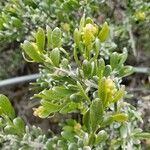
Grayia spinosa
Spiny hopsage
Description
Source: leafsnapGrayia spinosa is a species of the genus Grayia in the subfamily Chenopodioideae of the flowering plant family Amaranthaceae, which is known by the common names hop sage and spiny hop sage. It is widely distributed across the Western United States, where it grows in a number of desert and mountain habitats.
Care Guide
💧 Water
Spiny hopsage is well-suited to arid climates due to its drought tolerance, allowing it to thrive with very little water. It grows best when watered every 2 to 3 weeks, effectively managing its stored water. This plant is particularly resilient outdoors and excels during dry seasons, where conserving water is crucial.
What's the best way to water my Spiny hopsage plant?
To ensure excellent root development, place a garden hose at the base of the plant. Avoid spraying the leaves directly. If the plant is outdoors and exposed to direct sunlight, the leaves will need more watering. You can use bubblers to moisten the roots of each plant or use soaker hoses to cover the entire garden or bed when adding or removing plants. Make sure to drain any excess water and wait for the soil to dry before watering again. Water at ground level to prevent diseases. On a sunny day, consider spraying the entire bush with water. Whether in a pot or in the ground, remember that Spiny hopsage prefers deep watering rather than light sprinkling.
What should I do if I give Spiny hopsage too much or too little water?
An overwatered Spiny hopsage can exhibit yellowing leaves that eventually drop off and wilt. The plant may also appear dull and unhealthy, with mushy stems. When these signs appear, it is advisable to adjust your watering schedule accordingly. It is important to note that wilting can also be a sign of under watering. In such cases, leaves may become crispy and dry. Overwatered plants, on the other hand, will have soft and wilted leaves. If the soil is dry and simple watering is inadequate, a thorough watering is necessary. Sufficient watering will help the Spiny hopsage recover, but yellow and dry leaves caused by a damaged root system may persist for a few days. Once the plant returns to normal, the yellowing of leaves will cease. When you have an indoor Spiny hopsage, always check the moisture levels in the pot and avoid overwatering. If you notice black spots, allow the soil to dry by refraining from watering for a few days. Overwatering can result in root rot. If you observe discolored and slimy roots, consider transferring the plant to a different pot. It is important to prevent root rot by avoiding excessively soggy soil. When planting Spiny hopsage outdoors, dig a little deeper. If the soil feels too dry when you check with your fingers, it may indicate underwatering. Adequate watering is necessary to promote plant recovery.
How often do I need to water my Spiny hopsage?
The Spiny hopsage prefers deep and infrequent watering, especially when it's planted in pots. To ensure proper hydration, soak the plant in a gallon of water each time. Potted plants have limited water storage and dry out faster, so watering every 3 to 5 days is necessary in cold regions. Watering should be done in the morning when the soil is dry, either outdoors or indoors. You can also check the soil moisture by observing the top 2-3 inches. If it's dry, it's time for a full watering. During hot days, monitor the soil moisture daily as the heat can quickly dry out the pot's soil. In gardens, irrigation is also necessary, and in hot climates, watering once a week is recommended. Only water when the top 2-3 inches of soil are dry, whether indoors or outdoors. Take into account natural rainwater and avoid overwatering to prevent root rot. Spiny hopsage typically thrives in spring and fall. When outdoors, add mulch about 3 to 4 inches deep to conserve water. Sandy soil drains faster and requires more frequent watering. On the other hand, clay soil requires less frequent watering, with 2-3 days between watering to prevent root rot. Consider marking the watering dates on a calendar and be attentive to drooping leaves, which could indicate a need for watering.
How much water should I give my Spiny hopsage?
The Spiny hopsage typically needs about a gallon of water on a regular basis. For potted plants, water them deeply until you see water dripping from the bottom of the pot. Wait for the soil to dry before watering again. You can use a water calculator or moisture meter to track how much water you've given your plant in a week. During the flowering period, provide plenty of water but allow the moisture to evaporate afterward to prevent root rot. If the Spiny hopsage is planted outdoors and receives sufficient rainfall, additional watering may not be necessary. When the plant is young or newly planted, make sure it receives 1-2 inches of rain each week. As the Spiny hopsage matures, it can rely solely on rainfall. Only in hot weather or if there has been no rainfall for 2-3 weeks, consider giving the Spiny hopsage a thorough watering during cooler times of the day to prevent heat damage. Additional watering may be needed during extended dry periods.
Do I need to change how often I water my Spiny hopsage based on the time of year or the weather?
The Spiny hopsage plant requires watering according to the weather conditions. During the spring and fall, the soil should be kept moist but not soggy. Alternating between dry and moist soil conditions will help the plant grow well. In the summer, hot weather can cause water to evaporate quickly, so extra watering may be necessary if there is a lack of rainfall. However, during winter, the plant needs less water as it goes dormant. Using a well-draining soil mixture can help water evaporate quickly during this period. Once the plant starts leafing out and going dormant in spring, watering can be skipped as it can rely on rainwater. Good drainage is essential at all times to avoid ponding or drought, especially in winter. When the plant is in a pot, it has limited root growth, so it is important to keep it well-watered, especially in summer. Deep soaking the entire root system once or twice a week is better than shallow sprinkling, as it discourages fungal growth and reaches deep into the roots. However, the plant should never be allowed to dry out completely in fall or winter, even during dormancy. Avoid overwatering to prevent the roots from sitting in water for too long, as this can lead to plant death in winter. Applying mulch can help reduce stress, conserve water, and promote healthy blooms.
☀️ Light Full sun
Spiny hopsage prefers locations that receive full sunlight. Although it can tolerate sites with somewhat filtered light, it performs best when given ample illumination. Extended periods of inadequate sunlight can impede its growth and negatively affect its overall health.
What are the sunlight requirements for Spiny hopsage?
Spiny hopsage requires areas that receive full daylight exposure for optimal growth, thriving best when exposed to a generous amount of light. Although it can grow in slightly diffused sunlight, long periods of insufficient sunlight may hinder its growth and health. Full sun is characterized by above 6 hours of sunlight, while partial sun refers to about 3-6 hours of sunlight. It's important to watch how sunlight moves through your garden and choose spots that offer the right balance of light and shade for your plants.
How can artificial lighting benefit indoor Spiny hopsage plants?
When natural sunlight is insufficient, especially in winter or less sunny spaces, artificial lighting becomes essential for the optimal growth of indoor Spiny hopsage plants. Suitable artificial light promotes faster, healthier growth. LED lights are recommended because they can be customized to provide specific wavelengths needed by plants. Full sun plants require 30-50W/sq ft, partial sun plants need 20-30W/sq ft, and full shade plants need 10-20W/sq ft of artificial light. The light source should be placed 12-36 inches above the plant and operated for 8-12 hours per day to mimic natural daylight hours.
What symptoms indicate Spiny hopsage is receiving insufficient light?
Symptoms of light deficiency in Spiny hopsage include smaller new leaves, leggy or sparse growth with longer spaces between leaves or stems, faster leaf drop, slower or halted growth, and lighter-colored or yellowing leaves (chlorosis). Excessive sunlight can lead to sunscald, leaf curling, wilting, and leaf scorching. These symptoms indicate either inadequate or excessive light, affecting the plant's photosynthesis process and overall health.
What solutions can help improve the growth of Spiny hopsage with insufficient sunlight?
To optimize Spiny hopsage growth under insufficient light, gradually move plants to a sunnier spot each week, aiming for at least 6 hours of direct sunlight daily. For indoor plants, consider using artificial light by keeping a lamp on for at least 8 hours daily or using professional plant grow lights for ample light exposure. For outdoor plants, avoid sudden changes in light intensity to prevent sunburn. Reducing obstructions like pruning trees or transplanting during the plant's dormant period to a location with ample sunlight and good drainage can also improve growth. New growth should be healthy after increasing light exposure, although parts of the plant affected by prior light deficiency may not recover.
🌡️ Temperature 5–35°C
Spiny hopsage occurs naturally in regions where temperatures range from 41 to 95 °F (5 to 35 ℃). It is well adapted to cold winters and hot summers, which suggests using a garden setting with variable temperatures to mimic that environment. Seasonal adjustments can ensure healthier growth.
What temperature is best for Spiny hopsage?
The optimal temperature range for Spiny hopsage is 65-80℉ (18-27℃). During the main growth phase, the highest temperature it can tolerate is 95℉ (35℃), while the lowest tolerable temperature is 15℉ (-10℃). This species has a high tolerance for low temperatures and can survive freezing winters. Here is a breakdown of the perfect, highest, and lowest temperature ranges: - Perfect temperature range: 65-80℉ (18-27℃) - Highest temperature range: 85-95℉ (30-35℃) - Lowest temperature range: -5-15℉ (-20 to -10℃) or lower.
Do I need to change the temperature for Spiny hopsage when it's growing differently?
When Spiny hopsage is exposed to prolonged periods of higher temperatures, it may show signs of stunted growth, especially during the development of axillary buds and the growth of main shoots. To promote strong growth after germination or transplanting, it is beneficial to maintain consistent and cooler temperatures, around 65℉(18℃).
How can I make sure Spiny hopsage stays warm during cold seasons?
Spiny hopsage is a resilient plant that can handle freezing temperatures as long as it is planted in the ground in areas where the temperature doesn't drop below 15℉ (-10℃) during winter. However, if it is planted in pots or containers, extra precautions must be taken to protect its roots from the cold. This can be done by wrapping the container in a blanket or bringing it indoors where it will be fully shielded from the elements.
If the temperature is too high or too low, how will it harm Spiny hopsage?
Spiny hopsage is more likely to be harmed if the temperature is consistently too high than if it is consistently too low. When it gets too hot, heat stress triggers hormones that reduce seed germination and photosynthesis efficiency. This can be observed through wilting, leaf browning, and potentially plant death. On the other hand, if Spiny hopsage gets too cold, its functions such as nutrient uptake and photosynthesis will stop, possibly leading to the plant's death. Even a single freezing event during the growing season can cause a membrane phase transition, which could result in the plant's functions ceasing and its death.
What should I know about temperature for Spiny hopsage?
One of the most important strategies for ensuring the health of Spiny hopsage is maintaining a consistent soil temperature. This leads to successful budding, flowering, and new growth. To achieve this, it is important to consistently water the plant, add mulch to bare soil, and consider planting it in the shade.
💨 Humidity
🪴 Soil 6-8
🌱 Fertilizer
Fertilize your Spiny hopsage in early spring to encourage healthy growth. Regular feeding improves overall health, leading to vigorous growth, greater resilience to harsh conditions, and enhanced resistance to diseases and pests. Keep a consistent fertilization schedule for your Spiny hopsage to maintain lush foliage with deep, vibrant color.
🪴 Pot & Repot
✂️ Pruning
Spiny hopsage is a shrub characterized by its grayish-green leaves and thorny branches. To maintain its health and shape, it is best to prune the shrub in early spring. During pruning, remove any dead or crossing branches to improve air circulation. Thinning out older wood encourages new growth, helps minimize pest problems, and controls the size of the shrub.
🌿 Propagating
🐛 Diseases & pets
☠️ Toxicity
Characteristics
- Plant Type
- Shrub
- Life Cycle
- Perennial
- Genus
- Grayia
- Family
- Amaranthaceae
- Hardiness Zone
- 5-9
- Mature Height
- 0.3 m to 1.07 m
- Mature Spread
- 61 cm to 91 cm
- Leaf Color
- Gray, Light Gray
- Leaf Type
- Semi-evergreen
- Flower Color
- Purple, Red
- Flower Size
- 0.20 cm to 0.51 cm
- Bloom Time
- Mid spring, Late spring
- Planting Time
- Autumn, Winter, Spring
- Harvest Time
- Early summer, Mid summer