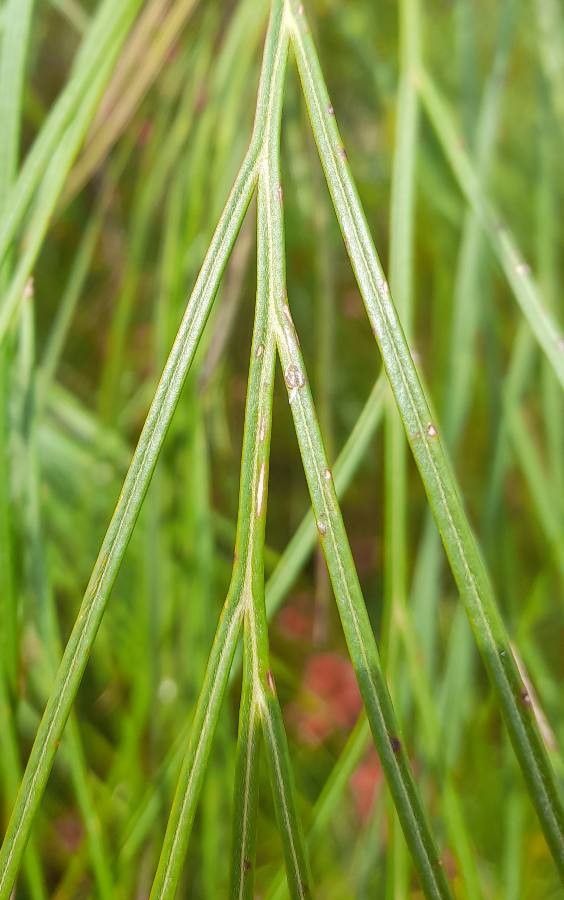
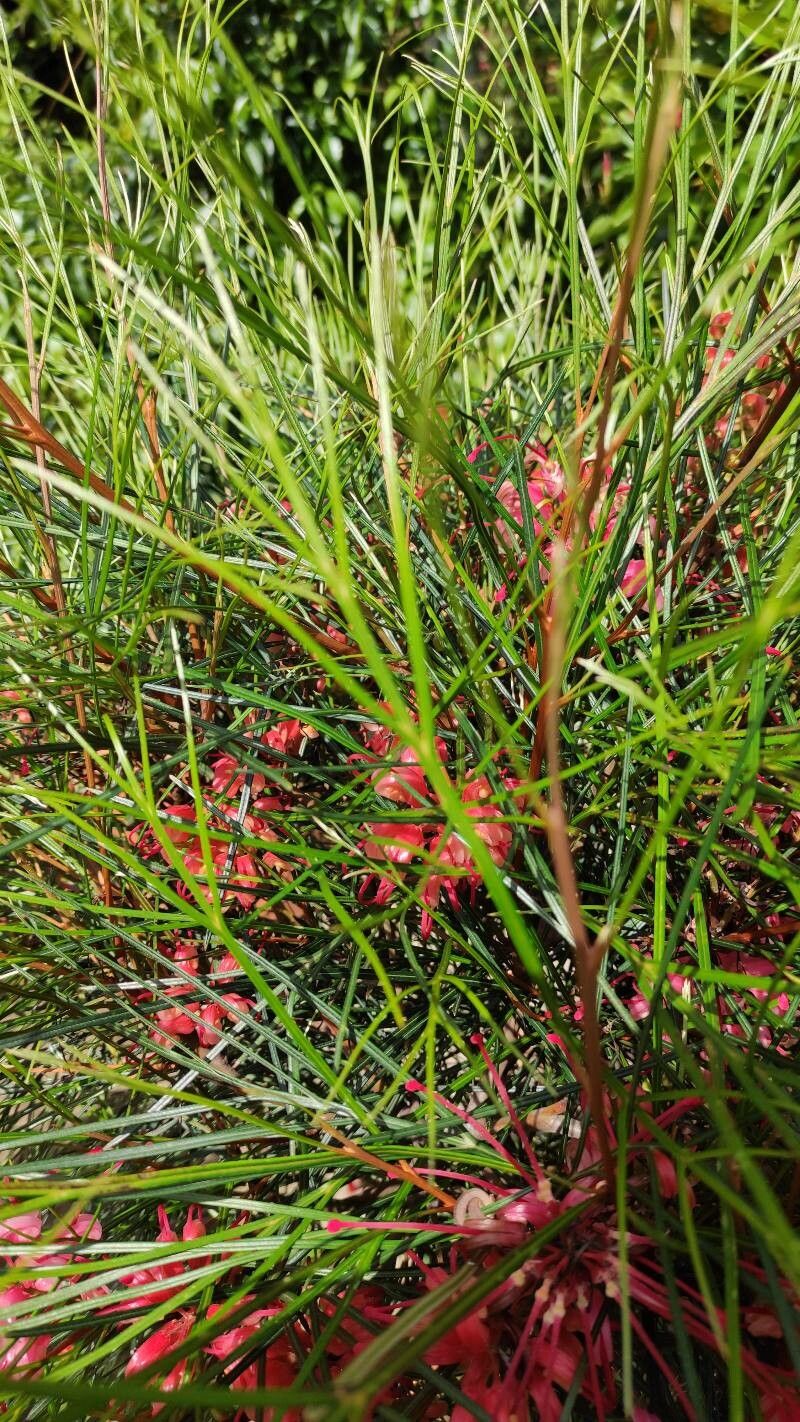
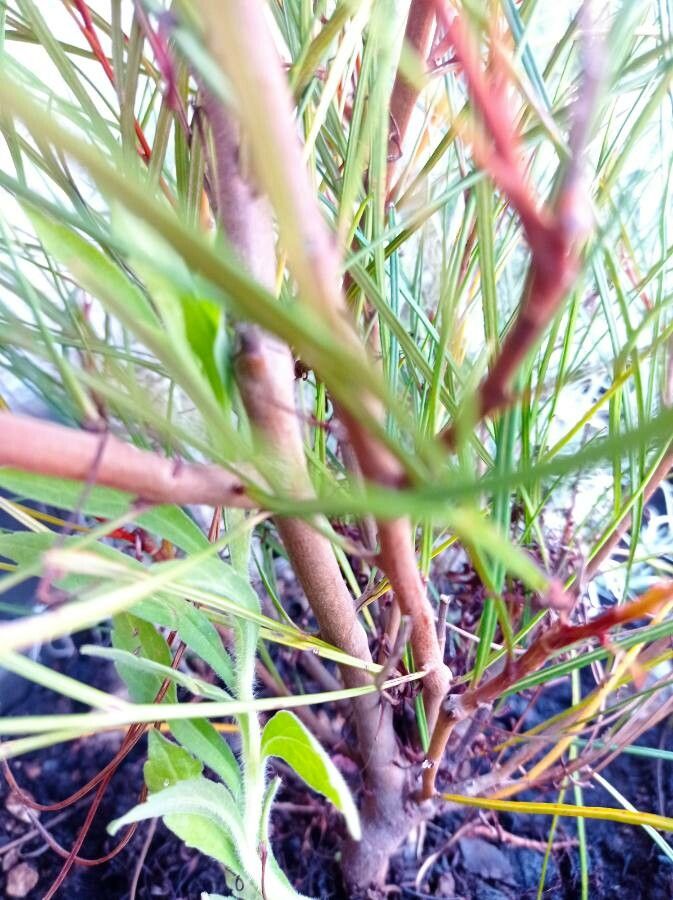
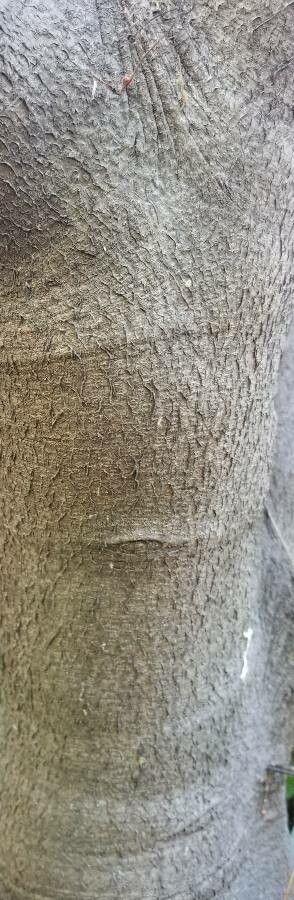
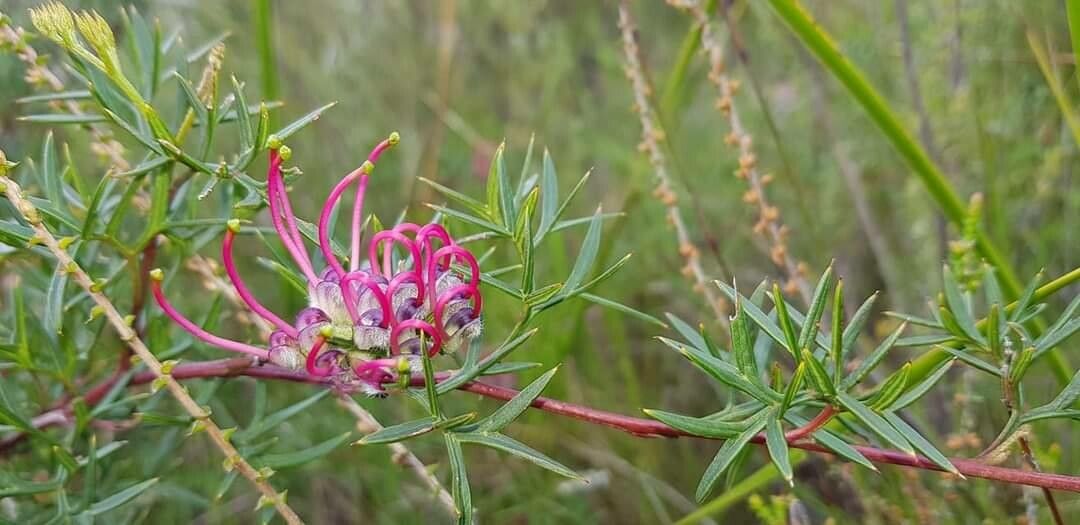
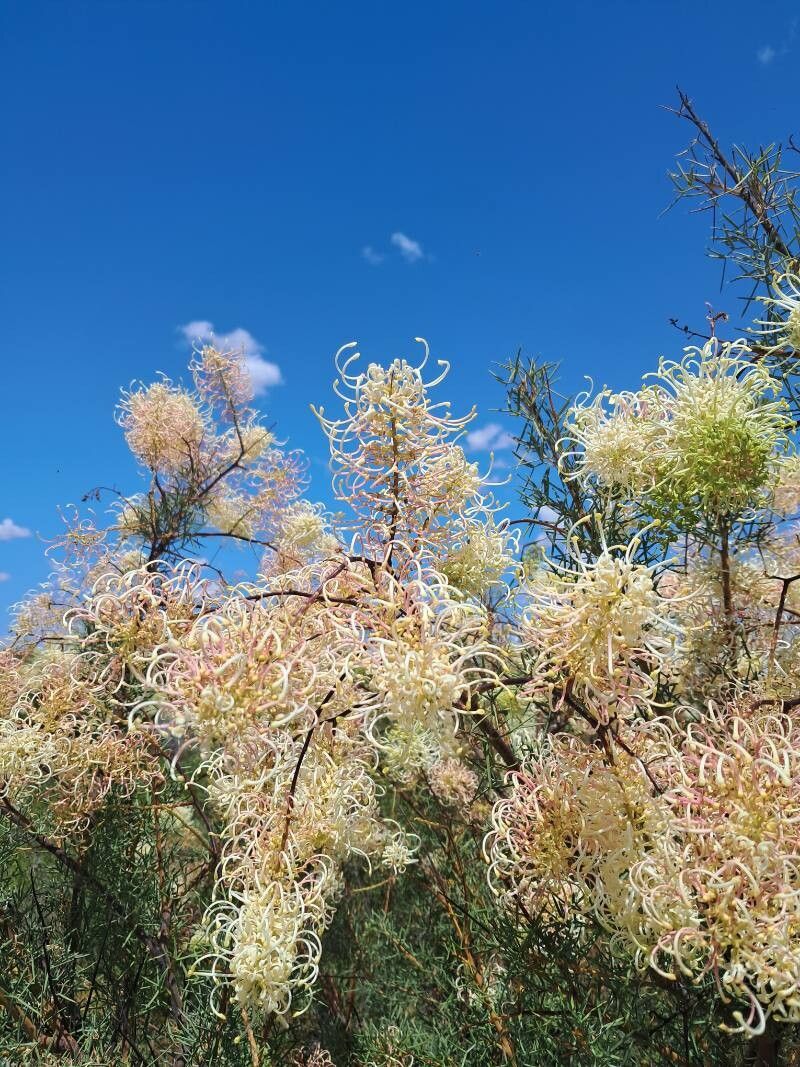
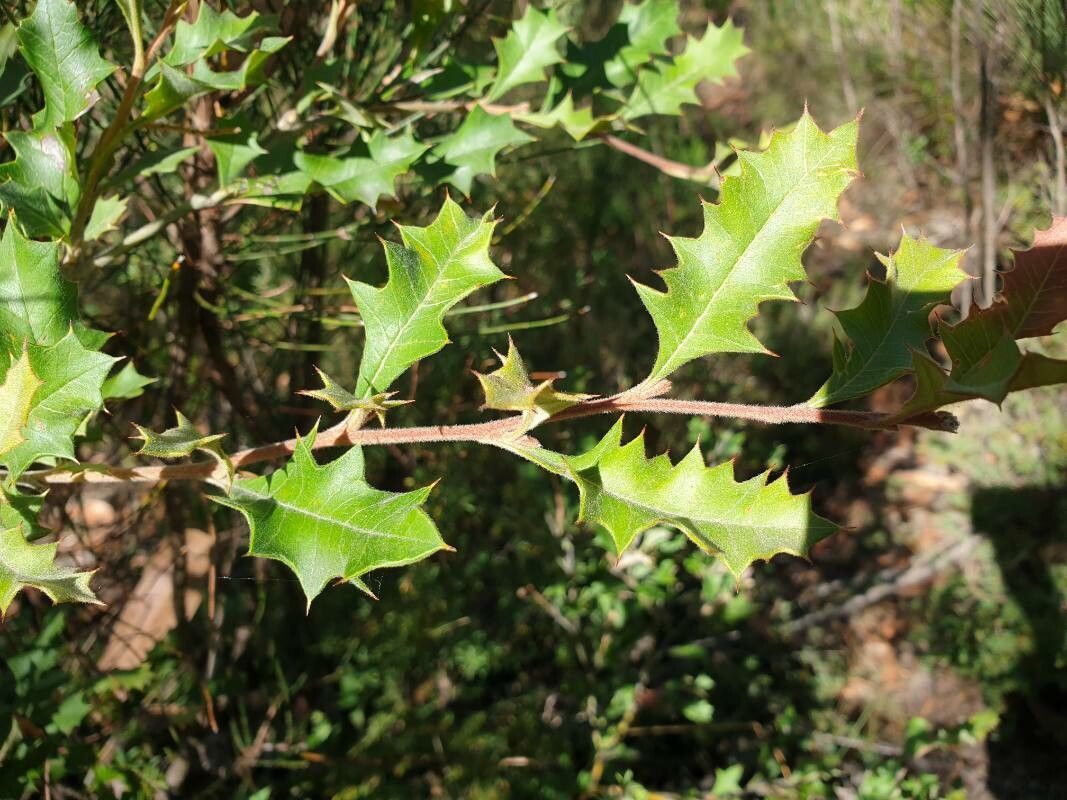
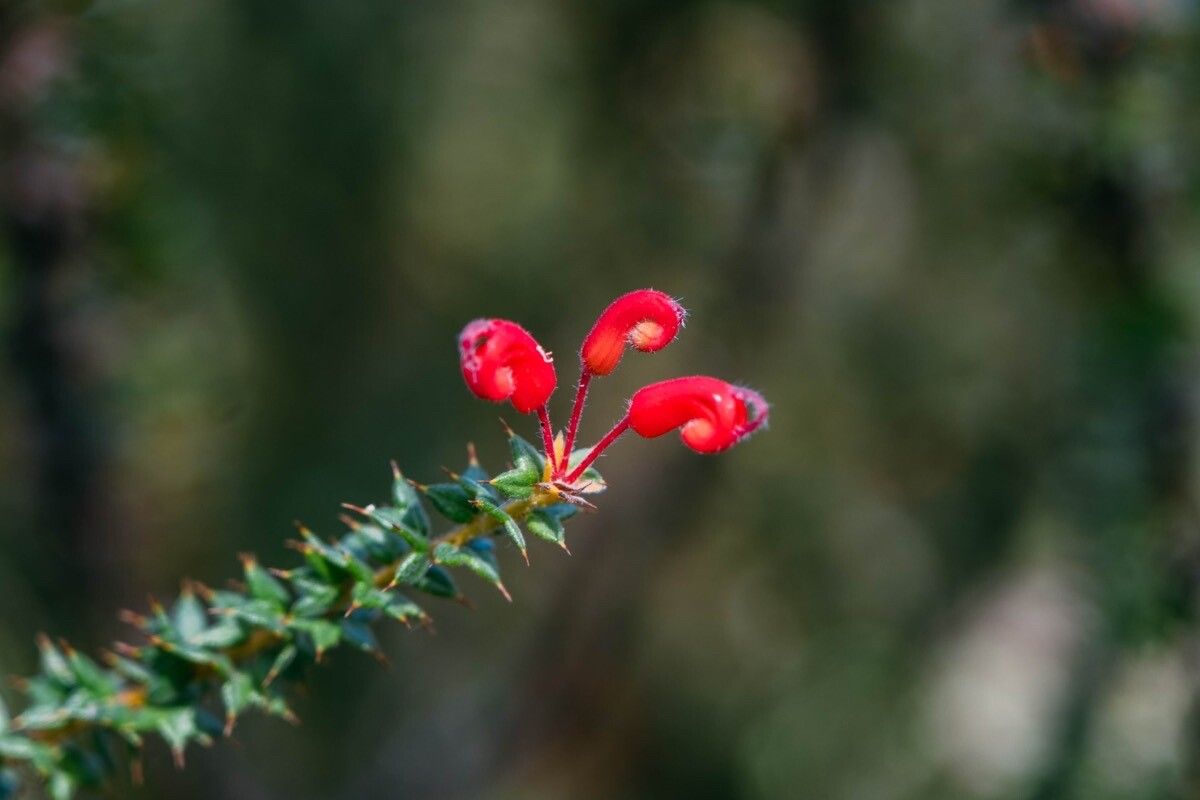
Grevillea johnsonii, a species of flowering plant in the Proteaceae family, is native to Western Australia. This shrub ranges from small to medium in size, capable of reaching up to 2 meters in height and 1.5 meters in width. Its leaves are narrow and lance-shaped, measuring up to 15 centimeters in length and 1 centimeter in width.
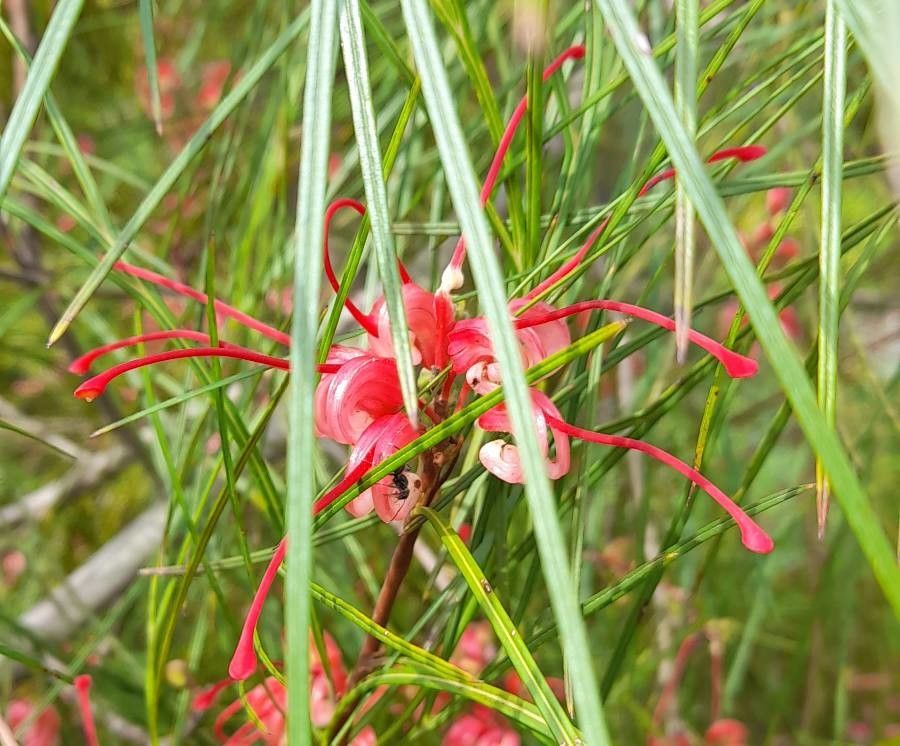
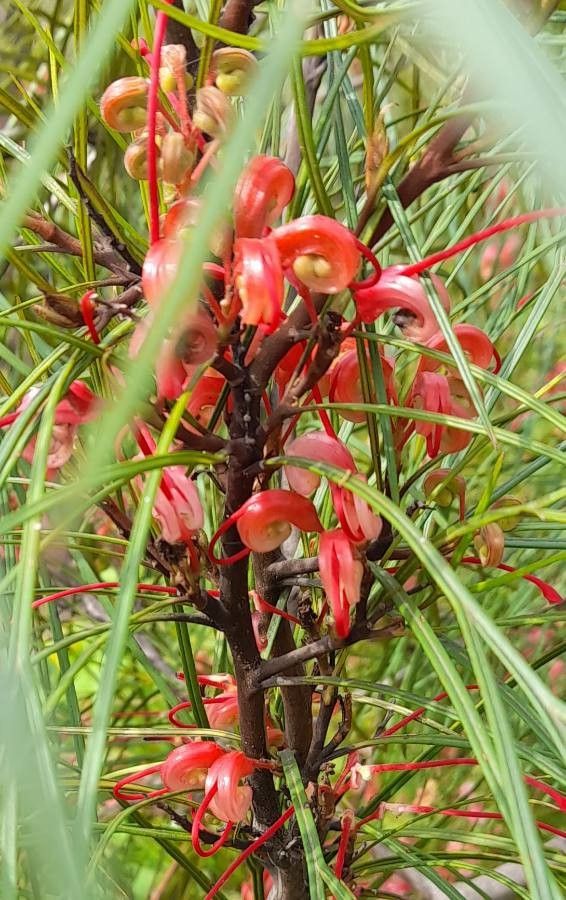
The flowers of Grevillea johnsonii are arranged in clusters at the ends of branches, with each cluster containing up to ten individual flowers. These tubular flowers feature long styles that extend from the end of the flower tube.
Blooming from late winter through spring (August-October), Grevillea johnsonii produces an abundance of bright pink or red flowers, which attract nectar-feeding birds such as honeyeaters.
This plant thrives in well-drained soils with full sun exposure, though it can tolerate some shade. While drought-tolerant once established, it benefits from occasional watering during dry periods.
Overall, Grevillea johnsonii is an attractive garden plant that provides year-round interest with its foliage and stunning floral display during its blooming season.
Johnsons spider flower is fairly resistant to disease and is generally unlikely to develop problems. Regarding care, this plant is fairly low-maintenance. Planted outdoors, it needs little watering, and larger specimens usually do not require pruning. Smaller plants, however, should be pruned after they finish blooming. Johnsons spider flower is appropriate for anyone with an outdoor area, such as a garden or deck, and does not demand extensive gardening experience.
How to keep Grevillea Johnsonii.
Light
Johnsons spider flower comes from open habitats, such as sunny meadows and forest margins, where it gets abundant light. It performs best in Full Sun but can also tolerate Partial Sun, adjusting well to different light conditions.
Water
Johnson's spider flower benefits greatly from additional watering, particularly in dry conditions, to achieve optimal growth and blooming. During the initial stages, water the plant twice a week for the first 2-3 weeks. Afterward, reduce watering to once a week for the next month, adjusting as needed depending on local weather conditions as the plant matures.
Temperature
Johnsons spider flower can tolerate a wide range of climate conditions, from very hot summers to very cold winters. Still, it has a preferred temperature range for healthy growth. If temperatures rise too much, the plant is susceptible to heat and humidity stress, which can lead to death. In areas where temperatures reach the lower end of its cold tolerance, it's necessary to use insulation to protect the plant.
Fertilizer
The timing of fertilization is critical for Johnsons spider flower. Apply fertilizer in early spring and continue once a month through early summer. Fertilizer helps produce attractive blooms and supplies energy during both dormant and active growth stages.
Pruning
To promote abundant blooms and new growth, it is best to prune Johnson's spider flower in the spring. Though this might temporarily reduce the number of flowers, it will ultimately encourage more blooms. Pruning during the warmer months can also help maintain the plant's desired shape or size.
Botanical profile.
- Plant Type
- Shrub
- Life Cycle
- Perennial
- Genus
- Grevillea
- Family
- Proteaceae
- Hardiness Zone
- 9-11
- Mature Height
- 2.13 m to 3.05 m
- Mature Spread
- 1.52 m to 2.44 m
- Leaf Color
- Green
- Leaf Type
- Evergreen
- Flower Color
- Red, Pink
- Flower Size
- 3.05 cm to 5.08 cm
- Bloom Time
- Fall, Early winter, Mid winter
- Planting Time
- Spring, Autumn
- Harvest Time
- Mid winter, Late winter, Early spring, Mid spring
Other names.