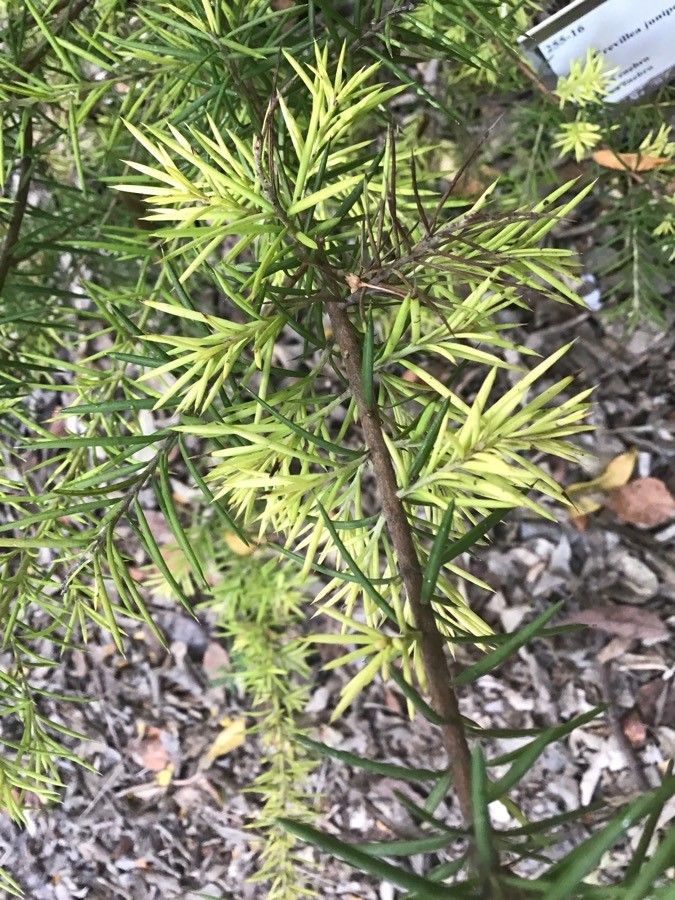
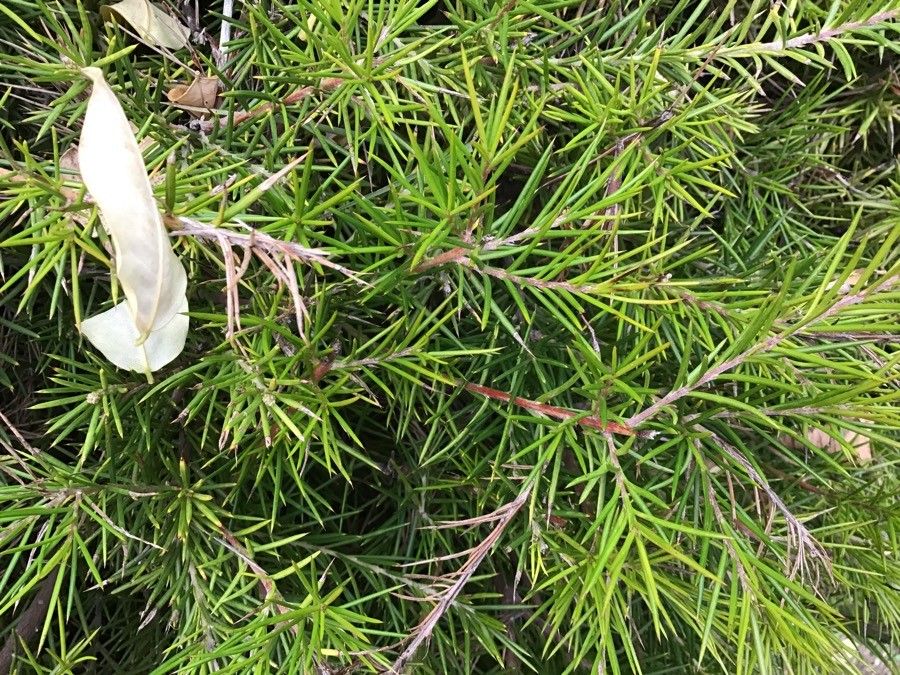
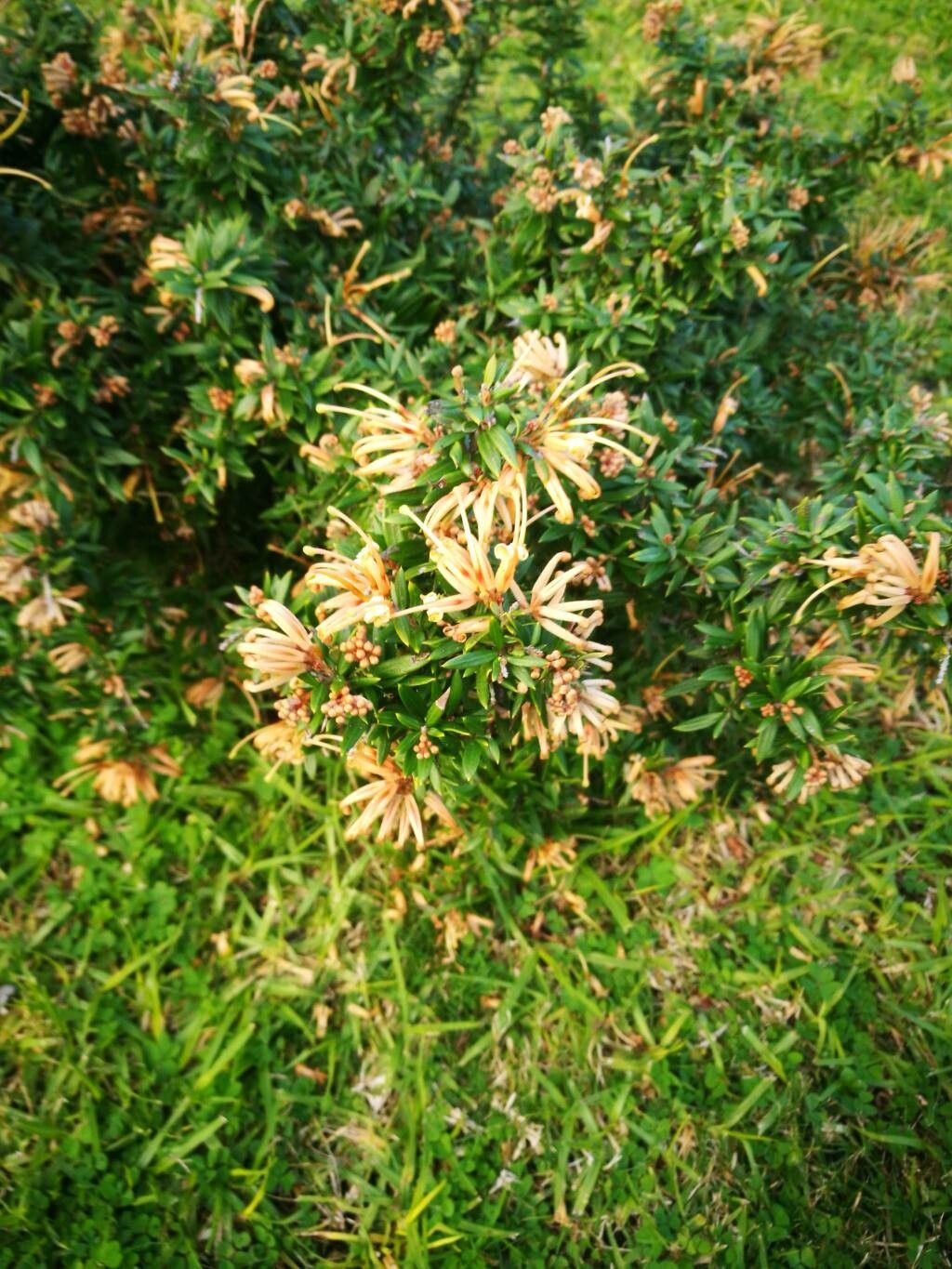
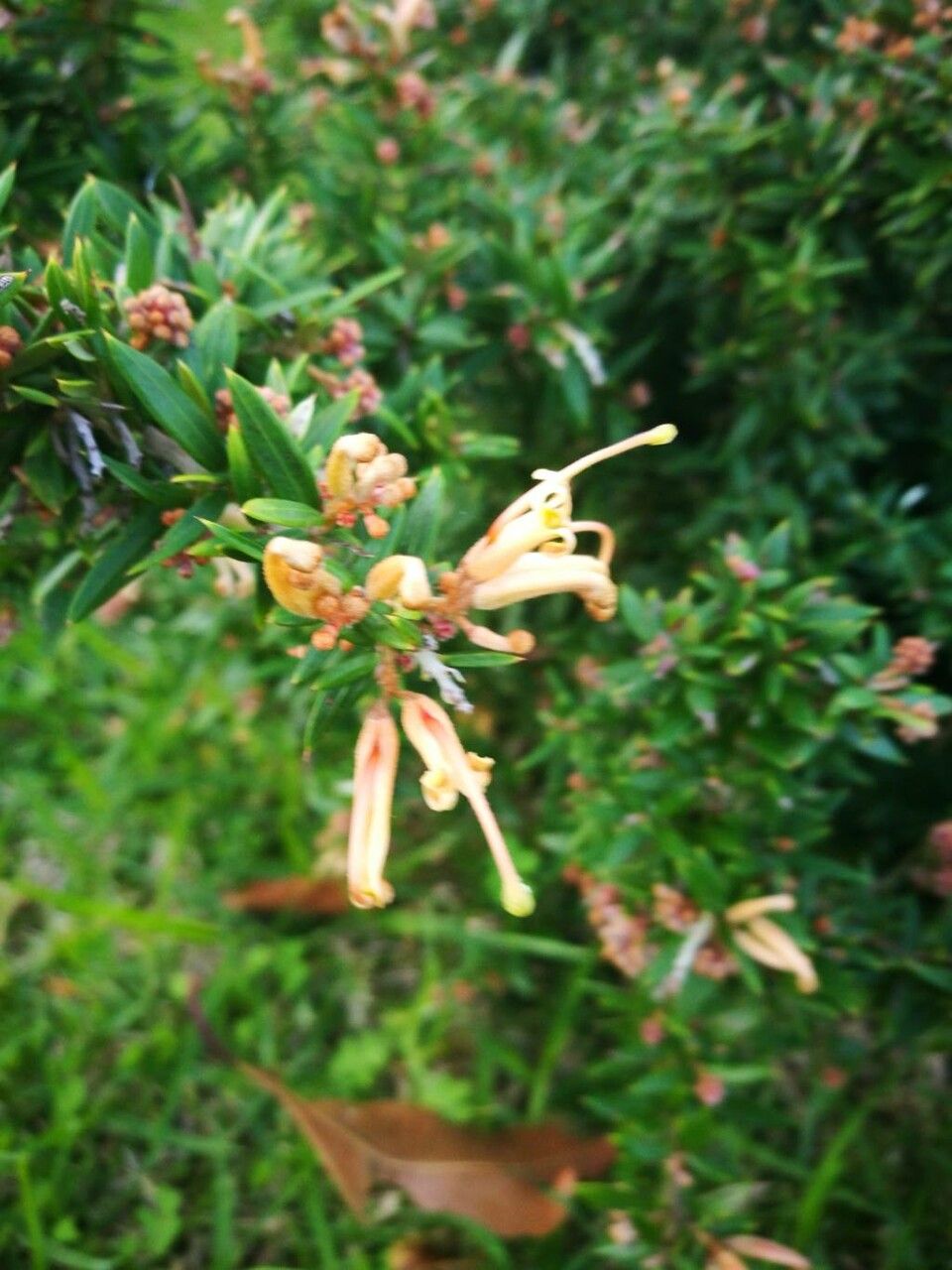
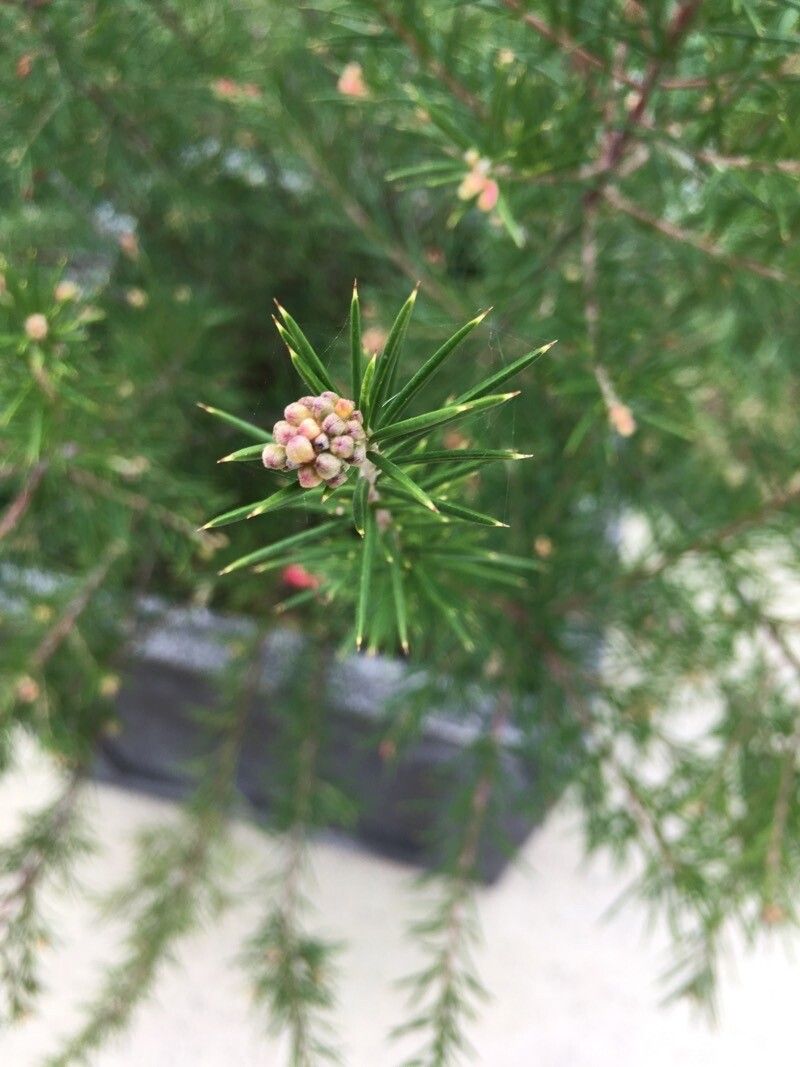
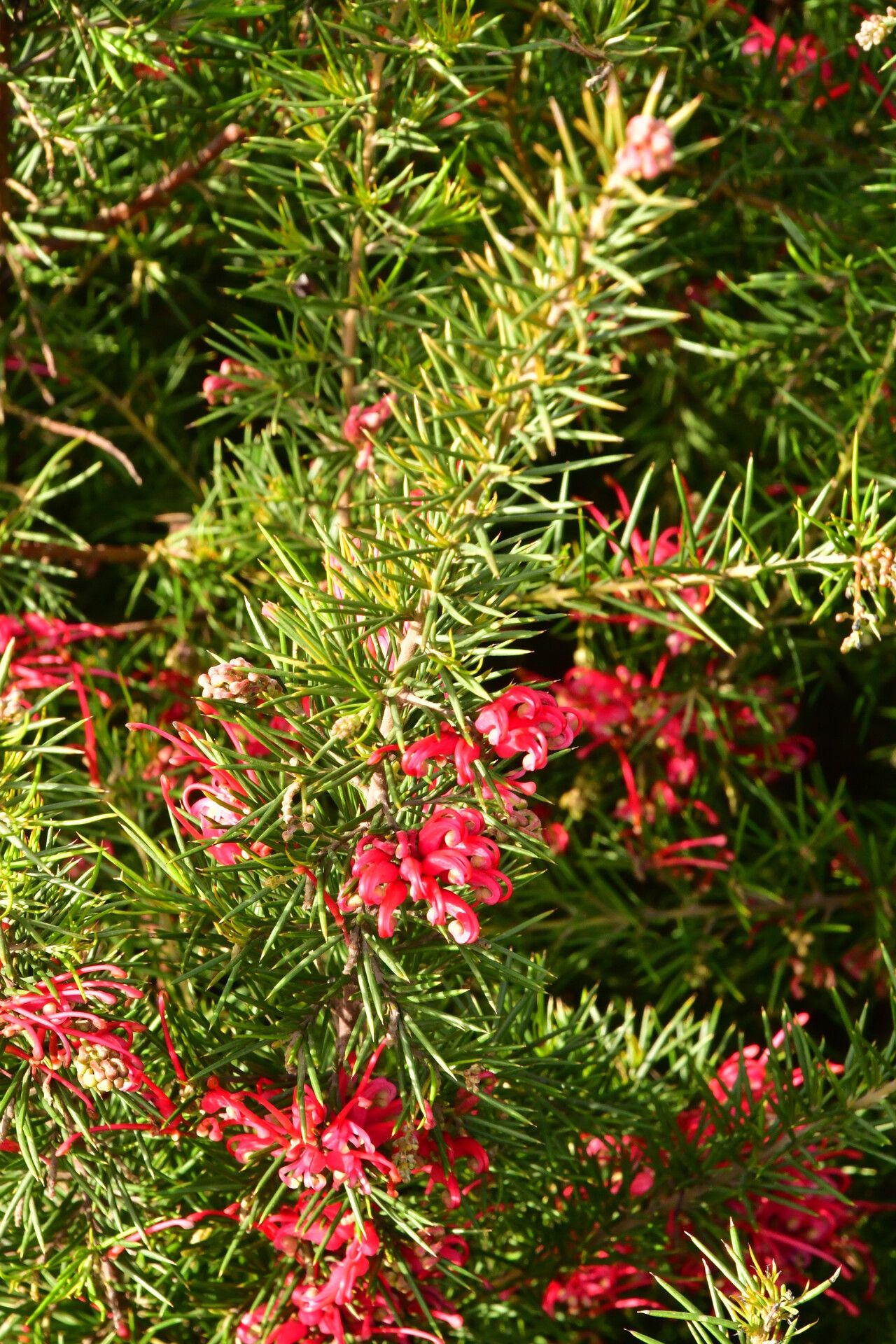
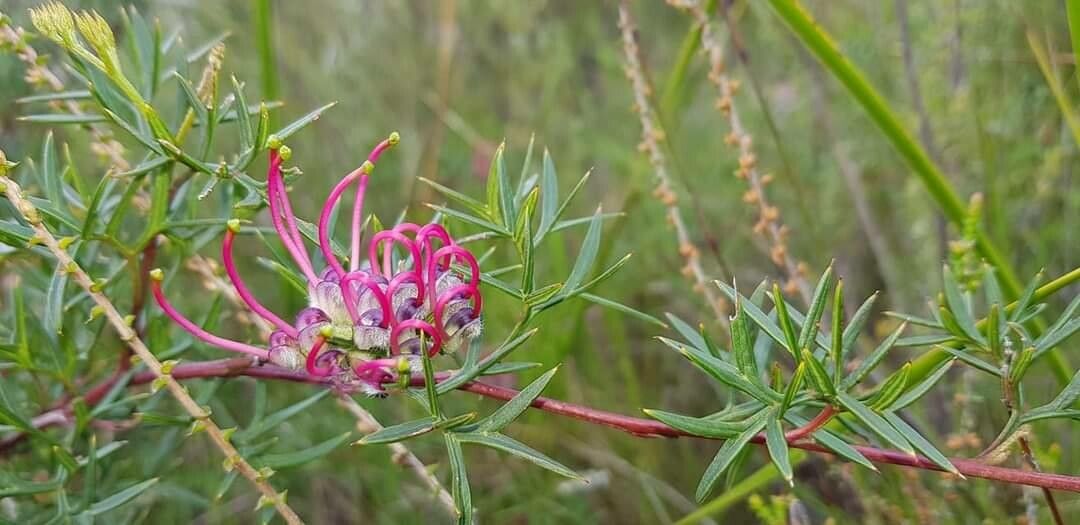
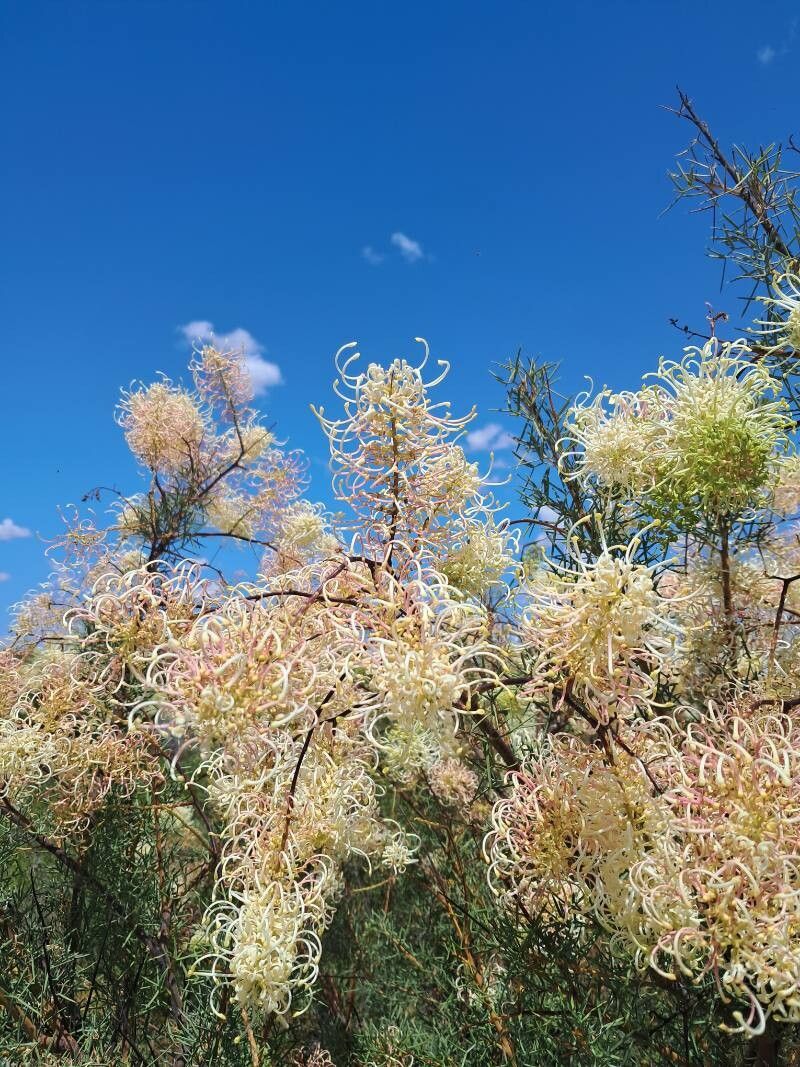
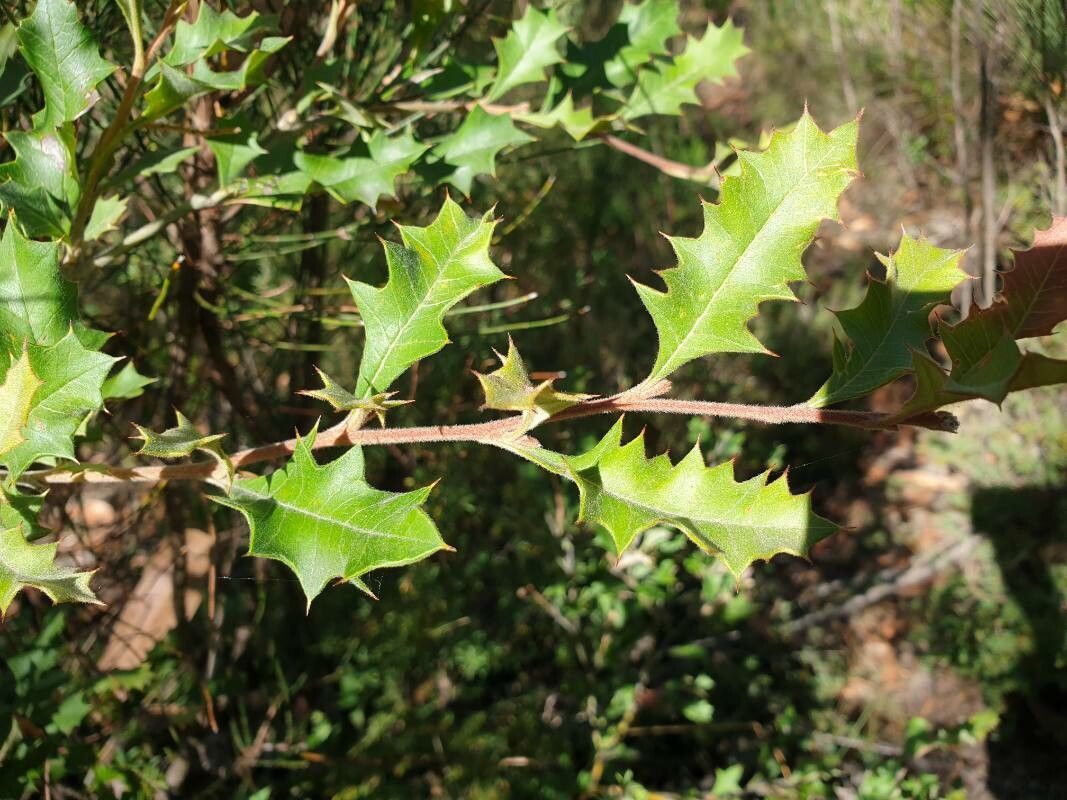
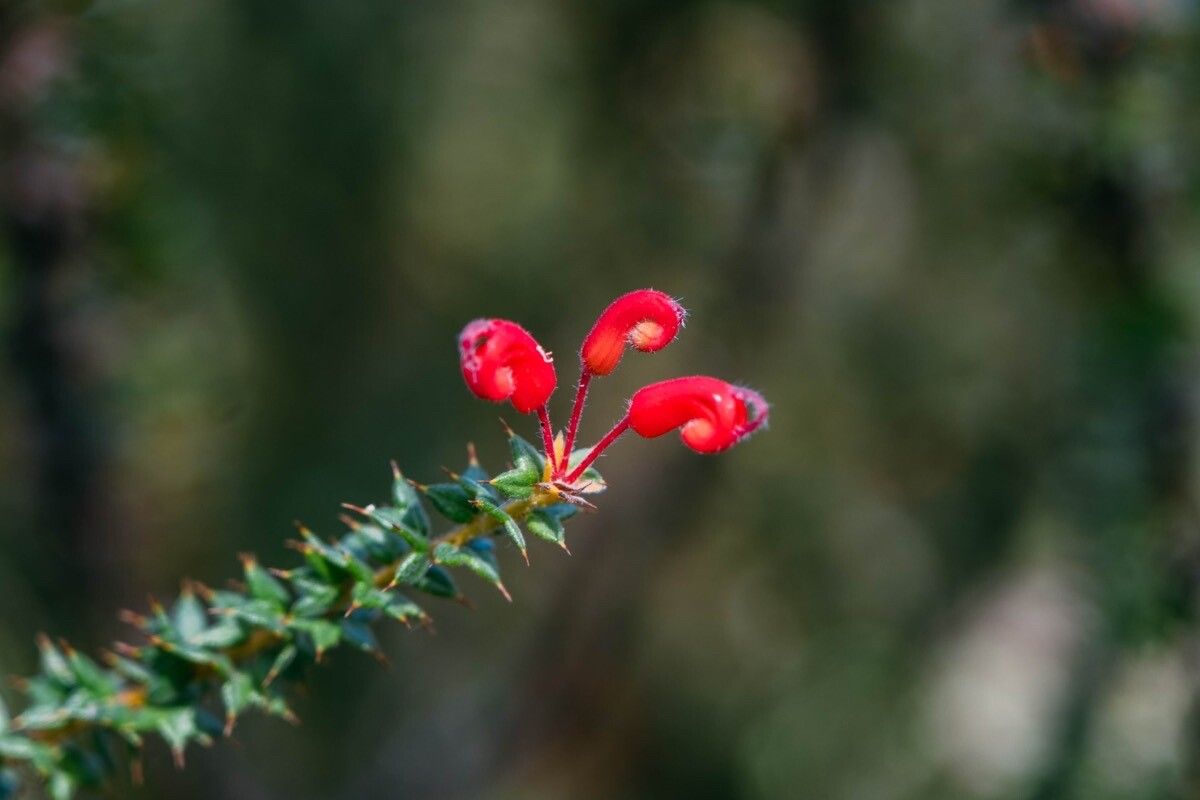
Grevillea juniperina, commonly known as juniper- or juniper-leaf grevillea or prickly spider-flower, is a plant of the family Proteaceae native to eastern New South Wales and southeastern Queensland in Australia. Scottish botanist Robert Brown described the species in 1810, and seven subspecies are recognised. One subspecies, G. j. juniperina, is restricted to Western Sydney and environs and is threatened by loss of habitat and housing development. A small, prickly-leaved shrub between 0.2–3 m (0.66–9.84 ft) high, G. juniperina generally grows on clay-based or alluvial soils in eucalypt woodland. The flower heads, known as inflorescences, appear from winter to early summer and are red, orange or yellow. Birds visit and pollinate the flowers. Grevillea juniperina plants are killed by bushfire, regenerating afterwards from seed. Grevillea juniperina adapts readily to cultivation and has been important in horticulture as it is the parent of many popular garden hybrids.
The prickly spider flower has strong disease resistance and is typically not susceptible to illnesses. In terms of care, this plant is fairly low-maintenance. When grown outdoors it needs only minimal watering, and larger specimens usually do not require pruning. Smaller plants, however, should be pruned after they finish blooming. The prickly spider flower is suitable for anyone with an outdoor area, such as a garden or deck, and does not demand extensive care experience.
How to keep Grevillea Juniperina.
Light
Prickly spider flower comes from open habitats, like sunny meadows and forest edges, that offer plenty of light. It performs best in Full Sun but can also tolerate Partial Sun, adapting well to different sunlight conditions.
Water
The prickly spider flower thrives in balanced water conditions and shows moderate drought tolerance. It typically requires watering every 1-2 weeks. This plant grows best in well-drained soil and is often cultivated outdoors, where it benefits from its robust nature and ability to retain moisture during dry spells.
Temperature
Prickly spider flower is quite adaptable to temperature, tolerating high heat and considerable temperature fluctuations. In hot weather, attention should be paid to watering and providing some shade to avoid sunburn. On the other hand, it has relatively poor cold tolerance: it can handle some cold, but very low temperatures can cause frost damage.
Fertilizer
The timing of fertilization is important for the Prickly spider flower. Apply fertilizer in early spring and continue monthly until early summer. Fertilizer promotes attractive blooms and supplies energy during both dormant and active growth periods.
Pruning
The prickly spider flower is a resilient shrub known for its spiky leaves and vibrant blossoms. To encourage growth and improve air circulation, lightly prune the plant from early to late winter, removing any dead wood and spent flowers. Be sure to use sharp, sterilized tools to prevent infections. Avoid heavy pruning to ensure the plant continues to bloom effectively.
Botanical profile.
- Plant Type
- Shrub
- Life Cycle
- Perennial
- Genus
- Grevillea
- Family
- Proteaceae
- Hardiness Zone
- 8-11
- Mature Height
- 1.52 m
- Mature Spread
- 3.05 m
- Leaf Color
- Dark Green
- Leaf Type
- Evergreen
- Flower Size
- 2.03 cm to 3.05 cm
- Bloom Time
- All year round
- Planting Time
- Spring, Summer, Autumn
- Harvest Time
- Late spring, Summer, Fall, Early winter
Other names.
Reader questions.
What are the sunlight requirements for the Prickly spider flower (Grevillea juniperina)?
The Prickly spider flower, or Grevillea juniperina, thrives under different sunlight conditions depending on its needs. For full sun exposure, it requires above 6 hours of sunlight, which is essential for its growth and bloom. On the other hand, partial sun, involving about 3-6 hours of sunlight, is also adequate for the plant's health. It's important to observe the way sunlight moves through your garden throughout the day. By understanding the patterns of light and shade, you can choose the ideal spots for your Prickly spider flower, ensuring they receive the appropriate balance of sunlight to flourish.
What is the Prickly spider flower?
The Prickly spider flower, known botanically as Grevillea juniperina, is a plant species distinguished by its unique characteristics. Unfortunately, the provided data does not include specific details on its essentials, content, or additional information such as symptoms.