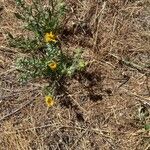
Grindelia squarrosa
Curly-cup gumweed · Gumweed · Grindelia · Curlycup Gumweed · Curlytop Gumweed
Description
Source: leafsnapGrindelia squarrosa, also known as a curly-top gumweed or curlycup gumweed, is a small North American biennial or short-lived perennial plant.
Care Guide
💧 Water
Curlycup gumweed is well-suited for arid conditions, displaying strong drought tolerance. It thrives with a balance of moderate watering about once a week, interspersed with dry periods. Typically grown outdoors, this plant can endure a wide range of temperatures while efficiently managing its internal moisture.
How should I water my Curlycup gumweed?
To properly water the Curlycup gumweed, it is best to use filtered water at room temperature. Tap water may contain harmful particles that can affect the plant's health. Since the Curlycup gumweed is accustomed to warm environments, it is important to avoid using cold water as it can be a shock to the plant. Additionally, overhead watering should be avoided to prevent foliage complications. Instead, it is recommended to apply filtered room temperature water directly to the soil until it is fully soaked. This helps to moisten the roots and aids in their spread through the soil to collect essential nutrients.
What should I do if I give my Curlycup gumweed too much or too little water?
Overwatering is a more common problem for Curlycup gumweed, causing wilting, yellowing leaves, and potential diseases like root rot, mold, and mildew. Underwatering is less likely, but can cause brittle, brown leaves. It's important to spot overwatering early to prevent irreversible damage. If you notice signs of overwatering, reduce watering and check soil drainage. If underwatering is the issue, simply increase watering until the signs improve.
How frequently should I water my Curlycup gumweed?
If your Curlycup gumweed is in a pot, the most precise way to determine if it needs water is by checking the soil with your finger. When the top two to three inches of soil are dry, it's time to water. If you're growing the plant outdoors in the ground, you can use the same method. Once the first few inches of soil have dried out, it's time to water. Usually, during spring and early fall, you'll need to water this plant about once a week. But in extremely hot weather, you may need to water it twice or more per week. However, it's worth noting that mature, well-established Curlycup gumweed can handle drought quite well.
How much water should I give my Curlycup gumweed?
When watering your Curlycup gumweed, don't be afraid to give it a generous amount. Make sure the first two to three inches of soil are dry before watering. It's important to thoroughly soak the soil, ensuring that the water reaches the bottom of the pot. If you don't see excess water draining out of the pot, you may not have watered enough. However, be careful not to let water accumulate inside the soil, as this can harm the plant. On the other hand, if water doesn't drain properly, it could indicate poorly draining soils, which are unhealthy for the plant. If the plant is outdoors, 1 inch of rain per week is sufficient.
How do I water my Curlycup gumweed as it grows?
The water needs of the Curlycup gumweed vary depending on its growth stages. When the plant is young or recently transplanted, it requires more water to support the development of new roots for future growth. As the plant matures, it needs less water. Additionally, during the bloom period, the Curlycup gumweed may require additional water to support flower development.
☀️ Light Full sun
Curlycup gumweed grows best when exposed to abundant sunlight throughout the day. It can tolerate lower light levels, but that may slow its growth and development because it originates from very sunny habitats. Conversely, excessive light does not harm the plant.
What are the sunlight requirements for Curlycup Gumweed?
Curlycup Gumweed (Grindelia squarrosa) thrives best in locations that are bathed extensively in sunlight throughout the day, requiring more than 6 hours of sunlight classified as full sun. It can also grow in partial sun, which involves about 3-6 hours of sunlight. However, receiving less sunlight may impede its growth and development, although overexposure to light does not negatively affect the plant. It's crucial to watch how sunlight moves through your garden, choosing spots that provide a perfect balance of light and shade to ensure the happiness of your plants.
Can artificial lighting be used for Curlycup Gumweed grown indoors, and how?
Yes, artificial lighting can be a vital solution for Curlycup Gumweed grown indoors, especially when natural sunlight is insufficient. Choosing the right type of artificial light is crucial, with LED lights being a popular choice because they can provide specific wavelengths of light needed by plants. For optimal growth under artificial lighting, full sun plants require 30-50W/sq ft, partial sun plants need 20-30W/sq ft, and full shade plants need 10-20W/sq ft. The artificial light source should be placed 12-36 inches above the plant to mimic natural sunlight, and the duration should mimic natural daylight hours, with most plants needing 8-12 hours of light per day.
What are the symptoms of light deficiency in Curlycup Gumweed?
When Curlycup Gumweed doesn't receive sufficient light, especially indoors, it may show symptoms such as small leaves, leggy or sparse growth, faster leaf drop, slower or no new growth, and lighter-colored new leaves. These symptoms suggest the plant is struggling with light deficiency and is unable to perform photosynthesis effectively. Inadequate sunlight leads to these growth issues, indicating a need to adjust the plant's lighting exposure.
How to address sunlight deficiency for Curlycup Gumweed?
To address sunlight deficiency for Curlycup Gumweed, gradually moving the plant to a sunnier location can help, aiming for at least 6 hours of direct sunlight daily. For indoor plants, consider using a south-facing window and keeping curtains open during the day or using artificial light, such as desk or ceiling lamps for at least 8 hours daily, or investing in professional plant grow lights. For outdoor plants, moving them gradually to sunnier spots and avoiding sudden changes in light intensity is crucial. If sunlight is blocked by obstacles, pruning or relocating the plant to an area with more sunlight and good drainage may be necessary. It's important to note that parts of the plant affected by previous insufficient sunlight might not recover fully, but new growth should be healthy with increased light exposure.
🌡️ Temperature 0–32.2°C
Curlycup gumweed is adapted to a temperate climate and prefers temperatures between 68 to 95 °F (20 to 35 ℃). It naturally thrives in moderate environments. During periods of extreme heat or cold, careful temperature management is recommended for optimal growth.
What is the ideal temperature range for Curlycup gumweed?
Curlycup gumweed thrives in a temperate climate with the ideal temperature range being between 68 to 95 °F (20 to 35 °C). This plant prefers moderate environments for optimal growth. During the extreme hot or cold seasons, it's recommended to manage the temperature thoughtfully to maintain these ideal conditions.
Does Curlycup gumweed require frost protection measures during winter?
Curlycup gumweed is highly cold-tolerant and doesn't require additional frost protection during winter. However, to prepare for the first freeze in autumn, it's advised to water the plant generously. This ensures that the soil remains moist and enters a frozen state more healthily, preventing drought and water scarcity for the plant during the colder months and early spring.
How should you care for Curlycup gumweed if the winter temperature drops too low?
Despite its high cold tolerance, if the winter temperature drops below the growth limit (not specified in the data provided), there may be a noticeable decrease in sprouting or even a lack of sprouting during springtime. As a solution, in spring, it's recommended to remove any parts of the plant that have failed to sprout.
What should you do if Curlycup gumweed is exposed to temperatures higher than its tolerance?
Curlycup gumweed is not tolerant to high temperatures. If exposed to temperatures exceeding its maximum tolerance (exact value not provided in the data), its growth will stop, and it becomes more susceptible to rot. To combat this, trim away the sunburned and dried-up parts, move the plant to a shaded location away from midday and afternoon sun, or use a shade cloth to provide shade. Additionally, watering the plant in the morning and evening helps keep the soil moist and supports the plant's health.
💨 Humidity
🪴 Soil 6-7
🌱 Fertilizer
Curlycup gumweed are considered heavy feeders with regard to nutrients. They need frequent, low doses of nitrogen and potassium fertilizers and periodic applications of phosphorus, micronutrients, sulfur, and magnesium to maintain good growth and bright coloration. Continuous fertilization throughout the growing season is needed to prevent deficiency symptoms and maintain optimal growth.
🪴 Pot & Repot
✂️ Pruning
🌿 Propagating
🐛 Diseases & pets
☠️ Toxicity
Characteristics
- Plant Type
- Herb
- Life Cycle
- Biennial, Perennial, Annual
- Genus
- Grindelia
- Family
- Asteraceae
- Hardiness Zone
- 3-7
- Mature Height
- 15 cm to 91 cm
- Mature Spread
- 61 cm
- Leaf Color
- Green
- Leaf Type
- Deciduous
- Flower Color
- Yellow
- Flower Size
- 2.54 cm
- Bloom Time
- Early summer, Mid summer
- Planting Time
- Autumn
- Harvest Time
- Mid summer
- Native Area
- Mexico