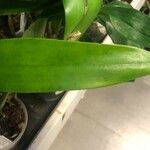
Guarianthe aurantiaca
Orange cattleya
Description
Source: leafsnapGuarianthe aurantiaca, commonly known as the Orange Guarianthe or the Orange Cattleya, is a species of orchid native to Central America. It is a popular ornamental plant because of its vibrant orange flowers that bloom in clusters on tall stems. These flowers have a sweet fragrance and can last for several weeks. The plant features pseudobulbs, which are swollen stems that store water and nutrients. Its leaves are long, narrow, and have pointed tips. Guarianthe aurantiaca thrives in bright, indirect light and moderate humidity levels. In its natural habitat, this orchid grows on trees or rocks in moist forests at elevations of up to 1,500 meters above sea level. It can be propagated by dividing the pseudobulbs or by seed. Guarianthe aurantiaca has been used in traditional medicine to treat ailments such as fever and respiratory problems. However, it is important to note that consuming any part of this plant can be toxic if ingested in large quantities. Overall, Guarianthe aurantiaca is an attractive orchid species with striking orange blooms, making it a popular choice among gardeners and collectors.
Care Guide
💧 Water Every 7 days
The orange Guarianthe thrives in high humidity and should be watered regularly, ideally twice a week. As an epiphytic orchid, it needs good air circulation around its roots. To prevent waterlogging and root rot, ensure that containers have proper drainage.
☀️ Light Full sun
Orange guarinanthe needs abundant sunlight to grow vigorously and flower well. In its native habitat it typically receives direct sun for most of the day. It can, however, tolerate somewhat reduced light. Excessive shade may cause weak growth and poor flowering, while too much sun can scorch the plant.
What are the sunlight requirements for Orange guarinanthe?
Orange guarinanthe requires specific sunlight conditions to thrive. For robust growth and abundant blooms, it's essential that the plant receives plenty of solar exposure. In its natural habitat, Orange guarinanthe is accustomed to unobstructed sunlight for most of the day. It can grow in conditions with slightly less sunlight, but excessive shading might lead to poor flowering and growth. Conversely, too much direct sunlight might scorch the plant. The ideal sunlight conditions are categorized as full sun, with above 6 hours of sunlight, and partial sun, about 3-6 hours of sunlight daily. It's recommended to watch how sunlight moves through your garden to find the perfect balance of light and shade for your plants.
How can artificial lighting be used for Orange guarinanthe?
In situations where natural sunlight is insufficient, especially during winter or in less sunny spaces, artificial lighting becomes essential for the health and growth of indoor Orange guarinanthe. Adequate lighting promotes faster and healthier plant development. When choosing artificial lights, LED lights are favored for their ability to provide specific wavelengths needed by plants. Full sun plants require 30-50W/sq ft, partial sun plants 20-30W/sq ft, and full shade plants 10-20W/sq ft of artificial light. The light source should be placed 12-36 inches above the plant to mimic natural sunlight effectively. Moreover, the duration should mirror the length of natural daylight hours, typically 8-12 hours of light per day for most plant species.
What are the symptoms of light deficiency in Orange guarinanthe?
Light deficiency in Orange guarinanthe can lead to various symptoms, indicating the plant is not receiving adequate sunlight. These symptoms include smaller new leaves compared to mature ones, leggy or sparse growth, which results in a thin appearance as the spaces between leaves or stems elongate, faster leaf drop as the plant conserves resources, slower or halted new growth as the plant enters a survival mode, lighter-colored new leaves indicating a lack of chlorophyll, and chlorosis where leaves turn yellow due to chlorophyll breakdown. Additional symptoms under excessive sunlight include sunscald, leaf curling as a defense mechanism, wilting due to increased water loss, and leaf scorching characterized by brown, dry edges on leaves.
How can lighting conditions be improved for Orange guarinanthe?
Improving lighting conditions for Orange guarinanthe involves both indoor and outdoor strategies. Indoors, gradually moving the plant to a sunnier location each week until it receives at least 6 hours of direct sunlight daily is beneficial. Use a south-facing window and keep curtains open during the daylight. If the plant is large or not easily movable, consider using artificial light, such as desk or ceiling lamps for at least 8 hours daily, or invest in professional plant grow lights. Outdoors, it's crucial to gradually acclimate your plants to sunnier spots to avoid sunburn, making sure there's no sudden change in light intensity. For ground plants, minimize obstructions like overhanging trees by pruning and transplant smaller plants during their dormant period to a spot with ample sunlight. Bear in mind that parts affected by insufficient sunlight may not recover, but new growth will be healthy following improved light exposure.
🌡️ Temperature 20–41.1°C
Orange guarinanthe thrives in temperatures between 68 and 106 °F (20 and 41 ℃). The plant favors warmer climates, reflecting its tropical origins. If temperatures fall below this range, consider a warming lamp or a greenhouse environment.
What is the native temperature range for Orange guarinanthe?
Orange guarinanthe, known botanically as Guarianthe aurantiaca, thrives in temperatures ranging from 68 to 106°F (20 to 41°C). Originating from warmer, tropical climates, it requires conditions that mimic its native environment. If temperatures fall below this range, adopting measures like using a warming lamp or setting up a greenhouse is advisable to keep the plant healthy.
How should Orange guarinanthe be cared for during winter?
In winter, it's crucial to ensure that Orange guarinanthe is kept in conditions that prevent cold stress, as it is a tropical plant. If the temperature drops below 5°C, the plant should be brought indoors to maintain a minimum temperature above 20°C. Placing it near a south-facing window affords it ample sunlight, contributing to its well-being. Moreover, to counteract indoor heating's drying effects, regularly misting the plant or using a humidifier to maintain appropriate humidity levels is highly recommended. For those cultivating it outdoors, providing a sheltered location that still receives sunlight, a temporary greenhouse, or wrapping with protective materials can offer necessary protection during colder temperatures.
What are the symptoms and solutions for Orange guarinanthe when exposed to low temperatures?
Orange guarinanthe displays a clear intolerance to low temperatures, thriving best above 20°C and requiring conditions to be kept above 5°C during winter. Exposure to temperatures below 1°C results in symptoms such as extensive water-soaked necrosis, wilting, and drooping of leaves. To address these issues, affected areas should be trimmed off, and the plant should be moved to a warm, indoor location. Placing the plant near a south-facing window enhances sunlight exposure, crucial for its recovery and growth. It's also important to avoid placing the plant near heaters or air conditioning vents to prevent the air around it from becoming excessively dry.
How does high temperature affect Orange guarinanthe and what are the solutions?
Orange guarinanthe should ideally be kept in conditions not exceeding 41°C during the summer. Temperatures above 45°C can halt its growth, cause wilting of leaves, increase susceptibility to root rot, and lead to sunburn if the plant is directly exposed to sunlight. To mitigate these issues, trim the sunburned and dried parts of the plant. Relocate the plant to a cooler location that provides shade during the intense midday and afternoon heat. Additionally, watering the plant in the morning and evening helps to maintain both the plant’s and the surrounding environment's moisture levels, supporting the plant's overall health in high temperatures.
💨 Humidity
🪴 Soil 5-6
🌱 Fertilizer
Adequate fertilization is essential for the health and appearance of the Orange guarinanthe. Fertilize the Orange guarinanthe in summer, repeating the application monthly throughout the season. Nutrients fuel growth and sustain the plant's parts. Fertilization enhances the Orange guarinanthe's flower display, ensuring the best blooms.
🪴 Pot & Repot
When repotting Orange guarinanthe, select a slightly larger pot with good drainage, preferably a clear orchid pot. Use a well-draining, orchid-specific mix that contains bark or moss. Carefully clean the roots and trim any that are dead or rotting. Repot after flowering, typically in spring or fall, water thoroughly, and place in bright, indirect light. Once repotted, avoid disturbing the roots.
✂️ Pruning
To enhance the health and blooming of orange guarinanthe, prune them from late winter to early spring. Concentrate on removing any dead or damaged growth to improve airflow. Lightly shape the plant, but be careful to avoid making excessive cuts, which could stress the plant. This practice not only promotes a tidy appearance but also maximizes the aesthetic benefits.
🌿 Propagating
🐛 Diseases & pets
☠️ Toxicity
Characteristics
- Plant Type
- Herb
- Life Cycle
- Perennial
- Genus
- Guarianthe
- Family
- Orchidaceae
- Hardiness Zone
- 10-13
- Mature Height
- 37 cm
- Mature Spread
- 46 cm to 61 cm
- Leaf Color
- Green
- Leaf Type
- Evergreen
- Flower Color
- Orange
- Flower Size
- 2.54 cm to 3.81 cm
- Bloom Time
- Late winter, Early spring, Mid spring
- Planting Time
- Spring, Summer, Autumn
- Harvest Time
- Late spring, Early summer, Mid summer
- Native Area
- Honduras, Mexico, Guatemala, El Salvador, Nicaragua, Costa Rica