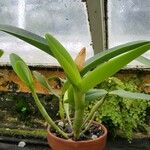
Guarianthe skinneri
Purple Guaria · Bob the orkid
Description
Source: leafsnapGuarianthe skinneri, commonly known as Skinner's orchid or the Christmas orchid, is an epiphytic orchid species native to Central America. This plant is highly valued as an ornamental due to its beautiful flowers, which bloom in shades of pink, purple, and white. The large, showy blossoms feature a distinctive lip that resembles a butterfly in flight. Typically, Guarianthe skinneri blooms from late fall through early winter. This orchid thrives in bright but indirect light and prefers high humidity levels. It can be cultivated in pots with well-draining soil or mounted on bark or other materials to improve air circulation around its roots. During the growing season, Guarianthe skinneri requires regular watering, but the soil should be allowed to dry out slightly between waterings. In its natural habitat, this species grows on trees at elevations of 500 to 1,500 meters above sea level in humid forests from Mexico to Panama. Unfortunately, due to habitat loss and over-collection for ornamental purposes, Guarianthe skinneri has become endangered in some regions. Overall, Guarianthe skinneri is an exquisite plant that demands some care but richly rewards growers with its stunning winter blooms when few other plants are flowering.
Care Guide
💧 Water Every 7 days
Skinner's Guarianthe flourishes in humid, tropical rainforest environments and benefits from frequent watering, ideally twice a week. As an evergreen plant often cultivated indoors, it needs consistent humidity to maintain its vibrant foliage. Therefore, it is not suitable for arid conditions.
What should I do if I give my Skinner's Guarianthe plant too much or too little water?
Skinner's Guarianthe can suffer from both overwatering and underwatering, but the symptoms can be easily mistaken for each other. For overwatering, look for limp and wrinkled leaves, yellowing or decay, and a lack of thriving. Sometimes, mistaking these signs for a need for more water, owners may continue to add more water, exacerbating the problem. To properly diagnose overwatering, it's important to inspect the roots. Healthy roots are silvery green, green, or white and feel firm. Overwatered roots will look mushy, limp, and brown or black. If root rot is setting in due to overwatering, it may not be possible to save the plant. To rescue an overwatered Skinner's Guarianthe, use a sterile knife or garden shears to cut off any rotted roots and then repot them in fresh growing medium. It's always best to avoid overwatering to prevent root rot. For underwatering, the symptoms are similar to overwatering, making it important to check the moisture level of the growing medium. If it's too dry, increase the frequency of watering to get back on track. Again, inspect the roots to confirm whether underwatering is the issue. Underwatered roots will appear crisp, brown, and brittle, whereas healthy roots are pliable and green. To revive an underwatered Skinner's Guarianthe, trim off any dried up or dead root pieces and repot the plant, giving it a thorough watering. Within a week or two, the leaves should start to firm up and regain a healthy appearance. If some leaves are too damaged, they can be removed to allow new growth.
How often should I water my Skinner's Guarianthe? How often should I give water to my Skinner's Guarianthe plant?
No matter what type of medium you use, remember to water your Skinner's Guarianthe when the mix is mostly dry but not completely dry. The frequency may vary depending on environmental factors. In summer, this will usually be around once or twice a week, while in winter it can be as infrequent as once every 2 weeks.
How should I water Skinner's Guarianthe?
Skinner's Guarianthe is an epithet plant, meaning it doesn't grow in soil like most plants. To ensure a healthy Skinner's Guarianthe, choose the growing medium carefully. Regardless of the medium, the container should have good drainage. Skinner's Guarianthe pots are designed to hold a chunky potting mix, allowing air circulation around the roots' center. Bark is a popular medium for Skinner's Guarianthe since they grow on bark in the wild, but it dries out quickly, requiring more frequent watering. Another common medium is sphagnum moss, which is lightweight and cheap but can cause root rot if not watered carefully. When watering, it's best to water from below to avoid wetting the leaves, stem, and flowers. Allow the roots to soak up water for 10-15 minutes, ensuring thorough draining before returning the plant to its normal location.
☀️ Light Partial sun
The growth of Skinner's Guarianthe is mainly supported by unobstructed exposure to sunlight. It originates from a natural habitat where sunlight is abundant. Unfiltered light supports its overall health and the various stages of growth. Exposure to too much or too little light can harm the plant, causing growth problems and leaf damage.
What are the sunlight requirements for Skinner's Guarianthe?
Skinner's Guarianthe requires full sun, meaning it needs above 6 hours of sunlight daily to thrive. It's important to watch how sunlight moves through your garden to ensure you place your plants in spots that offer a perfect balance of light and shade, optimizing their health and growth.
How does sunlight impact the growth of Skinner's Guarianthe?
Sunlight has a significant impact on the growth of Skinner's Guarianthe, as it originates from an environment where sunshine is abundant. Unobstructed exposure to sunlight is crucial for its wellbeing and the different stages of its growth. Both extreme and insufficient light can negatively affect the plant, leading to growth issues and leaf damage. Artificial lighting can be employed for indoor plants when natural sunlight is inadequate, with specific recommendations on the type of light, wattage per square foot, and the duration of exposure to ensure healthy growth.
What are the common symptoms of improper light conditions in Skinner's Guarianthe?
Skinner's Guarianthe can exhibit several symptoms when exposed to improper light conditions. Insufficient light can lead to small leaves, leggy or sparse growth, faster leaf dropping, slower or no new growth, and lighter-colored new leaves. Excessive sunlight can cause chlorosis, sunscald, leaf curling, wilting, and leaf scorching, indicating damage and stress due to inappropriate light levels. Identifying these symptoms early can help in taking corrective steps to improve the plant's light environment.
What solutions can be implemented for Skinner's Guarianthe facing light-related issues?
To counteract light-related issues in Skinner's Guarianthe, consider the following solutions: Indoors, gradually move plants to a sunnier location to ensure at least 6 hours of direct sunlight daily or use artificial lighting such as desk lamps or grow lights for 8 hours daily. Outdoors, move plants to areas with optimal sunlight gradually to avoid sunburn. Removing obstructions like overhanging branches to allow more sunlight or transplanting to a sunnier location are strategies for plants on the ground. Remember, parts of the plant already damaged by light stress may not recover, but new growth can be healthy with improved light conditions.
🌡️ Temperature 20–41.1°C
Skinner's Guarianthe prefers warm conditions. It does best in moderately warm temperatures that are not too hot or humid. Light helps heat the plant and encourages flowering. Still, long periods of direct sun in summer can cause sunburn, so the amount of sunlight during that season should be managed. The plant generally tolerates cold poorly, so it needs sufficient protection and warmer conditions in winter to avoid freezing.
What is Skinner's Guarianthe?
Skinner's Guarianthe, known botanically as Guarianthe skinneri, is the subject of interest. This specific name identifies a particular species within the plant kingdom, but additional details such as its characteristics, habitat, or significance were not provided in the information.
💨 Humidity high (>60%)
This plant needs special care because it loves high humidity levels of 60-80% or more. The best way to achieve this is by placing a humidifier near the plant. Daily misting is also essential! Make sure the room has good ventilation.
🪴 Soil 6-7
🌱 Fertilizer
Proper fertilization is essential to the health and appearance of Skinner's Guarianthe. Fertilize Skinner's Guarianthe during the summer, repeating the application monthly throughout the season. Nutrients support growth and help maintain the plant's parts. Fertilizing improves Skinner's Guarianthe's floral display, ensuring the best blooms.
Why should I provide fertilizer for my Skinner's Guarianthe?
Fertilization plays a vital role in the growth of Skinner's Guarianthe and other plants by providing essential nutrients both above and below ground. While the overall fertilization needs of Skinner's Guarianthe are relatively low, annual fertilization can greatly benefit the plant's health and promote the development of longer-lasting, beautiful flowers. Therefore, those wanting to enhance the appearance of their Skinner's Guarianthe should prioritize regular fertilization, despite the plant's capacity to survive without it.
When should I fertilize my Skinner's Guarianthe plant?
Fertilizing a Skinner's Guarianthe is best done in late winter to early spring, when the plant is coming out of dormancy and starting to grow actively. This timing promotes healthy growth and sets the plant up for a great season. While fertilization can also be done in the fall, it is not recommended during summer and winter for a Skinner's Guarianthe.
When is not a good time to fertilize my Skinner's Guarianthe?
To properly care for your Skinner's Guarianthe, it's best to fertilize only during late winter and early spring. This plant doesn't require frequent feeding, so a single annual dose is sufficient. Avoid fertilizing during spring, summer, and fall to prevent overfertilization and its associated problems. The only exception is if you missed fertilizing in spring, in which case it's acceptable to feed the plant in fall. Furthermore, it's unnecessary to fertilize during winter as the Skinner's Guarianthe enters a dormant phase and doesn't produce new growth.
What kind of fertilizer does my Skinner's Guarianthe orchid need?
For Skinner's Guarianthe plants, you can use any general-purpose fertilizer that has a balanced amount of the three main plant nutrients. However, there are specific nutrient blends that can be even more beneficial. Many gardeners believe that higher levels of phosphorus lead to stronger roots and better flowers. Since Skinner's Guarianthe is a flowering plant, using a fertilizer that is rich in phosphorus might be the best choice. Whether you choose granular or liquid fertilizer, make sure it contains an adequate amount of nutrients. In addition to synthetic fertilizers, you can also improve the soil for your Skinner's Guarianthe using organic methods such as compost or manure. These materials can greatly contribute to creating a healthy growing medium.
How should I fertilizer my Skinner's Guarianthe?
To fertilize a Skinner's Guarianthe, the most common method is to use a granular or pellet fertilizer applied to the soil surrounding the plant. It's important to remember to fertilize when the plant is transitioning from its winter dormant growth phase to active growth. In early spring, once the plant starts showing shoots above the soil, it's time to apply the fertilizer. Some people prefer to use liquid fertilizer instead of granular, and if that's the case, dilute the fertilizer with water before applying it. Regardless of the type of fertilizer used, always make sure to moisten the soil before, during, and after fertilizing.
🪴 Pot & Repot
When repotting Skinner's Guarianthe, pick a pot slightly larger than the current one with good drainage—ideally a clear orchid pot. Use an orchid-specific, well-draining medium that includes bark or moss. Carefully clean the roots and cut away any that are dead or rotting. Do the repotting after the plant has finished flowering, typically in spring or fall, water well afterward, and keep the plant in bright, indirect light. Once repotted, avoid disturbing the roots.
✂️ Pruning
Skinner's Guarianthe is known for its vibrant blooms and epiphytic nature. To maintain its health and appearance, pruning should be done in early spring or late winter. Focus on removing dead canes and reducing overcrowding to improve air circulation. Perform light, regular pruning to support the plant's health and aesthetics, but avoid heavy pruning to prevent stressing the plant.
🌿 Propagating
🐛 Diseases & pets
☠️ Toxicity
Characteristics
- Plant Type
- Herb
- Life Cycle
- Perennial
- Genus
- Guarianthe
- Family
- Orchidaceae
- Hardiness Zone
- 10-12
- Mature Height
- 49 cm
- Mature Spread
- 30 cm to 46 cm
- Leaf Color
- Dark Green
- Leaf Type
- Evergreen
- Flower Color
- White, Pink, Purple, Mauve
- Flower Size
- 7.62 cm to 10.16 cm
- Bloom Time
- Spring
- Planting Time
- Spring, Summer
- Harvest Time
- Early summer, Mid summer
- Native Area
- Belize, Honduras, Mexico, Guatemala, El Salvador, Nicaragua, Costa Rica