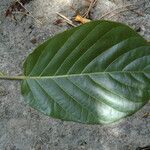
Guettarda speciosa
Sea randa · Zebrawood · Beach Gardenia
Description
Source: leafsnapGuettarda speciosa, commonly known as Velvet Apple or Mutton Apple, is a tropical evergreen shrub or small tree belonging to the Rubiaceae family. It is native to the Caribbean, Central America, and South America. This plant can grow up to 10 meters tall and features a dense crown of glossy, oval-shaped green leaves arranged in opposite pairs. The flowers of Guettarda speciosa are white, fragrant, and star-shaped with five petals. They bloom in clusters at the ends of branches from late spring through summer. The fruit produced by this plant is a fleshy drupe, resembling an apple or peach in shape but with a velvety texture on its surface. Guettarda speciosa thrives in well-drained soils rich in organic matter. While it can tolerate partial shade, it performs best under full sun exposure. It requires regular watering during dry periods but can withstand short periods of drought once established. This plant has several medicinal uses; its leaves have traditionally been used to treat fever, coughs, colds, headaches, and skin infections such as eczema and psoriasis due to their anti-inflammatory properties. Overall, Guettarda speciosa makes an excellent ornamental shrub for tropical gardens. Its attractive foliage, fragrant flowers, and edible fruits offer year-round beauty, making it a unique and appealing choice for any garden enthusiast.
Care Guide
💧 Water Every 7 days
Adapted to coastal habitats, sea randa thrives with minimal water, requiring hydration only every 2–3 weeks. It benefits from sea spray and absorbs humidity, making it ideal for seaside gardens. Its salt tolerance enhances its resilience in shoreline environments.
How should I water my Sea randa plant?
When watering your Sea randa, you have various options for watering tools. Watering cans, hoses, or even cups will all work fine. It's important to apply the water directly to the soil and make sure all areas are evenly moistened. Using filtered water is recommended to avoid harmful particles from tap water. Additionally, water at or slightly above room temperature is best as extreme temperatures can be a bit of a shock to the Sea randa. However, the plant is usually adaptable and responds well to any type of water you give it.
What should I do if I give too much or too little water to my Sea randa?
Outdoor plants, especially newly planted ones or seedlings, are prone to lack of watering. Remember to water them enough for the first few months while they are small or newly planted. Once the roots are established, Sea randa plants can rely on rainfall most of the time. When keeping Sea randa plants in pots, overwatering is more likely. If you accidentally overwater your Sea randa, take immediate action. Stop watering the plant right away to minimize the effects. Then, remove the Sea randa from its pot and check the roots for any signs of root rot. If there is no root rot, you can return the plant to its container. However, if you find root rot, trim away the affected roots and consider applying a fungicide to prevent further damage. Finally, repot the Sea randa in well-draining soil. In the case of underwatering, simply water the plant more frequently. Signs of underwatering include drooping and drying leaves, which will quickly recover after sufficient watering. Make sure to adjust your watering frequency when you notice underwatering.
How frequently should I give water to my Sea randa?
If you live in an area with sufficient rainfall, most outdoor plants can grow naturally without additional watering. However, if your area lacks rainfall, it is important to water your plants adequately. During the spring and fall, watering every 2 weeks should be sufficient. In the summer, more frequent watering is needed. In the winter, when plant growth slows down and water needs decrease, water sparingly or not at all. If you have a young or newly planted Sea randa, it is important to water more frequently to help it establish and become more adaptable and drought tolerant. For potted plants, there are two main approaches to determining watering frequency for your Sea randa. One option is to set a predetermined watering schedule, such as once every week or once every other week. However, this may not be accurate for your specific growing environment. Another option is to check the soil moisture before watering. Wait until the top two to four inches of soil have completely dried out before providing more water. Remember to adjust your watering frequency according to the season, as the water needs of your Sea randa will be highest during summer.
How much water does my Sea randa require?
When watering your Sea randa, remember that it doesn't always need a lot of water. If only a few inches of soil have dried since the last watering, give it about five to ten ounces of water. You can also determine the water volume based on the moisture of the soil. Take note of how many inches of soil have dried out. To ensure your Sea randa gets enough moisture, water it enough to moisten all the soil layers that have dried since the last watering. If more than half of the soil is dry, give it more water until you see excess water draining from the pot's holes. If your Sea randa is planted in an area with ample rain, it may not need extra watering. When it's young or newly planted, make sure it receives 1-2 inches of rain per week. As it grows and becomes established, it can rely solely on rainwater. However, if the weather is hot and there is no rainfall for 2-3 weeks, give your Sea randa a full watering to prevent stress.
How do I know if I am watering my Sea randa enough?
Sea randa plants commonly suffer from overwatering, which can be identified through several signs. An overwatered Sea randa may have yellowing leaves and may shed some leaves. Additionally, overwatering can lead to the plant's structure shrinking and trigger root rot. Conversely, an underwatered Sea randa will also show signs of wilting and may develop brown or brittle leaves. Whether you notice signs of overwatering or underwatering, it is crucial to take action and restore the plant's health.
☀️ Light Full sun
Sea randa, native to bright, sun-drenched environments, is a tropical woody plant that flourishes in full sun yet can withstand partial sun. It commonly grows in open, well-lit locations with minimal shade.
What are the sunlight requirements for Sea randa?
Sea randa, a tropical woody plant native to bright, sun-drenched environments, thrives best in full sun but can also adapt to partial sun conditions. Full sun refers to areas receiving above 6 hours of sunlight daily, while partial sun covers about 3-6 hours of sunlight each day. When finding the perfect spot for your Sea randa, observe the movement of sunlight through your garden, ensuring you pick locations that provide an ideal mix of light and shade, crucial for the plant's growth and happiness.
How can artificial lighting supplement Sea randa's light requirements?
In settings where natural sunlight is insufficient, especially during winter or in less sunny spaces, artificial lighting becomes a necessary substitute to ensure optimal growth of Sea randa plants. LED lights, customizable to provide specific wavelengths needed by plants, are recommended. For full sun plants, 30-50W/sq ft of artificial light is suggested; partial sun plants require 20-30W/sq ft; and full shade plants need 10-20W/sq ft. The light should be placed 12-36 inches above the plant to mimic natural sunlight, keeping it on for 8-12 hours daily according to the specific needs of your plant species.
What are the symptoms of inadequate lighting in Sea randa?
Sea randa shows several noticeable symptoms when suffering from inadequate lighting, particularly when grown indoors with insufficient natural light. Symptoms include the growth of smaller new leaves, leggy or sparse growth, faster leaf drop, delayed or halted growth, lighter-colored new leaves, chlorosis or yellowing of leaves, sunscald, leaf curling or twisting, wilting, and leaf scorching. These symptoms signify the plant's struggle with low light conditions, indicating a need for immediate intervention to enhance light exposure.
What solutions can mitigate inadequate sunlight exposure for Sea randa?
To address inadequate sunlight exposure for Sea randa, gradual acclimatization to brighter conditions is key. For indoor plants, moving them weekly towards sunnier locations until achieving at least 6 hours of direct sunlight is recommended, using south-facing windows for maximum exposure. Supplementing with artificial light, like desk or professional grow lights for at least 8 hours daily, can also help. Outdoor plants benefit from a similar gradual move to sunnier spots to prevent sunburn. Reducing obstructions, such as pruning trees that shade your plants, or transplanting to sunnier locations with good drainage during the plant's dormant period, are effective strategies for ground plants. However, damaged parts of the plant might not recover, but new growth should be healthy with improved light conditions.
🌡️ Temperature 20–41.1°C
Sea randa is native to habitats with temperatures between 68 and 106°F (20 to 41°C). It performs best in places that consistently stay within this temperature range. If seasonal temperatures fall outside this band, the plant should be acclimated gradually for optimal health.
What is the ideal temperature range for Sea randa?
The ideal temperature range for Sea randa is between 68 to 106°F (20 to 41°C). This plant thrives when the ambient temperature remains consistently within this zone. It is extremely heat-loving, and exposure to cold temperatures can cause significant harm. To ensure the plant's health, it is recommended that Sea randa be gradually acclimated if seasonal temperatures fall outside this preferred range. During winter, maintaining temperatures above 20°C is beneficial for its growth, and temperatures nearing 5°C or lower can be detrimental.
How should Sea randa be cared for in low temperatures?
Sea randa prefers warm environments and does not tolerate low temperatures well. It is best kept in conditions where the temperature is above 20°C, especially during winter, to ensure it remains healthy. Should the temperature drop below 1°C, the leaves may start to lighten in color, and after frost damage, they can turn brown or black with symptoms of wilting and drooping apparent. To care for Sea randa in low temperatures, trim off any frost-damaged parts and move the plant indoors to a warm area. Placing it near a south-facing window ensures it gets ample sunlight, but it should be kept away from heaters or air conditioning vents to avoid overly dry air.
What should be done if Sea randa experiences high temperatures?
If Sea randa is exposed to high temperatures, especially during the summer when it should ideally be kept below 41°C, care needs to be taken if temperatures soar above 45°C. In such conditions, the leaves may lighten and the plant can become vulnerable to sunburn. To address high temperature stress, trim away the sunburned and dried-up parts of the plant. Then, relocate Sea randa to a spot where it can enjoy shade during the midday and afternoon sun. Ensure to water the plant in the mornings and evenings to maintain soil moisture, helping it to cope with the heat.
💨 Humidity
🪴 Soil 6-7
🌱 Fertilizer
The best time to fertilize a Sea randa is in early spring, when it breaks dormancy. Doing so promotes overall growth and the development of flowers. Fertilization improves the foliage, stems, and branches, and encourages large, vivid, and long-lasting blooms. It also helps move nutrients from the roots to the flowers and enhances the plant’s health and resistance to disease.
🪴 Pot & Repot
✂️ Pruning
Sea randa is a visually striking shrub with glossy leaves and fragrant white flowers. To ensure healthy growth, it is essential to prune the plant from early to late winter. Focus on removing dead branches and thinning out overcrowded areas. Regular pruning not only boosts the plant's health but also enhances its ornamental appeal.
🌿 Propagating
🐛 Diseases & pets
☠️ Toxicity
Characteristics
- Plant Type
- Tree, Shrub
- Life Cycle
- Perennial
- Genus
- Guettarda
- Family
- Rubiaceae
- Hardiness Zone
- 10-13
- Mature Height
- 3.05 m to 4.88 m
- Mature Spread
- 0.91 m to 3.05 m
- Leaf Color
- Green, Dark Green
- Leaf Type
- Evergreen
- Flower Color
- White
- Flower Size
- 1.02 cm to 3.30 cm
- Bloom Time
- Late spring, Summer, Early fall, Mid fall
- Planting Time
- Spring, Summer, Autumn
- Harvest Time
- Late summer, Fall, Early winter, Mid winter
- Native Area
- Sri Lanka, India, Malaysia, Philippines, South Africa, Madagascar, Bangladesh, Fiji, Kenya, Tanzania, China, Indonesia, Cambodia, Mozambique, Myanmar, Japan, Singapore