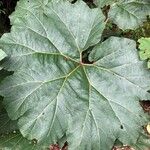
Gunnera insignis
Poorman's umbrella
Care Guide
💧 Water
☀️ Light
🌡️ Temperature
Poorman's umbrella comes from tropical areas where the climate is typically warm and humid. As a result, it is adapted to high heat and humidity. It does not tolerate sudden temperature shifts and prefers a consistent thermal environment, so indoor temperature fluctuations should be avoided. It generally cannot withstand cold and needs higher temperatures to grow. If the ambient temperature falls too low, the plant may stop growing or even die.
💨 Humidity
🪴 Soil
🌱 Fertilizer
Proper fertilization is vital for Poorman's umbrella's health and appearance. Fertilize Poorman's umbrella in the summer, repeating the application monthly during the season. Nutrients support growth and help maintain the plant's parts. Fertilizing improves Poorman's umbrella's flower display, ensuring the best blooms.
🪴 Pot & Repot
✂️ Pruning
To ensure the Poorman's umbrella plant thrives, it's important to prune it properly, ideally in early spring. Pruning encourages healthy growth, helps manage the plant's size and shape, and supports vigorous development. Start by removing any dead foliage to improve air circulation. Use clean, sharp tools to minimize stress and prevent disease, resulting in a visually appealing plant.
🌿 Propagating
🐛 Diseases & pets
☠️ Toxicity
Characteristics
- Plant Type
- Herb
- Life Cycle
- Perennial
- Genus
- Gunnera
- Family
- Gunneraceae
- Hardiness Zone
- 9-11
- Mature Height
- 2.13 m to 3.05 m
- Mature Spread
- 3.05 m to 3.96 m
- Leaf Color
- Dark Green
- Leaf Type
- Evergreen
- Flower Color
- Green
- Flower Size
- 0.51 cm to 0.76 cm
- Bloom Time
- Late spring, Early summer, Mid summer
- Planting Time
- Summer, Autumn
- Harvest Time
- Late summer, Early fall, Mid fall
- Native Area
- Nicaragua, Mexico, Panama, Costa Rica