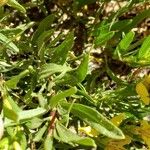
Gutierrezia sarothrae
Broom snakeweed · Matchbrush · Matchweed · Kindlingweed · Snakeweed
Description
Source: leafsnapGutierrezia sarothrae is a species of flowering plant in the family Asteraceae known by the common names broom snakeweed, broomweed, snakeweed, and matchweed. It is a subshrub native to much of the western half of North America, from western Canada to northern Mexico, and can be found in a number of arid, grassland, and mountain habitats. It can be toxic to livestock in large quantities, due mainly to the presence of saponins. The species was utilized by various Native American groups for medicinal and other purposes.
🌳 The small perennial shrub known as broom snakeweed is excellent for alpine gardens and xeriscapes. It's particularly useful for erosion control and quickly establishes itself in naturalized garden sites with poor soil. Additionally, it is resistant to deer, and its dried flowers make beautiful additions to flower arrangements.
🎭 Modesty, Tidiness
Care Guide
💧 Water
Adapted to semi-arid climates, broom snakeweed thrives with minimal moisture and is drought-tolerant, requiring only weekly watering. It is ideal for xeriscaping. Broom snakeweed's growth is closely linked to water availability, flourishing during its active growing season when rain patterns align with its needs.
How should I water my Broom snakeweed to keep it healthy?
To ensure the optimal care for Broom snakeweed, it is recommended to use filtered water at room temperature or slightly warmer. This is because tap water may contain harmful particles. Since Broom snakeweed is adapted to warm environments, cold water can be a shock to its system. It is also advisable to avoid watering from overhead as it can cause issues with the foliage. Instead, gently soak the soil with your filtered, room temperature water until it is fully saturated. This helps to moisten the roots and support their growth and nutrient absorption in the soil.
What should I do if I give my Broom snakeweed too much or too little water?
Overwatering is a more common issue that can harm your Broom snakeweed. It causes the stems and leaves to wilt and turn yellow. Over time, it can also lead to diseases like root rot, mold, and mildew that can kill the plant. Underwatering is less common because Broom snakeweed can tolerate drought. However, it can still happen and cause brittle, brown leaves. It's important to notice and address signs of overwatering early, as some diseases may be irreversible if left untreated. Reduce watering if you see early signs and check the soil's drainage. If it drains poorly, replace it with well-draining potting mix. If signs point to underwatering, water more regularly until the plant recovers.
How frequently should I water my Broom snakeweed plant?
If your Broom snakeweed is in a pot, the most precise way to determine if it needs water is to check the soil moisture. Stick your finger into the soil and if the top two to three inches are dry, then it's time to water. If you have your Broom snakeweed planted in the ground outside, you can use a similar method to test the soil. Again, check if the top few inches of soil are dry before watering. During the spring and early fall, watering once a week is usually sufficient. However, when the weather gets extremely hot, you may need to water twice or more per week. Despite this, mature and well-established Broom snakeweed plants have a remarkable ability to tolerate drought.
How much water does my Broom snakeweed require?
To properly water your Broom snakeweed, don't hold back on the amount of water you use. When the top two to three inches of soil are dry, give the plant a good, deep watering. Make sure to saturate the entire soil. The water should be enough to cause excess water to drain out from the bottom of the pot. If you don't see any excess water draining, it means you haven't given enough water. However, be cautious not to let the water accumulate in the soil, as that can harm the plant. On the other hand, if water doesn't drain well from the pot, it means the soil is poorly draining, which is not good for this plant's health. Avoid this by ensuring the soil is properly draining. If the plant is outside, 1 inch of rainfall per week should be adequate.
How do I water my Broom snakeweed at different times when it is growing?
The water requirements of the Broom snakeweed vary depending on its growth stages. When the plant is young or has been recently transplanted, it will need more water. During these stages, the plant puts a lot of energy into growing new roots, which require more moisture for optimal performance. As the plant matures, it will need less water. Additionally, during the bloom period, the plant will require more water due to the significant moisture demanded for flower development.
☀️ Light Full sun
Broom snakeweed grows best in plentiful sunlight, which it uses to support healthy growth and development at every stage. Originating from habitats with abundant sun, broom snakeweed can tolerate environments with less-than-optimal light, although this may reduce its vigor. Both overexposure to sunlight and insufficient sunlight can affect broom snakeweed's wellbeing.
What are the sunlight requirements for plants, and how do they vary?
Plants' sunlight requirements vary widely, generally categorized into full sun and partial sun conditions. Full sun refers to areas that receive above 6 hours of direct sunlight daily, ideal for plants that thrive in bright light. Partial sun is defined as spaces that get about 3-6 hours of sunlight each day, suitable for plants that can handle some shade. It's important to observe how sunlight moves through your garden to select the best spots for your plants, ensuring they receive the right balance of light and shade for optimal growth and health.
How does sunlight affect the growth of Broom snakeweed?
Broom snakeweed (Gutierrezia sarothrae) thrives best under abundant sunlight, which is crucial for its healthy growth through all stages of development. Native to regions with plenty of sunlight, Broom snakeweed can adapt to less than ideal light conditions, but its vigor may be compromised. Insufficient or excessive sunlight exposure can negatively impact the plant's wellbeing, highlighting the importance of providing the optimal amount of sunlight for its growth.
What artificial lighting requirements do indoor plants have?
Indoor plants, including Broom snakeweed, require adequate lighting, especially when natural sunlight is scarce, like in winter or less sunny spaces within a home. Artificial lights, particularly LED, can be a vital solution, offering the necessary wavelengths for optimal plant growth. Full sun plants need between 30-50W/sq ft, partial sun 20-30W/sq ft, and full shade plants 10-20W/sq ft of artificial light. The light source should be placed 12-36 inches above the plant to mimic natural sunlight, with the duration mimicking natural daylight hours, typically between 8-12 hours daily.
What are the symptoms of light deficiency in Broom snakeweed?
Symptoms of light deficiency in Broom snakeweed include smaller new leaves, leggy or sparse growth, faster leaf drop, slower or halted new growth, lighter-colored new leaves indicating a lack of chlorophyll, chlorosis or the yellowing of leaves, sunscald characterized by pale or necrotic areas on the plant, leaf curling as a defense against excessive sunlight exposure, wilting due to lost turgor pressure, and leaf scorching, seen as brown, dry edges on leaves. Recognizing these symptoms early can help take corrective actions to improve the plant's light conditions and overall health.
How can I mitigate sunlight-related issues for Broom snakeweed?
To address sunlight-related issues in Broom snakeweed, indoor plants should gradually be moved to sunnier locations until they get at least 6 hours of direct sunlight daily, utilizing south-facing windows and keeping curtains open during the day. For outdoor plants, avoid sudden exposure to intense sunlight to prevent sunburn, and for plants in the ground, reduce obstructions like overhanging branches. Using artificial light sources, like desk lamps or professional grow lights, can supplement natural light, especially for larger or less mobile plants. Remember, affected parts may not recover, but new, healthy growth can emerge with improved light conditions.
🌡️ Temperature 5–35°C
The native growing environment of broom snakeweed shows the plant does well in areas with mild temperatures between 5 and 35 ℃ (41 and 95 ℉). It favors a moderate temperature range that does not surpass 35 ℃ (95 ℉). In colder months, it is important to adjust temperatures to keep them within that range, especially in places with colder winters.
What is the ideal growth environment for Broom snakeweed?
Broom snakeweed, scientifically known as Gutierrezia sarothrae, thrives best in regions with mild temperatures, specifically between 5 to 35°C (41 to 95°F). The plant prefers moderate temperature ranges and does not do well in temperatures exceeding 35°C (95°F). Even though Broom snakeweed has strong cold resistance, it is advised to ensure temperatures remain within the optimal range, especially in colder winters. In cases where winter temperatures may drop below -25°C, it's important to provide cold protection for the plant, such as covering it with soil or straw. Additionally, watering the plant abundantly before the first freeze in autumn helps maintain soil moisture through the winter and early spring, preventing drought and water scarcity.
How does Broom snakeweed react to low temperatures?
Broom snakeweed is notably cold-tolerant, thriving best when temperatures remain above 5°C but should be kept above -20°C during the winter months. If temperatures fall below -25°C, the plant may not show immediate adverse effects during winter but could experience decreased sprouting or fail to sprout altogether come spring. The solution for these potential issues in the spring is to remove any parts of the plant that have failed to sprout, to encourage new growth and maintain the plant's health.
How does Broom snakeweed react to high temperatures, and what should be done?
During the summer months, it is crucial to ensure that Broom snakeweed is kept below 35°C. Temperatures exceeding 38°C can cause the plant's leaves to lighten in color, become prone to curling, suffer from sunburn, and in severe cases, cause the entire plant to wilt and dry up. To mitigate these issues, sunburned and dried-up parts of the plant should be trimmed away. Moving the plant to a shaded location or using a shade cloth to protect it from the midday and afternoon sun can be beneficial. Additionally, watering the plant in the morning and evening helps keep the soil moist and supports the plant's well-being during excessive heat.
💨 Humidity
🪴 Soil 6-7
🌱 Fertilizer
One fertilizer application in spring is generally sufficient for Broom snakeweed, but repeated feedings can maximize growth. Apply fertilizer every month to every month and a half. Fertilization improves leaf appearance and function, encouraging uniform color and a healthy texture. It also promotes root development and nutrient uptake for the plant's long-term health.
Why should I put fertilizer on my Broom snakeweed?
The Broom snakeweed relies heavily on its leaves for structure, so fertilization plays a crucial role in ensuring that both the appearance and function of these leaves are optimal. Proper fertilization results in consistent leaf color and a healthy texture. Additionally, fertilization benefits the Broom snakeweed below the soil's surface by promoting the growth of new roots and maintaining existing ones. In this way, fertilization not only supports the immediate health of the plant but also enhances its ability to absorb nutrients from the soil in the long term.
When should I fertilize my Broom snakeweed for the best results?
If you grow your Broom snakeweed outdoors each year, it will send out new growth in early spring. This is the time to start fertilizing. Usually, one application of fertilizer is enough. But if you want to maximize growth, you can repeat the fertilizing process multiple times in the spring and early summer. In this case, feed your Broom snakeweed about once every month to a month and a half.
When is the wrong time to fertilize my Broom snakeweed?
During late fall and winter, your Broom snakeweed goes into a dormant phase and stops producing new growth. It's best to avoid fertilizing during this time. In spring and summer, if you choose to fertilize multiple times, start reducing the fertilization rate as summer approaches because the growth rate of your Broom snakeweed will also slow down. Generally, it is not recommended to fertilize your Broom snakeweed when the weather is unusually hot or the soil is extremely dry. Fertilizing under these conditions can stress your Broom snakeweed and cause it to die prematurely.
What kind of fertilizer does my Broom snakeweed require?
Choosing the best fertilizer for a Broom snakeweed is a straightforward task. These plants thrive on a general-purpose garden fertilizer with equal amounts of nitrogen, phosphorus, and potassium, like a 10-10-10 ratio. Avoid fertilizers high in nitrogen if unsure. Granular fertilizers, preferably slow-release, are recommended for Broom snakeweed. Additionally, feeding them with organic amendments like compost can be beneficial.
How can I make my Broom snakeweed grow better?
In early spring, wait until your Broom snakeweed starts to push out its first leaves through the soil's surface. Once you spot this sign, apply a granular slow-release fertilizer with a balanced formula around the base of the plant. If desired, you can repeat this process later in the season. Remember to always apply the fertilizer to the soil near the plant's base, not directly onto the plant itself. Occasionally, you may need to move some leaves aside to access the soil above the roots. It's also a good idea to water your Broom snakeweed before and after fertilizing.
🪴 Pot & Repot
✂️ Pruning
Broom snakeweed features yellow flowers and needle-like leaves. For optimal blooming, prune the plant from early to late spring, concentrating on the removal of old stems. Regular pruning not only helps control its spread and increase its density but may also reduce pest problems. Make sure to use clean, sharp tools and follow local guidelines to ensure the best care for the plant.
🌿 Propagating
🐛 Diseases & pets
☠️ Toxicity
Characteristics
- Plant Type
- Herb, Shrub
- Life Cycle
- Perennial
- Genus
- Gutierrezia
- Family
- Asteraceae
- Hardiness Zone
- 5-9
- Mature Height
- 20 cm to 46 cm
- Mature Spread
- 30 cm to 46 cm
- Leaf Color
- Green
- Leaf Type
- Deciduous
- Flower Color
- Yellow
- Flower Size
- 2.54 cm
- Bloom Time
- Mid summer
- Planting Time
- Spring, Summer
- Harvest Time
- Mid summer, Late summer, Early fall
- Native Area
- Mexico