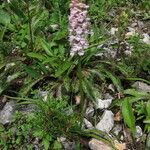
Gymnadenia odoratissima
Short-spurred Fragrant orchid · Wohlriechende Händelwurz · Scented Gymnadenia
Description
Source: leafsnapGymnadenia odoratissima is a species of orchid.
Care Guide
💧 Water
The short-spurred fragrant orchid thrives in humid environments and prefers consistent moisture. To keep it well-hydrated, water it weekly. This orchid is usually grown indoors and does well in containers, where its water needs can be easily managed.
How should I water my Short-spurred fragrant orchid?
The method of watering for the Short-spurred fragrant orchid depends on whether the plant is actively growing or not. During an active growth phase, water should be applied to the soil and occasional overhead watering may be done, especially in warm weather, to allow the plant to absorb moisture through its leaves. However, in winter or cool and wet weather, it is best to stick to watering the soil directly without overhead watering. You can tell if the plant needs more water if the roots and leaves appear thin, dry, or discolored. On the other hand, if the plant is receiving too much water, it will look mushy and limp. To grow the Short-spurred fragrant orchid, use a pot with good drainage and ensure the potting mix drains well. During the growing season, water the plant multiple times per week, but make sure the water drains quickly to avoid standing water. The amount of water needed depends on the pot size, with larger pots requiring less frequent watering and smaller pots needing more frequent watering. Rainwater and distilled water are the best options, and it is ideal for the water temperature to match the air temperature as closely as possible.
What should I do if I give my Short-spurred fragrant orchid too much or too little water?
One common way to kill a Short-spurred fragrant orchid is by letting it sit in overly moist soil for too long. Although these plants need frequent watering when they are actively growing, they also require a well-draining growing medium. Overwatering can cause the plant to become mushy and develop root rot. If this happens, you can carefully remove any rotted roots with sterilized pruning shears. Afterward, repot the orchid in a container with good drainage using a fast-draining potting mix. However, Short-spurred fragrant orchids do not usually respond well to excessive repotting, so it is important to get the watering frequency right. If you notice the orchid becoming shriveled and dry to the touch, it is likely underwatered. In this case, increase the watering frequency as the soil is drying out faster than expected.
How often should I give water to my Short-spurred fragrant orchid?
During the active growth stage in spring and summer, water your Short-spurred fragrant orchid once or twice per week. Increase watering to three times per week during hot and dry weather. In winter, water your orchid, but not as much. Watering two to three times per month should be enough during the coldest months. However, if kept indoors, the soil may dry quickly, so consider increasing the number of waterings. In fall, gradually reduce watering frequency from summer to winter schedule.
What do I need to think about when giving water to my Short-spurred fragrant orchid during different seasons and when it's growing?
When planning the watering schedule for your Short-spurred fragrant orchid, there are two important growth phases to consider. The first phase is the active growth period, which occurs in spring and summer. During this time, it is recommended to water the plant multiple times per week. The second phase is the rest period, which occurs in winter and lasts for about two to three months. During this period, the plant requires less water and fertilization. It is suggested to water it about once or twice per month. In the fall, you should gradually decrease the frequency of watering from multiple times per week to once or twice per month to prepare for the winter rest period.
How should I water my Short-spurred fragrant orchid if I keep it inside?
The Short-spurred fragrant orchid needs a relatively humid environment to grow well. Indoor growing locations usually don't have enough moisture in the air for this plant. As a result, the plant and its soil can dry out faster compared to outdoor growth. To address this, you can use a humidifier in the room where you grow the orchid and water it more frequently. However, it's important to note that while Short-spurred fragrant orchids like humidity, they also need good air circulation to prevent too much moisture and the resulting diseases. To achieve this, consider using a fan in the room as well.
☀️ Light Partial sun
Short-spurred fragrant orchid is native to habitats such as forest understories and rocky areas, where it grows in natural shade. It prefers partial sun but can tolerate full sun or full shade, reflecting its versatile and hardy nature.
What are the sunlight requirements for the Short-spurred fragrant orchid?
The Short-spurred fragrant orchid thrives in partial sun, requiring about 3-6 hours of sunlight daily, but it can also tolerate full shade, making it suitable for various garden locations. Despite its versatility, ensuring it receives the right balance of light and shade is crucial for optimal growth. This plant is native to environments like forest understories or rocky areas, which naturally offer such conditions.
What warnings are there regarding sunlight for plants?
It's essential to watch how sunlight moves through your garden throughout the day to choose spots that offer an ideal balance of light and shade. This careful selection ensures that your plants, including the Short-spurred fragrant orchid, are happy and healthy, avoiding the potential stresses caused by improper lighting conditions.
How can artificial lighting be used for indoor plants?
When natural sunlight is not sufficient, especially in winter or in less sunny indoor spaces, artificial lighting becomes critical for plant growth. LED lights are recommended because they can provide specific wavelengths needed by plants. The requirements for artificial light vary based on the plant's natural needs: full sun plants require 30-50W/sq ft, partial sun plants need 20-30W/sq ft, and full shade plants need 10-20W/sq ft. Furthermore, the light source should be placed 12-36 inches above the plant, ensuring it receives 8-12 hours of light per day to mimic natural daylight conditions.
What symptoms indicate light deficiency in Short-spurred fragrant orchid?
Light deficiency in Short-spurred fragrant orchid may lead to several symptoms, including smaller than usual new leaves, leggy or sparse growth, faster leaf drop, slower or no new growth, paler new leaves, or chlorosis—where leaves lose their green color and turn yellow. Moreover, excessive sunlight can cause symptoms like sunscald, leaf curling, wilting, and leaf scorching, suggesting the importance of balanced light exposure.
What solutions are available for light-related issues in plants?
To address light-related issues, gradually adapt your Short-spurred fragrant orchid to changing light conditions by shifting it to sunnier spots weekly until it receives the desired amount of sunlight. For indoor or large plants that are hard to move, using artificial light such as desk, ceiling, or professional grow lights for at least 8 hours daily can provide sufficient light. Outdoors, move plants gradually to sunnier locations to prevent sunburn. Reducing obstructions like pruning trees or transplanting smaller plants during their dormant period to sunnier spots can also enhance sunlight exposure. Note that parts of the plant damaged by insufficient light may not recover, but new growth will be healthy with improved lighting.
🌡️ Temperature 5–32.2°C
The short-spurred fragrant orchid can tolerate a wide range of temperatures, but its distribution may still be restricted by different combinations of moisture and heat. It does best in warm summer climates with sufficient rainfall or watering. Extended stretches of cloudy, rainy weather or sustained high temperatures can raise the likelihood of the short-spurred fragrant orchid dying. In winter, adequate protection from cold can increase the plant's survival rate.
What is the common name of Gymnadenia odoratissima?
The common name of Gymnadenia odoratissima is Short-spurred fragrant orchid.
What are the basic details about Gymnadenia odoratissima?
Gymnadenia odoratissima, commonly known as Short-spurred fragrant orchid, does not have any specific essentials, symptoms, or additional information provided at this time.
💨 Humidity
🪴 Soil 5-7
🌱 Fertilizer
The primary time to fertilize the Short-spurred fragrant orchid is in early spring, when the flowers are forming. Using the appropriate fertilizer promotes better blooms and helps the Short-spurred fragrant orchid produce attractive flowers. Fertilizing in early spring ensures excellent flowers throughout the season and supplies energy for dormant growth phases.
🪴 Pot & Repot
✂️ Pruning
The short-spurred fragrant orchid is known for its aromatic, short-spurred flowers. To promote blooming, prune the plant from early to late spring, removing any dead foliage and spent stems. Using sharp, clean tools helps prevent disease. Regular pruning encourages robust growth, extends the flowering period, and ensures the plant's health and longevity.
🌿 Propagating
🐛 Diseases & pets
☠️ Toxicity
Characteristics
- Plant Type
- Herb
- Life Cycle
- Perennial
- Genus
- Gymnadenia
- Family
- Orchidaceae
- Hardiness Zone
- 5-8
- Mature Height
- 20 cm to 40 cm
- Mature Spread
- 10 cm to 15 cm
- Leaf Color
- Green
- Leaf Type
- Deciduous
- Flower Color
- White, Purple, Pink
- Flower Size
- 0.51 cm to 0.76 cm
- Bloom Time
- Early summer, Mid summer
- Planting Time
- Spring, Summer
- Harvest Time
- Late summer, Early fall
- Native Area
- Sweden, Austria, Czech Republic, Slovakia, Poland, Greece, Croatia, Slovenia, Belarus, Ukraine, Russia, Lithuania, Hungary, Germany, Italy, Spain, Switzerland, Estonia, Ireland, Romania, Belgium, France