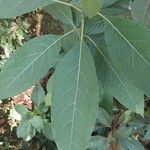
Gymnanthemum amygdalinum
Bitterleaf
Description
Source: leafsnapGymnanthemum amygdalinum, also known as bitter leaf or Vernonia amygdalina, is a perennial plant from the Asteraceae family. Native to tropical Africa, this plant is widely recognized for its medicinal properties in traditional medicine. Despite its bitter taste, the leaves are used in various culinary dishes. The leaves of Gymnanthemum amygdalinum are nutrient-rich, containing essential vitamins such as A, C, and E, as well as minerals like calcium, potassium, and iron. They are also packed with phytochemicals such as flavonoids, which have antioxidant properties that help protect the body against free radicals. In traditional African medicine, Gymnanthemum amygdalinum has been employed to treat several ailments, including malaria, due to its antimalarial properties. Additionally, the plant has demonstrated effectiveness against diabetes, thanks to its hypoglycemic effects that help regulate blood sugar levels. Gymnanthemum amygdalinum can be consumed either raw or cooked, depending on its intended use. It can also be processed into leaf extract or powder for medicinal purposes. While the plant continues to be utilized both medicinally and culinarily in many African countries where it naturally grows, it is now being studied globally for its potential health benefits. This versatile herbaceous perennial plant holds promise beyond just food preparation, offering numerous uses and benefits that have been recognized by local populations for generations.
Care Guide
💧 Water Every 7 days
Bitterleaf is a drought-tolerant plant that requires minimal watering, needing hydration only every 2-3 weeks. It thrives in well-draining soil, which helps prevent root rot and supports healthy growth. This plant is well adapted to the periodic dry spells of its native savanna, and it does particularly well during rainy seasons.
How should I water my Bitterleaf plant in the best way?
Your Bitterleaf plant is not particular about how you water it, so you can use any common watering tool. Watering cans, hoses, or even cups will work fine. When watering, make sure to apply the water directly to the soil and try to evenly moisten all areas of the soil to ensure all parts of the root system get enough water. Using filtered water is recommended to avoid potentially harmful particles in tap water. Additionally, using water at or slightly above room temperature is best as extreme temperatures can be a bit shocking to the Bitterleaf. However, the Bitterleaf is generally adaptable to any kind of water you provide.
What should I do if I give my Bitterleaf plant too much or too little water?
Outdoor plants, especially newly planted ones or seedlings, are susceptible to lack of water. To ensure their well-being, it's important to water them adequately for the first few months, particularly when they are small or recently planted. This is necessary because once the roots are established, Bitterleaf plants can usually rely on rainfall. When Bitterleaf is planted in pots, overwatering is more likely. In the event that you accidentally overwater your Bitterleaf, take immediate action to address the situation. Firstly, stop watering the plant right away to minimize the impact of overwatering. Next, remove the Bitterleaf from its pot to inspect the roots. If there is no sign of root rot, you can return the plant to its container. However, if you do find signs of root rot, trim away the affected roots and consider applying a fungicide to prevent further damage. Finally, repot the Bitterleaf in well-draining soil. On the other hand, underwatering is a more straightforward issue to resolve. If you notice the plant's leaves drooping, drying out, and falling off, it is a clear indication of underwatering. By watering the plant more frequently, the leaves should regain their fullness quickly. Correct your watering frequency as soon as you notice signs of underwatering.
How frequently should I give water to my Bitterleaf plant?
Most plants that grow outdoors can rely on rainfall for their water needs. However, if there is a lack of rainfall in your area, you should water your plants adequately every 2 weeks in the spring and fall. In the summer, more frequent watering is necessary, while in the winter, when growth slows down, water sparingly or not at all. Young or newly planted Bitterleaf plants should be watered more frequently to help them establish and become more adaptable to drought. For potted Bitterleaf plants, there are two main ways to determine watering frequency. One option is to follow a predetermined watering schedule, such as once a week or every other week. However, this approach may not consider the specific conditions of your Bitterleaf's growing environment. Another approach is to base watering frequency on soil moisture. Wait until the top two to four inches of soil, about ⅓ to ½ depth of the pot, have completely dried out before watering again. This method may require adjustments during the summer when the plant's water needs are highest.
How much water does my Bitterleaf plant need?
When watering your Bitterleaf, it's important to know that it doesn't always require a lot of water. If only a small amount of soil has dried out since the last watering, giving it about five to ten ounces of water should be sufficient for healthy growth. You can gauge how much water to give based on how dry the soil is. If more than half of the soil has dried out, it's a good idea to give more water. Keep adding water until you see excess water draining from the pot's drainage holes. If your Bitterleaf is planted outdoors and receives plenty of rain, it may not need additional watering. For young or newly established plants, aim for 1-2 inches of rain per week. As your Bitterleaf grows and becomes established, it can rely solely on rainwater. However, if there is a prolonged period without rainfall during hot weather, it's important to give it a thorough watering to prevent stress.
How can I know if I am giving enough water to my Bitterleaf plant?
Bitterleaf plants are more commonly affected by overwatering, and there are clear signs to watch out for. When a Bitterleaf is overwatered, its leaves turn yellow and some may even fall off. Additionally, the overall plant structure may shrink and root rot could develop. On the other hand, if a Bitterleaf is underwatered, it will start to wilt and its leaves may become brown and brittle. Whether you notice signs of overwatering or underwatering, it is important to act quickly to restore the plant's health.
☀️ Light Full sun
Bitterleaf does best when given uninterrupted sunlight. Placing this plant in full-day sun promotes ideal growth and supports healthy foliage. It evolved in environments that received abundant sunlight. Too little light can impede its growth, while too much can alter the leaves' color and quality.
What are the sunlight requirements for Bitterleaf?
Bitterleaf requires full sun, which means it should receive above 6 hours of sunlight daily for optimal growth. It's essential to observe the movement of sunlight through your garden to ensure you select spots that offer a perfect balance of light and shade. This balance is crucial for the happiness and health of your plants. Bitterleaf, also known as Gymnanthemum amygdalinum, thrives best under unobstructed exposure to the sun's rays, which promotes healthy foliage. It is naturally adapted to environments with abundant sunlight. Insufficient sunlight can stunt the plant's growth, whereas too much sunlight might affect its leaf color and quality.
Can Bitterleaf be grown indoors, and how should artificial lighting be used?
Yes, Bitterleaf can be grown indoors, especially when natural sunlight is insufficient, like in winter or less sunny spaces. Artificial lighting is a crucial solution for such situations, promoting faster and healthier growth. For indoor plants, LED lights are recommended as they can be customized to provide specific wavelengths needed by the plants. The requirements vary based on the type of plant: full sun plants need 30-50W/sq ft, partial sun plants need 20-30W/sq ft, and full shade plants need 10-20W/sq ft of artificial light. The artificial light source should be placed 12-36 inches above the plants, mimicking natural sunlight as closely as possible with durations matching natural daylight hours, generally 8-12 hours per day.
What are the symptoms of light deficiency in Bitterleaf?
When Bitterleaf is deprived of adequate sunlight, several symptoms can manifest, indicating light deficiency. These include smaller new leaves compared to the mature ones, leggy or sparse growth, faster leaf drop, slowed or ceased new growth, paler or irregularly colored new leaves, and symptoms of chlorosis where leaves lose their green coloration. Additionally, exposure to excessive sunlight can lead to sunscald, depicted as pale, bleached areas on plant tissue, leaf curling as a defense mechanism to minimize water loss, wilting due to loss of turgor pressure, and leaf scorching characterized by brown, dry edges on leaves. Addressing these symptoms appropriately is vital for the plant's health.
How can you improve light conditions for Bitterleaf both indoors and outdoors?
Improving light conditions for Bitterleaf involves several strategies. Indoors, gradually move plants to sunnier locations each week until they receive at least 6 hours of direct sunlight daily. Utilize south-facing windows and keep curtains open during daytime. For plants that are large or not easily movable, consider using artificial lighting, such as keeping a desk or ceiling lamp on for at least 8 hours a day, or investing in professional grow lights. Outdoors, similarly, gradually transition your plants to sunnier spots to avoid sunburn, observing and minimizing obstacles that might block sunlight. For plants in the ground, pruning obstructive branches and considering transplanting smaller plants during their dormant periods can greatly improve sunlight exposure. It's important to note that while parts of the plant affected by insufficient sunlight may not fully recover, new growth following increased light exposure should be healthy.
🌡️ Temperature 20–37.8°C
Bitterleaf is indigenous to regions where temperatures usually fall between 68 and 100 °F (20 to 38 ℃). It favors warmer conditions. Care should be taken to adjust the temperature appropriately across different seasons.
What is the native climate for Bitterleaf?
Bitterleaf is native to climates with temperatures typically ranging from 68 to 100 °F (20 to 38 °C). It thrives in a warmer environment, making it particularly fond of heat. Due to its heat-loving nature, it's important to adjust the surrounding temperature suitably across different seasons to ensure the plant's well-being.
How should Bitterleaf be cared for in different seasons?
During the colder months, it's recommended to bring Bitterleaf plants indoors to protect them from cold temperatures. Placing them near a bright window can be beneficial, but they should not be placed too close to heaters to avoid harm. It's crucial to maintain a temperature above 20°C during winter for optimal plant growth, as temperatures nearing 5°C can be detrimental to the plant. In autumn, transitioning the plant indoors helps protect it from the chill.
What should you do if Bitterleaf is exposed to low temperatures?
If Bitterleaf is exposed to low temperatures, it's important to take immediate action as it prefers warm temperatures and may suffer if the temperature drops below 1°C, leading to a lightening of leaf color, eventually turning brown or black after frost damage. Trimming off the frost-damaged parts and moving the plant to a warmer, indoor environment is crucial for its recovery. Placing it near a south-facing window ensures ample sunlight, but avoid placing it too close to heaters to avert air dryness.
How does high temperature affect Bitterleaf and what are the solutions?
Bitterleaf should ideally be kept below 38°C during the summer months to prevent stress from high temperatures. Exposure to temperatures above 43°C can lighten the leaf color and increase susceptibility to sunburn. In such cases, it's advisable to trim away sunburned or dried parts and relocate the plant to a shaded area, particularly away from the midday and afternoon sun. Ensuring the soil is moist by watering in the morning and evening can also help mitigate the effects of high temperatures.
💨 Humidity dry (<40%)
This plant prefers dry conditions, so don't mist it. However, watering it less often can also thrive in higher humidity.
🪴 Soil 6-6
🌱 Fertilizer
To achieve maximum yield, Bitterleaf responds well to regular applications of a balanced fertilizer, especially one high in nitrogen. Apply fertilizer before planting, at planting, and again when seedlings are about 2 inches tall. Adding compost or manure also provides a steady nutrient supply. Inadequate soil nutrients lead to underdeveloped leaves and stems, poor flavor, thin stems, and potentially a bitter taste.
🪴 Pot & Repot
✂️ Pruning
Bitterleaf is known for its woody growth and medicinal benefits. To maintain its shape, it should be pruned between early and late winter, focusing on removing dead or crowded areas. Avoid heavy pruning during its growth season to minimize stress on the plant. Using clean, sharp tools is essential for healthy trimming, which promotes robust foliage and longevity.
🌿 Propagating
🐛 Diseases & pets
☠️ Toxicity
Characteristics
- Plant Type
- Tree, Shrub
- Life Cycle
- Perennial
- Genus
- Gymnanthemum
- Family
- Asteraceae
- Hardiness Zone
- 10-12
- Mature Height
- 7.92 m
- Mature Spread
- 7.01 m
- Leaf Color
- Dark Green
- Leaf Type
- Evergreen
- Flower Color
- Lavender
- Flower Size
- 15.24 cm
- Bloom Time
- Late spring, Early summer, Mid summer
- Planting Time
- Spring
- Harvest Time
- Mid summer, Late summer
- Native Area
- Burkina Faso, Malawi, Angola, Namibia, South Africa, Zambia, Eritrea, Sudan, Nigeria, Guinea, Yemen, Kenya, Central African Republic, Tanzania, Zimbabwe, Benin, Mali, Chad, Gabon, Sierra Leone, Cameroon, Liberia, Mozambique, Bolivia, Togo, Côte d'Ivoire, Eswatini, Ethiopia, Congo (DRC), Botswana, Congo