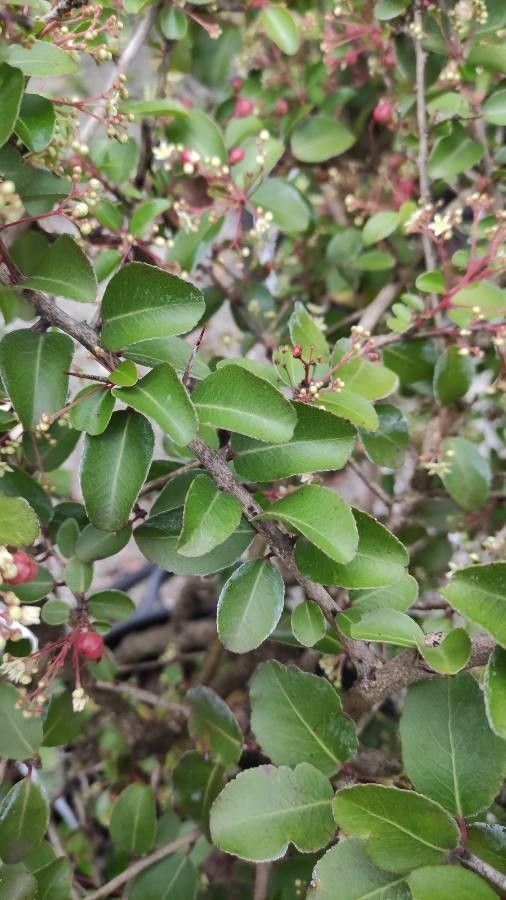
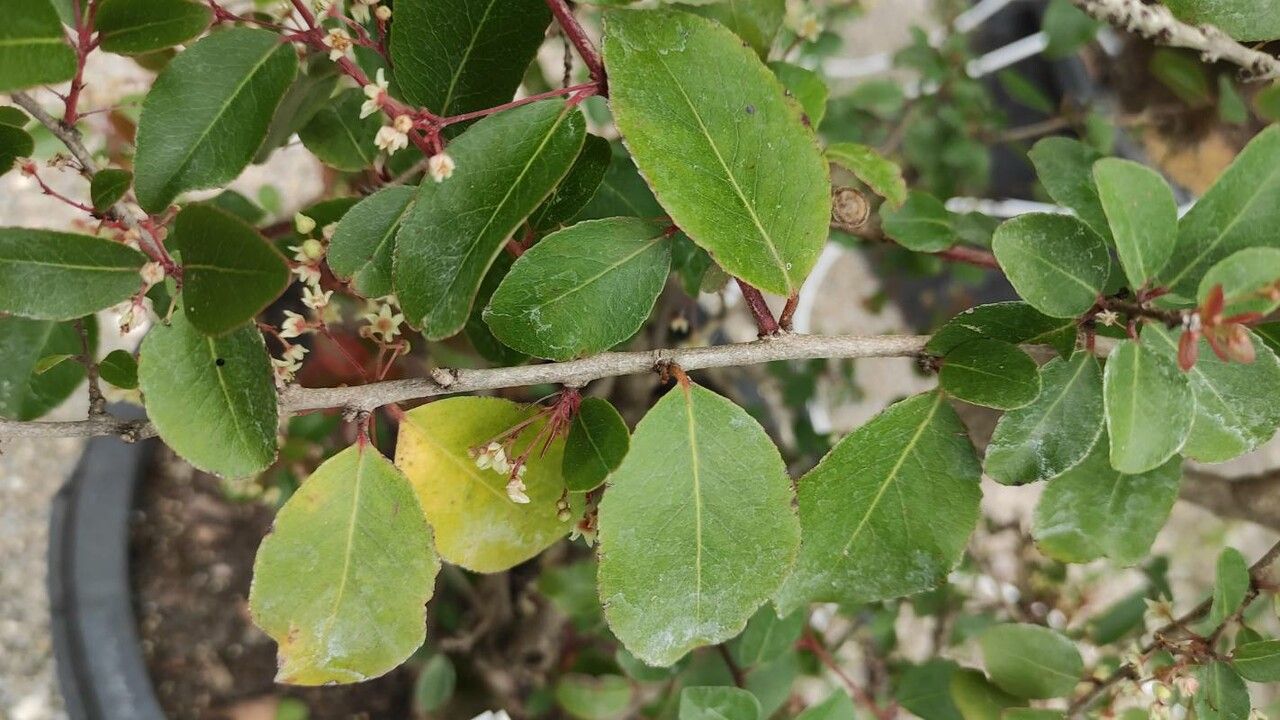
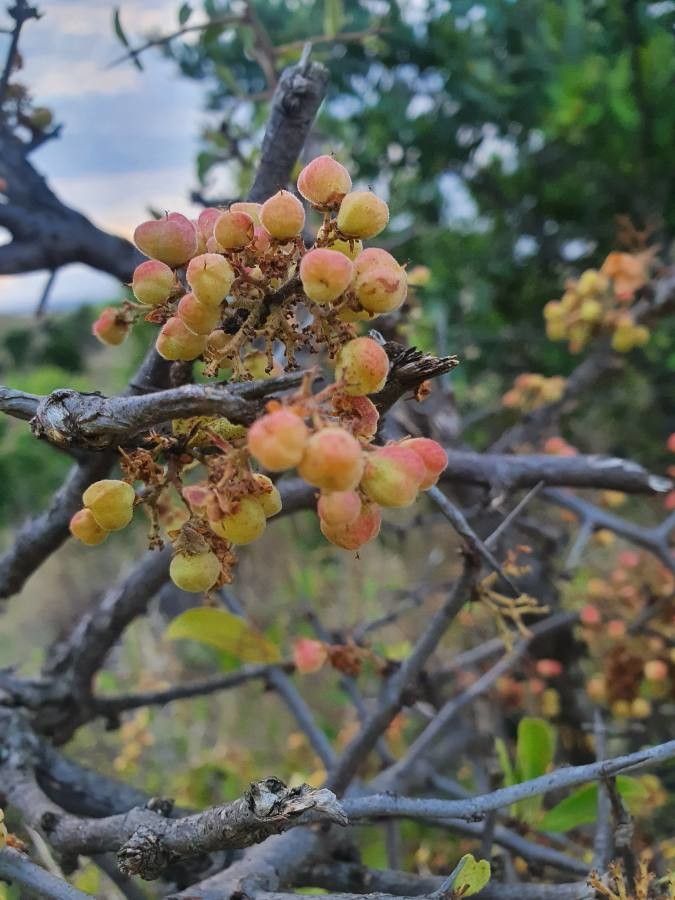
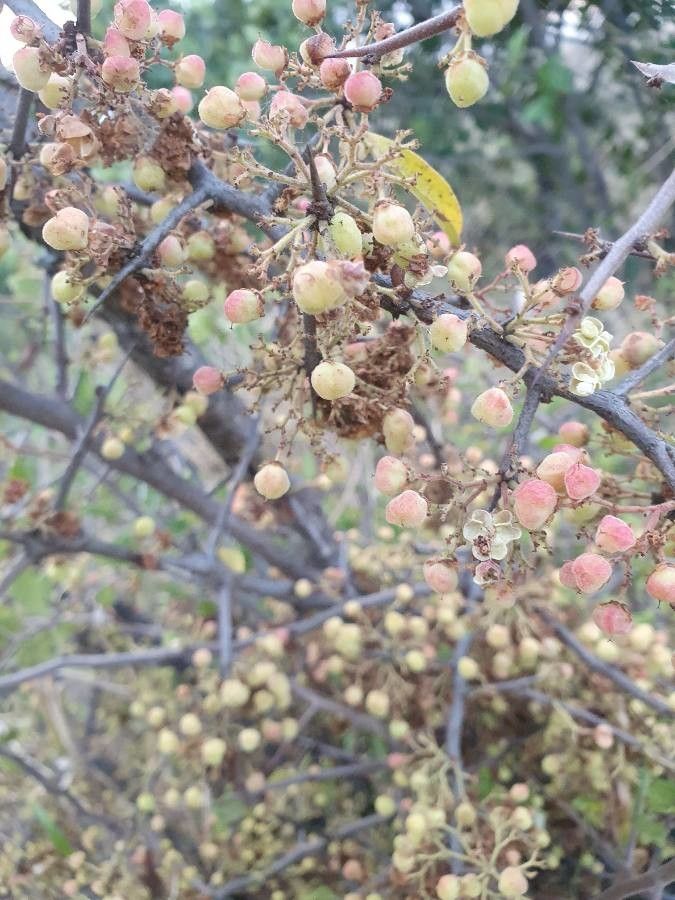
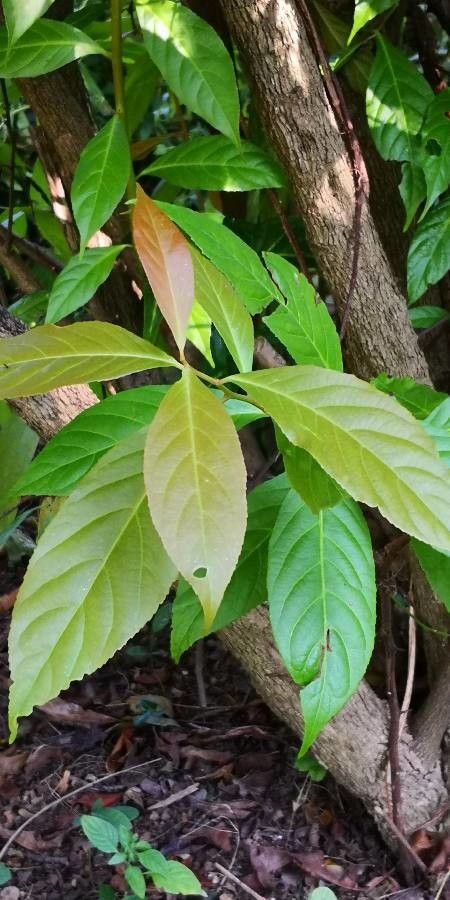
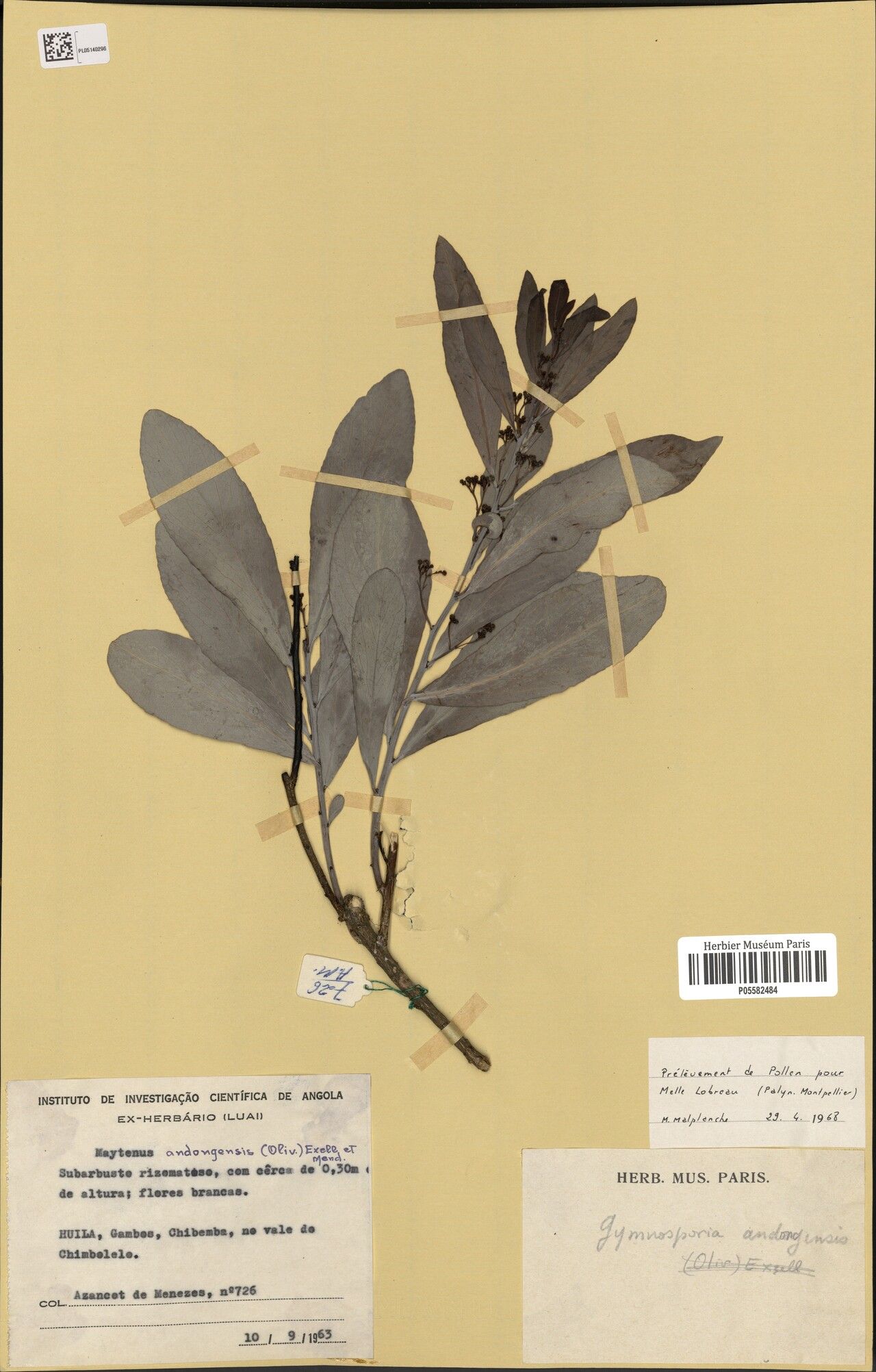
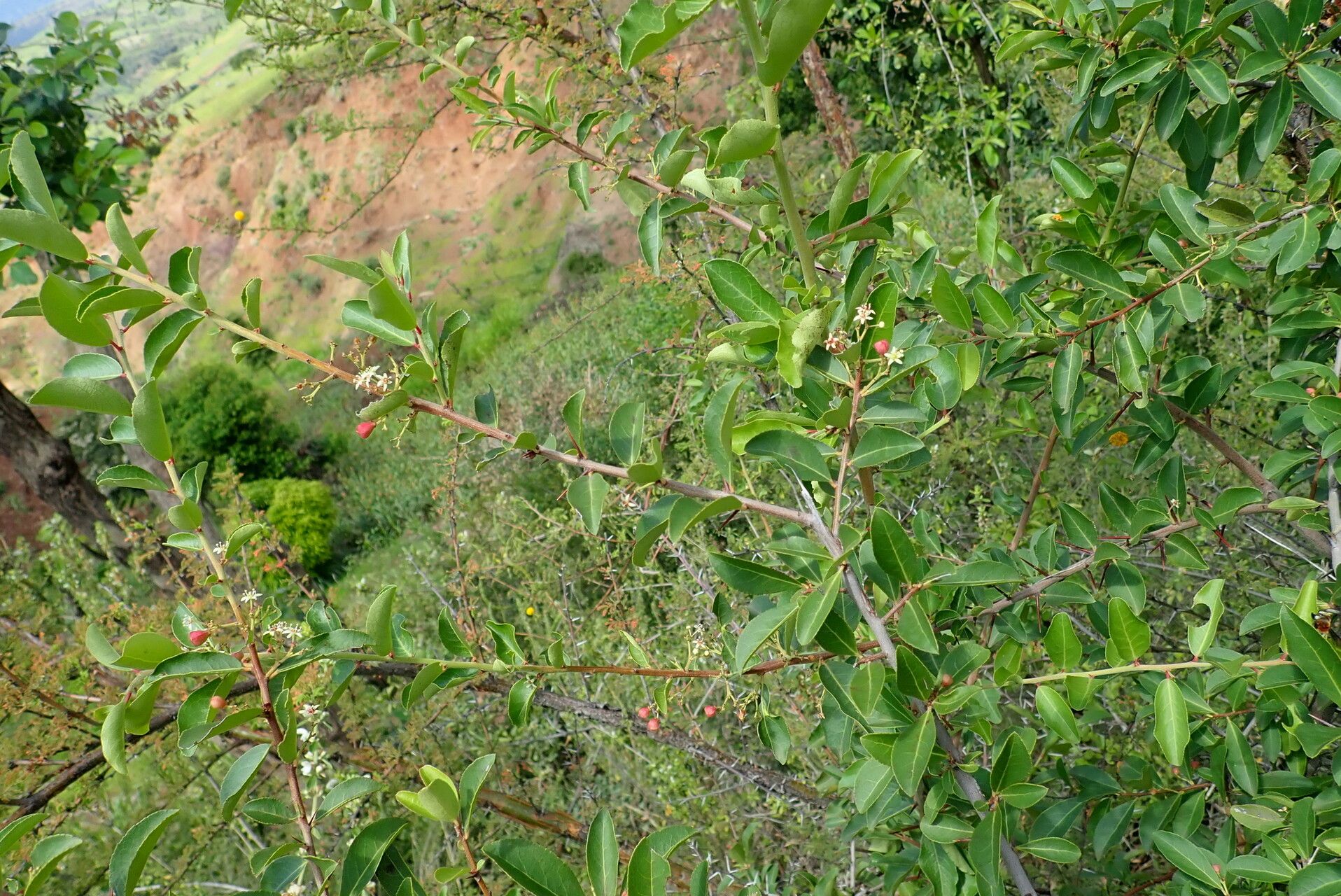
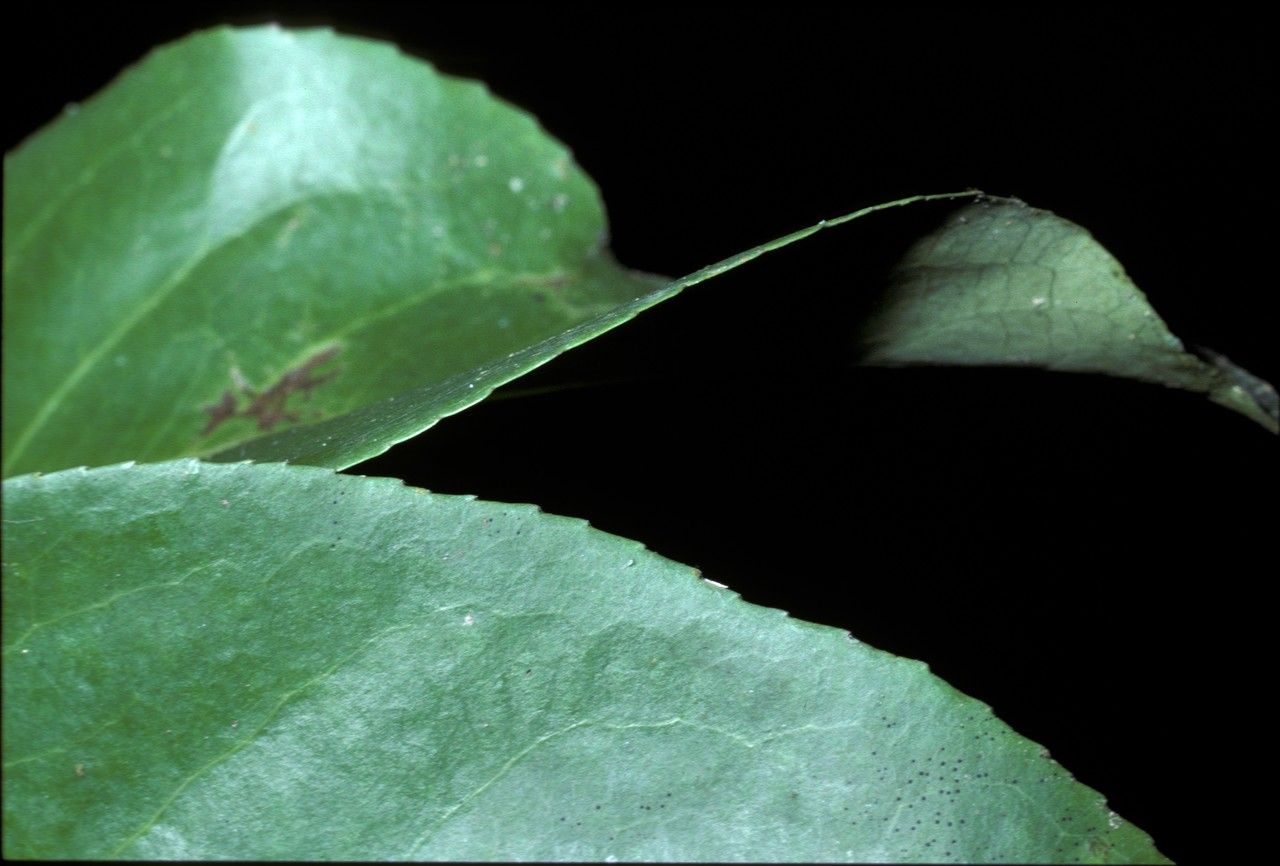
Gymnosporia putterlickioides is a small, evergreen shrub belonging to the Celastraceae family. Native to South Africa, it is primarily found in the Eastern Cape and KwaZulu-Natal provinces. This plant typically reaches a height of up to 2 meters and features a dense, bushy habit with small, glossy, oval-shaped green leaves.
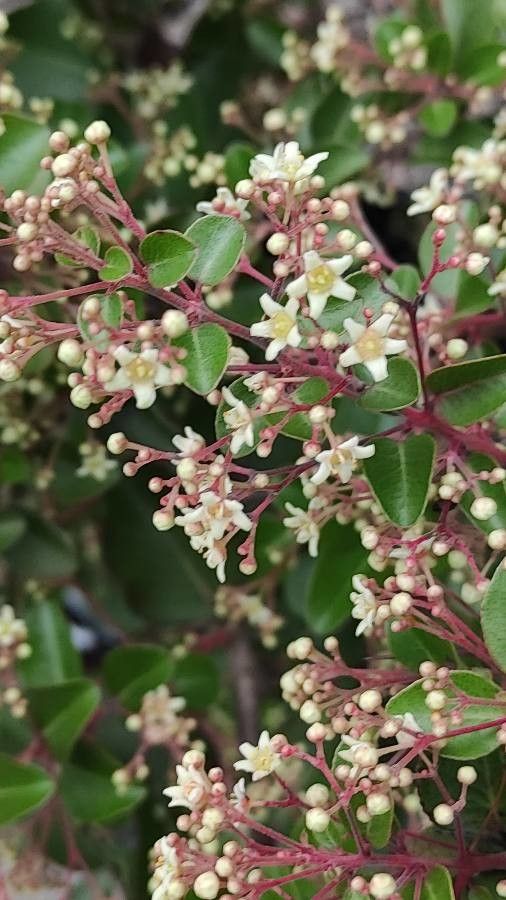
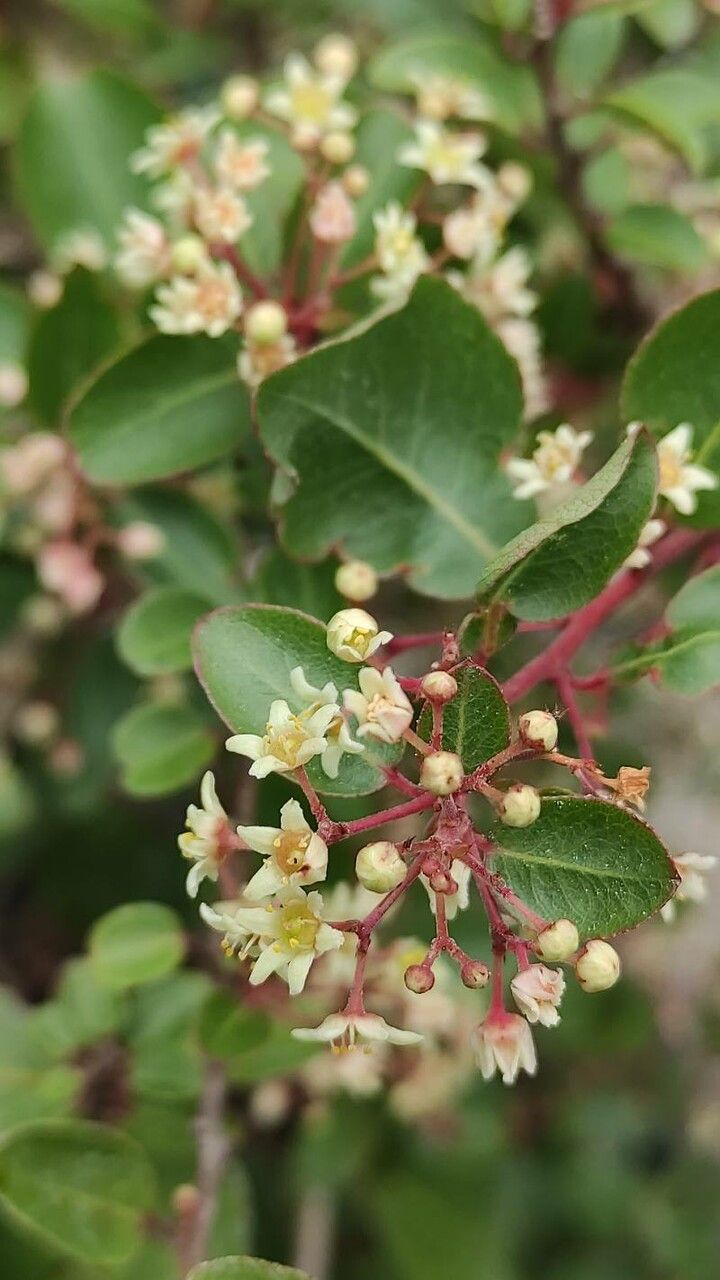
During the spring and summer, Gymnosporia putterlickioides produces small white flowers, which are then followed by red or black berries that attract birds and other wildlife. The plant is drought-tolerant and can thrive in a variety of soil types.
In traditional medicine, Gymnosporia putterlickioides has been used to treat stomach ailments, fever, and headaches. It is also valued for its anti-inflammatory properties.
This ornamental shrub is well-suited for gardens and landscapes, thanks to its dense foliage, which makes it ideal for hedging or screening purposes. While minimal maintenance is required once the plant is established, occasional pruning can help maintain its shape.
Overall, Gymnosporia putterlickioides is an attractive evergreen shrub that offers both ornamental value and medicinal benefits, making it a versatile addition to gardens and landscapes.
Large-flowered spikethorn is disease-resistant and typically not susceptible to illnesses. Regarding care, this plant is fairly low-maintenance. When grown outdoors it needs only minimal watering, and larger specimens usually do not require pruning. Smaller plants, however, should be pruned after they finish blooming. Large-flowered spikethorn is appropriate for anyone with outdoor space, such as a garden or deck, and does not require extensive care experience.
How to keep Gymnosporia Putterlickioides.
Light
Large-flowered spikethorn is native to habitats such as forest understories or rocky sites, where it grows under natural shade. It favors partial sun but can tolerate full sun or full shade, showing its adaptable and hardy nature.
Temperature
Large-flowered spikethorn comes from tropical areas, where the climate is usually warm and humid. Consequently, it is well suited to high temperatures and moisture. It dislikes sudden temperature fluctuations and favors a stable thermal environment, so avoiding indoor temperature swings is important. It generally does not tolerate cold and needs higher temperatures to grow. If the ambient temperature falls too low, the plant may stop growing or even die.
Fertilizer
The best time to fertilize a Large-flowered spikethorn is in early spring as it comes out of dormancy. This supports overall growth and flower development. Fertilization improves foliage, stems, and branches while encouraging large, vibrant, and long-lasting flowers. It also helps move nutrients from the roots to the flowers and boosts the plant's health and disease resistance.
Botanical profile.
- Plant Type
- Shrub
- Life Cycle
- Perennial
- Genus
- Gymnosporia
- Family
- Celastraceae
- Hardiness Zone
- 9-11
- Mature Height
- 2.13 m to 3.96 m
- Mature Spread
- 1.52 m to 3.05 m
- Leaf Color
- Dark Green
- Leaf Type
- Evergreen
- Flower Size
- 0.51 cm to 0.76 cm
- Bloom Time
- Mid spring, Late spring
- Planting Time
- Spring, Summer, Autumn
- Harvest Time
- Summer
Other names.