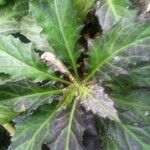
Gynura bicolor
Red-vegetable · Velvetplant · Cineraria hybrids · Florist's cineraria · Okinawan spinach
Description
Source: leafsnapGynura bicolor, hongfeng cai 紅鳳菜, Okinawan spinach or edible gynura, is a member of the chrysanthemum family (Asteraceae). It is native to China, Thailand, and Myanmar but grown in many other places as a vegetable and as a medicinal herb.There are two kinds: one that is green on both sides, and another with leaves that are green on the top and purple underneath. Both kinds are considered medicinal vegetables. Gynura bicolor is a perennial and therefore found for sale throughout the year, however, winter and spring are the best times to use the plant.
Care Guide
💧 Water
Okinawan spinach flourishes in humid conditions, efficiently absorbing moisture from its environment. It can withstand moderate drought but benefits from weekly watering to support optimal growth. As an evergreen plant, it maintains its lush, green appearance throughout the year when provided with the right balance of adequate moisture and well-draining soil.
How should I water my Okinawan spinach?
The Okinawan spinach is quite particular about its water needs and how it is given. If you don't water it correctly, you could end up damaging your tomatoes. To water the Okinawan spinach properly, make sure to apply the water directly to the soil in a slow and gentle manner. Avoid pouring all the water in at once or doing overhead watering. While it should be watered slowly, it's also important to water deeply to ensure the soil where the Okinawan spinach grows remains moist enough.
What should I do if I give my Okinawan spinach too much water or too little water?
If you accidentally water too much and worry about disease, act immediately. The best solution for overwatered Okinawan spinach is to remove it from its current spot and let the roots dry a bit before replanting in a well-drained soil in a new location. If you use pots, consider transferring the plant to one with better drainage. On the other hand, if you underwater the spinach, simply start watering it more often.
How frequently should I give water to my Okinawan spinach?
To ensure proper growth, Okinawan spinach requires a significant amount of water. To meet this demand, it is recommended to water the plants frequently and early on in the spring and summer. In the beginning of the growing season, watering once or twice a week should suffice. However, as the season progresses, the frequency of watering should be increased. During the hot summer months, it may be necessary to water the plants twice a day or even more, depending on the weather conditions. After the plants have gone through their main growth phases, you can reduce the watering frequency to once a week until the end of the growing season.
How much water does my Okinawan spinach require?
Okinawan spinach is very popular and many gardeners have successfully grown them. Therefore, we have a good understanding of how to care for these plants, including how much water they need. On average, an Okinawan spinach plant should receive about 1 - 1.5 inches of water per week, which should be evenly distributed during your weekly watering. As the weather gets warmer, you may need to increase the amount of water, but in most cases, two inches per week is a good baseline amount.
How do I know if I'm giving my Okinawan spinach enough water?
Both underwatering and overwatering are common problems for your Okinawan spinach and can cause similar symptoms. For instance, both overwatering and underwatering can lead to foliage discoloration and wilting. When your Okinawan spinach is underwatered, its leaves will initially curl and droop, and you'll notice a decrease in leaf vitality. Underwatering can also result in stunted growth and poor overall development, as this plant requires a high amount of water, including for flower production. On the other hand, overwatering can increase the risk of disease, such as rot, and may also cause unpleasant odors from the soil. It's worth noting that symptoms of underwatering appear more quickly than those of overwatering. If you observe a lot of standing water or waterlogged soil, it's likely due to overwatering.
☀️ Light Full sun
Okinawan spinach performs best with plenty of sunlight. Its native growing conditions have shaped it to do well in abundant sun. Still, it can tolerate and develop in locations with less than full sun. Too much or too little sunlight can influence its healthy growth.
How much sunlight does Okinawan spinach need for it to grow?
To ensure optimal growth and fruit production, Okinawan spinach typically requires a minimum of 6 to 8 hours of sunlight per day.
What kind of sunlight does Okinawan spinach require?
To ensure the successful growth of Okinawan spinach, it is important to place it in a spot with abundant sunlight. This means finding a location where it can receive direct sunlight without any obstructions like trees, fences, or buildings. Generally, the plant's growth rate determines its sunlight requirements, as faster-growing plants need more hours of sunlight. For optimal photosynthesis, it is recommended to expose the plant to morning sun.
Do I need to keep Okinawan spinach out of the sun to keep it safe?
In most climates, Okinawan spinach generally doesn't require protection from the sun. However, if you live in a desert or near the equator, you may need to consider that the sun can be too harsh for certain plants, although this is not the case for most areas.
What happens if Okinawan spinach doesn't get enough sunlight?
All plants require sunlight to generate energy. However, plants with a short growing season require even more sunlight and energy compared to plants that grow slowly. This is because they need to go through all their growth processes, including fruit production, within a limited timeframe. One clear sign of insufficient sunlight for Okinawan spinach is the development of pale and yellow leaves that lack the necessary chlorophyll to maintain their healthy green color. Eventually, these leaves may fall off and new growth will be stunted and weak. As the plant stretches itself towards the available light, it may become leggy and sparse. Ultimately, without adequate sunlight, the plant will be unable to produce large, high-quality leaves or fruit. Since Okinawan spinach expends a significant amount of energy on leaf and fruit development, a lack of light to convert into energy will result in a compromised harvest.
If Okinawan spinach gets too much sunlight, what will happen?
Okinawan spinach can be sunburned when exposed to intense sunlight, especially when it is hot and the plant does not have enough water. The afternoon sun is particularly likely to cause burns, resulting in faded patches of light brown to white on the top parts of the plant that are directly exposed to the sun. This is especially a concern right after the plant has been transplanted to an area with full sun. Gradually transitioning the plant or providing it with a barrier can help prevent sunburn in young plants. While Okinawan spinach usually develops large leaves that protect its fruits from the sun, it is still possible for the fruits to be damaged if they come into direct contact with intense sunlight. To prevent this, it is important not to overly prune the protective leaves.
🌡️ Temperature 15–35°C
Okinawan spinach comes from regions where temperatures typically range from 59 to 95 °F (15 to 35 ℃). It prefers this mild climate and can adapt to seasonal fluctuations within that range.
What temperature is best for Okinawan spinach?
Okinawan spinach thrives in a specific temperature range. As long as you maintain this range, you can avoid any problems with cold or hot damage to the foliage. However, if you notice a change in leaf colors, it could be a sign that the Okinawan spinach is not happy. To keep it content, aim to keep the temperature between 70-85℉(21-30℃). Don't worry if the temperature occasionally goes slightly above or below this range.
How can I keep Okinawan spinach safe from very hot or very cold weather outside?
If you have Okinawan spinach growing outside, it can be difficult to move it indoors. However, there are steps you can take to protect it from extreme temperatures. For example, you can create a shade tent using stakes and cloth to shield the plant from direct sunlight. To guard against cold weather and strong winds, you can build a small greenhouse using garden stakes and clear or translucent plastic. If you have greenhouse plastic like polycarbonate, it is ideal for this purpose. Remember to remove the greenhouse once nighttime temperatures reach 40℉ (10℃).
Does Okinawan spinach require varying temperatures depending on the season?
Okinawan spinach has a preferred temperature range that it should stay within throughout the year. However, the care for Okinawan spinach should be adjusted depending on the season. In the warmest months, providing extra shade and a gentle breeze will help the plant handle the hottest days. Conversely, during cooler months in places where temperatures drop below 40℉(10℃), the plant may need to be moved away from cold windows and doors.
How can I keep my Okinawan spinach at the right temperature?
Maintaining the right temperature for your Okinawan spinach is quite straightforward. If you're growing it indoors, you have the flexibility to move the plant around your indoor space to find the ideal temperature zones. Just be cautious not to place it near air conditioning vents, heaters, frequently opening doors, or drafty windows. On the other hand, controlling the temperature for outdoor growth can be a bit more challenging. If your Okinawan spinach is in a pot, you can bring it inside during extreme hot or cold weather. Otherwise, you'll have to take additional precautions to safeguard it from irreversible damage caused by excessive heat or cold. Consider providing some cover to shield the spinach from the scorching sun or chilling winds that could potentially harm your plant.
💨 Humidity
🪴 Soil 6-7
🌱 Fertilizer
To maximize yield, Okinawan spinach does best with regular applications of a balanced fertilizer, particularly one high in nitrogen. Apply fertilizer before planting, at planting, and when seedlings are 2 inches tall. Adding compost or manure also provides a steady nutrient supply. Insufficient nutrients in the soil cause underdeveloped leaves and stems, inferior flavors, thin stems, and possibly a bitter taste.
🪴 Pot & Repot 2-3 years
To ensure optimal growth for your Okinawan spinach, repot it every 2-3 years in early spring. Choose a pot that is one size larger to allow for healthy root development. After repotting, make sure to water the plant frequently and place it in partial shade. Regularly misting the leaves will help the plant recover and encourage lush foliage.
✂️ Pruning
Okinawan spinach is a versatile leafy plant with vibrant green and purple leaves. To encourage bushier growth, prune it from early to late spring. Trim the stems just above the leaf nodes, and remove any dead leaves. This will improve airflow, reduce the risk of disease, and enhance both the appearance and productivity of the plant for culinary use.
🌿 Propagating
🐛 Diseases & pets
☠️ Toxicity
Characteristics
- Plant Type
- Herb
- Life Cycle
- Perennial
- Genus
- Gynura
- Family
- Asteraceae
- Hardiness Zone
- 7-10
- Mature Height
- 30 cm to 91 cm
- Mature Spread
- 91 cm
- Leaf Color
- Green
- Leaf Type
- Evergreen
- Flower Color
- Orange, Yellow
- Flower Size
- 2.54 cm
- Bloom Time
- Late spring, Summer, Early fall, Mid fall
- Planting Time
- Spring, Winter
- Harvest Time
- Mid summer, Late summer, Fall, Early winter
- Native Area
- Nepal, India, Myanmar, Bhutan, Thailand, China