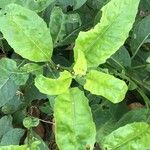
Gynura procumbens
Longevity spinach
Description
Source: leafsnapGynura procumbens, also known as longevity spinach or Sambung Nyawa, is a perennial herbaceous plant in the Asteraceae family. Native to Southeast Asia, it has been utilized for centuries in traditional medicine for its numerous health benefits. This plant exhibits a trailing growth habit and can reach up to one meter in length. Its dark green leaves, which feature purple undersides, possess a slightly fuzzy texture. The leaves are edible, bearing a slightly bitter taste with hints of sweetness. Gynura procumbens is rich in various bioactive compounds, including flavonoids, alkaloids, saponins, tannins, and phenolic acids, all of which contribute to its medicinal properties. Traditionally, it has been used to treat diabetes by helping to regulate blood sugar levels and improving digestion by reducing inflammation in the gut. The plant is easy to grow both indoors and outdoors. It thrives in well-drained soil with partial shade but can also tolerate full sun if provided with an adequate water supply. In conclusion, Gynura procumbens is a perennial plant that offers numerous health benefits due to its bioactive compounds. It helps regulate blood sugar levels, improve digestion, and reduce inflammation, making it an excellent addition to both indoor and outdoor gardens. Not only is it aesthetically pleasing, but it also provides valuable medicinal properties.
Care Guide
💧 Water Every 7 days
Longevity spinach flourishes in humid tropical environments, as it prefers constant moisture and typically needs watering about twice a week. Although it can withstand short periods of dryness, maintaining humidity is essential, especially indoors. To support its lush foliage during growth cycles, consider misting the plant or using a pebble tray to increase humidity levels.
☀️ Light Partial sun
Longevity spinach comes from habitats like forest understories or rocky areas with natural shade. It prefers partial sunlight but can also tolerate full sun when necessary. This flexibility enables it to thrive under a range of sunlight exposures.
🌡️ Temperature 20–37.8°C
Longevity spinach prefers moderate temperatures, about the same range people usually find comfortable. It does best in conditions that are not excessively hot or cold. The primary problem in high heat is the potential for sunburn, so some shade during summer is recommended to avoid too much heat. When temperatures fall, Longevity spinach becomes dormant. To keep it growing year-round, warmer winter temperatures must be maintained. Frost can harm the plant and should be kept away.
💨 Humidity normal (40-60%)
This plant will thrive in moderate humidity, which is probably the level in your home. However, misting it a few times a week can be very beneficial. Make sure the room has good ventilation.
🪴 Soil 6-7
🌱 Fertilizer
To maximize yield, Longevity spinach benefits from regular applications of a balanced fertilizer, particularly one high in nitrogen. Apply fertilizer before planting, at planting, and when seedlings are 2 inches tall. Adding compost or manure also provides a continuous supply of nutrients. Insufficient nutrients in the soil lead to underdeveloped leaves and stems, inferior flavors, thin stems, and a potentially bitter taste.
🪴 Pot & Repot
✂️ Pruning
🌿 Propagating
🐛 Diseases & pets
☠️ Toxicity
Characteristics
- Plant Type
- Herb
- Life Cycle
- Annual
- Genus
- Gynura
- Family
- Asteraceae
- Hardiness Zone
- 10-12
- Mature Height
- 49 cm
- Mature Spread
- 91 cm
- Leaf Color
- Green, Dark Green
- Leaf Type
- Semi-evergreen
- Flower Color
- Orange
- Flower Size
- 1.02 cm to 1.52 cm
- Bloom Time
- All year round
- Planting Time
- Spring, Summer, Autumn
- Harvest Time
- All year round
- Native Area
- India, Malaysia, Philippines, Nigeria, Guinea, Gabon, China, Benin, Indonesia, Cambodia, Vietnam, Liberia, Côte d'Ivoire, Singapore, Thailand, Central African Republic