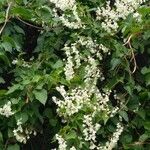
Gypsophila paniculata
Baby's-breath · Tall baby's-breath · Bachelor's button · Babysbreath · Babysbreath Gypsophila
Description
Source: leafsnapGypsophila paniculata, commonly known as baby's breath, is a perennial flowering plant in the Caryophyllaceae family. Native to Europe and Asia, it has been widely cultivated in gardens and used in floral arrangements around the world. The plant typically grows up to 1 meter tall with a bushy habit and narrow, gray-green leaves. The small flowers, which can be white or pinkish-white, are arranged in large panicles at the tops of long stems. These blooms appear from late spring through summer. Gypsophila paniculata prefers well-drained soil and full sun exposure but can tolerate partial shade. While it is drought-tolerant once established, the plant benefits from regular watering during dry spells. This plant is valued for its delicate appearance, making it popular in ornamental gardening. Additionally, it has medicinal uses; its expectorant properties can help treat respiratory issues such as asthma or bronchitis. Overall, Gypsophila paniculata is an attractive perennial that adds beauty and elegance wherever it grows, along with offering some medicinal benefits.
💡 Baby's breath is a popular choice among florists and is commonly used in flower arrangements as a filler due to its long-lasting blossoms, which endure longer than most other flowers. It is also an excellent option for dried flowers. To dry, simply hang the blooms upside down for a few days until they are fully dried. However, exercise caution, as baby's breath is reported to be mildly toxic to dogs and cats. The plant contains saponin and gypenosin, substances that can irritate the gastrointestinal tract of your pets.
🌳 Although commonly seen in decorative bouquets, baby's breath has also made its way into the cosmetics sector. Extracts of baby's breath are added to beauty products for their calming qualities. This lesser-known use leverages the plant's capacity to soften and soothe the skin, making it a useful component in skincare formulations. Given its delicate appearance, its usefulness beyond the vase can be surprising.
🎭 Purity, guilelessness and love
Care Guide
💧 Water Every 3 days
Baby's breath thrives in well-drained soil and moderate humidity. While it can tolerate occasional drought, it needs weekly watering to remain healthy and vigorous. Native to Eurasia, this plant adapts well to temperate climates with balanced rainfall. As an herbaceous perennial, baby's breath goes dormant during the colder months and requires less water at that time.
How should I water my Baby's breath plant the right way?
To ensure the health of your Baby's breath plant, follow these watering tips. It is best to use filtered water that is at room temperature or slightly warmer. Tap water may contain harmful particles, so filtered water is preferred. The reason for using room temperature water is that Baby's breath comes from a warm environment, and cold water could be detrimental. It's important to avoid overhead watering, as this can lead to issues with the plant's foliage. Instead, focus on watering the soil directly. Apply filtered room temperature water until the soil is thoroughly soaked. This method benefits the plant by moistening the roots and aiding in nutrient absorption.
What should I do if I give my Baby's breath plant either too much or too little water?
Overwatering and underwatering can harm your Baby's breath. However, overwatering is a more common problem. Too much water can cause the stems and leaves to wilt and turn yellow. Prolonged overwatering can also lead to root rot, mold, and mildew, which can be fatal. Underwatering is less common because Baby's breath can tolerate drought to some extent. However, it's still possible to underwater the plant, which will result in brittle, brown leaves. It's important to recognize signs of overwatering early to prevent irreversible damage. If you notice early signs, reduce your watering schedule and check the soil drainage. Replace poorly draining soil with a loose, well-draining potting mix. If you suspect underwatering, increase your watering frequency until signs of dehydration disappear.
How frequently should I water my Baby's breath?
If your Baby's breath plant is in a pot, the most precise way to determine if it needs water is to check the soil moisture. Stick your finger into the soil and if the top two to three inches are dry, then it's time to water it. For Baby's breath plants grown outdoors in the ground, you can use the same method to test the soil. Again, if the top few inches are dry, it's time to water. During the spring and early fall, you'll typically need to water this plant about once a week using this method. In extremely hot weather, you may need to increase watering to twice or more per week. However, mature, well-established Baby's breath plants have a good ability to withstand drought.
How much water should I give to my baby's breath?
To properly water your Baby's breath, don't hesitate to give it a generous amount of water. Make sure the top two to three inches of soil are dry before watering. It is best to thoroughly soak the soil with water, enough so that excess water drains out of the pot's drainage holes. If there is no excess water draining, then you may have underwatered the plant. However, be cautious not to let water accumulate in the soil, as this can harm the plant. On the other hand, if water does not drain through the pot, it may indicate poor soil drainage which can harm the plant's health. If the plant is outdoors, watering it with 1 inch of rain per week should be sufficient.
How do I water my Baby's breath as it grows?
The water needs of Baby's breath can vary depending on its growth stages. In the first few years of the plant's life or after transplanting it to a new location, it will require more water than usual. During these stages, the plant focuses on developing new roots to support future growth, and these roots perform best with a slightly higher moisture level. As Baby's breath matures, its water requirements decrease. Additionally, during the blooming period, the plant may need more water due to the significant moisture needed for flower development.
☀️ Light Full sun
Baby's breath does best in full sunlight, which encourages healthy growth and flower production. It can also tolerate locations with somewhat reduced light. Conversely, too much or too little light can cause poor plant health. Native to sunny habitats, baby's breath uses light efficiently at every stage of its growth.
What are the sunlight requirements for Baby's Breath?
Baby's Breath (Gypsophila paniculata) requires full sun, meaning it thrives under more than 6 hours of direct sunlight per day, but it can also tolerate partial sun conditions of about 3-6 hours of sunlight. Observing how sunlight moves through your garden allows you to select spots that provide a balance of light and shade, ensuring the plants' well-being. Baby's Breath originally comes from environments with ample sun exposure and is effective in utilizing light at all stages of growth. However, too much or too little light can negatively impact the plant's health.
How do artificial lights support Baby's Breath indoor growth?
For Baby's Breath growing indoors, sufficient lighting is crucial, especially in conditions where natural sunlight is inadequate, such as during winter or in less sunny spaces. Artificial lighting serves as an essential solution to promote faster and healthier growth. LED lights are recommended due to their ability to be customized to provide the specific wavelengths needed by plants. For optimal growth, full sun plants require 30-50W/sq ft of artificial light, partial sun plants need 20-30W/sq ft, and full shade plants 10-20W/sq ft. The light source should be positioned 12-36 inches above the plant to mimic natural sunlight and be turned on for 8-12 hours per day to simulate the length of natural daylight.
What are the symptoms of improper lighting for Baby's Breath?
Symptoms of improper lighting for Baby's Breath include small leaves, leggy or sparse growth, accelerated leaf drop, slower or halted growth, lighter colored new leaves, chlorosis (leaves losing green color), sunscald (leaf and stem damage due to intense sunlight), leaf curling (as a defense mechanism against overexposure to sunlight), wilting (due to increased water loss from transpiration), and leaf scorching (brown, dry, and crispy leaf edges due to excessive sunlight). These symptoms indicate that the plant is either not receiving enough light or is being exposed to too much direct sunlight.
What solutions can improve Baby's Breath's growth in terms of lighting?
To ensure optimal growth for Baby's Breath, gradually acclimate plants to receive at least 6 hours of direct sunlight daily by moving them to sunnier spots each week. Use south-facing windows and keep curtains open during the day for indoor plants. Artificial lighting, such as desk or ceiling lamps left on for at least 8 hours daily or professional grow lights, can provide additional support. Outdoors, move your plants gradually to avoid sunburn. Removing obstructions or transplanting to sunnier locations with good drainage can also benefit plants. Note that parts of the plant affected by previous light conditions may not recover, but new growth will be healthy with improved lighting.
🌡️ Temperature 5–35°C
Baby's breath is indigenous to temperate areas and favors warm conditions. The optimal temperature for growth is 68 to 95 °F (20 to 35 ℃). Depending on the season, you may need to adjust the surrounding temperature to imitate its natural habitat.
What is the ideal temperature range for growing Baby's breath?
The ideal temperature range for Baby's breath, or Gypsophila paniculata, is between 68 to 95 °F (20 to 35 °C). This plant is native to temperate regions and thrives in warm conditions. To ensure optimal growth, it's important to adjust the ambient temperature according to the season to closely mimic its natural habitat. Despite its strong cold resistance, in environments where winter temperatures fall below -30°C, it's crucial to provide cold protection by covering the plant with soil or straw and ensuring the soil is moist before the first freeze.
Does Baby's breath require any special care during winter?
Baby's breath has a strong resistance to cold and generally does not require special frost protection measures. However, if temperatures are expected to drop below -30°C, it's important to take steps to protect the plant from extreme cold. This can be achieved by covering it with soil or straw. Additionally, before autumn's first freeze, it is advisable to water the plant abundantly to keep the soil moist. This preparation helps in preventing drought and water scarcity for the plant during the winter and early spring.
How should you care for Baby's breath in low temperature conditions?
Baby's breath thrives best when the temperature remains above 20°C and should ideally be kept above 0°C during winter. If temperatures fall below -30°C, you may not notice any immediate changes during the winter, but there could be a decrease in sprouting or no sprouting at all in the spring. To care for Baby's breath in such conditions, in spring, it is recommended to remove any parts of the plant that have failed to sprout.
What steps should be taken if Baby's breath is exposed to high temperatures?
During the summer months, it's important to keep Baby's breath below 35°C. Exposure to temperatures above 41°C can cause the leaves to lighten in color, become prone to curling, susceptible to sunburn, and in severe cases, the plant may wilt and dry up. To mitigate these issues, you should trim away sunburned and dried-up parts. Moving the plant to a location that provides shade during the midday and afternoon sun, or using a shade cloth, can also help. Additionally, watering the plant in the morning and evening can help maintain soil moisture and protect the plant from heat stress.
💨 Humidity dry (<40%)
This plant prefers dry conditions, so don't mist it. However, watering it less often can also thrive in higher humidity.
🪴 Soil 6-7
🌱 Fertilizer
The ideal time to fertilize a Baby's breath is in early spring, when it is coming out of dormancy and beginning active growth. Fertilization supplies essential nutrients for healthy development. Although Baby's breath has relatively low fertilizer requirements, applying fertilizer annually can improve its survival and encourage better, longer-lasting flowers.
Why do I need to add food for my Baby's breath plant?
Fertilization is important for Baby's breath plants because it provides essential nutrients for their overall growth. Although Baby's breath generally requires less fertilization compared to other plants, it can still benefit from annual fertilization. Proper fertilization not only helps keep the plant alive but also encourages better flower production and longer-lasting blooms. Therefore, those who want their Baby's breath to thrive should make annual fertilization a priority.
When should I fertilize my Baby's breath plant?
The best time to fertilize a Baby's breath is in late winter to early spring when the plant is transitioning from dormancy to active growth. Fertilizing at this time promotes healthy growth and sets the plant up for a successful season. Although it is generally best to fertilize in the early spring, it is also acceptable to fertilize in the fall. However, it is not recommended to feed the plant during summer or winter.
When should I not add fertilizer to my Baby's breath plant?
To provide optimal care for your Baby's breath plant, it is recommended to fertilize it only in late winter and early spring. This plant has low fertilization needs, and a single feeding during that time should be sufficient. It is important to avoid fertilizing during spring, summer, and fall as it can easily lead to overfertilization and its associated issues. However, if you missed fertilizing in spring, it is acceptable to do so in fall. In addition, there is no need to fertilize during the winter months when the Baby's breath plant is in a dormant growth phase and not actively producing new growth. Therefore, fertilization during most of the winter should be avoided.
What kind of fertilizer should I use for my Baby's breath plant?
When it comes to fertilizing Baby's breath, any general-purpose fertilizer with a balanced mix of plant nutrients will suffice. However, there are specific nutrient blends that can be more advantageous. Many gardeners recommend using a fertilizer with higher levels of phosphorus because it promotes stronger roots and better flowers, which is beneficial for flowering plants like Baby's breath. Whether you choose a granular or liquid fertilizer, the key is to ensure it contains an ample supply of nutrients. Alternatively, you can also improve the soil using organic methods such as compost, manure, and similar materials, which can greatly enhance the growth of your Baby's breath.
How can I add fertilizer to my Baby's Breath plant?
To fertilize Baby's breath, the most common method is applying granular or pellet fertilizer to the soil surrounding the plant. For optimal results, fertilize when the plant transitions from its winter dormant phase to active growth in early spring. Wait for shoots to emerge from the soil before applying fertilizer. Alternatively, you can use liquid fertilizer, which should be diluted with water before application. Regardless of the type of fertilizer used, it is recommended to moisten the soil before, during, and after fertilization.
🪴 Pot & Repot 2-3 years
When repotting Baby's breath, select a pot 1-2 inches (2.5–5.1 cm) larger that has ample drainage. Use a well-draining potting mix. Repot in spring or fall, making sure the root ball sits slightly lower than the rim of the flower pot. Water thoroughly after repotting and place the pot in a warm spot with indirect sunlight.
✂️ Pruning
Baby's breath produces delicate flowers and benefits significantly from pruning, which can improve both its shape and flower production. Key techniques include deadheading and cutting back stems by one-third in the spring. Proper pruning encourages robust growth, controls the plant's size, and prevents legginess, all of which promote a healthy appearance.
🌿 Propagating
🐛 Diseases & pets
☠️ Toxicity
Characteristics
- Plant Type
- Herb
- Life Cycle
- Perennial, Annual
- Genus
- Gypsophila
- Family
- Caryophyllaceae
- Hardiness Zone
- 4-10
- Mature Height
- 30 cm to 76 cm
- Mature Spread
- 61 cm to 91 cm
- Leaf Color
- Green, Blue, Gray, Silver
- Leaf Type
- Deciduous
- Flower Color
- White, Pink
- Flower Size
- 0.10 cm
- Bloom Time
- Early summer, Mid summer
- Planting Time
- Spring
- Harvest Time
- Mid summer
- Native Area
- Turkey, Austria, Czech Republic, Slovakia, Bulgaria, Poland, Belarus, Ukraine, China, Russia, Serbia, Lithuania, Hungary, Kyrgyzstan, Kazakhstan, Mongolia, Azerbaijan, Romania, Latvia, Moldova