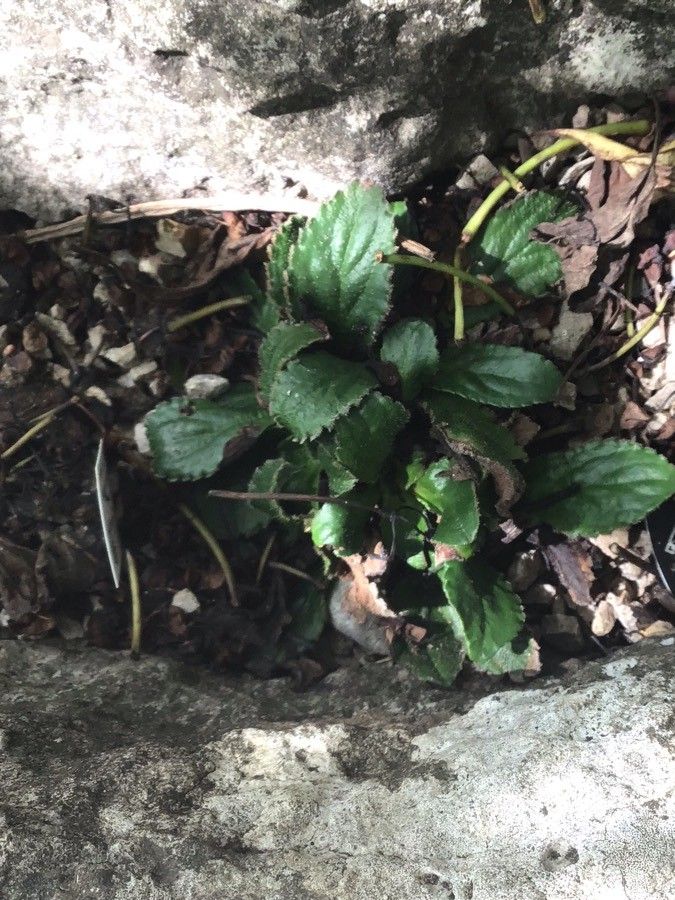
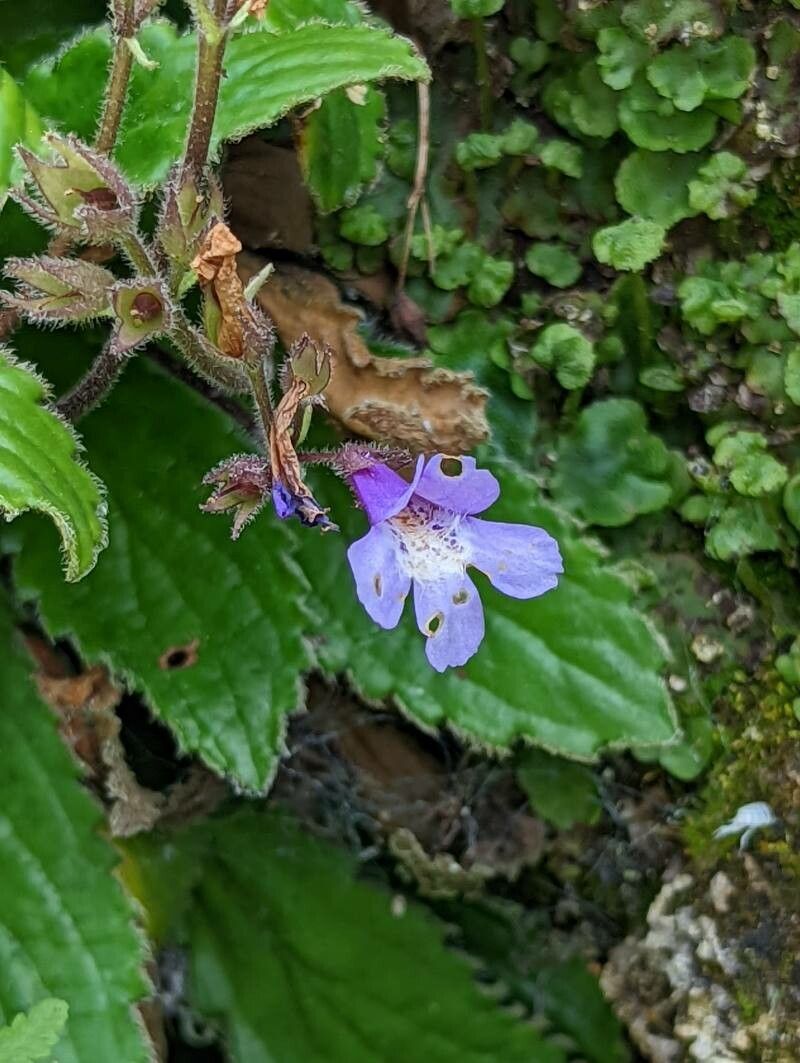
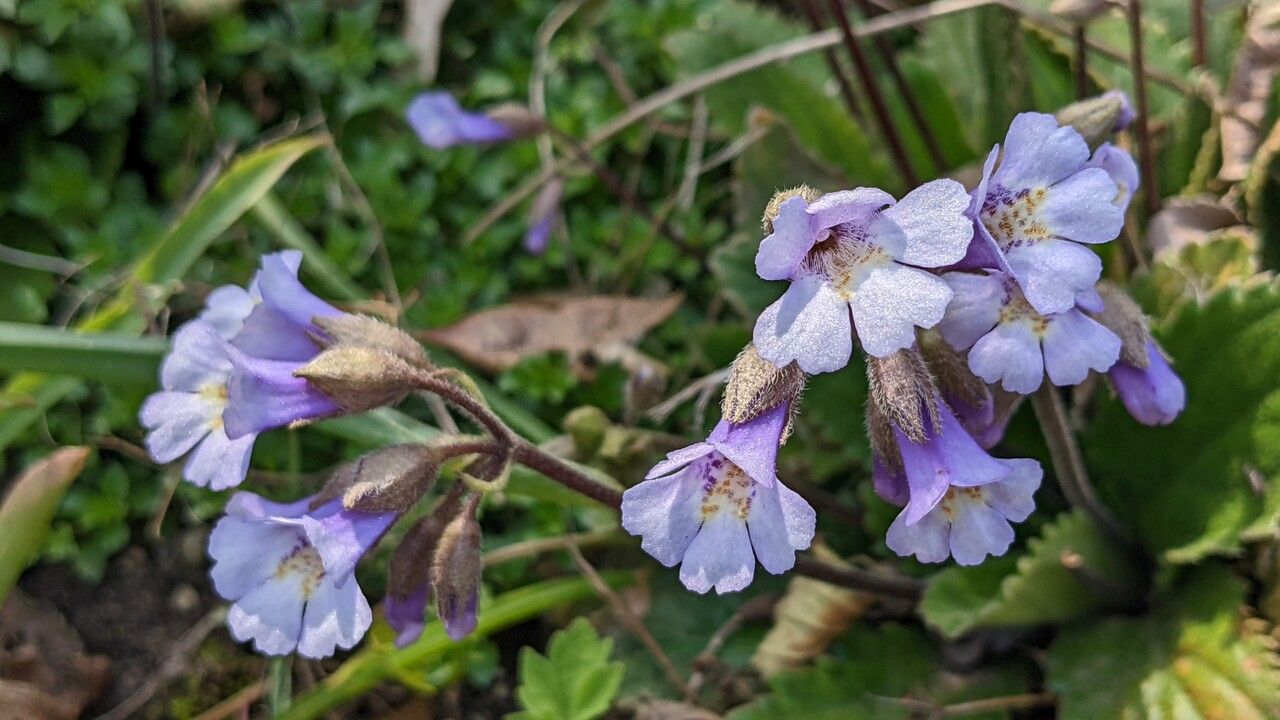
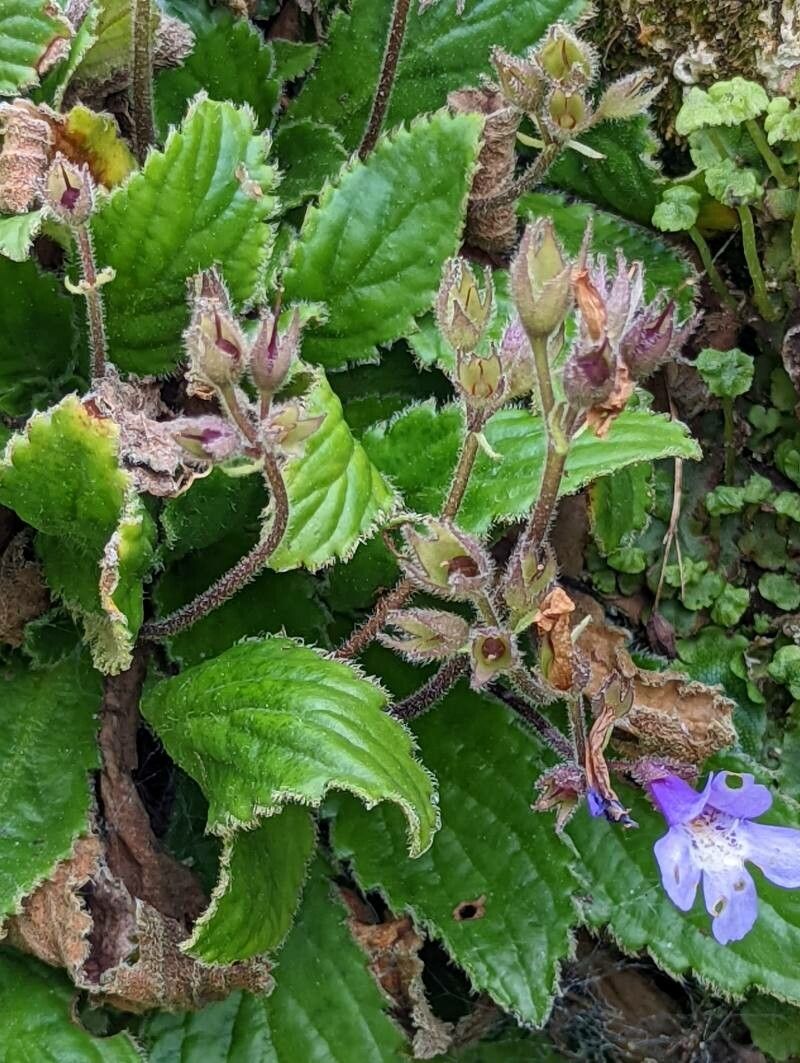
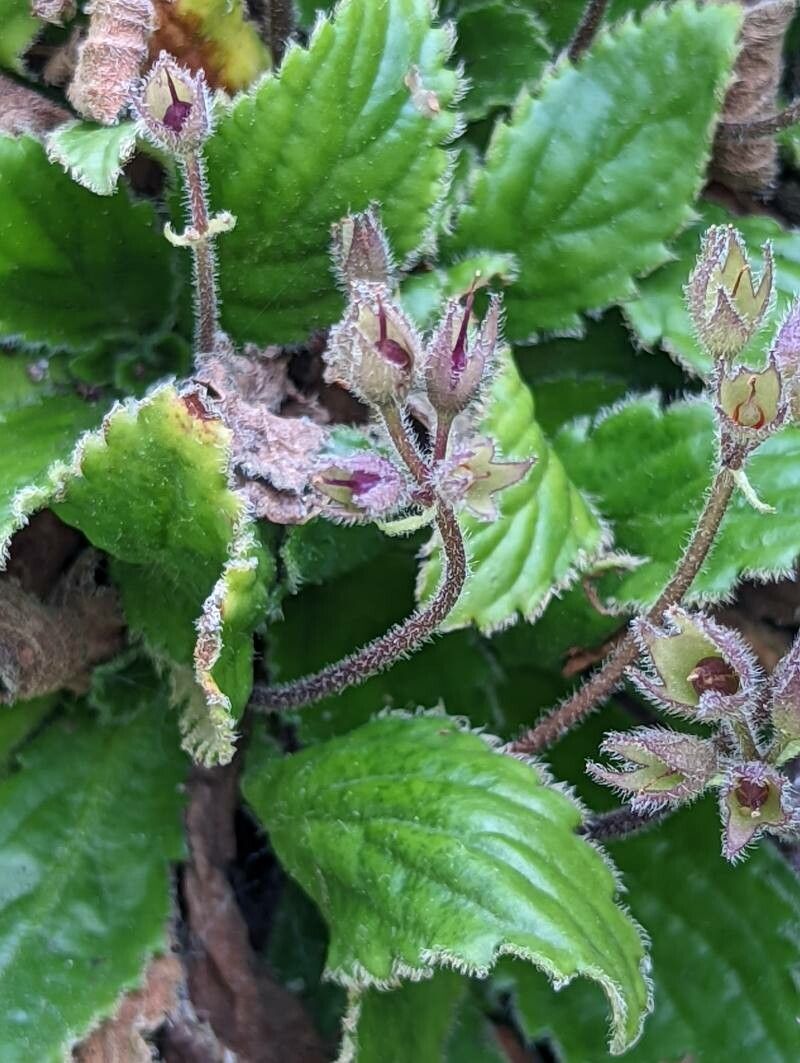
Haberlea is a monotypic genus of flowering plants in the family Gesneriaceae. The only member of this genus, Haberlea rhodopensis, is endemic to parts of Bulgaria and a small part of northern Greece, especially in the Rhodope Mountains. Common names include Orpheus flower and resurrection plant because of the remarkable ability of Haberlea to survive very long periods of desiccation.The species is a stemless, evergreen perennial found in north-facing rocky habitats. Basal rosettes of dark green leaves bear trumpet-shaped flowers in shades of white, violet or purple in spring and summer. Despite the zygomorphic nectar-producing flowers (which are considered an ancestral character) and the overall trend in Gesneriaceae, resurrection plant is only rarely pollinated by bees and does not have specific pollinators. Rather its evolution has switched in the direction of providing pollen as a reward and generalisation of pollinating insects - a trend that is observed in the other European member (Ramonda) of the more tropically and subtropically spread family Gesneriaceae. Active pollinators of Haberlea are found to be syrphids (hoverflies) and Lasioglossum morio (Hymenoptera, Halictidae) which are characterised by low preferential behaviour regarding the plants that they visit for food.Haberlea rhodopensis (pale lilac flowers) has gained the Royal Horticultural Society's Award of Garden Merit.Haberlea rhodopensis, also known as Orpheus flower, resurrecting flower, and Rhodope Silivryak, is a rare ancient relict flower, endemic to the mountain tops of Bulgaria. There are approximately 20 areas in Bulgaria where Haberlea rhodopensis grows in nature. It can be found at various altitudes up to almost 2000 meters above sea level. Most locations are found in the Rhodope Mountains of Bulgaria and the southern slopes of Northern Greece but smaller populations are also found in Stara Planina region of Bulgaria. The extent of occurrence is estimated to be smaller than 20,000 km². Although rare and protected, the overall population trend is stable, and the habitat is not threatened. Haberlea rhodopensis and approximately 350 other plant species are called ‘resurrection’ plants. The Orpheus flower is among the most interesting and rare representatives of Bulgarian flora, and a unique plant in many ways. It possesses a property unique among flowering plants (angiosperms) to survive extreme and prolonged dehydration, falling into an anabiotic state that mimics death. It was documented about 70 years ago that Haberlea rhodopensis can survive three years in an herbarium. When the water is available again, the plants can recover (resurrect) in less than two days and have full restoration of all activities.
The resurrection plant is fairly disease-resistant and usually not prone to illnesses. However, it can be affected by pests and diseases present in its surroundings. These problems are generally minor. For care, this plant requires moderate maintenance. It should be pruned regularly to preserve a neat appearance and support healthy growth. Fertilizing can also help encourage flowering. The resurrection plant is suitable for anyone with outdoor space, such as a garden or patio, and does not demand extensive care experience. It may need more attention when kept indoors.
How to keep Haberlea Rhodopensis.
Light
The resurrection plant does best with moderate sunlight but can also grow satisfactorily in low-light conditions. Adequate light is crucial for its health and normal growth. Too little light can restrict growth, while too much exposure may stress the plant and cause it to shrivel. Since this species is native to shaded, dappled-light habitats, providing less bright surroundings is important.
Water
The resurrection plant thrives in rocky terrains, needing moderate humidity and weekly watering. Known for its drought tolerance, this plant curls its leaves during dry periods, showcasing its resilience and adaptability until moisture returns.
Temperature
Resurrection plant does best in a temperate climate, with an ideal temperature range of 50 to 77 °F (10 to 25 ℃). If grown in climates that are colder or hotter, modifications are needed to preserve suitable growing conditions.
Fertilizer
The best time to fertilize a Resurrection plant is in early spring, when it is coming out of dormancy and starting active growth. Fertilization supplies essential nutrients for healthy development. While the Resurrection plant requires relatively little fertilizer, feeding it once a year can improve its survival and encourage better, longer-lasting flowers.
Pruning
The Resurrection plant benefits from light pruning, which is best performed from late winter to early spring. By removing dead leaves and spent flowers, you can encourage new growth, improve air circulation, and reduce the risk of disease. This helps ensure vibrant blooms and a longer lifespan for the plant.
Pot & Repot
The Resurrection plant is a perennial that forms rosettes and needs to be repotted every 2-3 years in the spring. When repotting, use a shallow pot to avoid excess moisture build-up. After repotting, place the plant in bright, indirect light and keep the soil slightly moist. This hardy species flourishes with minimal disturbance and consistent care.
Botanical profile.
- Plant Type
- Herb
- Life Cycle
- Perennial
- Genus
- Haberlea
- Family
- Gesneriaceae
- Hardiness Zone
- 6
- Mature Height
- 15 cm
- Mature Spread
- 25 cm
- Leaf Color
- Green
- Leaf Type
- Evergreen
- Flower Color
- Lavender, Purple
- Flower Size
- 2.03 cm to 3.05 cm
- Bloom Time
- Mid spring, Late spring
- Planting Time
- Spring, Summer, Autumn
- Harvest Time
- Early summer, Mid summer
- Native Area
- Bulgaria, Greece
Reader questions.
How should I water my Resurrection plant for the best results?
When watering the Resurrection plant, it is recommended to use filtered water at room temperature or slightly warmer. Tap water may contain harmful particles, hence filtered water is better. The plant is accustomed to warm environments, so cold water could be a shock. It is important to avoid overhead watering as it can cause foliage issues. Instead, pour filtered room temperature water onto the soil until it is completely soaked. This helps moisten the roots and facilitates the spread of nutrients.
Why should I put fertilizer on my Resurrection plant?
Fertilization is important for the Resurrection plant because it provides key nutrients for growth above and below ground. Although the Resurrection plant has relatively low fertilization needs, annual fertilization can greatly benefit the plant by ensuring its survival and promoting the development of longer-lasting flowers. Therefore, those who want their Resurrection plant to look its best should make sure to fertilize it annually.
How long does Resurrection plant need sunlight to grow?
The Resurrection plant needs about 3-6 hours of direct sunlight daily to grow well. However, it should also be protected from the intense sun during the hottest parts of the day to avoid damage. In the morning, the Resurrection plant thrives under sunlight, but it can withstand some afternoon sun as long as it's not too hot. To achieve the ideal sunlight balance, consider planting the Resurrection plant in a location that receives partial sun, like under a tree or on the east side of a building.
What is the best temperature for the Resurrection plant?
The Resurrection plant thrives in cooler weather and has a specific temperature range that is ideal for its growth. To ensure the plant's health, it is best to keep it within the temperatures of 65-75℉(18-25℃). However, the plant can tolerate higher and lower heat levels to some extent. It is recommended to keep the growing area within a few degrees of the optimal temperature range. If it is not possible to maintain exact temperatures, the plant will still continue to grow, but it may suffer damage or reduced growth. On the higher end, the plant can handle temperatures between 75-85℉(25-30℃), while on the lower end, it can tolerate temperatures as low as 5℉(-15℃). It is crucial to pay attention to the higher temperature range as the Resurrection plant prefers cooler environments. Allowing the temperatures to go above the upper range can slow down growth or even cause the plant to die if it reaches above 85℉(30℃).
What do I do if I give my Resurrection plant too much water or too little water?
Overwatering is a more common problem for Resurrection plants and can cause wilting, yellowing, diseases like root rot, mold, and mildew, and even plant death. Underwatering is less common but can result in brittle, brown leaves. It's important to notice signs of overwatering early and adjust your watering schedule accordingly. If the soil drains poorly, replace it with a well-draining mix. If your plant is not getting enough water, increase your watering until the signs improve.
When should I fertilize my Resurrection plant for the best results?
The best time to fertilize a Resurrection plant is in late winter or early spring. This is when the plant is transitioning from its dormant phase to a phase of active growth. Fertilizing at this time promotes healthy growth and sets the plant up for a successful season. While early spring is generally the most beneficial time to fertilize, it is also acceptable to fertilize in the fall. However, it is not recommended to feed a Resurrection plant during the summer or winter seasons.
What happens if the Resurrection plant doesn't get enough sunlight?
To avoid sun damage, it's important to protect the Resurrection plant from excessive direct sunlight. If the plant is exposed to too much sun, its leaves may turn yellow, dry out, or burn. Additionally, you may notice that the plant wilts or doesn't grow properly. To prevent this, provide some shade for the Resurrection plant during the hottest times of the day. This can be done by using a shade cloth or positioning the plant near taller plants that can offer natural shade.
Does the Resurrection plant need different temperatures at different stages of growth?
To keep your Resurrection plant healthy, it is crucial to maintain an optimal temperature range of 65-75℉ (18-25℃) in your growing space. It is best to aim for the cooler end of this range, but be careful not to go below -5℉ (-20℃), as extremely cold temperatures can negatively affect growth. While extremely hot temperatures are more damaging, it is important to note that even mild heat during the budding stage can prevent the Resurrection plant from flowering.
How often do I need to water my Resurrection plant?
If your Resurrection plant is in a pot, the best way to determine if it needs water is by checking the soil with your finger. If the top two to three inches of soil are dry, it's time to water it. If you have the plant planted in the ground, you can use the same method to test the soil. When the top few inches of soil are dry, it's time to water it. In the spring and early fall, you'll likely need to water the plant once a week using this method. In very hot weather, you may need to increase watering to twice a week or more. However, mature Resurrection plants have a great ability to withstand drought.
When is it not a good idea to fertilize my Resurrection plant?
To properly care for your Resurrection plant, it's important to know the right time to fertilize it. Late winter and early spring are the only times when fertilization is recommended, as this plant has low fertilizer needs. Overfertilization can cause problems, so it's best to avoid fertilizing during spring, summer, and fall, unless you missed the opportunity to fertilize in spring. In that case, fall is an acceptable time to feed the plant. During winter, when the Resurrection plant is in a dormant phase and not actively growing, fertilization is not necessary.
What happens if the Resurrection plant gets too much sunlight?
When Resurrection plant doesn't receive sufficient sunlight, it can become tall and weak, with few leaves. The leaves may also turn yellow or pale green, which means the plant isn't making enough chlorophyll due to the lack of sunlight. To fix this issue, you can try transferring the Resurrection plant to a sunnier location or trimming nearby foliage to increase the amount of light reaching the plant.
Here are three suggestions for maintaining the right temperature for a Resurrection plant.
Here are three tips for growing a Resurrection plant indoors: 1. Choose the coldest room: Select the coolest room in your home for growing the Resurrection plant. This room should be away from the scorching heat of the sun during the middle of the day. However, make sure the room still receives a good amount of sunlight, as zero sunlight can hinder the plant's growth. 2. Watch out for high temperatures: During the growing season of spring and early summer, high temperatures can negatively impact the Resurrection plant's flowering. This can cause the buds to change into non-flowering buds, resulting in a loss of aesthetic quality. Keep the temperature within the range of 65-75℉ (18-25℃) to ensure the plant flowers to its full potential. 3. Protect from frost: Although the Resurrection plant can withstand lower temperatures, such as -5℉ (-20℃), it will not survive significant frost. If exposed to cold temperatures in late fall or winter, the plant will show signs of frost damage, including wilting and discoloration. Cut off any parts of the plant that turn brown or black due to frost damage.