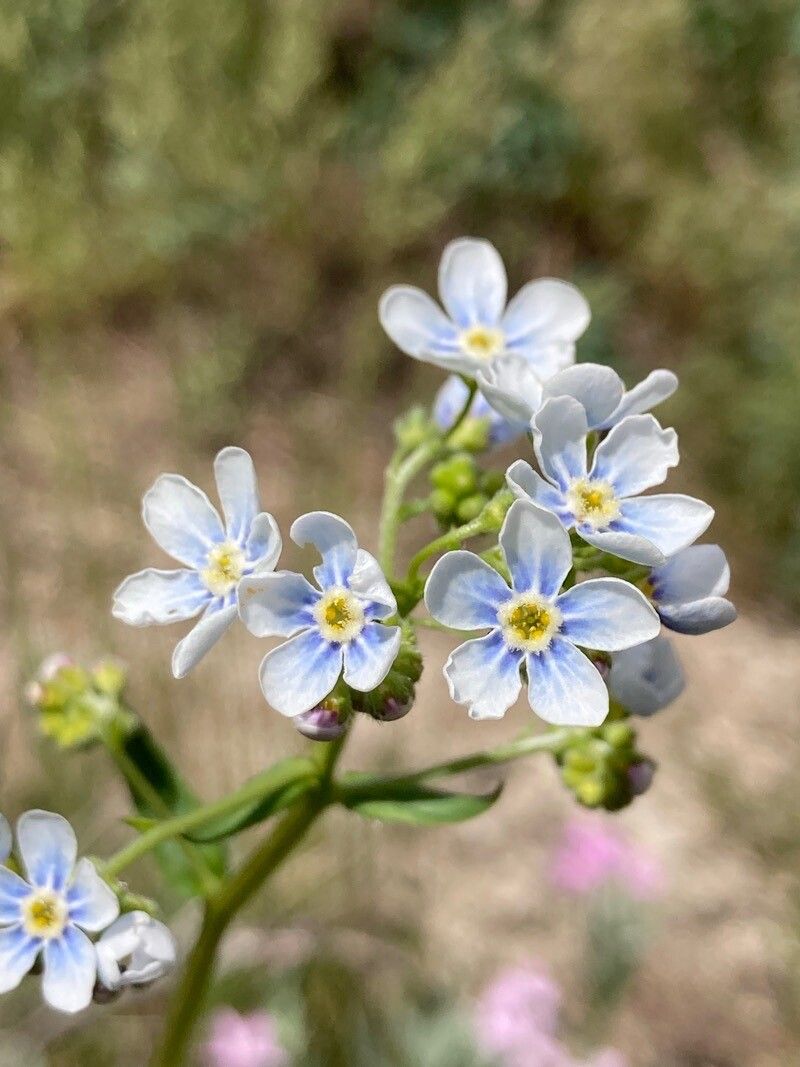
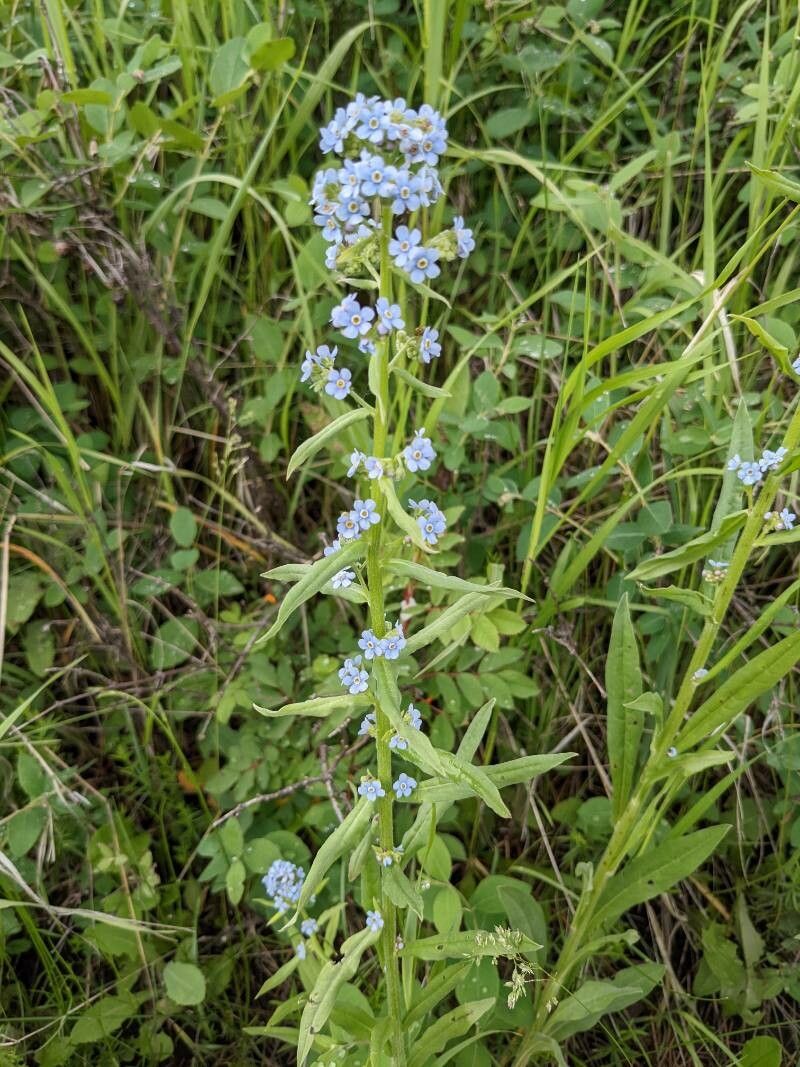
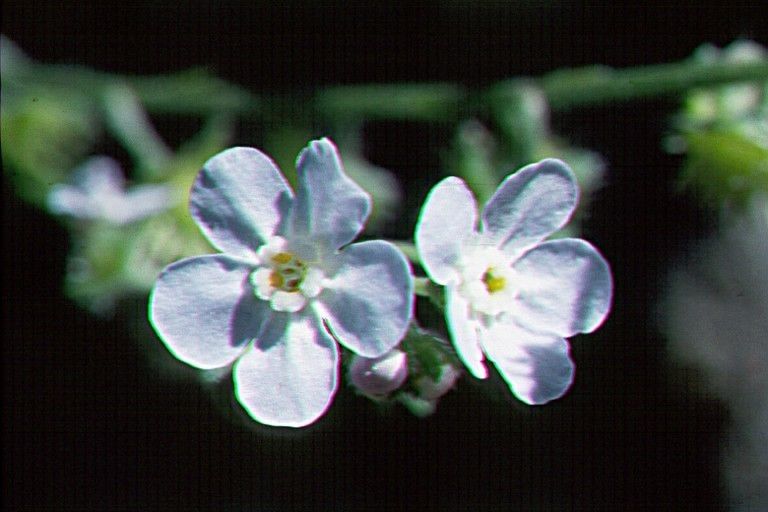
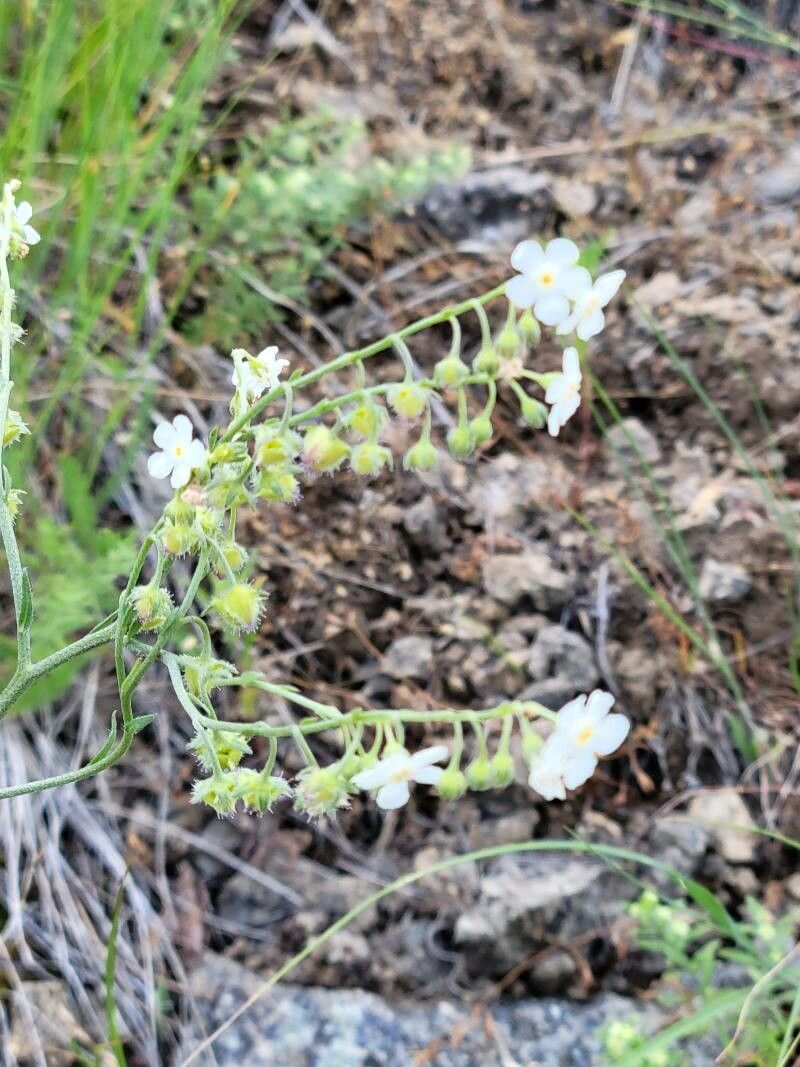
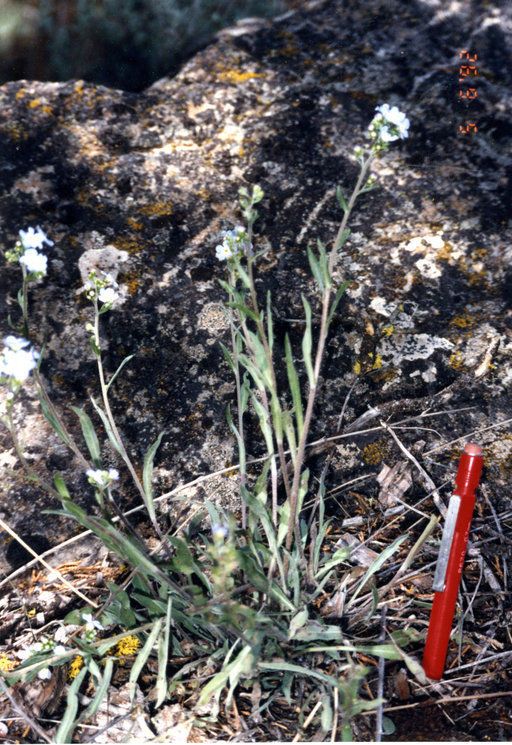
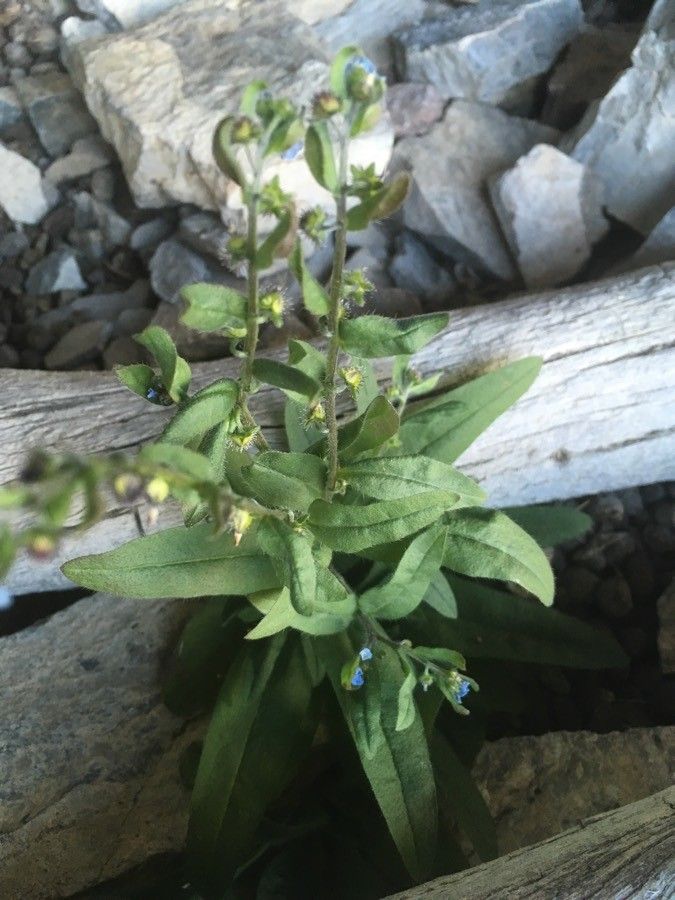
Hackelia floribunda is a species of flowering plant in the borage family known by the common names large-flowered stickseed and manyflower stickseed.The plant is native to much of the western half of North America, in Canada and the Midwestern and Western United States. It is most often found in areas which are wet during the springtime, such as meadows, wetlands, and riparian areas.Hackelia floribunda is a lush biennial or perennial herb with hairy stems reaching a maximum height of about 1 metre (3.3 ft). They emerge as a leafy clump, surrounded by many smooth lance-shaped leaves up to 24 meters long. There are few leaves at the ends of the stems, which hold cyme inflorescences of blue flowers. Each flower has five lobes with petallike appendages at their bases. The fruit is a tiny, mildly prickly nutlet.
Manyflower stickseed has strong resistance to disease and is generally unlikely to suffer from illnesses. Still, it can be affected by pests and diseases present in its environment; such infections are typically mild. Care-wise, the plant needs moderate maintenance. It should be pruned regularly to preserve an attractive appearance and healthy growth. Applying fertilizer can also help encourage flowering. Manyflower stickseed is appropriate for anyone with outdoor space, like a garden or patio, and does not demand extensive care experience. It may need more attention when kept indoors.
How to keep Hackelia Floribunda.
Light
The manyflower stickseed grows best in conditions comparable to full sunlight, though it can also tolerate lower or moderate light levels. Because it comes from non-specific habitats, its broad tolerance to sunlight supports healthy growth. However, too much or too little sunlight can negatively affect the plant’s development.
Temperature
Manyflower stickseed originates from temperate habitats and performs best in temperatures of 68 to 95 °F (20 to 35 °C). If temperatures lie outside this range, seasonal adjustments may be necessary to achieve optimal growth.
Fertilizer
Manyflower stickseed are regarded as heavy feeders in terms of nutrients. They need frequent, low doses of nitrogen and potassium fertilizers and periodic applications of phosphorus, micronutrients, sulfur, and magnesium to maintain good growth and bright coloration. Continuous fertilization throughout the growing season prevents deficiency symptoms and sustains optimal growth.
Pruning
Manyflower stickseed benefits from strategic pruning between early and late spring to boost its growth and flowering. Techniques such as deadheading and removing damaged growth improve air circulation, reduce the risk of disease, and promote an overall healthier plant.
Botanical profile.
- Plant Type
- Herb
- Life Cycle
- Biennial, Perennial
- Genus
- Hackelia
- Family
- Boraginaceae
- Hardiness Zone
- 3-7
- Mature Height
- 30 cm to 91 cm
- Mature Spread
- 20 cm to 40 cm
- Leaf Color
- Green
- Leaf Type
- Semi-evergreen
- Flower Color
- White
- Flower Size
- 2.54 cm
- Bloom Time
- Mid spring, Late spring, Early summer
- Planting Time
- Spring
- Harvest Time
- Mid summer, Late summer, Early fall
Other names.
Reader questions.
How should I water my Manyflower stickseed plant?
To properly water the Manyflower stickseed plant, it is recommended to use filtered water that is at room temperature. The reason for this is that tap water may contain harmful particles. The plant prefers warm water as it is accustomed to a warm environment, and cold water may be a shock to its system. It is best to avoid watering the plant from above, as this can lead to issues with the foliage. Instead, carefully apply the filtered room temperature water directly to the soil until it is completely soaked. Soaking the soil has many benefits for the plant, including keeping the roots moist and aiding in the spread of nutrients throughout the soil.
How long should Manyflower stickseed be exposed to sunlight each day to grow well?
To ensure the well-being of the plants, it is important to provide them with a minimum of 6 to 8 hours of sunlight each day. They thrive when exposed to more morning light, especially during the summer. The Manyflower stickseed, in particular, requires full sun and benefits from as much sunlight as possible. This extra light enables these species to produce more food, display stunning blooms, and increase their chances of survival.
What temperature is best for Manyflower stickseed?
Manyflower stickseed thrives in cooler weather and has an ideal temperature range for optimal growth. To keep Manyflower stickseed healthy, aim to maintain temperatures between 65-75℉(18-25℃). While Manyflower stickseed can tolerate higher and lower temperatures, it is best to keep the growing area within a few degrees of the recommended range. Deviating from this range does not mean that the plant will stop growing, but it may lead to damage or reduced growth. On the higher end, temperatures between 75-85℉(25-30℃) are acceptable. On the lower end, Manyflower stickseed can withstand temperatures as low as 5℉(-15℃). However, it is crucial to pay closer attention to the upper temperature range, as Manyflower stickseed prefers cooler environments. Exceeding 85℉(30℃) may cause growth to slow and potentially kill the plant.
What should I do if I give my Manyflower stickseed plant too much or too little water?
Overwatering is a more common problem for the Manyflower stickseed, and it can cause wilting, yellowing leaves, and diseases like root rot, mold, and mildew. Underwatering is less common, but it can make the leaves brittle and brown. To prevent overwatering, pay attention to any early signs and reduce your watering schedule. If the soil drains poorly, replace it with a well-draining potting mix. If your plant is not receiving enough water, simply water it more regularly.
What kind of sunlight does Manyflower stickseed require?
The Manyflower stickseed thrives in full sunlight, so it is important to not overcrowd them. This allows each plant to receive equal exposure to the sun and prevents the leaves from being deprived of sunlight. If you are planting them in pots, make sure to place them in windows with direct sun so they can receive full sunlight throughout the year. It is not recommended to place them in areas with partial or filtered light, as this can result in weak stems and unhealthy flowers. For optimal growth, always ensure that the Manyflower stickseed is exposed to the sun.
Does Manyflower stickseed need different temperatures at different stages of growth?
To ensure healthy growth of Manyflower stickseed, it is crucial to maintain a growing space temperature between 65~75℉(18~25℃). It is advised to stay towards the cooler end of this range. Avoid going below -5℉(-20℃) as extremely cold temperatures can hinder growth at any stage. While extremely hot temperatures are more damaging than cold temperatures, it is still important to prevent high temperatures during the budding stage as it may prevent Manyflower stickseed from flowering.
How often do I need to water my Manyflower stickseed?
If your Manyflower stickseed plant is in a pot, the easiest way to determine if it needs water is by sticking your finger into the soil. If the top two to three inches of soil are dry, it's time to water it. The same method can be used if you're growing the plant outdoors in the ground. Again, if the top few inches of soil have dried out, it's time to water. Typically, during spring and early fall, you'll need to water this plant about once a week using this method. However, in extremely hot weather, you may need to water it twice or more per week. It's worth noting that mature, well-established Manyflower stickseed plants have a remarkable ability to tolerate drought.
Can the sun harm plants? How can I shield Manyflower stickseed from damage caused by sunlight and heat?
When the temperature exceeds 90℉(32℃), the Manyflower stickseed can be harmed by extreme heat, especially if they are exposed to prolonged sun exposure. To mitigate this, it is advisable to provide shade for them in the afternoon during summer. It is crucial to remember that sunlight in summer is more intense and longer than in winter. If the Manyflower stickseed appears to be stressed from excessive sun, it may be necessary to ensure they are well-watered. Water them when the top 2 inches of soil are dry and consider moving potted plants indoors if it is too hot outside. It is normal for the plant leaves to wilt during the day, but they usually recover overnight. If you notice continued drooping, it indicates the plant is losing water rapidly and requires watering.
Here are three tips to help you keep the temperature of the Manyflower stickseed plant under control.
Here are three tips for growing Manyflower stickseed plants indoors: Tip #1: Choose the coldest room with sunlight Select the coldest room in your home for growing Manyflower stickseed plants indoors. This room should be on the side of your house that doesn't experience excessive heat from the sun during the middle of the day. However, make sure the room still receives a sufficient amount of sunlight. Lack of sunlight can hinder the growth of Manyflower stickseed plants, so it's important to strike a balance between shade and sunlight. Tip #2: Maintain the right temperature for flowering During the growing season (spring and early summer), high temperatures can disrupt the flowering stage of Manyflower stickseed plants. This can result in buds that fail to blossom or only partially open. For optimal flowering, ensure the temperature remains within the range of 65-75℉ (18-25℃). With the right temperature conditions, Manyflower stickseed plants can reach their full potential. Tip #3: Protect against frost damage Manyflower stickseed plants can tolerate low temperatures as low as -5℉ (-20℃). However, they are not frost-resistant. If exposed to significant frost during late fall or winter, Manyflower stickseed plants will show signs of damage. These signs include wilting, discoloration, and eventually, the affected parts turning brown or black as they die. It's important to promptly prune any damaged sections to preserve the overall health of the plant.
How much water does my Manyflower stickseed plant require?
To properly water your Manyflower stickseed, do not hesitate to give it a generous amount of water. Make sure that the top two to three inches of soil are dry before watering. It is important to thoroughly soak the soil, ensuring that water flows through the drainage holes at the bottom of the pot. If you do not see any excess water draining, you may have not given enough water. However, be cautious not to let water accumulate in the soil as it can harm the plant. On the other hand, if water does not drain properly through the pot, it may indicate poorly draining soil, which can negatively affect the plant's health. If the plant is outdoors, approximately one inch of rain per week should be sufficient.
Should I keep Manyflower stickseed away from the sun?
The Manyflower stickseed thrives in the sun and doesn't need any protection from it. In fact, they love the sun so much that some species are heliotropic, meaning they actively move towards it. To ensure their optimal growth, it is recommended to plant them in south-facing gardens where they can receive sunlight from morning to afternoon. It is worth noting, however, that while the sun is generally beneficial for them, some individuals may be susceptible to sunburn. In such cases, it is advisable to provide protection from the intense afternoon and midday sun by positioning them near a shaded area created by a tree or a wall. On the other hand, attempting to grow the Manyflower stickseed in shady areas is not feasible. This is because the larger flowers of these plants require a significant amount of energy to grow and blossom, which can only be provided through ample sunlight. Therefore, for optimum results, it is essential to ensure they are placed in an area with full sun and provided with the appropriate lighting conditions.
Does Manyflower stickseed require varying temperatures for different seasons?
To ensure optimal conditions for Manyflower stickseed growth, it is important to maintain a consistent temperature in your growing area throughout the year. If your location experiences extreme winters or hot summers, it is recommended to bring your plants indoors. By placing them in a cool room, you can provide the ideal environment for Manyflower stickseed. However, if you choose to keep your plants outside, it is crucial to closely monitor the temperature. In regions with particularly hot summers, it is essential to prevent temperatures from exceeding 85℉ (30℃) as this can quickly dehydrate and damage Manyflower stickseed, eventually leading to their demise.