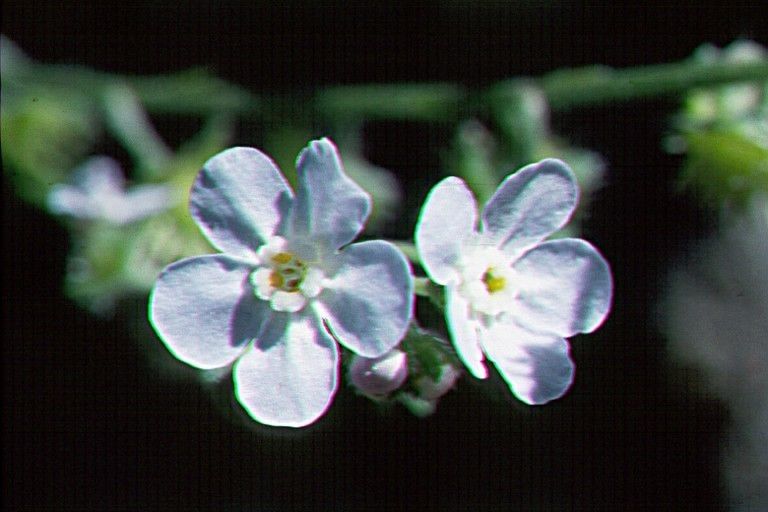
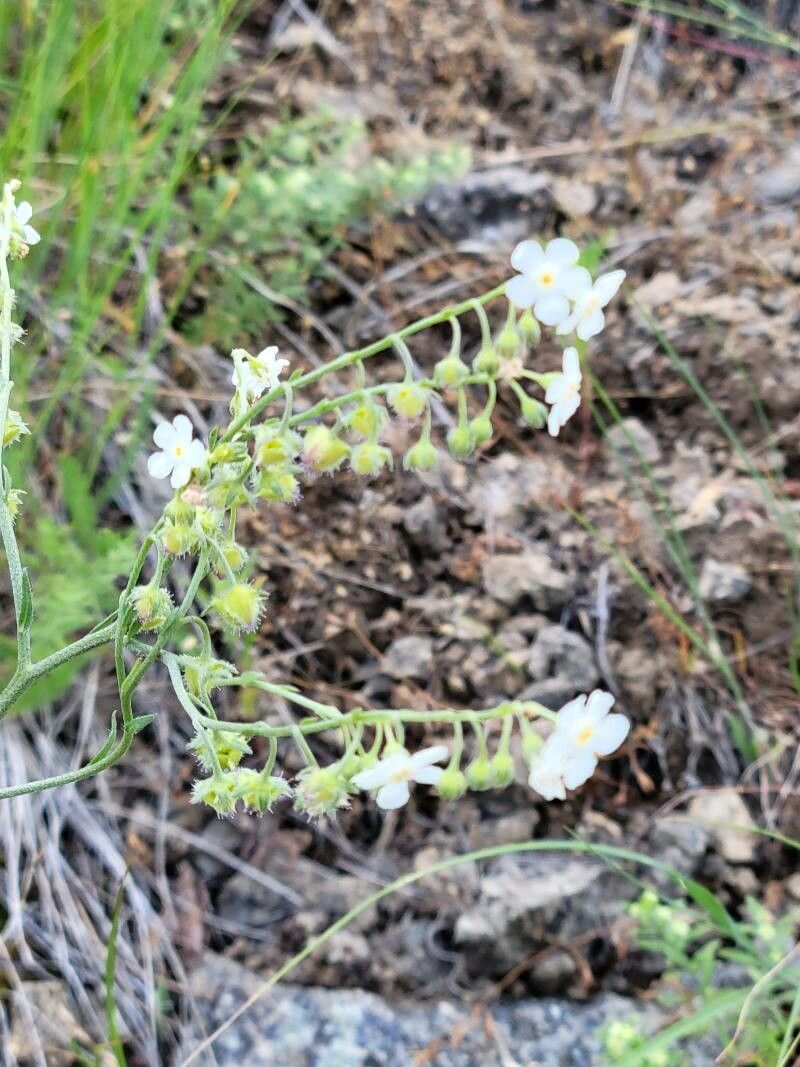
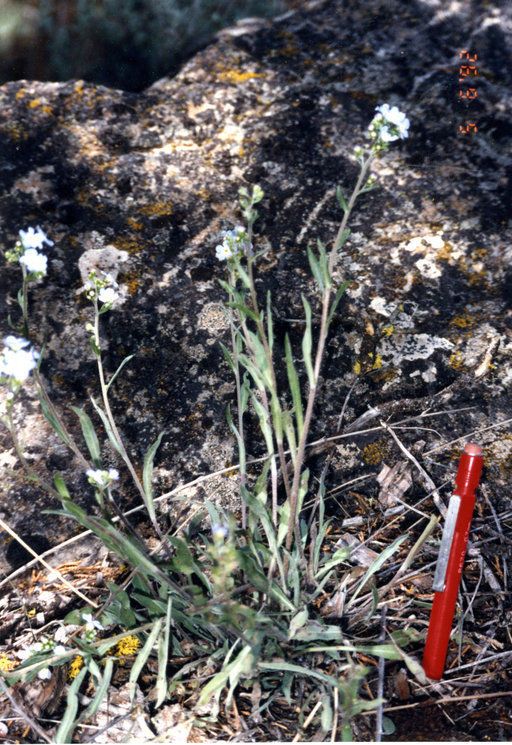
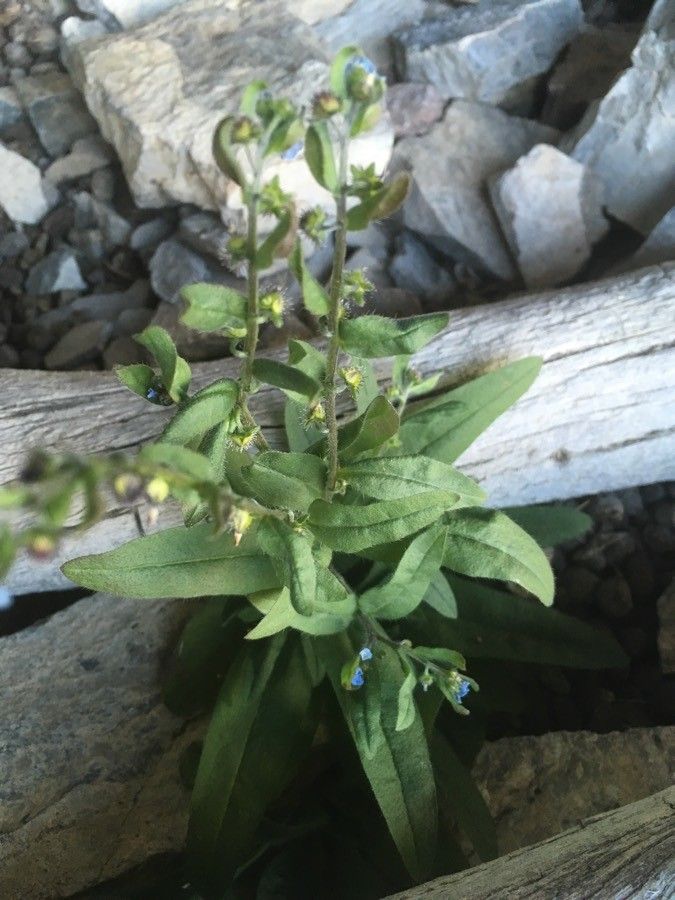
Hackelia nervosa is a species of flowering plant in the borage family known by the common name Sierra stickseed. It is native to the mountains of California, especially the Sierra Nevada and its foothills, in areas with some moisture up to near treeline. Its range may extend into Nevada. Sierra stickseed is a perennial herb starting from basal patches of oblong leaves each up to 12 centimeters long. Erect stems rise to heights between 40 and 70 centimeters, with gradually fewer and smaller leaves toward the tops. The stems hold cyme inflorescences of deep sky blue to violet flowers (see top left image); the buds are often pink. Each petite flower has five oblong rounded-end lobes, with a slightly raised appendage at the base of each forming a white ring around the yellow anthers. The flowerheads start off quite compact, but later the stems and petioles elongate to give a more open appearance (image center left). The fruit (the "stickseed") is a nutlet about half a centimeter long, covered with barb-tipped prickles that stick to almost anything (image at lower left), explaining the common name of this genus.
Sierra stickseed has strong resistance to disease and is generally not susceptible to illnesses. However, it can be affected by pests and diseases present in its environment. These infections are typically mild. In terms of care, this plant needs moderate maintenance. It should be pruned regularly to maintain an attractive appearance and healthy growth. Applying fertilizer can also encourage flowering. Sierra stickseed is well suited for anyone with outdoor space, such as a garden or patio, and does not require much gardening experience. It may need more attention when grown indoors.
How to keep Hackelia Nervosa.
Light
Sierra stickseed occurs naturally in habitats like forest understories or rocky areas, where it is subjected to natural shade. It prefers partial sun but can tolerate full sun or full shade, illustrating its versatile and hardy nature.
Temperature
Sierra stickseed can tolerate a broad span of temperatures, but its range may still be constrained by various combinations of moisture and heat. It performs best in warm summer conditions with sufficient rainfall or irrigation. Extended stretches of overcast, rainy weather or sustained high temperatures can raise the chance of Sierra stickseed dying. During winter, shielding it from cold helps increase its survival rate.
Fertilizer
One fertilizer application in spring is generally enough for Sierra stickseed, though multiple feedings can maximize growth. Feed every one to one and a half months. Fertilization improves the leaves’ appearance and function, helping maintain uniform color and a healthy texture. It also encourages root development and boosts nutrient uptake for long-term plant health.
Pruning
Sierra stickseed thrives in well-drained soils and is known for its delicate blue flowers and hairy foliage. To encourage healthy growth, prune the plant in early spring. This will help remove dead stems and improve airflow. Regular maintenance not only improves the plant's health but also enhances its aesthetic appeal. For specific pruning techniques, consult horticultural guides.
Botanical profile.
- Plant Type
- Herb
- Life Cycle
- Perennial
- Genus
- Hackelia
- Family
- Boraginaceae
- Hardiness Zone
- 4-8
- Mature Height
- 30 cm to 61 cm
- Mature Spread
- 20 cm to 40 cm
- Leaf Color
- Green
- Leaf Type
- Deciduous
- Flower Color
- Blue
- Flower Size
- 0.51 cm to 0.76 cm
- Bloom Time
- Mid spring, Late spring
- Planting Time
- Spring, Summer
- Harvest Time
- Early summer, Mid summer