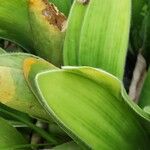
Haemanthus albiflos
The Paintbrush Plant · Paintbrush
Description
Source: leafsnapHaemanthus albiflos, commonly known as the white paintbrush lily, is a bulbous perennial plant native to South Africa. It belongs to the Amaryllidaceae family and is well-loved for its striking appearance, making it a popular ornamental plant. The plant features large, round bulbs that can reach up to 15 cm in diameter, covered in papery brown scales. Its leaves are large and strap-like, growing up to 60 cm in length and 10 cm in width. In late summer or early autumn, Haemanthus albiflos produces tall stalks that can grow up to 60 cm in height. These stalks bear clusters of small white flowers that resemble paintbrushes or bottle brushes, with each cluster containing dozens of individual flowers. The flowers are highlighted by long stamens that protrude from their centers, adding to their distinctive look. This plant prefers well-draining soil rich with organic matter and thrives in partial shade or filtered sunlight. It is relatively easy to grow but requires regular watering during its growing season, which spans from spring through autumn. In addition to its ornamental appeal as a garden plant or houseplant, Haemanthus albiflos has been used for medicinal purposes by indigenous peoples in South Africa for centuries due to its antibacterial properties. However, it is important to note that ingesting any part of the plant can be toxic if consumed in large quantities. Therefore, caution should be exercised when handling it around children or pets who might accidentally ingest it. Overall, Haemanthus albiflos is a captivating choice for any garden enthusiast seeking an easy-to-grow yet stunningly beautiful flowering bulbous perennial with unique bottle brush-like blooms!
Care Guide
💧 Water Every 7 days
The Paintbrush plant thrives with consistent moisture and moderate humidity, though it can tolerate brief periods of dryness. To align with its water storage capabilities, it's best to water it every two weeks. Being an evergreen, the Paintbrush retains its foliage throughout the year, so it's important to water it carefully during its active growth phase to maintain optimal leaf health.
How should I water my Paintbrush?
To properly water the Paintbrush plant, it is recommended to use filtered water at room temperature. Tap water may contain harmful particles, so it is best to avoid it. The plant prefers water that is at or slightly warmer than room temperature, as it is accustomed to a warm environment. Cold water can be a shock to its system. It is advised to refrain from overhead watering, as it can lead to issues with the foliage. Instead, carefully apply filtered, room temperature water directly to the soil until it is completely soaked. This method helps to moisturize the roots and promote their growth and nutrient absorption.
What do I do if I put too much or too little water on my paintbrush?
Overwatering and underwatering can harm your Paintbrush plant, but overwatering is more common. When the plant receives too much water, its stems and leaves may wilt and turn yellow. Overwatering for a long time can also cause diseases like root rot, mold, and mildew, which can be fatal to your plant. Underwatering is less likely, as the Paintbrush plant can tolerate drought to some degree. However, it is still possible, and when it happens, the leaves may become brittle and brown. To care for your Paintbrush, it is crucial to recognize the signs of overwatering early. Some diseases resulting from overwatering, like root rot, may be irreversible if not addressed promptly. If you notice early signs of overwatering, reduce your watering and check the soil quality. If the soil does not drain well, replace it with loose, well-draining potting mix. If signs of underwatering are present, simply water your plant regularly until the signs subside.
How frequently do I need to water my Paintbrush?
If your plant is potted, the easiest way to determine if it needs water is by sticking your finger in the soil. If the top two to three inches of soil are dry, it's time to water. If your Paintbrush is grown outdoors in the ground, you can use the same method to check the soil. Once the top few inches of soil are dry, it's time to water. Typically, you'll need to water this plant about once a week in the spring and early fall. In extremely hot weather, you may need to water twice a week or more. However, it's important to note that mature, well-established Paintbrush plants can tolerate drought well.
How much water should I use for my Paintbrush?
To properly water your Paintbrush plant, don't hold back on the amount of water you give. Make sure the top few inches of soil are dry before watering, and then thoroughly soak the entire soil. You should add enough water for excess to flow out through the drainage holes in the pot. If you don't see any water draining, it means you haven't given enough water. However, be careful not to let water accumulate inside the soil, as this can harm the plant. On the other hand, if water is not draining through the pot, it could be a sign of poorly draining soil, which is bad for the plant's health. If the plant is outdoors, it generally only needs about 1 inch of rain per week.
How should I water my Paintbrush as it grows?
The water requirements of the Paintbrush plant can vary depending on different growth stages. When the plant is in its early years or has been recently transplanted, it will need more water than usual. During these stages, the plant focuses on developing new roots to support future growth. These roots require additional moisture to perform optimally. As the plant matures, its water needs decrease. However, during the bloom period, when the flowers are developing, the plant may require more water due to the increased moisture requirements for this process.
☀️ Light Partial sun
Paintbrush performs best with a careful balance of sun exposure. It prefers places with a moderate amount of sunlight, yet it can also tolerate areas with plentiful sun. Both too much and too little sunlight can influence its growth, which is typical of its native habitats. Its sunlight needs can vary at different stages of development.
What are the sunlight requirements for Paintbrush plants?
Paintbrush plants have flexible sunlight requirements, thriving in both partial sun (about 3-6 hours of sunlight) and full sun (more than 6 hours of sunlight). The amount of sunlight affects their growth, with different growth stages possibly having varying needs for light. It is important to observe the sunlight movement through your garden to spot the ideal balance of light and shade to ensure the plants' well-being.
How does artificial lighting benefit Paintbrush plants indoors?
Indoor Paintbrush plants benefit significantly from artificial lighting, especially when natural sunlight is insufficient. Artificial lights, such as LEDs, can be customized to provide the necessary wavelengths of light, fostering faster and healthier growth. For optimal growth, full sun plants require 30-50W/sq ft, partial sun plants need 20-30W/sq ft, and full shade plants need 10-20W/sq ft of artificial light. The light source should be placed 12-36 inches above the plant and kept on for 8-12 hours per day to mimic natural daylight conditions.
What are the symptoms of inadequate light for Paintbrush plants?
Paintbrush plants show several symptoms when light conditions are inadequate, including small leaves, leggy or sparse growth, faster leaf drop, slower or no new growth, lighter-colored new leaves, chlorosis, sunscald, leaf curling, wilting, and leaf scorching. These symptoms indicate either an excess or deficiency of sunlight, affecting the plant's ability to photosynthesize efficiently and maintain healthy growth.
What solutions can help Paintbrush plants adapt to new light conditions indoors and outdoors?
To help Paintbrush plants adapt to new light conditions, gradually shift them to sunnier spots each week until they receive 3-6 hours of direct sunlight daily. This can involve using artificial lighting if the plant is large or indoors. For outdoor plants, moving them gradually avoids sunburn. Removing obstructions and potentially transplanting smaller plants during their dormant period can also provide more sunlight. It's important to note that parts of the plant affected by insufficient sunlight might not recover, but new growth should be healthy with improved light exposure.
🌡️ Temperature 20–37.8°C
Paintbrush originates from temperate regions and does best in temperatures between 68 and 100 °F (20 to 38 ℃). It favors warmer climates but can adjust seasonally when needed. During winter, appropriate care is necessary to keep it warm.
What is the ideal temperature range for Paintbrush plants?
The Paintbrush plant, known botanically as Haemanthus albiflos, thrives best in temperate environments. It prefers a temperature range of 68 to 100°F (20 to 38°C), indicating its love for warmer climates. However, it can adjust to seasonal changes when necessary. During colder seasons, especially in winter, special care should be taken to maintain warmth. It is suggested to keep the plant indoors in a bright location, away from direct heat sources to ensure it stays above 20°C, as temperatures nearing 0°C can be harmful.
How should you care for a Paintbrush plant during low temperatures?
In low temperatures, Paintbrush plants are not very tolerant and prefer the warmth, thriving best when the temperature remains above 20°C. When winter approaches, ensuring the temperature stays above 0°C is crucial. Exposure to temperatures below -5°C can cause the leaves to lighten in color, and following frost damage, they may turn brown or black, presenting symptoms such as wilting and drooping. To mitigate damage, affected parts should be trimmed off and the plant should be moved to a warmer indoors spot, ideally near a south-facing window for sufficient sunlight. It's also important to avoid placing it near heaters or air conditioning vents to prevent air dryness.
What steps should be taken if a Paintbrush plant experiences high temperatures?
In the case of high temperatures, particularly during the summer, Paintbrush plants should be kept below 38°C to prevent stress. Should the temperature exceed 43°C, the plant is at risk of lightening leaf color and becoming prone to sunburn. Addressing sunburn involves trimming off the sunburned and dried parts of the plant, relocating it to an area with shade from the midday and afternoon sun, and ensuring the soil remains moist by watering in the morning and evening.
💨 Humidity normal (40-60%)
This plant will thrive in moderate humidity, which is probably the level in your home. However, misting it a few times a week can be very beneficial. Make sure the room has good ventilation.
🪴 Soil 6-6
🌱 Fertilizer
Proper fertilization is essential for Paintbrush's health and appearance. Fertilize Paintbrush in summer, repeating the application once a month throughout the season. Nutrients provide the fuel for growth and help maintain the plant's parts. Fertilizing boosts Paintbrush's flower display, ensuring the best blooms.
Why should I put fertilizer on my Paintbrush?
Fertilizer and soil nutrients are like fuel for your Paintbrush plant, helping it grow healthy and strong. Plants, including the Paintbrush, use the nutrients they find in the soil to develop new plant material and maintain their existing components. For the Paintbrush, fertilization is especially important because it helps the plant produce its most vibrant flowers. Since the flowers are the main attraction of this plant, most gardeners would want to do everything they can to make sure the flowers look their best. Fertilization is one of the most effective ways to ensure that your Paintbrush produces its most beautiful blooms.
When should I fertilize my Paintbrush plant?
The Paintbrush plant goes through two main phases throughout the year. The first phase is the dormant phase, which occurs during winter and involves minimal new growth. The second phase is the active growth phase, which happens during spring and fall and requires more fertilization. To properly care for your Paintbrush, it is recommended to start fertilizing it in the spring and continue once a month throughout spring and most of the summer. As fall approaches, you can gradually decrease the frequency of fertilization.
When is the best time to not fertilize my Paintbrush plant?
In order to encourage Paintbrush growth while avoiding root burn, it is important to provide extra nutrients during the active growth period of spring and summer. However, during the fall and winter when the plant enters its dormancy stage, it is best to discontinue fertilizing.
What kind of fertilizer should I use for my Paintbrush?
To properly nourish a Paintbrush plant, it is best to use a fertilizer that contains a balanced mix of the three main plant nutrients, with slightly higher levels of phosphorus. Alternatively, some gardeners prefer to enhance the soil for their Paintbrush by introducing organic materials like compost, worm castings, and manure. There are various types of fertilizers available, all of which can be effective for your Paintbrush. However, the most recommended fertilizers for Paintbrush plants are typically in liquid or powdered form. Whichever form you choose, make sure to dilute the fertilizer and apply it while watering your Paintbrush.
How can I add plant food to my Paintbrush plant?
To properly apply fertilizer to your Paintbrush, start by finding a suitable fertilizer and learning the recommended fertilization schedule. Once you have that information, the most reliable method is to mix your liquid fertilizer with water before applying it to the soil. It's important to follow the instructions provided by the manufacturer of your chosen fertilizer, as they will have specific guidance on how to use and dilute the product to avoid overfertilization. This mixing process is simple, and once finished, you can simply pour the mixture into the soil where your Paintbrush plant is located.
🪴 Pot & Repot 2-3 years
When repotting Paintbrush, select a pot 1–2 inches (2.5–5.1 cm) larger that provides ample drainage. Use a well-draining potting mix. Repot in spring or fall, making sure the root ball sits slightly below the rim of the flower pot. Water thoroughly after repotting and place in a warm spot with indirect sunlight.
✂️ Pruning
The Paintbrush plant is known for its distinctive foliage and blooms. To promote healthy growth and flowering, it's best to prune the plant in late winter or early spring. During this time, remove any dead leaves and old stems. This will not only encourage new growth but also improve air circulation and reduce the risk of diseases. Remember to always use clean tools to ensure the plant stays healthy.
🌿 Propagating
🐛 Diseases & pets
☠️ Toxicity
Characteristics
- Plant Type
- Herb
- Life Cycle
- Perennial
- Genus
- Haemanthus
- Family
- Amaryllidaceae
- Hardiness Zone
- 9-11
- Mature Height
- 20 cm to 30 cm
- Mature Spread
- 15 cm
- Leaf Color
- Green
- Leaf Type
- Evergreen
- Flower Color
- White
- Flower Size
- 3.05 cm to 5.08 cm
- Bloom Time
- Early spring, Mid spring, Late summer, Fall, Winter
- Planting Time
- Spring
- Harvest Time
- Late spring, Early summer, Mid summer
- Native Area
- South Africa