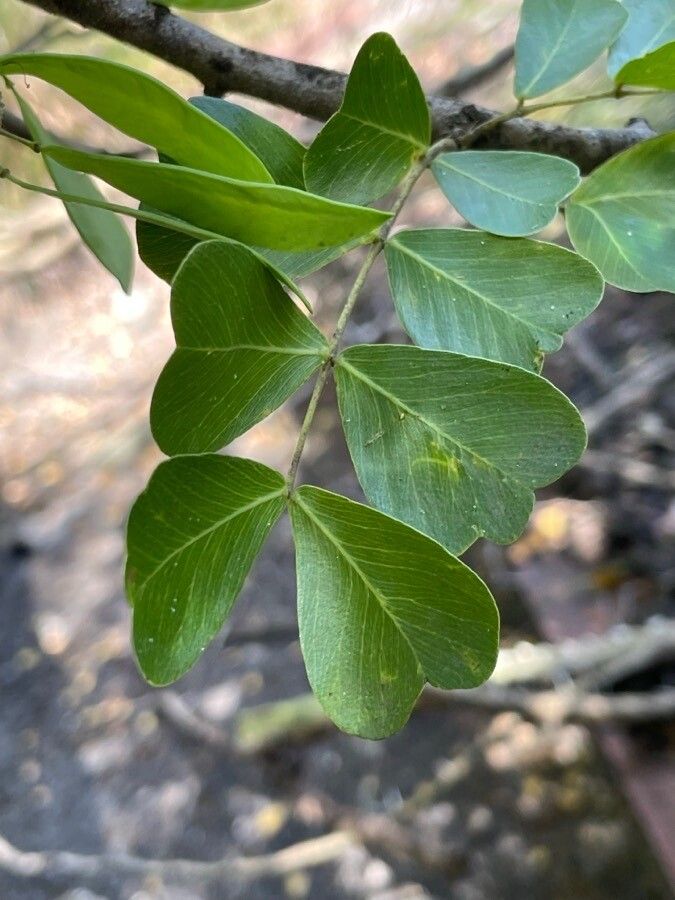
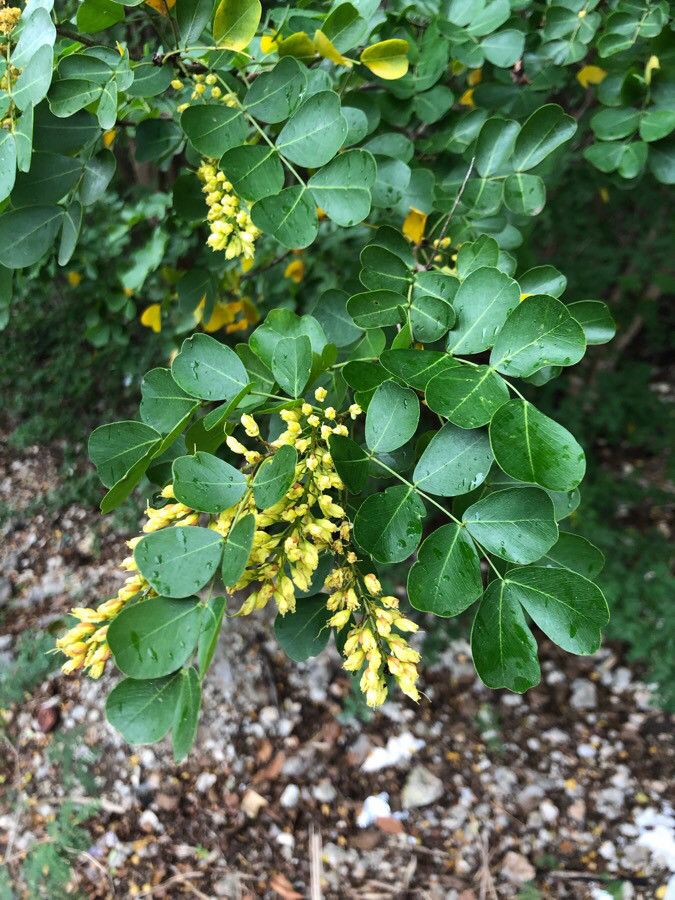
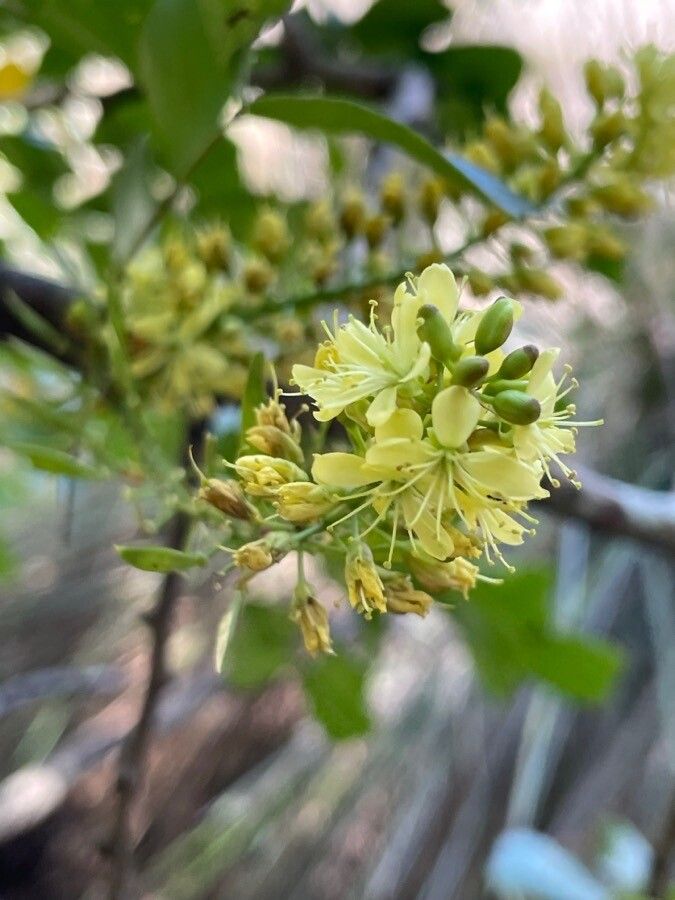
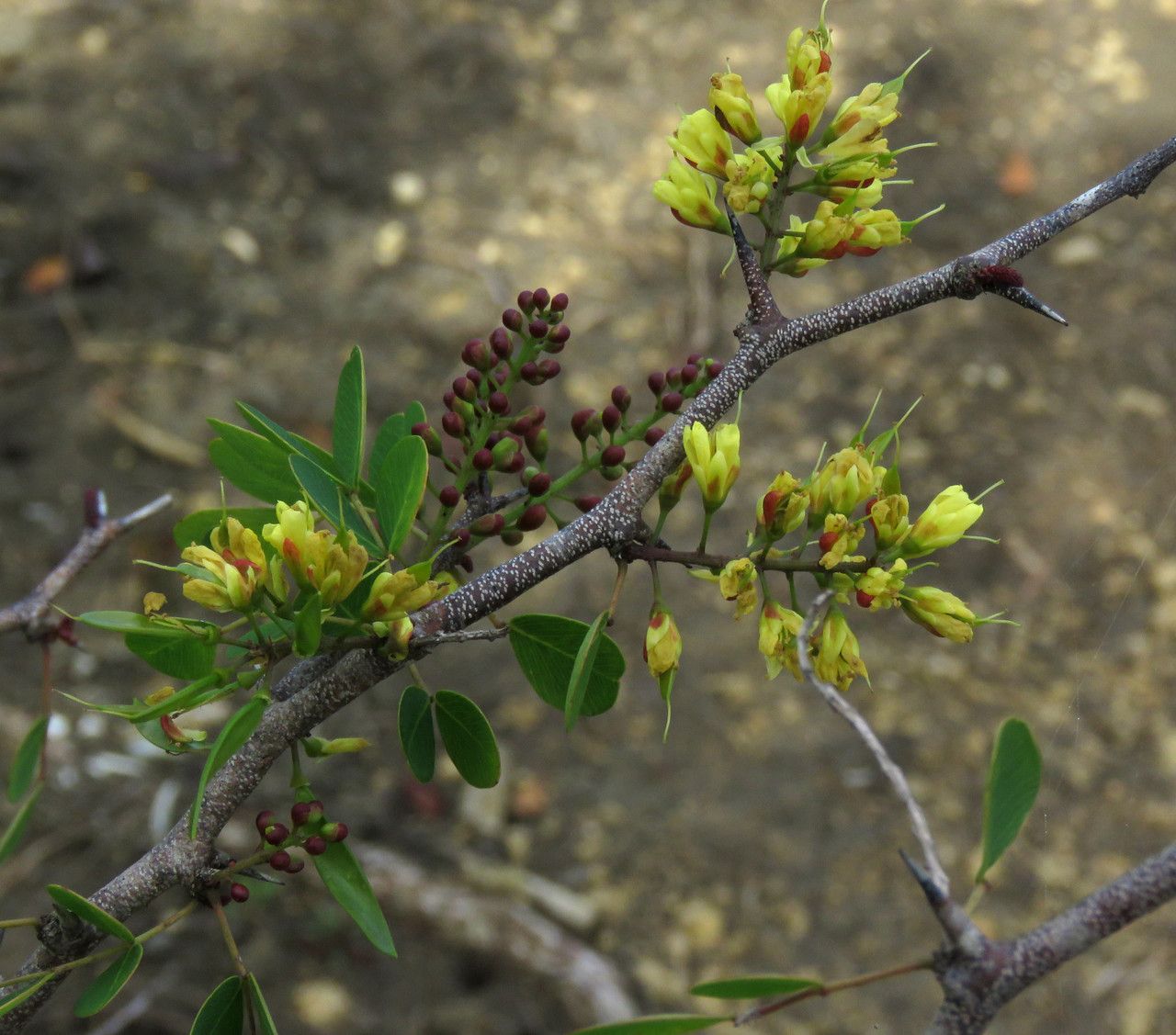
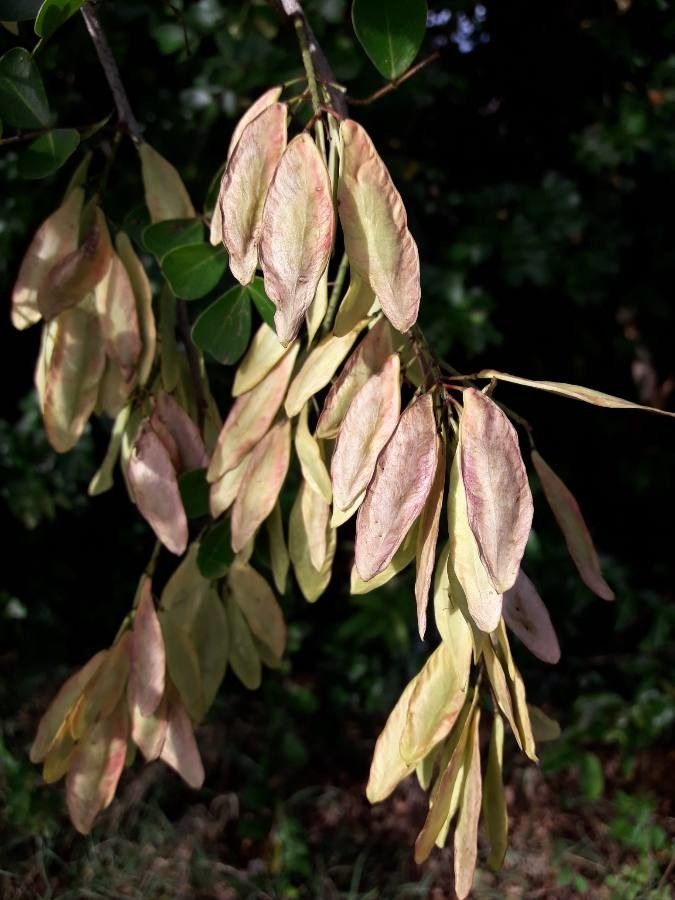
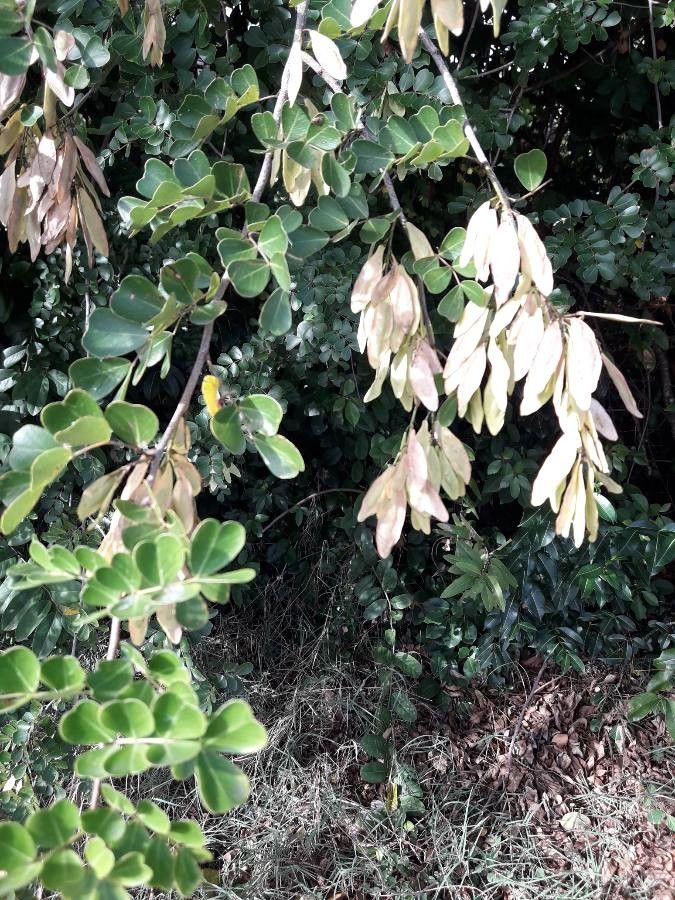
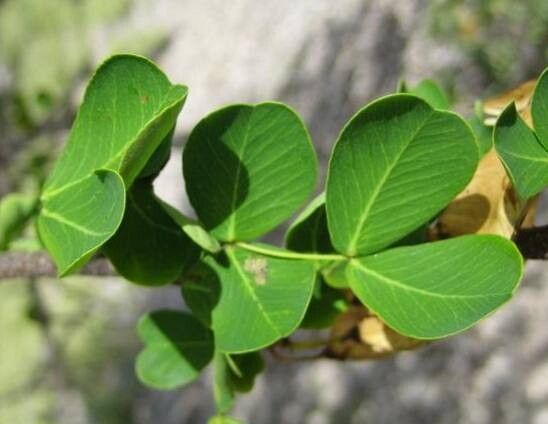
Haematoxylum campechianum, commonly known as the logwood tree, is a species of flowering tree in the legume family. Native to Central America and parts of South America, it has also been introduced to other regions as an ornamental plant. The tree can grow up to 20 meters tall and features a dense, spreading crown with dark green leaves that turn yellow before falling off during the dry season. The most notable characteristic of Haematoxylum campechianum is its heartwood, which produces a deep red dye used for centuries in textiles and wood staining. This dye was especially valued during colonial times for coloring British military uniforms. Beyond its commercial applications, Haematoxylum campechianum has medicinal properties. Its bark contains compounds with anti-inflammatory effects, which may be beneficial in treating conditions such as arthritis. However, Haematoxylum campechianum can become invasive in areas where it has been introduced outside its native range. It has the potential to form dense thickets that outcompete native vegetation and disrupt local ecosystems. In summary, Haematoxylum campechianum is a fascinating plant with cultural significance and practical uses, but it requires careful management when cultivated outside its natural habitat.
Bloodwoodtree has strong resistance to disease and is generally not susceptible to illnesses. In terms of care, this plant is fairly low-maintenance. When grown outdoors it needs only minimal watering, and larger plants typically do not require pruning. Smaller plants, however, should be pruned after they have finished blooming. Bloodwoodtreet is suitable for anyone with an outdoor area, such as a garden or deck, and does not demand extensive care experience.
How to keep Haematoxylum Campechianum.
Light
The bloodwoodtree grows best when exposed to uninterrupted sunlight, though it can adapt to places with only moderate light. It originates from habitats where sunlight is consistently abundant, which promotes healthy growth. Too much or too little light can interfere with its development.
Water
The Bloodwood tree, native to arid regions, is highly drought-tolerant and can thrive with minimal moisture. It is best to water it sparingly, ideally every 2-3 weeks, letting the soil dry out between waterings. The tree flourishes when it follows natural rainfall cycles, efficiently regulating its water use, which is crucial for its survival in its native habitat.
Humidity
This plant prefers dry conditions, so don't mist it. However, watering it less often can also thrive in higher humidity.
Temperature
Bloodwoodtree thrives in its native environment at temperatures between 68 to 95 °F (20 to 35 ℃). It prefers warm conditions, and drops in temperature should be avoided. During cooler seasons, adjustments may be necessary to keep the plant within its comfortable range.
Fertilizer
The best time to fertilize a Bloodwoodtree is in early spring as it comes out of dormancy. This stimulates overall growth and the development of flowers. Fertilization improves the foliage, stems, and branches, and encourages large, vibrant, long-lasting flowers. It assists in moving nutrients from the roots to the flowers and enhances the plant’s health and resistance to disease.
Pruning
The bloodwood tree benefits from pruning during its dormant period, which lasts from early to late winter. When pruning, concentrate on removing damaged branches, improving air circulation, and shaping the tree for aesthetic appeal. Make sure to make clean cuts just above the buds to encourage healthy growth. This will help maintain the tree's structural integrity and promote vigorous new growth. For the best results, refer to horticultural guides for optimal pruning techniques.
Botanical profile.
- Plant Type
- Tree, Shrub
- Life Cycle
- Perennial
- Hardiness Zone
- 10
- Mature Height
- 3.66 m to 4.57 m
- Mature Spread
- 1.52 m
- Leaf Color
- Dark Green
- Leaf Type
- Evergreen
- Flower Color
- Yellow
- Flower Size
- 5.08 cm to 20.32 cm
- Bloom Time
- Spring
- Planting Time
- Spring
- Harvest Time
- Late spring, Summer
- Native Area
- Belize, Honduras, Mexico, Guatemala, Venezuela, China
Other names.
Reader questions.
How should I water my Bloodwood tree?
Watering your Bloodwoodtree is easy and flexible. You can use various tools such as watering cans, hoses, or even cups to water the plant's soil. It's important to water directly onto the soil and make sure all areas are evenly moistened for the root system's benefit. Filtered water is preferable to tap water, as it may contain harmful particles. Additionally, using water that is at or slightly above room temperature is beneficial, as extremely cold or hot water can be shocking to the Bloodwoodtree. However, this plant typically responds well to different types of water.
What are the sunlight requirements for Bloodwoodtree?
Bloodwoodtree thrives best when it receives continuous sunlight, being native to environments with abundant sunlight for healthy growth. It demands more than 6 hours of sunlight, classified as 'Full sun', but can also adapt to 'Partial sun', needing about 3-6 hours of sunlight daily. Observing how sunlight moves through your garden helps in choosing the right spots that ensure the plant's happiness by providing the perfect balance of light and shade.
What are the ideal growing conditions for a Bloodwoodtree?
Bloodwoodtree, botanically known as Haematoxylum campechianum, thrives in warm climates with temperatures ranging from 68 to 95°F (20 to 35°C). It is extremely heat-loving and sensitive to cold temperatures, making it important to avoid any drops in temperature that might harm the plant. During cooler seasons or when the temperature approaches 5°C, adjustments should be made to keep the plant within its comfort range. In autumn, if the Bloodwoodtree is grown outdoors, it is advisable to bring it indoors near a bright window, while ensuring it is kept away from direct heat sources like heaters. Maintaining temperatures above 20°C during winter supports its growth, while temperatures nearing 5°C can be detrimental.
What should I do if I give my Bloodwood tree too much water or too little water?
Outdoor plants, especially newly planted ones or seedlings, are prone to being under-watered. It's important to remember to water them adequately for a few months while they're still small or recently planted. This is because once the roots are established, the Bloodwoodtree can usually rely on rain. However, when the Bloodwoodtree is planted in pots, overwatering is more likely. If you accidentally overwater your Bloodwoodtree, it's important to take immediate action to fix the situation. First, stop watering the plant right away to minimize the negative effects. Then, remove the tree from its pot to check the roots. If there is no root rot, you can return the plant to its container. However, if there is root rot, you should trim affected roots and consider using a fungicide. Finally, repot the Bloodwoodtree in well-draining soil. On the other hand, if your Bloodwoodtree is underwatered, simply water it more frequently. This issue is usually easy to fix, as the leaves will droop and dry out, but they will quickly return to normal after sufficient watering. Make sure to adjust your watering frequency as soon as you notice underwatering.
How can artificial lighting support plant growth indoors?
For indoor plants, particularly during winter or in less sunny spaces, artificial lighting is essential for optimal growth. LED lights are recommended as they can provide specific wavelengths needed by the plants. For full sun plants, 30-50W/sq ft of artificial light is required, partial sun plants need 20-30W/sq ft, and full shade plants need 10-20W/sq ft. The light source should be placed 12-36 inches above the plant, mimicking natural sunlight for 8-12 hours per day to promote faster and healthier growth.
How should you care for a Bloodwoodtree in low temperatures?
Bloodwoodtree requires warmth and is not tolerant of cold. For optimal health, keep its environment above 20°C and ensure it does not drop below 5°C during winter. Exposure to temperatures below 1°C can lead to leaves lightening in color, with frost damage causing them to turn brown or black, accompanied by wilting and drooping. If frost damage occurs, trim off the damaged parts and move the plant to a warm indoor spot immediately. Positioning it near a south-facing window is beneficial for sufficient sunlight, but avoid placing it near heaters or air conditioning vents to prevent air dryness.
How frequently should I water my Bloodwood tree?
Most outdoor plants can rely on rainfall for their water needs. However, if your area doesn't get enough rain, you should make sure to water your plants adequately. During spring and fall, watering every 2 weeks should be sufficient. Summer requires more frequent watering, while winter requires less watering as plants grow slower and need less water. In fact, you may not need to water at all in winter. If your Bloodwoodtree is young or newly planted, it's important to water more often to help it establish and grow into a more adaptable and drought-tolerant plant. For potted plants like the Bloodwoodtree, there are two main methods for determining watering frequency. The first method is to follow a set schedule, such as watering once a week or once every other week. However, this may not always be effective as it doesn't account for the specific growing conditions of your Bloodwoodtree. Alternatively, you can adjust the watering frequency based on the moisture level of the soil. It's usually best to wait until the top two to four inches of soil, about ⅓ to ½ depth of the pots, have completely dried out before watering again. Keep in mind that during the summer, when the plant's water needs are highest, a predetermined watering schedule may not be enough.
What are the signs of light deficiency in Bloodwoodtree?
Signs of light deficiency in Bloodwoodtree include smaller new leaves, leggy or sparse growth, accelerated leaf drop, halted or slowed new growth, leaves developing irregular color patterns or appearing pale, signaling a lack of chlorophyll and nutrients. Conditions like Chlorosis, sunscald, leaf curling, wilting, and leaf scorching also indicate exposure to inappropriate light levels, with each symptom reflecting the plant's struggle in less than optimal light conditions.
What steps should be taken if a Bloodwoodtree experiences high temperatures?
During hot summer months, it's essential to ensure the Bloodwoodtree's temperature doesn't exceed 35°C. Temperatures above 41°C can lighten the leaf color and increase sunburn risk. To mitigate this, trim the sunburned or dried parts and relocate the plant to a shaded area, particularly away from the intense midday and afternoon sun. Additionally, watering the plant during cooler times, such as morning and evening, helps keep the soil adequately moist and supports the plant's wellbeing in high temperatures.
How much water does my Bloodwood tree require?
When watering your Bloodwoodtree, you may be surprised to learn that it doesn't always need a lot of water. If only a few inches of soil have dried since your last watering, giving it about five to ten ounces of water will support healthy growth. You can also gauge how much water to give based on the moisture of the soil. Take note of how many inches of soil have dried out between waterings. To ensure your Bloodwoodtree gets enough moisture, water until all the dry soil layers have been moistened since the last watering. If more than half of the soil has dried out, consider giving more water than usual. In these cases, continue watering until you see excess water draining from the pot's drainage holes. If your Bloodwoodtree is planted in an area that receives plenty of rain, it may not need additional watering. When the tree is young or establishing itself, make sure it receives 1-2 inches of rain per week. As it grows and becomes established, it can rely solely on rainwater. However, during hot weather with no rainfall for 2-3 weeks, give your Bloodwoodtree a thorough watering to prevent stress.
How can you remedy light deficiency for indoor and outdoor plants?
To address light deficiency, gradually increase sunlight exposure by moving plants to a sunnier spot each week until they receive at least 6 hours of direct sunlight daily. For indoors, using a south-facing window or artificial lighting like desk or ceiling lamps for at least 8 hours daily can help. Outdoors, make shifts to sunnier locations gradually to avoid sunburn. Note, areas affected by prior insufficient sunlight might not recover, but new growth should be healthy with adequate light adjustments.
How can I know if I'm giving enough water to my Bloodwood tree?
The Bloodwoodtree is more commonly affected by overwatering, which can be identified by signs such as yellowing leaves and leaf drop. Overwatering can also cause the plant's structure to shrivel and lead to root rot. Conversely, an underwatered Bloodwoodtree will wilt and show symptoms like brown or brittle leaves. Regardless of whether you notice signs of overwatering or underwatering, it's important to intervene and restore your Bloodwoodtree's health.