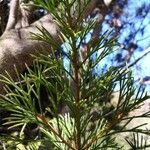
Hakea drupacea
Sweet hakea
Description
Source: wikipedia (CC BY-SA)Hakea drupacea, commonly known as sweet-scented hakea, is a tree or shrub which is native to south west Western Australia.
Care Guide
💧 Water
☀️ Light Full sun
Sweet hakea is native to open habitats, such as sunny meadows and forest edges, where light is plentiful. It does best in Full Sun but can also tolerate Partial Sun, adapting well to different sunlight conditions.
🌡️ Temperature 20–37.8°C
Sweet hakea shows strong adaptability to heat, tolerating higher temperatures and broader temperature swings. In hot weather, attention should be paid to watering and providing adequate shade to prevent sunburn. However, Sweet hakea tolerates low temperatures relatively poorly; while it can endure some cold, overly cold conditions can cause frost damage.
💨 Humidity
🪴 Soil 6-7
🌱 Fertilizer
Proper timing is important when fertilizing Sweet hakea. Apply fertilizer in early spring and continue monthly until early summer. Fertilizer promotes attractive blooms and supplies energy during both dormant and active growth phases.
🪴 Pot & Repot
✂️ Pruning
Sweet hakea is a unique shrub that thrives with careful pruning, ideally done in early spring before new growth begins. To maintain its health, remove any dead branches. This not only enhances air circulation but also encourages dense growth. Be sure to make clean cuts just above the buds to promote vigorous regrowth.
🌿 Propagating
🐛 Diseases & pets
☠️ Toxicity
Characteristics
- Plant Type
- Shrub
- Life Cycle
- Perennial
- Genus
- Hakea
- Family
- Proteaceae
- Hardiness Zone
- 9-11
- Mature Height
- 2.13 m to 3.96 m
- Mature Spread
- 2.13 m to 3.05 m
- Leaf Color
- Dark Green
- Leaf Type
- Evergreen
- Flower Size
- 0.51 cm to 1.02 cm
- Bloom Time
- Late fall, Early winter, Mid winter
- Planting Time
- Summer, Autumn, Winter
- Harvest Time
- Late winter, Early spring, Mid spring