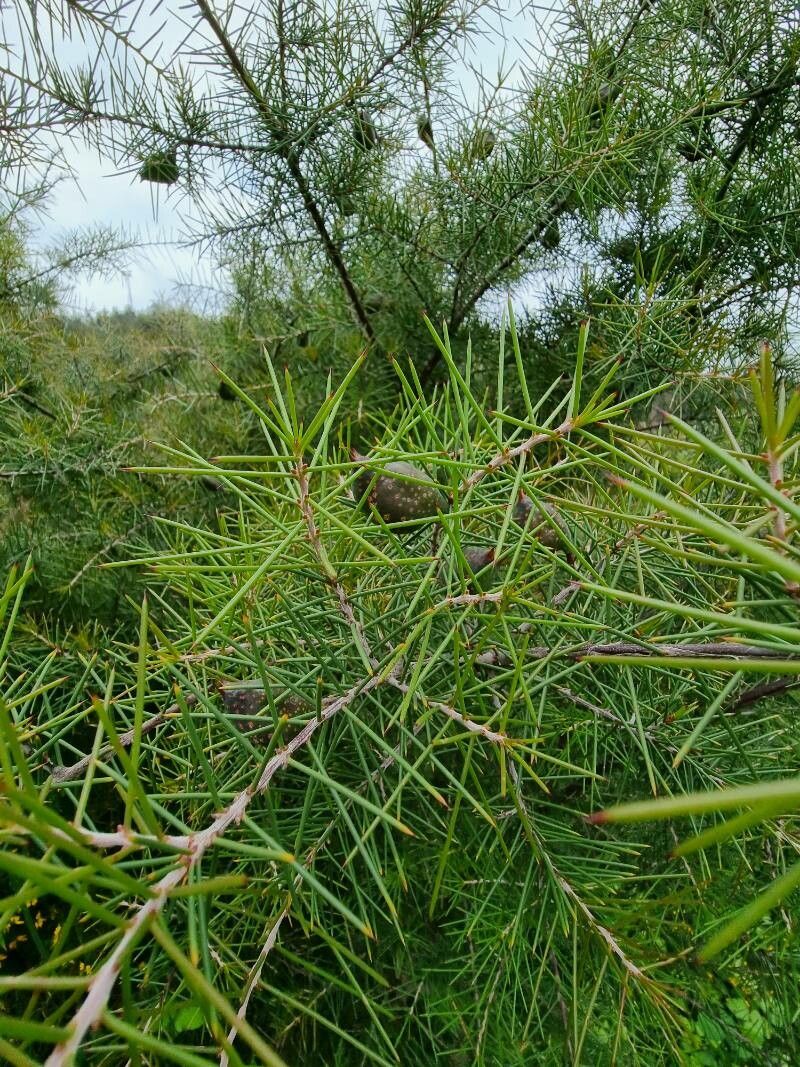
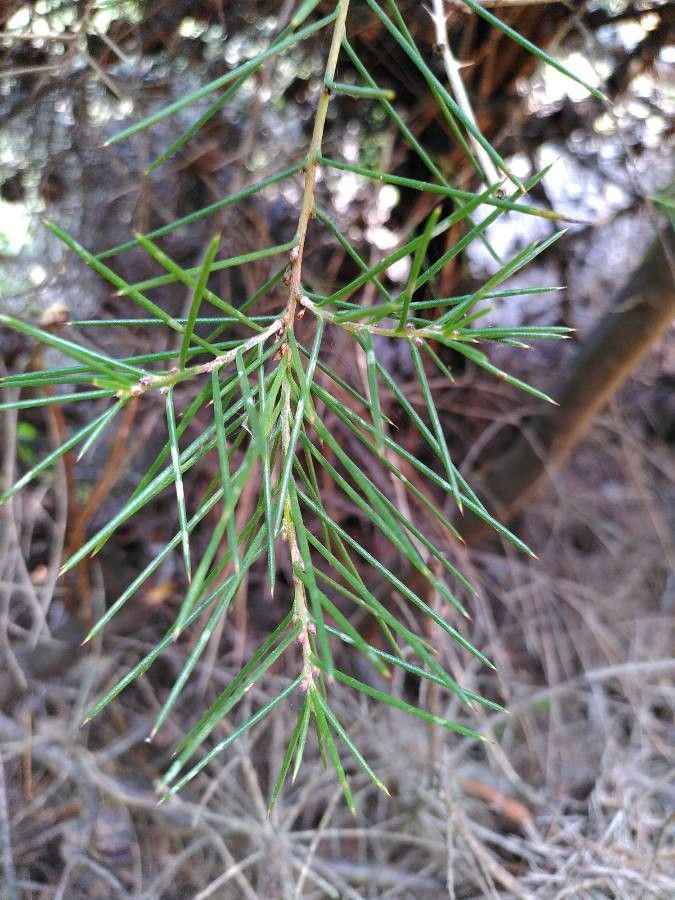
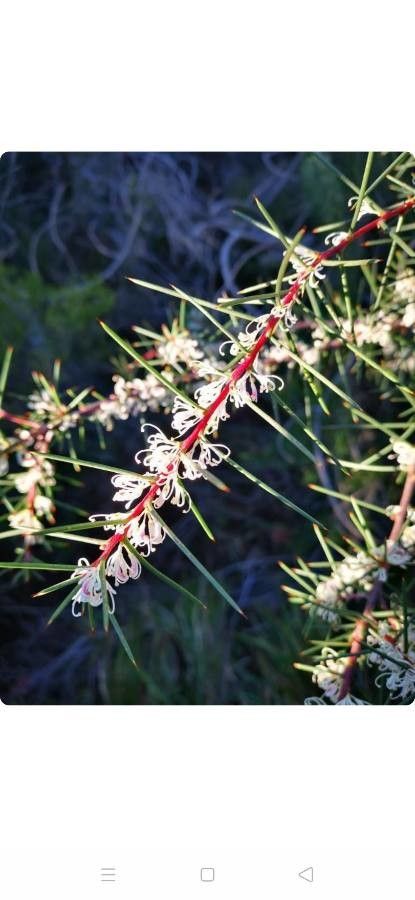
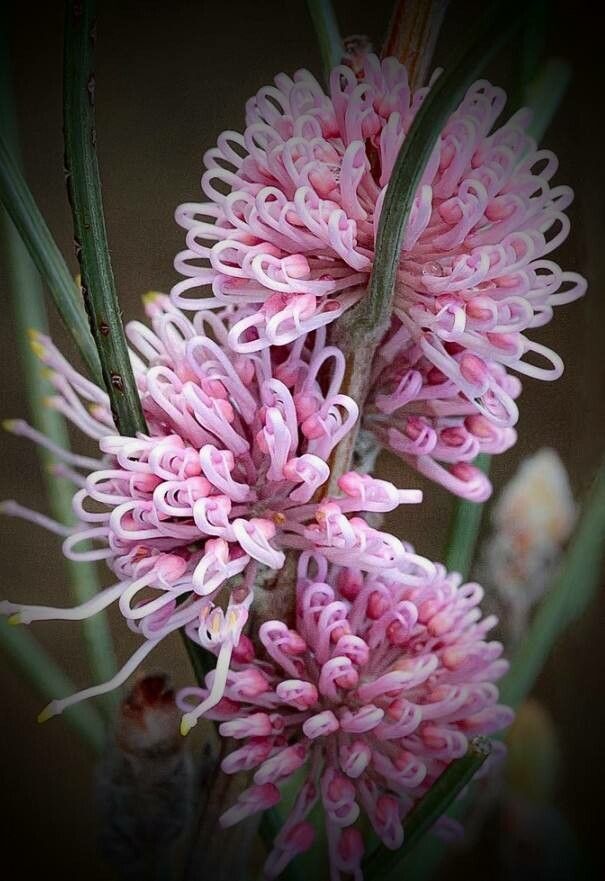
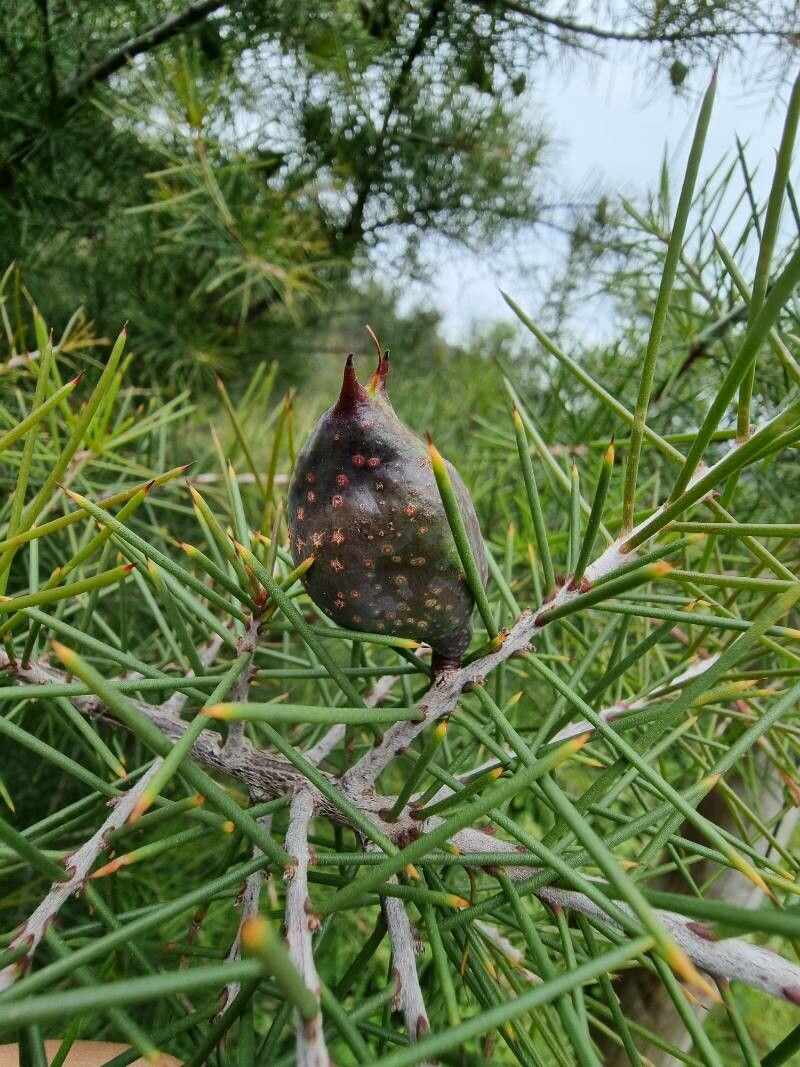
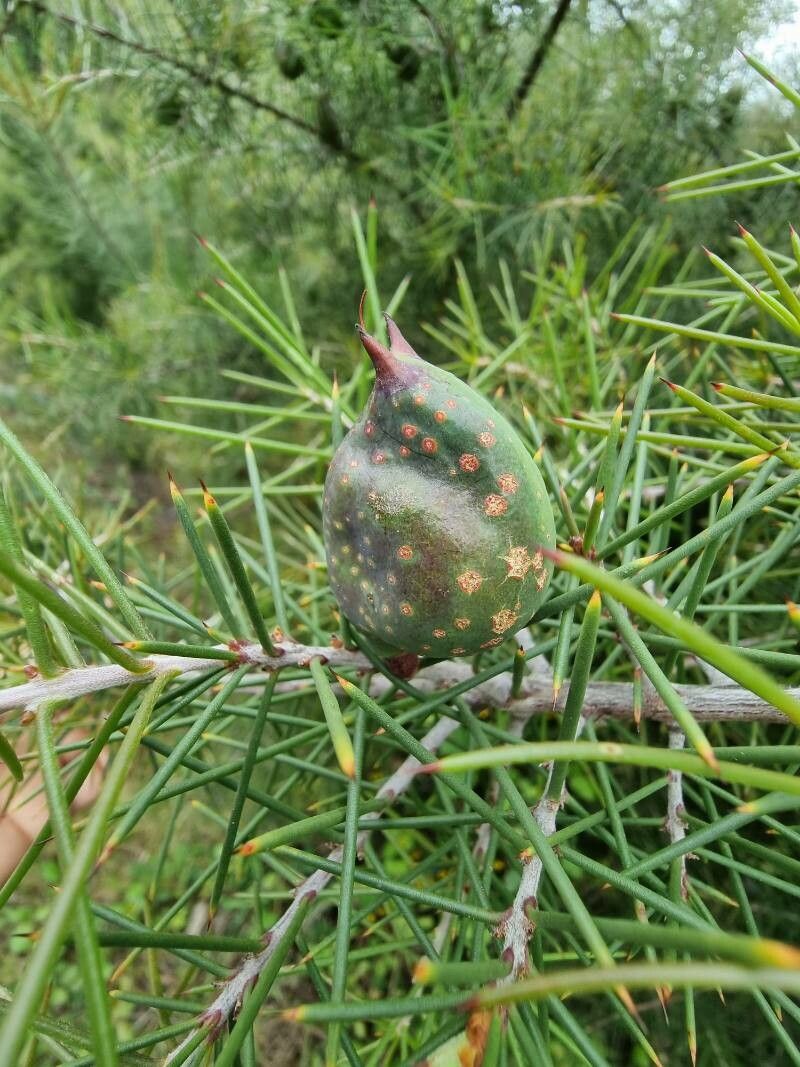
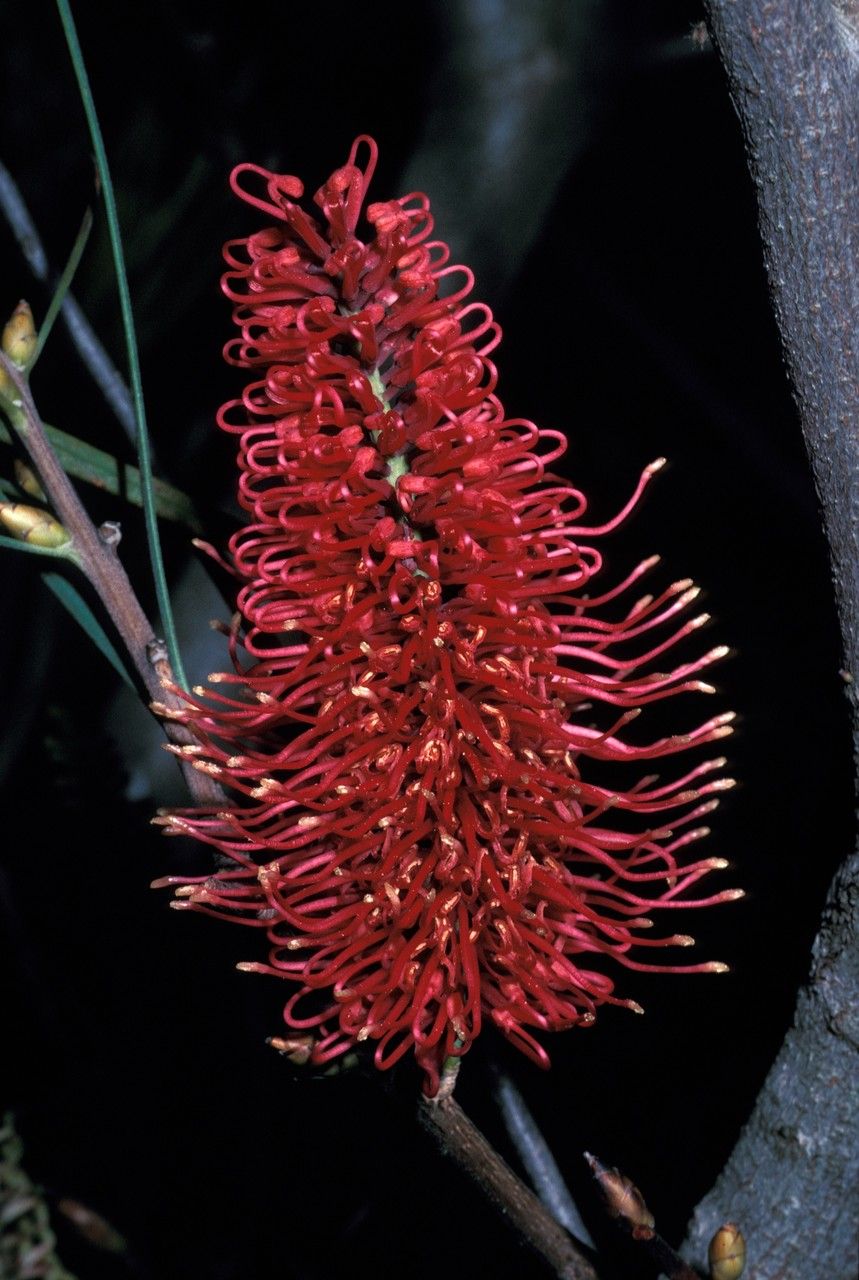
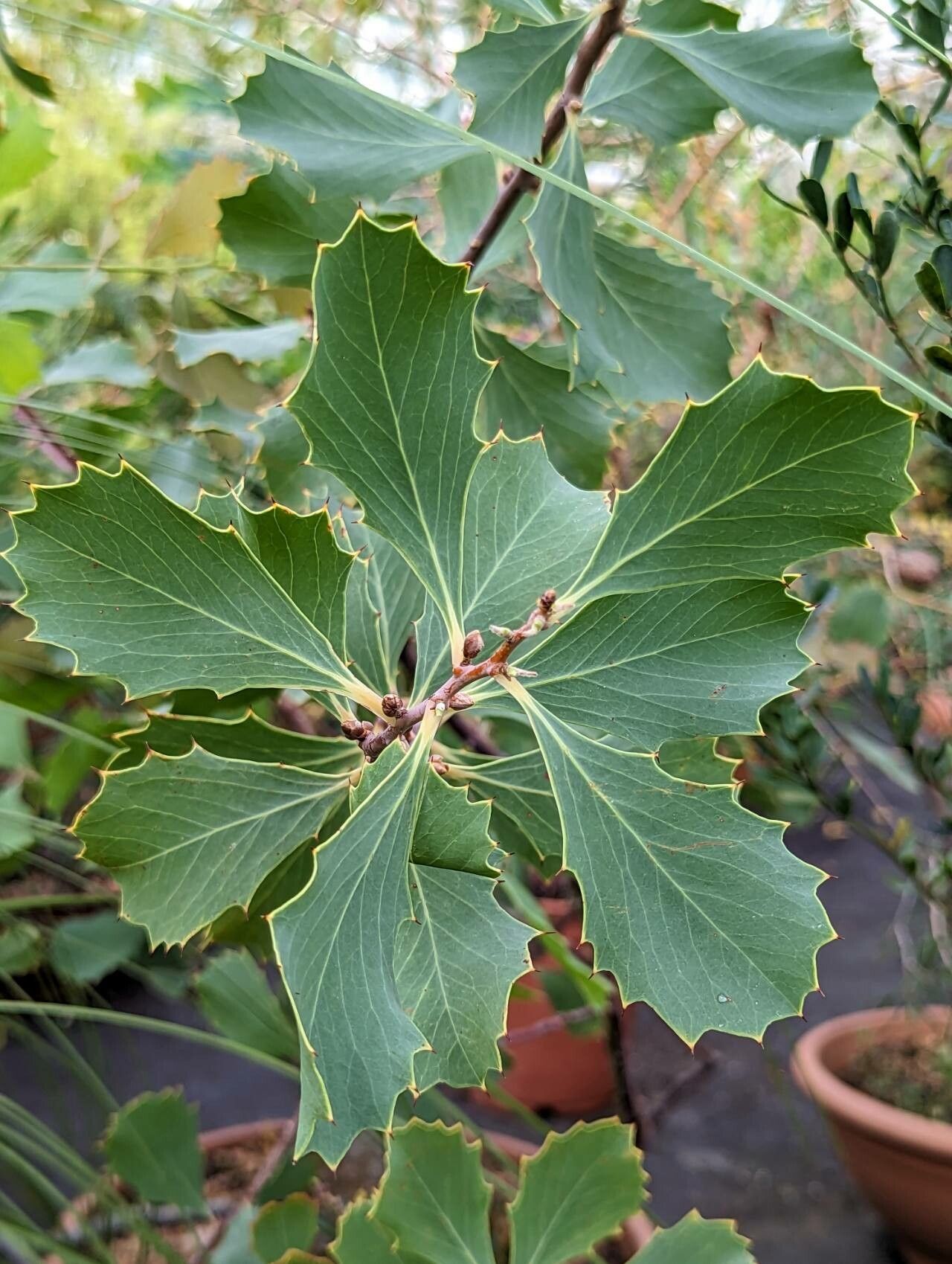
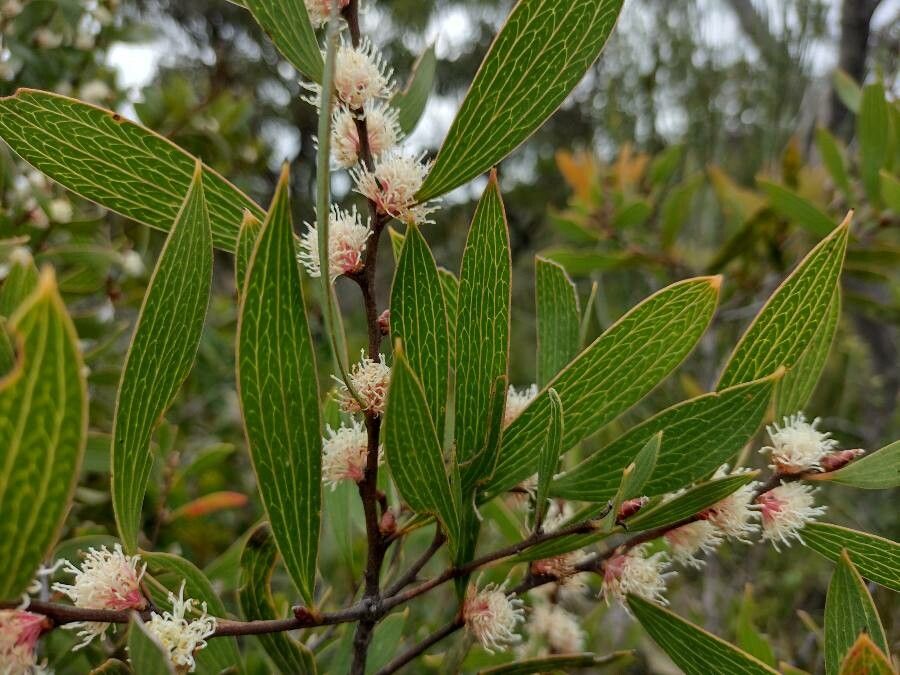
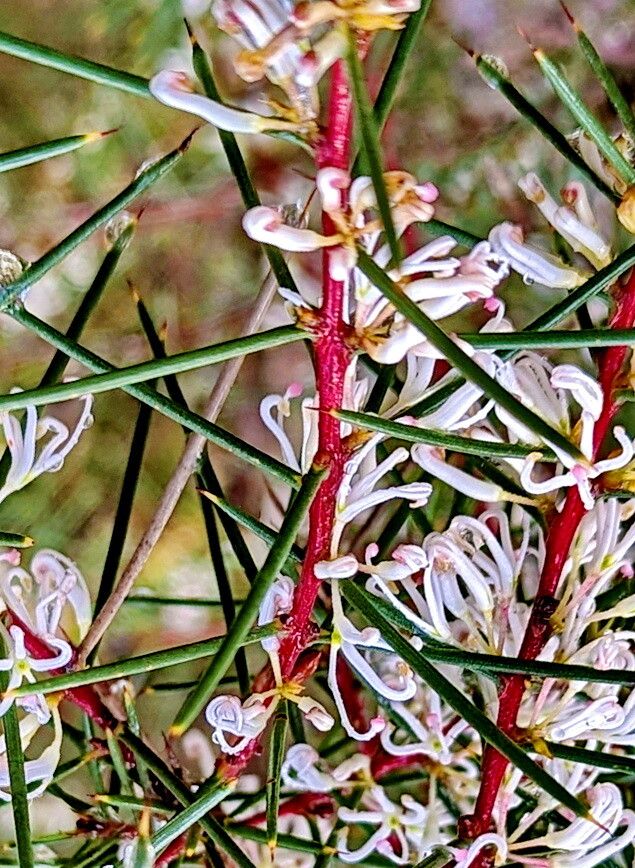
Hakea sericea, commonly known as needlebush or silky hakea, is a shrub species native to Australia. Belonging to the Proteaceae family, this plant can grow up to 4 meters tall. Its needle-like leaves range from 10-20 cm in length and 1-2 mm in width. The flowers, which are white or cream-colored, appear in clusters from late winter to early spring.
Hakea sericea is a hardy plant, capable of tolerating drought, frost, and poor soil conditions. Its dense growth habit makes it commonly used in landscaping as a hedge or screen. Additionally, the plant provides valuable habitat for birds and other wildlife.
Indigenous Australians have used Hakea sericea for medicinal purposes, including the treatment of coughs, colds, and skin conditions. However, it is important to note that the plant contains toxic compounds that can cause skin irritation if handled improperly.
Overall, Hakea sericea is an attractive shrub with unique foliage that adds interest to any garden setting. It also provides ecological benefits by offering habitat for wildlife species native to Australia's ecosystem.
Silky hakea is fairly disease-resistant and typically not susceptible to many illnesses. In terms of upkeep, this plant is relatively low-maintenance. Planted outdoors, it needs only minimal watering, and larger specimens usually do not require pruning. Smaller plants, however, should be trimmed after they finish blooming. Silky hakeat is appropriate for anyone with an outdoor area, such as a garden or a deck, and does not demand extensive care experience.
How to keep Hakea Sericea.
Light
Silky hakea does best when exposed to unobstructed sunlight, which encourages vigorous growth. In its native habitat, where clear skies are common, the plant has adapted to intense light. However, too much sun can cause leaf scorch, while insufficient sunlight reduces photosynthesis and thus hampers growth.
Water
The silky hakea, native to Australia's arid regions, is highly drought-tolerant. It needs watering only every 2-3 weeks and grows best in well-draining soil, which helps prevent over-saturation. This setup mimics the plant's natural environment, promoting optimal growth.
Temperature
Silky hakea is native to areas with moderate climates and prefers a temperature range of 59 to 100.4 °F (15 to 38 ℃). If temperatures fall outside this range, seasonal temperature adjustments should be made cautiously.
Fertilizer
The timing of fertilizing Silky hakea is important. Fertilize in early spring and continue monthly until early summer. The fertilizer promotes lovely blooms and supplies energy during both dormant and active growth phases.
Pruning
Silky hakea has dense, prickly foliage that needs regular pruning to maintain its shape and health. It's best to prune this plant from early to late winter. During pruning, be sure to remove any dead branches and thin out the foliage to improve air circulation. This helps prevent disease and encourages blooming. Pruning annually also promotes balance and enhances the plant's aesthetic appeal.
Botanical profile.
- Plant Type
- Shrub
- Life Cycle
- Perennial
- Genus
- Hakea
- Family
- Proteaceae
- Hardiness Zone
- 8-11
- Mature Height
- 3.96 m
- Mature Spread
- 1.52 m to 2.44 m
- Leaf Color
- Dark Green
- Leaf Type
- Evergreen
- Flower Color
- White, Pink
- Flower Size
- 0.51 cm to 1.02 cm
- Bloom Time
- Winter
- Planting Time
- Spring
- Harvest Time
- Spring
Other names.
Reader questions.
How can I properly water my Silky hakea plant?
Your Silky hakea is not demanding when it comes to watering. You can use any common watering tool, such as watering cans, hoses, or cups, to moisten the soil. It's important to directly apply the water to the soil and make sure all areas are evenly moistened to provide the necessary water to all parts of the root system. Using filtered water is recommended as tap water may have harmful particles. It's also best to use water at or slightly above room temperature, as extremely cold or hot water can be shocking to the Silky hakea. However, this plant generally responds well to any type of water you give it.
What are the sunlight requirements for Silky hakea?
Silky hakea requires above 6 hours of sunlight to thrive, mirroring its native environment that's accustomed to clear skies. It's crucial for the plant's robust growth, as the intense light stimulates photosynthesis while contributing to its overall health. However, it's important to watch how sunlight moves through your garden, ensuring spots are selected that offer a perfect balance of light and shade, to avoid issues such as leaf scorch from too much sun and hindered growth from insufficient sunlight.
What is the ideal temperature range for Silky Hakea?
Silky hakea, known botanically as Hakea sericea, thrives in moderate climates. It prefers temperatures between 59 to 100.4 °F (15 to 38 °C). It's important to make seasonal temperature adjustments with care to remain within this range. Despite having some cold tolerance, it generally does not require special care for cold protection when temperatures are above -5°C. However, if temperatures are expected to drop below -5°C, it is necessary to employ temporary cold protection measures such as wrapping the plant in plastic film, fabric, or other materials, which should be removed once temperatures rise.
What do I do if I give my Silky hakea too much or too little water?
When it comes to outdoor plants, especially newly planted ones or seedlings, they are prone to not getting enough water. It's important to remember to water them enough for the first few months, especially when the tree is still small or newly planted. Once the roots are established, Silky hakea plants can rely on rain for most of their water needs. If your Silky hakea is planted in pots, overwatering is more likely to happen. If you accidentally overwater your plant, it's important to act quickly to fix the situation. First, stop watering the plant immediately to minimize the negative effects of overwatering. Then, take the plant out of its pot and check the roots for any signs of root rot. If you don't find any root rot, you can put the plant back in its container. However, if you do see signs of root rot, trim away the affected roots and consider applying a fungicide to prevent further damage. Lastly, repot the Silky hakea in well-draining soil. In the case of underwatering, simply water the Silky hakea plant more frequently. Underwatering is usually easy to fix. If you notice the plant's leaves drooping, drying out, or falling off, watering it sufficiently should make the leaves return to their full state quickly. Make sure to adjust your watering frequency as soon as you notice signs of underwatering.
How should artificial lighting be used for Silky hakea indoors?
For indoor Silky hakea plants where natural sunlight is insufficient, artificial lighting can be a vital solution. It's particularly beneficial in winter or less sunny spaces, promoting faster and healthier plant growth. LED lights are recommended as they can be customized to the plant's specific light wavelength needs. Full sun plants should have 30-50W/sq ft of artificial light, partial sun plants 20-30W/sq ft, and full shade plants 10-20W/sq ft. The light source should be placed 12-36 inches above the plant, mimicking natural sunlight as closely as possible and ensuring the plant receives 8-12 hours of light per day.
How does Silky Hakea react to low temperatures, and what should I do?
Silky hakea has a moderate tolerance to low temperatures, performing best when temperatures stay above 15°C. It can generally withstand winter temperatures down to -5°C. However, when temperatures fall below -10°C, the leaves may begin to droop. While they can recover from mild cases, severe temperature drops can cause the leaves to wilt and eventually fall off. To protect your plant in cold weather, trim off frost-damaged parts and wrap the plant with non-woven fabric or cloth. Constructing a wind barrier can also help shield it from cold winds.
How frequently do I need to water my Silky hakea?
Most outdoor plants can rely on rainfall for their water needs. However, in areas with low rainfall, it is important to provide adequate watering every 2 weeks in spring and fall, and more frequent watering in summer. In winter, when plants grow slower and require less water, it is best to water sparingly or not at all. If your Silky hakea plant is young or newly planted, it will benefit from more frequent watering to help it establish and become more drought tolerant. For potted Silky hakea plants, there are two main methods to determine watering frequency. One way is to follow a set watering schedule, such as once every week or every other week. However, this may not always be suitable for the unique growing conditions of your Silky hakea. Another approach is to gauge soil moisture levels. Wait until the top two to four inches of soil, about ⅓ to ½ depth of the pots, have completely dried out before watering again. It is especially important to adjust the watering frequency during summer when the plant's water needs are highest.
What are the symptoms of insufficient sunlight for Silky hakea?
Silky hakea may exhibit various symptoms when subject to suboptimal lighting conditions. New leaves can grow smaller, and the plant may develop a leggy or sparse appearance due to longer spaces between leaves or stems. Other signs include faster leaf drop, slower or halted growth, lighter-colored new leaves, and chlorosis, where leaves lose their green color and turn yellow. Sunscald, resulting from intense sunlight exposure, can cause damage to leaves or stems, while leaf curling and wilting can occur under extreme sunlight conditions. Leaf scorching, characterized by brown, dry, and crispy leaf edges, also indicates excessive sunlight exposure.
How does Silky Hakea handle high temperatures, and what are the preventive measures?
During the summer months, it's crucial to ensure that Silky hakea does not exceed temperatures of 38°C. Exposure to temperatures above 43°C can result in the leaves lightening in color, leaf tips drying and withering, leaf curling, and an increased susceptibility to sunburn. To mitigate these effects, trim away any sunburned or dried-up parts of the plant. Relocate the plant to an area with shade during the midday and afternoon sun or use a shade cloth. Additionally, water the plant in the morning and evening to maintain soil moisture.
How much water does my Silky hakea plant require?
When watering your Silky hakea, you don't always need to give it a lot of water. If only a few inches of soil have dried since the last watering, give it about five to ten ounces of water. You can also base the amount of water on how dry the soil is. If more than half of the soil is dry, give it more water until you see excess water draining from the pot. If your Silky hakea is outside and it rains a lot, it may not need extra watering. When it's young, it needs 1-2 inches of rain per week, but as it grows, it can survive on rainwater alone. Only give it a full watering if it's very hot and hasn't rained for 2-3 weeks to prevent stress.
What solutions are recommended for Silky hakea facing poor light conditions?
For indoor Silky hakea facing poor light conditions, you can improve growth by gradually moving the plant to a sunnier location each week until it receives at least 6 hours of direct sunlight daily. Utilize a south-facing window for maximum sunlight exposure and consider using artificial light if the plant is large. For outdoor plants, it's crucial to gradually adapt them to brighter spots to avoid sunburn. Pruning surrounding trees may help reduce obstructions to sunlight. For smaller, ground-placed plants, transplanting during the dormant period to a location with ample sunlight and good drainage is advised. It's important to note that while parts of the plant that have suffered due to lack of sunlight may not recover, new growth should be healthy after addressing the light exposure issue.
How do I know if I am giving enough water to my Silky hakea plant?
The Silky hakea commonly suffers from overwatering, which can be identified by yellowing leaves, leaf drop, and a shriveled plant structure. Overwatering can also lead to root rot. On the other hand, an underwatered Silky hakea will wilt and have brown or brittle leaves. Regardless of whether you notice signs of overwatering or underwatering, it is important to take action and restore your Silky hakea's health.