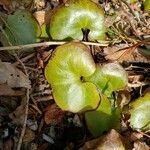
Halerpestes cymbalaria
Marsh buttercup · Seaside crowfoot · Alkali Buttercup · Shore Buttercup · Seaside Buttercup
Description
Source: wikipedia (CC BY-SA)Halerpestes cymbalaria is a species of buttercup known by the common names alkali buttercup and seaside buttercup. It is native to much of Eurasia and parts of North and South America, where it grows in many types of habitat, especially in moist to wet areas such as marshes, bogs, and moist spring meadows. It is a perennial herb producing several stems a few centimeters to nearly 40 centimeters long. Some are prostrate against the ground and are stolons which root in moist substrate, and some are erect. The leaves are variable in shape, the basal ones with notched or slightly divided leaf blades borne on long petioles, and any upper leaves much reduced in size. The inflorescence bears one or more flowers on erect stalks. The flower has five to eight pale yellow petals, each under a centimeter long. The protruding receptacle at the center of the flower becomes a cylindrical cluster of fruits, each of which is an achene.
Care Guide
💧 Water
The shore buttercup flourishes in consistently moist environments. It requires soil that is evenly moist, with weekly watering, to prevent the soil from becoming too dry or overly saturated. This herbaceous plant is typically grown outdoors, where it benefits from natural rainfall, especially during its active growing season.
☀️ Light Partial sun
Shore buttercup naturally occurs in habitats such as forest understories or rocky areas, where it is exposed to natural shade. It favors partial sun but can tolerate full sun or full shade, illustrating its adaptable, hardy nature.
🌡️ Temperature 5–35°C
Shore buttercup can adapt to a wide range of temperatures, but its distribution may still be constrained by different combinations of moisture and heat. It does best in warm summer conditions with adequate rainfall or watering. Extended periods of cloudy, rainy weather, as well as prolonged high temperatures, can raise the chance of Shore buttercup dying. In winter, suitable protection from cold can increase the plant's survival rate.
💨 Humidity
🪴 Soil 6-7
🌱 Fertilizer
One fertilizer application in spring is generally enough for Shore buttercup, though repeated feedings can enhance growth. Apply fertilizer about every month to six weeks. Fertilizing improves the leaves' appearance and function, helping maintain even color and a healthy texture. It also promotes root development and nutrient uptake for long-term plant vigor.
🪴 Pot & Repot
✂️ Pruning
The shore buttercup is a plant known for its yellow, buttercup-like flowers and its ability to thrive in coastal areas. To care for this plant, it's best to prune it from early to late spring. During pruning, remove any dead stems and shape overgrown areas to improve airflow and reduce the risk of disease. This timing aligns with the plant's growth cycle, promoting optimal recovery.
🌿 Propagating
🐛 Diseases & pets
☠️ Toxicity
Characteristics
- Plant Type
- Herb
- Life Cycle
- Perennial
- Genus
- Halerpestes
- Family
- Ranunculaceae
- Hardiness Zone
- 4-9
- Mature Height
- 40 cm
- Mature Spread
- 10 cm to 30 cm
- Leaf Color
- Light Green
- Leaf Type
- Semi-evergreen
- Flower Color
- Yellow
- Flower Size
- 0.51 cm to 0.76 cm
- Bloom Time
- Mid spring, Late spring, Early summer
- Planting Time
- Spring, Summer
- Harvest Time
- Summer
- Native Area
- Colombia, Mexico, Guatemala, Denmark, Peru, Ecuador, Costa Rica