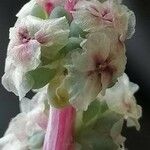
Halogeton glomeratus
Halogeton · Salt-lover
Description
Source: leafsnapHalogeton glomeratus is a species of flowering plant in the family Amaranthaceae known by the common names saltlover, Aral barilla, and halogeton. It is native to Russia, Central Asia and China, but the plant is probably better known in the western United States, where it is an introduced species and a notorious noxious weed. This annual herb is a hardy halophyte, thriving in soils far too saline to support many other plants. It also grows in alkali soils such as those on alkali flats and disturbed, barren habitat. It can be found in sagebrush and shadscale habitat, and it grows well in areas with cold winters.This plant produces a usually erect stem with several curving branches up to about 25 centimeters (10 in) tall. It has a taproot reaching up to half a meter deep in the soil and many lateral roots. The branches are lined with narrow, fleshy, blue-green leaves each up to about 2 centimeters long tipped with stiff bristles. The inflorescences are located all along the stem branches next to the leaves. Each inflorescence is a small cluster of tiny bisexual and female-only flowers accompanied by waxy bracts. The winged, membranous flowers surround the developing fruit, which is all that remains on the plant when it is ripe, the leaves and flower parts having fallen away. The fruit is a pale cylindrical utricle. The plant produces large amounts of seeds, which are dispersed by many vehicles, including human activity, animals (including ants), water flow, wind, and by being carried on the dry plant when it breaks off at ground level and rolls away as a tumbleweed. The seeds have the ability to germinate within one hour after being exposed to water.This herb is a pest on rangelands in the western United States. It has a high oxalate content, with up to 30% of the plant's dry weight made up of oxalate crystals, making it toxic to livestock that graze on it. It is especially toxic to sheep, which can be fatally poisoned by as little as twelve ounces (350 g) of the plant. Halogeton was first recognized as a danger to sheep in the 1940s after a rancher lost a herd of 160 sheep to poisoning. The oxalate causes acute hypocalcemia in the sheep, causing them to stagger, spasm, and finally die. Ingestion of a fatal dose of the plant can cause death in a sheep in under 12 hours. Ranchers often provide calcium-supplemented feed to sheep grazing on halogeton-infested land. Sheep are also able to adapt to halogeton in their diets over time, becoming sick from it less easily, and since it is hardly palatable they tend to avoid it in the first place when possible.Halogeton is also destructive to the land of the American west because its excretion of mineral salts makes it harder for other plants to grow where it occurs. The growth of the plant is controlled by introducing certain nonnative plants, such as immigrant kochia (Kochia prostrata) and crested wheatgrass (Agropyron cristatum), which compete successfully with halogeton. Grazing practices are changed to assure that land is not denuded, since land which is disturbed by overgrazing is susceptible to halogeton invasion.
Care Guide
💧 Water
Saltlover thrives in dry environments with very little moisture and shows remarkable resistance to drought. When grown in cultivation, it needs to be watered once a week and is best suited for outdoor conditions. Its leaves, which resemble those of succulent plants, efficiently store water, making Saltlover an excellent choice for xeriscaping in harsh climates.
How should I water my Saltlover plant?
When it comes to watering Saltlover, there are various options you can choose from. You can use a garden hose with a spray nozzle, a watering can, or any other common watering tool. Saltlover is not too particular about the type of water it receives, as it can thrive with rainwater, tap water, or filtered water. However, it is generally advised to avoid watering this plant from overhead, as it can harm the leaves, flowers, and even cause disease. A drip irrigation system is often the best method for watering Saltlover, as it evenly and directly supplies water to the soil. If you have a container-grown Saltlover, the approach is similar, but you can use a cup, watering can, or tap water to apply water specifically to the soil.
What should I do if I give my Saltlover too much or too little water?
The solution to underwatering Saltlover is pretty straightforward. If you notice that your plant is lacking moisture, just water it more regularly. On the other hand, overwatering can be a more serious problem, especially if you don't catch it early. When Saltlover is overwatered, it can get sick and die. To prevent this, choose a suitable spot for it to grow - one that gets enough sunlight to dry out the soil and has good drainage to prevent water from pooling and causing waterlogged soil. If you have overwatered a potted Saltlover, consider moving it to a new pot. The old container may not have had proper drainage or enough holes. When repotting your overwatered Saltlover, use loose soil and a pot that drains well.
How frequently should I water my Saltlover?
To ensure the health of your Saltlover plant, it is important to water it regularly throughout the growing season. In the spring, watering once a week should be sufficient. As the season progresses and temperatures rise, you may need to increase your watering frequency to two or three times a week. However, be careful not to exceed this rate as it can harm the Saltlover. Regardless of the watering frequency, it is essential to keep the soil moist but not overly wet. When watering a Saltlover plant in a pot, you will generally need to water it more frequently than an in-ground plant. This is because the soil in a pot can heat up and dry out faster. In most cases, watering a container-grown Saltlover a few times a week should be sufficient, compared to just once a week for an in-ground plant.
How much water does my Saltlover plant need?
There are different ways to figure out how much water to give your Saltlover. Some gardeners use the "moisture feel" method, where they water until the top six inches of soil feel moist. Another approach is to measure the water volume. Generally, giving your Saltlover about two gallons of water per week is recommended, but adjust based on weather and soil dryness. However, be cautious about overwatering if your plant needs less water. When growing Saltlover in a container, you have to use a different method. Water enough to moisten all dry soil layers by checking moisture with your finger or looking for drainage at the pot's holes.
How can I know if I am giving enough water to my Saltlover plant?
Avoiding overwatering your Saltlover can be a bit tricky. While these plants need weekly watering to moisten the soil due to their deep roots, they are also highly prone to root rot. Overwatering can cause browning of the plant. Underwatering is not as common for Saltlovers because they can survive for a while without additional watering. However, if you wait too long to water your Saltlover, it may start to wilt and its leaves may become dry.
☀️ Light Full sun
Saltlover prospers with continuous sunlight. In such conditions—its original habitat—its photosynthesis and growth are optimized, allowing it to reach its full potential. It tolerates stretches without sunlight. Both too much and too little sunlight can impede its growth.
How many hours of sunlight does Saltlover need each day to grow well?
To ensure healthy growth and survival, it is recommended to give the plants a minimum of 6 to 8 hours of sunlight every day. Ideally, they should receive more exposure to morning light, particularly during the summer season. The Saltlover plant especially thrives in full sun and benefits from as much sunlight as possible. Adequate light enables these plant species to produce food, bloom beautifully, and enhance their chances of survival.
What kind of sunlight does Saltlover need?
The Saltlover thrives in full sunlight. To ensure even sun exposure, avoid crowding them together. Make sure the leaves receive ample sunlight. If planted in pots, place the herbaceous flowers in windows with direct sun throughout the year. It's important to avoid partial or filtered light as it can result in weak stems and unhealthy flowers. Keeping the Saltlover always exposed to the sun is ideal.
Can the sun harm plants? How do I protect Saltlovers from damage caused by the sun and heat?
When the temperature surpasses 90℉ (32℃), Saltlover plants are susceptible to damage from extreme heat, especially when exposed to prolonged sunlight. It is ideal to provide them with some shade in the afternoon during the summer months. Keep in mind that the sunlight in the summer is stronger and lasts 50% longer compared to winter. If your Saltlover plants are stressed by too much sunlight, it is advisable to keep them well hydrated. Water them when the top 2 inches of soil is dry and consider moving them indoors if the outside temperature is excessively hot, particularly if they are planted in containers. It is normal for the plant leaves to wilt during the day, as they can recover overnight. However, if you notice persistent drooping, it signifies rapid water loss, indicating that the plant requires watering.
Should I protect Saltlover from the sun?
The Saltlover is not affected by the sun and actually enjoys it, with some species being heliotropic. To optimize their sun exposure, it is recommended to plant them in south-facing gardens where they can receive sunlight from morning to afternoon. While sunlight is beneficial, some species may be prone to sunburn. To protect them from the intense afternoon and midday sun, offering shade from a tree or wall is advisable. It is not possible to grow the Saltlover in shady areas as the larger flowers need ample energy to develop and bloom. To achieve the best results, ensure that the Saltlover is placed in an area with full sun and provide the appropriate lighting conditions.
What would happen if Saltlover doesn't get enough sunlight?
When the Saltlover is lacking adequate sunlight or placed in shaded areas, the photosynthetic process slows down, causing the stems to become leggy as they stretch and search for more light. In the shade, they will not bloom or produce seeds. Additionally, insufficient sunlight can result in older leaves dying, new leaves appearing lighter in color, and overall smaller new growth. While the Saltlover enjoys sunlight, it can wilt under excessive heat and ultraviolet light during the summer months. To protect against scorching, consider covering them with a green shade net, especially in summer. Indoors, use a fan to reduce heat.
🌡️ Temperature 5–35°C
Saltlover can tolerate a wide range of temperatures, but its range may still be restricted by various combinations of moisture and heat. It performs best in warm summer conditions with enough rainfall or watering. Long stretches of cloudy, rainy weather, as well as prolonged high temperatures, can raise the risk of Saltlover dying. In winter, adequate protection from cold can increase the plant's chances of survival.
💨 Humidity
🪴 Soil 7-8
🌱 Fertilizer
Saltlover benefits from regular, weak applications of fertilizer to encourage healthy leaf growth. You should fertilize Saltlover about once a month during the summer months. Nitrogen is important for foliage, and supplying nitrogen-rich sources helps Saltlover thrive.
🪴 Pot & Repot
✂️ Pruning
Saltlover, a plant with succulent stems, thrives in saline soils. To encourage denser growth and manage its spread, prune it from early to late spring. Make sure to clean your tools to prevent the spread of disease, and address any salt buildup in the soil to maintain the plant's optimal health.
🌿 Propagating
🐛 Diseases & pets
☠️ Toxicity
Characteristics
- Plant Type
- Herb
- Life Cycle
- Annual
- Genus
- Halogeton
- Family
- Amaranthaceae
- Hardiness Zone
- 5-9
- Mature Height
- 25 cm
- Mature Spread
- 15 cm to 40 cm
- Leaf Color
- Green, Blue
- Leaf Type
- Semi-evergreen
- Flower Color
- White, Pink, Purple
- Flower Size
- 2.54 cm
- Bloom Time
- Mid summer, Late summer, Early fall
- Planting Time
- Autumn
- Harvest Time
- Fall
- Native Area
- Uzbekistan, Russia, Afghanistan, Tajikistan, India, Kyrgyzstan, Kazakhstan, Mongolia, Pakistan, Turkmenistan, China