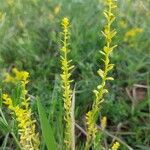
Hammarbya paludosa
Bog Orchid · Bog adder's-mouth orchid · Bog Adder's-mouth-orchid
Description
Source: leafsnapHammarbya paludosa (or Malaxis paludosa) is a small orchid commonly known as bog orchid, bog adder's-mouth or bog adder's-mouth orchid. It grows in bogs in temperate and subarctic regions of the Northern Hemisphere.
Care Guide
💧 Water
The bog adder's-mouth orchid thrives in marshy environments, where consistent humidity is crucial for its well-being. It requires weekly watering while ensuring that the soil neither becomes too dry nor overly saturated. The orchid is sensitive to water quality, so it's best to use rainwater or distilled water to prevent mineral buildup, which reflects the conditions of its natural habitat.
☀️ Light Partial sun
The bog adder's-mouth orchid occurs naturally in habitats such as forest understories or rocky areas, where it is exposed to natural shade. It prefers partial sun but can adapt to full sun or full shade, demonstrating its versatility and hardiness.
What are the sunlight requirements for Bog adder's-mouth orchid?
Bog adder's-mouth orchid (Hammarbya paludosa) requires varying amounts of sunlight depending on the type of growth desired. For partial sun conditions, about 3-6 hours of sunlight is needed. For plants that thrive in full sun, more than 6 hours of sunlight is necessary. It's important to observe the movement of sunlight through your garden to identify spots that offer a perfect balance of light and shade, ensuring the well-being of your plants.
🌡️ Temperature 0–32.2°C
Bog adder's-mouth orchid can tolerate a wide range of temperatures, but its distribution may still be restricted by different combinations of moisture and heat. It does best in warm summer conditions with adequate rainfall or watering. Extended periods of cloudy, rainy weather, as well as prolonged high temperatures, can raise the chance of the Bog adder's-mouth orchid dying. In winter, proper protection from cold can increase the plant's survival rate.
What is the Bog adder's-mouth orchid?
The Bog adder's-mouth orchid, known scientifically as Hammarbya paludosa, is a unique plant species. However, there is no specific information provided here about its essentials, such as growth requirements, habitat, or other relevant characteristics. Additionally, symptoms related to this plant, whether they pertain to conditions of distress, diseases, or other health indicators, are not addressed in the given data.
💨 Humidity
🪴 Soil 4-6
🌱 Fertilizer
A single spring application of fertilizer is generally enough for the Bog adder's-mouth orchid, though additional feedings can optimize growth. Apply fertilizer every month to six weeks. Fertilizing improves the leaves’ appearance and function, helping them retain even color and a healthy texture. It also encourages root development and nutrient uptake, supporting the plant’s long-term health.
🪴 Pot & Repot
✂️ Pruning
The Bog Adder's-mouth Orchid, a distinctive orchid species, flourishes in wetland environments. To promote healthy growth, enhance airflow, and encourage blooming, prune dead leaves from early to late spring. Be sure to use sterilized tools to prevent infections, and refer to specialized horticultural guides for the best care practices.
🌿 Propagating
🐛 Diseases & pets
☠️ Toxicity
Characteristics
- Plant Type
- Herb
- Life Cycle
- Perennial
- Genus
- Hammarbya
- Family
- Orchidaceae
- Hardiness Zone
- 3-7
- Mature Height
- 3 cm to 15 cm
- Mature Spread
- 2 cm to 5 cm
- Leaf Color
- Yellow Green, Olive Drab
- Leaf Type
- Evergreen
- Flower Color
- Yellow, Green
- Flower Size
- 0.20 cm to 0.25 cm
- Bloom Time
- Early summer, Mid summer
- Planting Time
- Spring, Summer
- Harvest Time
- Late summer, Early fall
- Native Area
- Sweden, Austria, Czech Republic, Poland, Slovenia, Belarus, Ukraine, Russia, Lithuania, Norway, Hungary, Germany, Switzerland, Denmark, Netherlands, Estonia, Japan, Finland, Ireland, United Kingdom, Romania, Latvia, Belgium, France