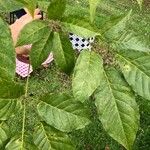
Handroanthus chrysanthus
Roble amarillo · Yellow trumpet tree · Yellow poui · Trumpet Trees · Golden tabebuia
Description
Source: leafsnapHandroanthus chrysanthus, commonly known as the Yellow Trumpet Tree, is a species of flowering tree native to Central and South America. Belonging to the Bignoniaceae family, this tree can grow up to 30 meters tall. It features a straight trunk with grayish-brown bark that is smooth in its youth but becomes rough as the tree ages. The leaves are compound and can reach up to 30 cm in length, with each leaflet being lance-shaped. The Yellow Trumpet Tree produces large clusters of bright yellow, trumpet-shaped flowers that bloom in late winter or early spring, prior to the emergence of the leaves. Each flower is approximately 5 cm long and has five petals that flare outward from the center. This tree prefers full sun exposure but can also tolerate partial shade in well-drained soil. While it is drought-tolerant once established, it requires regular watering during its early growth stages. Handroanthus chrysanthus is valued in traditional medicine for its anti-inflammatory properties and for treating respiratory issues such as asthma and bronchitis. In summary, Handroanthus chrysanthus is not only an attractive ornamental plant that adds vibrant color to any landscape or garden but also offers medicinal benefits.
💡 Handroanthus chrysanthus, commonly known as the Araguaney or ipê-amarelo, is Venezuela's national tree. The striking yellow color of its flowers, which bloom from winter to spring, is said to closely resemble the shade of yellow found on the Venezuelan flag.
🌳 Beyond its ornamental appeal, the golden trumpet-tree is recognized for its strong and attractive timber. The lumber is prized for fine furniture, boat construction, and outdoor decking because of its durability, resistance to decay, and attractive golden hue. Although not widely exploited, the tree’s potential as resonance wood for musical instruments has been noted due to its excellent acoustic properties. The golden trumpet-tree may also have a role in phytoremediation, using its capacity to absorb certain contaminants from soil and water, though additional research is necessary to fully utilize this application.
Care Guide
💧 Water Every 7 days
The golden trumpet tree, native to arid regions, thrives with minimal moisture and has high drought tolerance. It only needs watering every 2-3 weeks. In warmer climates, as an outdoor plant, it benefits from rain during the dry season, which enhances its flowering and vibrancy.
What is the best way to water my Golden trumpet-tree?
To promote excellent root development, consider placing a garden hose at the base of your plants. Avoid spraying the leaves directly, especially if they are outdoors and exposed to direct sunlight, as they may require more water. Using bubblers or soaker hoses can help moisten the roots effectively. When adding or removing plants, use soaker hoses that cover the whole garden or bed to ensure deep root growth. Be sure to drain excess water and allow the soil to dry before watering again. Water at ground level to prevent disease. On a sunny day, it may be beneficial to spray the entire bush with water. Whether your plants are in pots or planted in the ground, remember that Golden trumpet-tree prefers deep watering rather than light sprinkling.
What should I do if I give the Golden trumpet-tree too much or too little water?
An overwatered Golden trumpet-tree can exhibit several signs of distress. The leaves may turn yellow, drop off, and become wilted. The plant may also appear dull and unhealthy, with mushy stems. When these signs become apparent, it is best to adjust your watering schedule as needed. On the other hand, wilting can also indicate under watering. In this case, the leaves may become crispy and dry, while overwatered leaves will be soft and wilted. If the soil is dry and simply watering is not enough, a thorough watering is necessary. However, even with enough water, the Golden trumpet-tree may still have dry and yellow leaves due to damage to the root system. Once the plant returns to normal, the yellowing of leaves will cease. When keeping the Golden trumpet-tree indoors, always check the moisture levels of the pot. Avoid overwatering and be on the lookout for black spots. If such spots are present, allow the soil to dry in the pot for a few days by refraining from watering. Overwatering can lead to root rot, so if discolored and slimy roots are observed, consider transferring the plant to a different pot. It is important to prevent root rot by avoiding excessively soggy soil. When planting the Golden trumpet-tree outdoors, it is recommended to dig a little deeper. If the soil feels excessively dry when checked with your fingers, this could indicate under watering. Adequate watering is essential in aiding the plant's recovery.
How often should I give water to my Golden trumpet-tree?
The Golden trumpet-tree prefers deep and less frequent watering, especially when planted in pots. To keep the soil from drying out quickly, soak the plant with a gallon of water each time you water it. If you live in a cold region, water the tree every 3 to 5 days, preferably in the morning when the soil is dry. Check the soil by feeling the top 2-3 inches; if it's dry, it's time to water. During hot weather, check the moisture daily to prevent the soil from drying out. If you have a garden, irrigation is necessary, especially in hot climates where watering once a week is sufficient. Be mindful of rainfall, as excessive water can lead to root rot. Mulching about 3 to 4 inches deep can help conserve water when the tree is outdoors. Sandy soil requires more frequent watering, while clay soil can go 2-3 days without water to avoid root rot. Keep track of watering dates on a calendar and pay attention to drooping leaves, which might indicate a need for water sooner than expected.
How much water does my Golden trumpet-tree need?
The Golden trumpet-tree needs about a gallon of water on schedule. For potted plants, water them deeply until you see water dripping from the bottom of the pot. Let the soil dry before watering again. Use a water calculator or moisture meter to determine how much water the plant receives in a week. Water generously during the flowering period, but allow the moisture to evaporate to prevent root rot. If the Golden trumpet-tree is planted outside and receives adequate rainfall, additional watering may not be necessary. When the tree is young or newly planted, ensure it receives 1-2 inches of rain per week. As it grows, it can rely solely on rainfall. However, during extremely hot weather or in the absence of rain for 2-3 weeks, consider giving the tree a thorough watering during cooler times of the day to protect it from heat damage. Additional watering will be needed during extended dry spells.
Do I need to change how often I water my Golden trumpet-tree based on the time of year or the type of weather?
The Golden trumpet-tree needs to be outdoors and rely on rainwater, but if it's persistently dry, you'll need to water it. During the spring and fall, keep the soil moist but not soggy. Alternating between dry and moist soil conditions is beneficial for growth. In the summer, hot weather and lack of rain may require more frequent watering to keep the soil moist. Generally, less water is needed in the winter when the tree is dormant. Use well-draining but moisture-retentive soil for this period. Once the tree starts to leaf out in the spring, you can rely on rainfall. Good drainage is crucial for the tree's health, especially during the winter. In pots, watering is important as the roots have limited growth. Avoid cold and wet roots by providing adequate drainage. Water the entire root system deeply once or twice a week, avoiding shallow sprinkles. In the fall and winter, even during dormancy, don't let the tree dry out completely. Avoid overwatering as it can lead to root problems. Apply mulch to reduce stress, conserve water, and promote healthy blooms.
☀️ Light Full sun
The golden trumpet-tree does best when it gets plenty of daylight. Native to bright habitats, it shows its strongest growth under those light conditions. It is not tolerant of shade. Its origin in well-lit places explains this preference. Nonetheless, either too much or too little light can interfere with its growth and overall health.
What are the sunlight requirements for the Golden trumpet-tree?
The Golden trumpet-tree requires more than 6 hours of sunlight to thrive, emphasizing the need for full sun exposure. It's vital to observe your garden's sunlight patterns to find spots that provide an ideal balance of light and shade, as proper placement ensures the plant's growth and health. Originating from sun-rich environments, the Golden trumpet-tree performs best under ample daylight and has a low tolerance for shade. Insufficient or excessive sunlight can negatively affect its growth.
How do you provide adequate light for indoor Golden trumpet-trees?
Indoor Golden trumpet-trees need sufficient lighting to grow optimally, especially when natural sunlight is lacking, such as in winter or less sunny spaces. Artificial lighting becomes essential in such scenarios, offering a solution for healthier, faster growth. LED lights are recommended for their ability to be customized to the specific light wavelengths needed by the plant. For full sun plants, 30-50W/sq ft of artificial light is needed; partial sun plants require 20-30W/sq ft, while full shade plants need 10-20W/sq ft. The light source should be placed 12-36 inches above the plant, mimicking natural sunlight as closely as possible, with most plants benefiting from 8-12 hours of artificial light per day.
What are the symptoms of insufficient light in Golden trumpet-trees?
Golden trumpet-trees exhibit various symptoms when exposed to insufficient light, especially indoors during winter. These symptoms include smaller new leaves, leggy or sparse growth, premature leaf drop, halted new growth, paler new leaves, chlorosis (yellowing leaves), sunscald, leaf curling, wilting, and leaf scorching. Each symptom indicates the plant's struggle with light deficiency and its impacts on growth, leaf size, and overall health.
How can you address insufficient light for Golden trumpet-trees?
To address insufficient light for Golden trumpet-trees, gradually move your plants to sunnier locations to ensure they get at least 6 hours of direct sunlight daily. For indoor plants that are large or not easily movable, consider using artificial lights, keeping lamps on for at least 8 hours daily. Outdoor plants should be moved progressively to avoid sunburn. Removing obstructions and possibly transplanting smaller plants during their dormant period to sunnier spots can also help. Note that parts of the plant damaged by low light might not recover, but new growth should be healthy with improved light conditions.
🌡️ Temperature 20–37.8°C
The golden trumpet-tree comes from warm-climate habitats and favors temperatures between 68 and 100 °F (20 to 38 ℃). Seasonal measures may be needed to maintain these temperatures, particularly during cooler months.
What is the ideal temperature range for the Golden trumpet-tree?
The ideal temperature range for the Golden trumpet-tree falls between 68 and 100 °F (20 to 38 °C). This plant is native to warm climates and prefers these temperatures to thrive. During cooler months, it is essential to make seasonal adjustments to maintain these temperature conditions, as the Golden trumpet-tree is extremely heat-loving. Cold temperatures can adversely affect the plant, and it is recommended to bring outdoor plants indoors during autumn, placing them near a bright window but away from heaters to avoid harm. Keeping the temperature above 20°C during winter contributes positively to the plant's growth, while temperatures nearing 5°C can be detrimental.
How should you care for a Golden trumpet-tree exposed to low temperatures?
If a Golden trumpet-tree is exposed to low temperatures, it's important to act quickly to mitigate any potential damage. This plant thrives best at temperatures above 20°C and should be kept above 5°C during winter. Exposure to temperatures below 1°C may cause the leaves to lighten in color, and after frost damage, you might see the leaves browning or blackening, with signs of wilting and drooping. The recommended care solution is to trim off the frost-damaged parts and move the plant to a warm indoor environment immediately for protection. Placing the plant near a south-facing window can ensure it receives ample sunlight. It's also crucial to avoid placing it near heaters or air conditioning vents, as these can cause excessive dryness in the air.
What steps should be taken if a Golden trumpet-tree is subjected to high temperatures?
During summer, it's important to monitor the temperature around a Golden trumpet-tree, ensuring it stays below 38°C. Exposure to temperatures above 43°C can lead to lighter leaf color and increase the risk of sunburn for the plant. To care for a Golden trumpet-tree under such conditions, start by trimming away any sunburned or dried-up parts. Next, move the plant to a location where it can receive shade during the midday and afternoon sun, which will help protect it from further damage. Watering the plant in the morning and evening is also advisable to keep the soil moist and help the plant cope with the heat.
💨 Humidity
🪴 Soil 6-7
🌱 Fertilizer
The best time to fertilize a Golden trumpet-tree is in early spring as it breaks dormancy. This encourages overall growth and flower formation. Fertilizing improves the foliage, stems, and branches, and supports flowers that are large, vivid, and long-lasting. It assists nutrient movement from the roots to the flowers and enhances the plant’s health and disease resistance.
Why should I put fertilizer on my Golden trumpet-tree?
Fertilizing a Golden trumpet-tree is crucial for its overall health and well-being. When provided with the right combination of energy and nutrients, the tree develops lush foliage, strong stems, and branches. However, it is the flowers of the Golden trumpet-tree that are highly valued by gardeners. Luckily, fertilization not only benefits the overall plant health but also enhances the size, vibrancy, and longevity of the flowers. The reason behind this is that the appropriate fertilizer helps the tree efficiently transport fuel from its roots to its flowers through its stems. Moreover, proper fertilization supports the tree's overall health, increasing its ability to combat diseases.
When should I fertilize my Golden trumpet-tree?
To properly fertilize a Golden trumpet-tree, the best time is in early spring when the plant is coming out of its dormant phase and is about to bloom. By fertilizing during this time, your tree will have enough energy to support its growth and flower development. However, it is also beneficial to give it another feeding in the fall, although a smaller amount will suffice. Some gardeners may choose to fertilize during planting, but it is not always required.
When is it not a good idea to use fertilizer on my Golden trumpet-tree?
You do not need to fertilize your Golden trumpet-tree during the winter because it is in a dormant phase and does not require energy from the soil. Fertilizing during winter can lead to negative effects from overfertilization. The best times to feed the Golden trumpet-tree are in early spring and fall. During most of the spring and summer, the plant does not need fertilizer. It is also advisable to refrain from feeding if the plant is experiencing exceptionally hot or dry conditions.
Which fertilizer should I use for my Golden trumpet-tree?
It is generally fine to use a general-purpose fertilizer with equal amounts of nitrogen, phosphorus, and potassium. However, Golden trumpet-tree plants tend to do better with a specific type of fertilizer. The most important nutrients for these trees are nitrogen and phosphorus, so the fertilizer should have higher levels of these compared to potassium. A fertilizer with an N-P-K ratio of 10-10-8 or similar should work well. Additionally, using organic materials such as compost for at least one yearly feeding can be beneficial. If using fertilizer, granular fertilizer is most commonly used for Golden trumpet-trees.
How can I help my Golden trumpet-tree to grow better?
Fertilizing your Golden trumpet-tree is an easy task that anyone, even inexperienced gardeners, can do. To feed your tree with granular fertilizer, simply sprinkle it on the soil after moistening it with water. You can also improve the tree's soil by adding organic materials like compost or manure. To do this, place the material on top of the soil and gently work it into the first few inches without disturbing the roots, using a hand rake.
🪴 Pot & Repot
✂️ Pruning
The golden trumpet tree showcases vibrant yellow flowers and flourishes when pruned in early spring. To promote healthy growth, it is important to remove any dead or diseased branches, which will improve the tree's structure and airflow. Additionally, always clean your tools to prevent the spread of disease. Pruning properly not only encourages robust blooms but also maintains the tree's visual appeal.
🌿 Propagating
🐛 Diseases & pets
☠️ Toxicity
Characteristics
- Plant Type
- Tree
- Life Cycle
- Perennial
- Genus
- Handroanthus
- Family
- Bignoniaceae
- Hardiness Zone
- 10-12
- Mature Height
- 6.1 m to 11.89 m
- Mature Spread
- 7.62 m to 10.36 m
- Leaf Color
- Green, Blue
- Leaf Type
- Deciduous
- Flower Color
- Yellow
- Flower Size
- 2.54 cm to 5.08 cm
- Bloom Time
- Mid spring, Late spring, Early summer
- Planting Time
- Spring, Autumn
- Harvest Time
- Mid summer