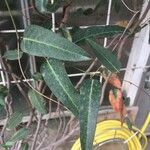
Hardenbergia comptoniana
Australian lilac vine · Native Wisteria · Sarasaparilla vine · Coral pea
Description
Source: leafsnapHardenbergia comptoniana, commonly known as the Native Wisteria or Purple Coral Pea, is a species of flowering plant in the family Fabaceae. Native to Australia, it thrives in various habitats such as forests, woodlands, and heathlands. Typically, this plant grows as a climbing vine or shrub with woody stems that can reach up to 5 meters in length. Its dark green, leathery leaves are oval-shaped and can measure up to 10 cm long. The flowers of Hardenbergia comptoniana are strikingly beautiful, displaying shades of purple or pink. They bloom from late winter through spring and grow in clusters along the stems, attracting bees, butterflies, and other pollinators. Relatively easy to grow, this plant requires minimal maintenance once established. It prefers well-drained soil and full sun exposure but can also tolerate partial shade. Hardenbergia comptoniana is versatile, serving both ornamental and medicinal purposes. Its attractive flowers make it a popular choice for landscaping gardens. Additionally, indigenous Australians have used it for treating skin infections and other ailments. Overall, this beautiful native Australian plant adds color and beauty to gardens while being low-maintenance, making it an excellent choice for gardeners seeking a hardy and attractive addition to their landscape design.
Care Guide
💧 Water Every 7 days
☀️ Light Partial sun
Native wisteria occurs naturally in habitats like forest understories or rocky areas, where it grows in natural shade. It prefers partial sun but can adapt to full sun or full shade, illustrating its versatile and hardy nature.
What are the sunlight requirements for Native wisteria?
Native wisteria, also known as Hardenbergia comptoniana, flourishes under specific sunlight conditions. For optimal growth, it requires 'Full sun' which means the plant should receive above 6 hours of sunlight per day. However, it can also tolerate 'Partial sun', indicating about 3-6 hours of sunlight per day. It's important to observe the sunlight's path through your garden to ensure that your Native wisteria is placed in a location that offers a harmonious balance of light and shade, ensuring the plant's wellbeing.
🌡️ Temperature 20–37.8°C
Native wisteria shows strong adaptability to a range of climate conditions, from very hot summers to cold winters. Nevertheless, it has an optimal temperature range for healthy growth. If temperatures become too high, the plant can experience heat and humidity stress, which may kill it. In areas where temperatures approach the lower limit of its cold tolerance, insulating the plant is important to protect it.
What is the botanical name of Native Wisteria?
The botanical name of Native Wisteria is Hardenbergia comptoniana.
💨 Humidity
🪴 Soil 6-8
🌱 Fertilizer
The timing of fertilizing Native wisteria is important. Apply fertilizer in early spring and continue monthly until early summer. Fertilizer promotes beautiful blooms and supplies energy during both dormant and active growth phases.
🪴 Pot & Repot Every 12 months
✂️ Pruning
Native wisteria is a vigorous climbing plant admired for its vibrant purple flowers. To keep it healthy and looking its best, prune it in early spring after it has finished blooming. This helps shape its growth, remove dead stems, and improve air circulation. Regular pruning not only encourages blooming but also maintains the plant's health and appearance for the next season.
🌿 Propagating
🐛 Diseases & pets
☠️ Toxicity
Characteristics
- Plant Type
- Vine
- Life Cycle
- Perennial
- Genus
- Hardenbergia
- Family
- Fabaceae
- Hardiness Zone
- 9-11
- Mature Height
- 3.96 m
- Mature Spread
- 3.05 m
- Leaf Color
- Green
- Leaf Type
- Evergreen
- Flower Color
- Purple
- Flower Size
- 1.02 cm to 1.52 cm
- Bloom Time
- Late winter, Early spring, Mid spring
- Planting Time
- Spring, Summer, Autumn
- Harvest Time
- Late spring, Early summer, Mid summer