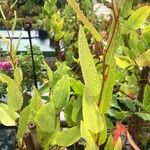
Hardenbergia violacea
Coral-pea · Vine-lilac · Purple coral-pea · False sarsaparilla · Purple twining-pea
Description
Source: leafsnapHardenbergia violacea, commonly known as the Purple Coral Pea or Happy Wanderer, is a flowering plant native to Australia. It is a vigorous climber that can reach up to 6 meters in height and 3 meters in width. The plant features dark green, oval-shaped, leathery leaves. The flowers of Hardenbergia violacea are pea-shaped and come in shades of purple, pink, or white. They bloom from winter through spring, attracting bees, butterflies, and birds. This plant is easy to grow because it can tolerate a wide range of soil types, though it prefers well-draining soil with regular watering during the growing season. It thrives best when planted in full sun or partial shade. Hardenbergia violacea has many uses. It can be used as an ornamental plant for trellises or fences due to its climbing habit. It also serves as an excellent ground cover when planted en masse on slopes or banks. Overall, this beautiful flowering vine adds color and interest to any garden with its vibrant blooms, while also being low maintenance, making it an excellent choice for gardeners of all levels!
🌳 Because of its twining habit, false sarsaparilla is useful for more than ornamentation; it is well suited to erosion control and land rehabilitation. Its dense leaf cover creates living spaces, providing a protective refuge for small fauna and offering support for the growth of other plants. Native Australian species such as the Bluebell Creeper are often noted for their landscaping value, but their ecological role in creating microhabitats is just as significant.
Care Guide
💧 Water Every 7 days
False sarsaparilla, originally from Australian forests, thrives in humid conditions with periodic rainfall. Once established, it is drought-tolerant but still prefers consistently moist soil. To mimic its natural habitat, water it weekly and apply mulch to help retain moisture. Because of its climbing nature, false sarsaparilla is typically grown outdoors.
What's the easiest way to water my False sarsaparilla plant?
To ensure excellent root development, it is recommended to place a garden hose at the base of the plant. However, avoid spraying the leaves directly. Keep in mind that if the leaves are exposed to direct sunlight outdoors, they may require more watering. To moisten the roots, bubblers can be used for each plant or soaker hoses can cover the entire garden or bed. When adding or removing plants, using soaker hoses can help push the roots deeper into the soil. Remember to drain any excess water and wait for the soil to dry before watering again. Watering at ground level is advised to prevent diseases. On a sunny day, it may be beneficial to spray the entire bush with water. Whether the plant is potted or in the ground, it is important to prioritize deep watering rather than light sprinkling for false sarsaparilla.
What should I do if I give False sarsaparilla too much or too little water?
An overwatered False sarsaparilla can display signs such as yellowing and wilting leaves, as well as dull and unhealthy appearance with mushy stems. Adjust your watering schedule if you see these signs. Wilting can also be a sign of under watering, where leaves turn crispy and dry. If the soil is dry and watering is not enough, give the plant a full watering. However, even with enough water, the False sarsaparilla may still have dry and yellow leaves due to damaged roots. Once it recovers, the yellowing will stop. When growing the False sarsaparilla indoors, check the moisture levels and avoid overwatering. Look out for black spots, and if present, allow the soil to dry by withholding water for a few days. Overwatering can cause root rot, so transfer the plant to a different pot if you see discolored and slimy roots. Prevent root rot by avoiding overly soggy soil. When planting the False sarsaparilla outdoors, ensure the soil is adequately watered if it feels too dry.
How often should I give water to my False sarsaparilla?
The False sarsaparilla prefers deep and infrequent watering, especially when planted in pots. Water them with a gallon of water each time to ensure proper hydration. Potted plants have limited water storage and the soil dries out faster, so water every 3 to 5 days in cold regions. Water in the morning when the soil is dry, and check the top 2-3 inches of soil to determine if watering is needed. During hot days, check the moisture daily as the heat can quickly dry out the pot soil. If you have a garden, irrigation is necessary. In hot climates, water once a week when the soil becomes too dry. Take into account the amount of rainwater received to avoid overwatering and root rot. False sarsaparilla grows in spring and fall, and adding 3 to 4 inches of mulch when outdoors helps conserve water. Sandy soil drains faster and requires more frequent watering, while clay soil needs less watering to prevent root rot. Keep a record of watering dates to ensure timely hydration and watch for drooping leaves as a sign of insufficient water.
How much water should I give my False sarsaparilla?
The False sarsaparilla plant needs about a gallon of water on a regular schedule. For potted plants, water deeply until the water drips out of the pot, then wait for the soil to dry before watering again. Use a water calculator or moisture meter to track how much water you give to the plant each week. During the flowering period, provide plenty of water but allow the moisture to evaporate to prevent root rot. If the False sarsaparilla is planted outdoors with enough rainfall, it may not need extra watering. When the plant is young or newly planted, aim for 1-2 inches of rainwater per week. As it grows, it can rely on rainfall alone. Only if the weather is very hot or there is no rain for 2-3 weeks, water the False sarsaparilla fully during cooler parts of the day to protect it from heat damage. Additional watering will be needed during prolonged dry spells.
Should I water my False sarsaparilla more or less depending on the time of year or the weather?
The False sarsaparilla prefers to be outdoors and relies on rainwater, but it may need to be watered during persistent dry weather. In the spring and fall, the soil should be kept moist but not soggy, with alternating dry and moist conditions being beneficial. Hot summer weather can cause water to evaporate quickly, so additional watering may be necessary if there is a lack of rainfall. During the winter, the False sarsaparilla requires less water as it goes dormant. A well-draining and moisture-retentive soil mix, such as terracotta, can aid in water evaporation. Once the plant begins to leaf out and go dormant, watering can be skipped, relying on fall and winter rains. In the spring, you can encourage growth and blooming with proper cultivation. Ensure good drainage at all times, especially during the winter, as the plant dislikes ponding or drought during flowering. When grown in pots, root growth is limited, so adequate watering is essential, particularly in the summer. Deep soaking once or twice a week is best, avoiding shallow sprinkles that can encourage fungal growth. Even during dormancy, the False sarsaparilla should not be allowed to dry out completely in the fall or winter. Avoid overwatering and ensure good soil drainage to prevent plant death during winter. Applying mulch can help reduce stress, conserve water, and promote healthy blooms.
☀️ Light Full sun
False sarsaparilla grows best with plenty of light, though it can still manage to develop in places with somewhat reduced brightness. This tendency reflects its natural habitat, where the plant is exposed to considerable illumination. Still, receiving either too much or too little light can impede its growth and compromise its overall health.
What are the sunlight requirements for False sarsaparilla?
False sarsaparilla requires full sun, which is above 6 hours of sunlight per day, but it can also tolerate partial sun, about 3-6 hours of sunlight daily. It's essential to observe how sunlight moves through your garden to ensure that your plants are placed in spots with an ideal balance of light and shade for optimal growth. Although False sarsaparilla thrives under abundant light, mimicking its natural habitat's considerable illumination, too much or too little light can adversely affect its health.
What is the role of artificial lighting for False sarsaparilla growing indoors?
Artificial lighting is crucial for indoor False sarsaparilla plants, especially when natural sunlight is insufficient such as in winter or in less sunny spaces. Proper lighting is essential for optimal growth, and choosing the right type of artificial light, like LED, can help provide the specific wavelengths needed. Full sun plants require 30-50W per square foot, partial sun plants need 20-30W per square foot, and full shade plants need 10-20W per square foot. The light source should be placed 12-36 inches above the plant and be on for 8-12 hours per day to mimic natural daylight effectively.
What are the symptoms of light deficiency in False sarsaparilla?
False sarsaparilla shows several symptoms when light conditions are not optimal, including smaller new leaves, leggy or sparse growth, faster leaf drop, slower or no new growth, lighter-colored new leaves, and chlorosis (leaves turning yellow). Sunscald, leaf curling, wilting, and leaf scorching are signs of stress due to excessive sunlight. These symptoms reflect the plant's struggle to adapt to its lighting environment, indicating a need for adjusted light exposure.
How can I address the light-related issues of False sarsaparilla?
To address light-related issues for False sarsaparilla, consider gradually moving plants to sunnier locations to receive at least 6 hours of direct sunlight daily. For indoor plants not easily movable or too large, turning on a desk or ceiling lamp for at least 8 hours daily or investing in professional grow lights can help. For outdoor plants, avoid sudden changes in light intensity. You can also reduce sun obstruction by pruning nearby trees or transplant smaller plants during their dormant period to sunnier spots with good drainage. Note that parts affected by insufficient light may not recover, but new growth will be healthy with improved light exposure.
🌡️ Temperature 20–37.8°C
False sarsaparilla naturally occurs in environments with temperatures between 68 and 100°F (20 to 38°C). It performs best within that range, especially during its growth phase. In regions with harsh seasonal climates, consider adjusting indoor temperatures to suit its preferences.
What is the ideal temperature range for growing False sarsaparilla?
False sarsaparilla, or Hardenbergia violacea, thrives in environments with temperatures ranging from 68 to 100°F (20 to 38°C), particularly during its growth period. This plant loves heat and does not fare well in cold temperatures. To accommodate its preferences, especially in areas with harsh seasonal climates, it's recommended to adjust indoor temperatures accordingly. During the autumn, if the False sarsaparilla has been grown outdoors, it should be brought indoors and placed near a bright window, keeping in mind to maintain a distance from heaters. Ensuring temperatures remain above 20°C during winter is vital for the plant's well-being, as temperatures approaching 0°C can be detrimental.
How should you care for False sarsaparilla in low temperatures?
False sarsaparilla prefers warm environments and doesn't tolerate low temperatures well, thriving best above 20°C. During the winter months, it is crucial to keep the plant in conditions above 0°C to prevent cold damage. Should the temperature drop below -5°C, you may notice the plant's leaves lightening in color, eventually turning brown or black with symptoms like wilting and drooping following frost damage. To mitigate these effects, trim off the frost-damaged parts and move the plant indoors to a warm spot, preferably near a south-facing window for adequate sunlight. It's also important to avoid placing the plant near heaters or air conditioning vents, as this can cause excessive dryness in the air.
What should you do if False sarsaparilla experiences high temperatures?
During the hotter months, it's important to ensure False sarsaparilla is not exposed to temperatures above 38°C. Exposure to temperatures over 43°C can lead to lighter leaf colors and increase susceptibility to sunburn. In such scenarios, you should trim away the sunburned and dried parts of the plant. Relocating the plant to a shaded area, particularly from the midday and afternoon sun, can help prevent further damage. Additionally, watering the plant during the cooler parts of the day, such as in the morning and evening, helps maintain soil moisture and supports the plant's overall health.
💨 Humidity
🪴 Soil 6-7
🌱 Fertilizer
The best time to fertilize a False sarsaparilla is in early spring, when it comes out of dormancy. This encourages general growth and flower development. Fertilizing improves the foliage, stems, and branches, and promotes flowers that are large, vivid, and long-lasting. It helps move nutrients from the roots to the flowers and enhances the plant’s health and resistance to disease.
Why should I put fertilizer on my False sarsaparilla?
Fertilization is crucial for the overall health and well-being of a False sarsaparilla. It helps the plant develop healthy foliage, sturdy stems, and branches. The flowers of the False sarsaparilla are highly valued by gardeners, and fertilizing the plant promotes the production of large, vibrant, and long-lasting flowers. The right fertilizer enables the plant to efficiently transfer nutrients from its roots to its flowers. Additionally, proper fertilization improves the plant's overall health, making it more resilient against diseases.
When should I fertilize my False sarsaparilla?
It is recommended to fertilize your False sarsaparilla during early spring, as it emerges from dormancy and prepares to bloom. This will provide energy for growth and flower development. However, you can also give it a smaller feeding during the fall. Some gardeners choose to fertilize the plant during planting, but it is not always necessary.
When is the best time to not use fertilizer on my False sarsaparilla?
During the winter, False sarsaparilla is in a dormant phase, so fertilization is unnecessary. Over-fertilizing during this time can have negative effects. The best times to feed the plant are early spring and fall. Fertilizer is not needed in most of the spring and summer unless the plant is experiencing extreme heat or dry conditions.
What kind of fertilizer does my False sarsaparilla plant need?
When fertilizing false sarsaparilla plants, it's generally fine to use a general-purpose fertilizer with equal amounts of nitrogen, phosphorus, and potassium. However, false sarsaparilla plants tend to thrive when they receive a specific type of fertilizer. Generally, nitrogen and phosphorus are the most important nutrients for false sarsaparilla, so the fertilizer you use should have a higher concentration of these compared to potassium. A fertilizer with an N-P-K ratio of 10-10-8 or something similar should work well. Additionally, applying organic material like compost at least once a year can be beneficial. If using fertilizer, granular fertilizer is usually the most common choice for false sarsaparilla.
How do I help my False sarsaparilla grow better?
Applying fertilizer to your False sarsaparilla is a simple task that any gardener can do, even those with little experience. To fertilize with granular fertilizer, just sprinkle it on the soil after moistening it with water. You can also improve the soil for your False sarsaparilla by adding organic material like compost or manure. To do this, place the material on top of the soil and use a hand rake to gently incorporate it into the top few inches without disturbing the roots.
🪴 Pot & Repot 2-3 years
Repot false sarsaparilla every 2-3 years during the spring. Use a medium-sized container with good drainage to support its growth. After repotting, place the plant in bright, indirect light and water it regularly to prevent shock and encourage healthy development. Consistent care is crucial for the plant to thrive after it has been repotted.
✂️ Pruning
False sarsaparilla is a climbing plant known for its vibrant purple blooms. To optimize its growth and flowering, prune it in early spring. Remove any weak stems above healthy buds. Regular trimming promotes a bushier appearance and prevents the plant from becoming too leggy. Be sure to use sharp tools to minimize any damage to the plant. Avoid heavy pruning during the blooming period to preserve the flowers.
🌿 Propagating
🐛 Diseases & pets
☠️ Toxicity
This plant is known to be toxic to some sensitive animals and humans, causing serious gastrointestinal disturbances and severe skin irritations. On the other hand, it does not show any sign of toxicity in others. But for safety purposes, ensure to keep your household pets and children away from this plant, so that they do not consume any part of the plant.
Characteristics
- Plant Type
- Vine, Shrub
- Life Cycle
- Perennial
- Genus
- Hardenbergia
- Family
- Fabaceae
- Hardiness Zone
- 9-11
- Mature Height
- 6.1 m
- Mature Spread
- 2.13 m
- Leaf Color
- Green
- Leaf Type
- Evergreen
- Flower Color
- Purple, Violet
- Flower Size
- 2.54 cm to 5.08 cm
- Bloom Time
- Early spring, Mid spring, Winter
- Planting Time
- Spring, Autumn
- Harvest Time
- Late spring, Early summer, Mid summer
- Native Area
- Australia