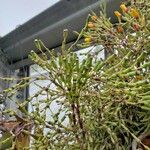
Hatiora salicornioides
Dancing-bones · Bottle cactus · Drunkard's-dream · Dancing bones cactus · Spice cactus
Description
Source: leafsnapHatiora salicornioides, commonly known as Drunkard's Dream or Dancing Bones, is a unique and fascinating member of the cactus family. Native to Brazil, it thrives as an epiphyte on trees or rocks within the rainforest. The plant features thin, cylindrical stems that are segmented, resembling a series of joints or bones. These green stems can grow up to 30 cm long. In late winter or early spring, during its blooming season, Hatiora salicornioides produces small, pinkish-red flowers at the tips of its stems. These tubular flowers have five petals that flare outward at the tips, adding to the plant's distinctive appearance. This easy-to-care-for plant flourishes under bright but indirect light and requires moderate watering. It prefers well-draining soil and good air circulation around its roots. Hatiora salicornioides is an excellent addition to any indoor garden due to its unusual appearance and low maintenance needs. Its striking look makes it a popular choice for those seeking something different from traditional houseplants while still being easy to care for.
Care Guide
💧 Water Every 7 days
Native to arid environments, the bottle cactus is highly efficient at storing water and exhibits remarkable drought tolerance. This plant thrives in dry climates and generally requires watering only once every two weeks, allowing the soil to dry out in between. Often grown indoors in containers, the bottle cactus demands careful moisture management to maintain healthy roots.
How should I water my Bottle cactus?
To effectively water the Bottle cactus, it is important to understand the different methods. People often wonder whether they should water from top to bottom or the other way around. According to experts, starting from the bottom is one of the best approaches. This ensures that the water reaches the plant's roots adequately. Watering from the top results in insufficient saturation. The water tends to trickle down and evaporate, meaning only a small quantity actually reaches the roots.
If my Bottle cactus doesn't have enough water, what should I do?
If you find that your flowers are drying out despite watering them regularly, the issue may be with the container they are planted in. In this case, choose a larger container with good drainage. It's important to use the right potting soil and clean sand mixture to help the plant absorb more water easily. This species is an epiphyte and cannot handle soggy roots, as it obtains water and nutrients from the air. Therefore, proper drainage is necessary to prevent fungal infections. If your cactus becomes limp, you can transfer it to fresh soil. Gently remove as much of the old soil as possible and keep the new soil evenly moist. Mist the cactus frequently if possible. After the flowers have finished blooming, reduce watering until new buds appear. Be careful not to let the soil dry out too much, as this can cause the buds to drop. Underwatering followed by overwatering is a common mistake made by many owners of these succulent cacti. The lack of water may not be noticeable until it's too late, so it's important to pay attention to signs of wilting or withering. While it is tempting to overcompensate with excessive watering, this can lead to desiccated roots that cannot take in any more water. This can result in waterlogged plants and rotting roots. If you notice signs of underwatering, you can try to revive the cactus by providing regular and frequent, yet controlled, watering. Give the cactus a chance to regenerate and recover its roots without overdoing it.
How much water does my Bottle cactus need?
To keep the Bottle cactus healthy all year round, it is important to water it properly and pot it in well-draining soil. The amount of water needed may vary, but a good rule of thumb is to water the cactus when about 1/3 of the topsoil is dry. The Bottle cactus is thirstier than other succulents, so it typically needs to be watered about once a week. To check if the soil is dry enough, use your fingers to see if it is about two inches dry. If the top layer of soil is very dry, you can run water through the drainage holes until it flows out of the pots. It is recommended to have a tray underneath to catch the excess water. After about 10 to 15 minutes, discard any remaining water. This soaking method works well for the Bottle cactus, but be careful not to let it sit in water-filled pots for too long. During the flowering stage, it is best to water the cactus sparingly. A good indication that the cactus needs water is when its leaves begin to droop. To add humidity, you can place pebbles in the saucer of the pots and add water to the pebbles. Checking the soil is the best way to know when to water the Bottle cactus. If it is too dry, simply add water and moisture. However, avoid letting the pot sit in water, especially in winter when the soil takes longer to dry, as this can cause root rot. It is important to consider the climate when watering the Bottle cactus. In dry and hot climates, watering about twice a week may be necessary. In humid areas, watering once a week should suffice. It is also advisable to water less frequently during fall and winter to encourage flower blooming. When the pots are exposed to a lot of sunlight, the moisture in the soil evaporates faster, requiring more frequent watering. On the other hand, cooler or more humid environments may require less watering.
What happens if I give too much water to my Bottle cactus?
Sometimes, if you give your Bottle cactus too much water, it can droop or look wilted. If you have neglected it for a while, give it a little bit of water. Only water it sparingly until you notice that the soil has a slight amount of moisture. Overwatering can lead to a fungal infection called white rot. The leaves may droop and cause wilting. Just like other species, the cactus does not do well with too much or too little water. It cannot tolerate dry soil because it will also cause the flowers to start falling off, which is something you want to avoid.
Should I water my Bottle cactus more or less depending on the time of year?
The cold and hot months have different temperatures and soil conditions. In winter and fall, temperatures drop and soil takes longer to dry, so succulents don't need frequent watering. These seasons are also when the Bottle cactus blooms best. To keep the plant healthy, water it sparingly. In October, stop watering if the soil is too wet. Resume watering in November, but keep moisture light if it's still cool outside. When the blooms start to appear, stop watering for a few weeks to give the plants a rest from excess moisture. Be cautious with watering as these plants are delicate. Once new growth is visible, you can water once a week if needed.
☀️ Light Partial sun
Bottle cactus thrives in spots that provide a balance of shade and light, giving it ideal conditions for growth. Its native habitat corresponds to these requirements. Although the plant can tolerate a complete lack of light, too much sun exposure can negatively affect its health.
What are the sunlight requirements for Bottle cactus?
Bottle cactus thrives in partial sunlight, requiring about 3-6 hours of sunlight daily. It's crucial to watch how sunlight moves through your garden to ensure spots provide a balance of light and shade. This balance is essential for the plant's happiness and health. Although Bottle cactus can tolerate full sunlight in cooler weather, excessive sun exposure can be harmful, leading to symptoms such as chlorosis, sunscald, leaf curling, wilting, and leaf scorching.
What essentials should be considered for Bottle cactus' growth?
Bottle cactus flourishes in environments that offer a balance of shade and light, mimicking its native habitat. It can withstand periods of complete light scarcity, but excessive sun exposure may impact its health negatively. For indoor plants, artificial lighting can be crucial, especially in winter or less sunny spaces. It's advisable to use LED lights, adjusting them to provide 30-50W/sq ft for full sun plants, 20-30W/sq ft for partial sun plants, and 10-20W/sq ft for full shade plants. The light source should be placed 12-36 inches above the plant, ensuring 8-12 hours of light per day to mimic natural daylight hours.
What are the common symptoms of inadequate light in Bottle cactus?
Inadequate lighting conditions can lead to several symptoms in Bottle cactus, including smaller new leaves, leggy or sparse growth, faster leaf drop, and slowed or ceased growth. These symptoms are indicators of light deficiency. Chlorosis, leaf curling, wilting, and leaf scorching are symptoms of excessive sunlight exposure. Both insufficient and excessive light affect the plant's ability to photosynthesize and maintain healthy growth.
How can I address lighting issues for indoor and outdoor Bottle cactus plants?
To optimize growth for both indoor and outdoor Bottle cactus plants, gradually increase their exposure to sunlight. For indoor plants, especially those too large or immovable, supplementing with artificial light, like keeping a desk or ceiling lamp on for at least 8 hours daily or using professional plant grow lights, can provide the necessary light. Outdoors, avoid sudden changes in light intensity by progressively moving plants to sunnier spots each week. Minimize obstructions from sunlight by pruning trees or moving smaller plants in the ground to sunnier locations with good drainage. Note that parts of the plant affected by insufficient sunlight may not recover, but new growth will be healthy.
🌡️ Temperature 20–41.1°C
Although Bottle cactus tolerates some heat, it mainly thrives and grows in the cooler months and becomes dormant in summer. In very hot summer conditions, provide shade to prevent scorching from strong sunlight. Watering should be reduced or stopped during the hottest period to avoid root rot. Bottle cactus shows vigorous growth in winter and spring. Provided the temperature does not fall too low, it will continue to grow steadily.
What are the essential care tips for Bottle cactus?
Bottle cactus, scientifically named Hatiora salicornioides, thrives in warm environments, requiring higher temperatures during its growing season to foster growth and metabolism. It benefits from ample sunlight, proper moisture levels, and good ventilation. The plant is heat-loving but becomes dormant in winter. It's crucial to maintain it in warm conditions, ideally indoors near a south-facing window, when temperatures drop below 0°C, to ensure it receives enough sunlight. Supplemental lighting can be used if natural light is insufficient. The plant's growth slows when temperatures fall below 20°C, necessitating reduced or ceased watering to prevent root rot. In cold conditions, outdoor Bottle cactus should not be watered, and protective measures like a temporary greenhouse or wrapping with plastic film or fabric can offer insulation.
How do low temperatures affect Bottle cactus and what solutions can be applied?
Bottle cactus favors high temperatures and struggles with cold, thriving best above 20°C while requiring protection from temperatures below 0°C. Exposure to temperatures below -5°C can lead to the cactus becoming weak, wilting, and susceptible to root rot. Though mild frost damage may not show immediate symptoms, affected plants will gradually wither. To address this, frostbitten areas and possibly rotted roots should be trimmed. The plant can also be propagated through cuttings if root damage is significant. Moving the cactus to a warm environment indoors, preferably near a south-facing window for maximum sunlight, can aid recovery. If natural light isn’t sufficient, supplemental lighting is recommended.
How should Bottle cactus be cared for in high temperatures?
In high temperatures, particularly during the summer when temperatures should ideally stay below 41°C, Bottle cactus is at risk of halting growth, suffering water loss, wilting, and sunburn if exposed to temperatures above 45°C. If such conditions cause sunburn or root rot, it's important to remove the damaged parts of the plant. Providing shade to protect the cactus from afternoon sunlight will help it recover and resume growth. If root rot is present, cease watering until new roots develop as part of the recovery process.
💨 Humidity dry (<40%)
This plant prefers dry conditions, so don't mist it. However, watering it less often can also thrive in higher humidity.
🪴 Soil 5-6
🌱 Fertilizer
For Bottle cactus, light fertilizer applications once or twice a year during the growing season are enough. Do not fertilize in winter or summer, when the plant is dormant. Cut back on fertilizer for plants that have been repotted and wait a couple of months after repotting before applying any. Fertilizing helps maintain healthy growth and promotes blooming.
🪴 Pot & Repot 2-3 years
Repot the bottle cactus in spring or summer, choosing a pot slightly larger than the current one with good drainage. Use a well-draining, sandy or gritty cactus mix. Handle the plant carefully to avoid its spines. Allow the cactus to dry out before repotting to prevent root rot. After repotting, wait for a week before watering so the roots can heal.
✂️ Pruning
The bottle cactus requires very little pruning. To encourage healthy growth, remove any withered flowers and branches. This allows the plant to direct nutrients to its thriving parts.
🌿 Propagating
🐛 Diseases & pets
☠️ Toxicity
Some sources say that the stems and flowers may be toxic to humans and pets and should not be ingested.
Characteristics
- Plant Type
- Succulent
- Life Cycle
- Perennial
- Genus
- Hatiora
- Family
- Cactaceae
- Hardiness Zone
- 10-12
- Mature Height
- 49 cm
- Mature Spread
- 61 cm
- Leaf Color
- Green
- Leaf Type
- Evergreen
- Flower Color
- Yellow, Cream
- Flower Size
- 1.02 cm to 2.03 cm
- Bloom Time
- Spring
- Planting Time
- Spring, Autumn
- Harvest Time
- Early summer, Mid summer
- Native Area
- Brazil