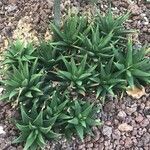
Haworthia coarctata
Cowhorn haworthia · Zebra Plant · Octopus kalabanda · Haworthis
Description
Source: leafsnapHaworthia coarctata is a small succulent plant that belongs to the Asphodelaceae family. Native to South Africa, it is commonly found in rocky areas and on cliffs. The plant features thick, fleshy leaves that grow in a rosette pattern, forming a compact cluster. The leaves are green with white stripes or spots, giving the plant an attractive appearance. During the summer months, Haworthia coarctata produces small white or pink tubular flowers on long stems. Each flower has six petals. This plant is easy to care for and can be grown both indoors and outdoors, provided it receives bright but indirect sunlight. It prefers well-draining soil and should be watered occasionally during its growing season (spring and summer). During the winter months, it should be kept dry. Haworthia coarctata can be propagated by separating offsets from the mother plant or by using leaf cuttings. Leaf cuttings should be left to dry for 2-3 days before planting them in a well-draining soil mix. Overall, Haworthia coarctata is an excellent addition to any succulent collection due to its attractive appearance and ease of care.
🌳 The spiny succulent, Haworthia coarctata, adds a touch of interest to outdoor succulent gardens and indoor pots alike. These versatile plants can enhance patios when potted or bring life to garden beds when planted. With showy foliage that lasts all year, you can enjoy their bright white blooms during spring and summer. Remarkably easy to grow, especially in hot, sunny gardens, Haworthia coarctata is a great choice even for beginners.
🎭 Unselfish love, perseverance, strength
Care Guide
💧 Water Every 7 days
Haworthia coarctata is well-suited for arid environments due to its exceptional drought tolerance. This plant requires minimal watering, roughly once every two weeks, and it thrives in well-draining soil to prevent root rot. Its ability to store water in its leaves enables it to endure periods of neglect, making it an excellent choice for dry indoor conditions.
How should I water my Haworthia coarctata plant in the best way?
To properly water Haworthia coarctata, follow these steps: 1. Wait until spring when new leaves are growing before watering. 2. Only water when the soil in the pot is completely dry. 3. Use either tap water or distilled water. 4. Avoid watering from above; instead, water at the base of the plant by pouring water slowly and evenly across the surface of the soil. 5. This will ensure that the soil is moistened consistently without wetting the above-ground parts of the plant. 6. You can continue watering until you see excess water draining from the pot's hole.
What should I do if I give too much or too little water to my Haworthia coarctata?
Overwatering is a common problem with Haworthia coarctata plants and can quickly lead to their death. To avoid overwatering, it is important to let the soil dry completely before watering. Many people mistakenly water their plants too often, especially during dormancy. To address overwatering, the first step is to remove the plant from its pot and examine the roots for any signs of rot or other moisture-related diseases. Some roots may need to be removed, while others can be cleaned and will return to health. After this, repot the plant in well-draining soil to prevent future overwatering. Underwatering is less common but can still occur. If this happens, simply increase the frequency of watering, being careful not to overcorrect and overwater the plant.
How often should I water my Haworthia coarctata plant?
Haworthia coarctata is a succulent plant that requires minimal water due to its origins in hot and dry regions. To care for this plant, it is best to let the soil completely dry out between waterings. This usually takes around two weeks to a month. The frequency of watering depends on the season. During spring and summer, when the plant is actively growing, the soil may take 2-3 weeks to dry. In the summer, the soil may dry out faster. However, when the temperature drops below 60 degrees or exceeds 85 degrees Fahrenheit, the plant enters a dormant or semi-dormant state and does not require watering. Instead, it is important to keep the soil dry until the temperature is suitable for growth, and then resume watering.
How often should I water my Haworthia coarctata plant?
Haworthia coarctata doesn't require a lot of water because it can go without water for a while. However, when it's time to water the plant, you should give it a generous amount. It's important to make sure the soil is completely moist, and a good way to do this is by watering until you see water coming out of the drainage holes at the bottom of the pot. Another method is to insert a pencil into the soil and if it comes out moist, you've watered enough.
How do I know if I am giving enough water to my Haworthia coarctata?
Overwatering is more of a concern than underwatering. When overwatering, the leaves will quickly become mushy and change colors, making them noticeably different from healthy leaves. On the other hand, underwatering is rare for Haworthia coarctata because this species can often survive without water. However, if underwatering does occur, you may notice leaf discoloration and dryness.
☀️ Light Full sun
Haworthia coarctata thrives in full sun but also adapts well to lower light conditions. Its native habitats receive abundant sunlight. However, excessive exposure can cause sunburn, while insufficient light might affect its normal growth cycles.
What are the sunlight requirements for Haworthia coarctata?
Haworthia coarctata thrives best when it receives more than 6 hours of sunlight, known as full sun, but it can also adapt to receiving about 3-6 hours of sunlight, categorized as partial sun. Observing the movement of sunlight through your garden and choosing areas that offer a mix of light and shade will ensure your plants grow happily.
What are the essentials for growing Haworthia coarctata successfully?
Haworthia coarctata flourishes with full exposure to sunlight, resembling its native habitat's conditions, yet it can adapt to less sunlit environments. Be aware, though, that too much sunlight may cause sunburn, whereas insufficient light can hinder its growth cycles. For indoor plants lacking natural sunlight, especially during winter or in darker spaces, artificial lighting provides a beneficial alternative. LED lights are recommended for their ability to offer specific light wavelengths needed by plants. Full sun plants require 30-50W/sq ft of light, partial sun plants need 20-30W/sq ft, and shade plants need 10-20W/sq ft. The light should be placed 12-36 inches above the plant, and the duration should mimic natural daylight, typically between 8-12 hours daily.
What are the symptoms of insufficient or excessive light in Haworthia coarctata?
Haworthia coarctata shows various symptoms in response to light conditions. Inadequate sunlight leads to lighter-colored new leaves, leggy growth, slower or halted growth, all of which are signs of light deficiency. Symptoms of excess sunlight include chlorosis, where leaves lose their green color, sunscald characterized by damaged leaf or stem areas, leaf curling as a defense mechanism against sunlight, wilting due to high transpiration and hydration issues, and leaf scorching, noticeable by brown, dry edges on leaves. These symptoms highlight the plant's struggle with incorrect light levels.
How can I address light-related issues in Haworthia coarctata?
To mitigate light-related issues in Haworthia coarctata, gradually introduce the plant to more sunlight, aiming for at least 6 hours daily. For indoor plants, consider moving them to a south-facing window or using artificial light if repositioning isn't feasible. Ensure the light is on for at least 8 hours a day. For outdoor plants, avoid abrupt changes in sunlight exposure and seek spots that offer optimal light without causing sunburn. If your plant is obstructed by shadows, prune any branches or relocate smaller plants during their dormant season to a sunnier location with good drainage. Remember, while parts of the plant that have suffered due to inadequate light may not fully recover, new growth will benefit from the improved lighting.
🌡️ Temperature 20–37.8°C
Haworthia coarctata is a succulent native to the semi-arid regions of South Africa. Its natural growing conditions indicate it prefers temperatures of 20 to 38 ℃ (68 to 100.4 ℉). It can tolerate lower winter temperatures as long as it remains dry. In summer, avoid direct sunlight and place it in partial shade to prevent overheating.
What is Haworthia coarctata and where does it come from?
Haworthia coarctata is a succulent plant native to the semi-arid regions of South Africa. This plant thrives in temperatures ranging from 20°C to 38°C (68°F to 100.4°F) and has adapted to grow best in these conditions, suggesting its preference for a warm climate. During winter, it's important to ensure the environment remains above 20°C for optimal growth. Originating from such a specific environment indicates the need for careful regulation of its surrounding temperature to mirror its natural habitat.
How should I care for Haworthia coarctata in different seasons?
Caring for Haworthia coarctata involves adjusting its care according to seasonal changes. During the summer, protect it from direct sunlight by placing it in a partially shaded area to prevent overheating. Since winter is its growing season, maintain temperatures above 20°C. When outdoor temperatures fall below 0°C, move the plant indoors to a well-lit area. Watering should be increased with higher temperatures and reduced as temperatures approach freezing. If the plant is kept outdoors during winter, ensure it's in a sheltered spot with ample sunlight and consider using a temporary greenhouse for extra protection against consistent low temperatures while keeping the plant adequately moist.
What are the symptoms of temperature stress in Haworthia coarctata and how can I treat them?
Haworthia coarctata shows distinct symptoms when experiencing temperature stress. In low temperatures, particularly below -5°C, symptoms include water-soaked necrosis and wilting, leading to leaves falling off over time. To treat frost damage, trim the affected areas and move the plant to a warm, well-lit environment indoors or to a makeshift greenhouse with good ventilation. During high temperatures, exceeding 43°C, the plant may enter dormancy and become susceptible to rot in humid conditions. In this case, remove any dry or rotten parts and reposition the plant to a cooler, partially shaded area, halting watering until temperatures decrease.
💨 Humidity
🪴 Soil 6-7
🌱 Fertilizer
For Haworthia coarctata, small amounts of fertilizer applied once or twice a year during the growing season are sufficient. Avoid feeding in winter and in summer when the plant is dormant. Cut back on fertilizer for recently repotted plants and wait a couple of months after repotting before applying fertilizer. Fertilizing helps maintain healthy growth and encourages flowering.
Why is it necessary to fertilize my Haworthia coarctata plant?
Fertilizing Haworthia coarctata improves the nutrients in the growing medium and supports healthy growth, even though it already stores water and nutrients. Additionally, fertilizing during the growing season can stimulate mature specimens to produce blooms.
When should I fertilize my Haworthia coarctata?
Haworthia coarctata, like other plants, can benefit from added nutrients. However, it only requires a small amount of fertilizer during its growing season. It is recommended to fertilize this plant 1-2 times a year, specifically in the spring and autumn. Avoid fertilizing during winter and summer when the plant is dormant. Take caution when repotting, as the amount of fertilizer should be reduced. It is also advisable to wait a few months after repotting before applying fertilizer.
When is it best not to add fertilizer to my Haworthia coarctata?
Haworthia coarctata, like many plants, goes through a dormant period where fertilizer applications should be ceased. This occurs during the summer and winter when the plant stops growing. Additionally, it is advisable to refrain from fertilizing for the initial months after repotting in the spring.
What kind of fertilizer should I use for my Haworthia coarctata?
When fertilizing Haworthia coarctata, it is recommended to use a liquid plant food specifically formulated for succulents and cacti. To avoid a fertilizer buildup in the soil, dilute the fertilizer with water to half-strength. Apply the fertilizer to the base of the plant and water it thoroughly, making sure any extra moisture drains from the container or seeps into the ground.
How should I add plant food to my Haworthia coarctata?
When fertilizing Haworthia coarctata, it is recommended to use liquid plant food, although granules are also an option. It's important to follow the instructions on the packaging and dilute liquid fertilizers to half-strength. Whether you choose granules or liquid plant food, make sure to apply it to the soil. For granules, cover them with a thin layer of soil and water, and for liquid plant food, the same process applies.
🪴 Pot & Repot Every 2 years
When repotting Haworthia coarctata, choose a pot slightly larger than the current one that has good drainage. Use a gritty, well-draining cactus or succulent mix. Gently remove the plant from its old pot, brush off excess soil, and plant it at the same depth. Wait several days before watering so any root injury can heal. Repot in spring or fall and place it in a brightly lit spot.
✂️ Pruning
Haworthia coarctata does not require pruning. If you choose to prune, use sharp, clean scissors to remove any dead leaves or flowers. Always cut above the leaf node, which is where the roots are. This will prevent disease and allow more light to reach your plant's foliage.
🌿 Propagating
🐛 Diseases & pets
☠️ Toxicity
Humans and animals are not poisoned by Haworthia coarctata. However, as with any other plant, it is always best to proceed with caution. When handling, always use appropriate gloves because their sap can irritate bare skin. The toxicity of this plant is primarily due to its irritating sap, which can cause allergic reactions when it comes into contact with skin or eyes.
Characteristics
- Plant Type
- Succulent, Herb
- Life Cycle
- Perennial
- Genus
- Haworthia
- Family
- Xanthorrhoeaceae
- Hardiness Zone
- 9-11
- Mature Height
- 20 cm
- Mature Spread
- 3 cm to 30 cm
- Leaf Color
- Green, White, Red, Purple
- Leaf Type
- Evergreen
- Flower Color
- White
- Flower Size
- 1.02 cm
- Bloom Time
- Spring, Winter
- Planting Time
- Spring, Summer
- Harvest Time
- Spring, Early summer
- Native Area
- Southern Africa