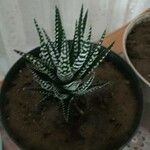
Haworthia fasciata
Zebra haworthia · Zebra plant · Zebra aloe
Description
Source: leafsnapHaworthiopsis fasciata, formerly Haworthia fasciata, is a species of succulent plant from the Eastern Cape Province, South Africa. The species is rare in cultivation; most plants that are labelled as H. fasciata are actually Haworthiopsis attenuata.
🌳 The Zebra plant is a popular succulent often found in arid gardens, valued for its distinctive foliage and small white flowers that bloom in early summer. It's an essential addition to rock gardens, where it adds texture and is frequently planted alongside sedum or hens-and-chicks.
🎭 Suave, upbeat, sociable
Care Guide
💧 Water
The zebra plant thrives in semi-arid regions because of its ability to store water in its leaves, which allows it to tolerate drought conditions. When caring for this plant, water it every three weeks, making sure the soil dries out between waterings. It is often grown indoors for its ornamental appeal and does best in well-draining soil, which mimics its natural habitat.
When Should I Water My Zebra Plant?
Determining the right time to water your Zebra Plant (Haworthia fasciata) is crucial for its health and growth. Originating from desert environments, this plant thrives when the top inch of soil dries out completely between waterings. Signs that your plant needs water include dry topsoil, thin or wrinkled succulent leaves, and leaves that turn brown or reddish due to stress. Over or underwatering can lead to root rot, fungal diseases, or even plant death. To maintain its health, only water when necessary, based on these indicators.
How Should I Water My Zebra Plant?
Watering your Zebra Plant correctly is vital to avoid problems such as root rot. Bottom-watering is an effective technique that allows the plant to absorb moisture without getting its foliage wet, which can cause fungal diseases. Ensure the topsoil dries out before each watering and avoid stagnating water in the tray. Using a watering can with a narrow spout helps target water at the base, and a moisture meter can be beneficial for checking soil moisture levels. Remember, Zebra Plants prefer being slightly underwatered and require well-draining soil and indirect sunlight.
How Much Water Does Zebra Plant Really Need?
A Zebra Plant's water needs are moderate, requiring about 1-2 ounces (30-60 ml) of water per session, ensuring the shallow root system (3-4 inches deep) is adequately hydrated without being waterlogged. The frequency of watering will depend on the plant's environment, including pot size and climate. It's essential to allow the soil to partially dry out between waterings. Signs of adequate hydration include firm, upright leaves, while limp or soft leaves may indicate under-watering, and swollen or mushy leaves could suggest over-watering.
What Kind of Water is Best for Zebra Plant?
Rainwater or distilled water is best for Zebra Plants due to their natural softness and absence of harmful additives. While tap water is generally safe, it can contain chlorine and fluoride, potentially harming the plant in large amounts. Allowing tap water to sit out for 24 hours before use can evaporate chlorine; however, fluoride-sensitive plants may benefit from filtered water to remove these elements. Room temperature water is ideal to prevent shock to the plant's system.
How Do Zebra Plant's Watering Needs Change with the Seasons?
Seasonal changes affect the watering needs of Zebra Plants. During spring, increase watering to support growth, ensuring soil partially dries out between sessions. In summer, reduce frequency as the plant enters a slower growth phase. Autumn calls for reduced watering, waiting until the soil completely dries out before watering again. Winter requires minimal watering, with the soil staying mostly dry, only watering when leaves show signs of shriveling, using lukewarm water to avoid shock.
☀️ Light Partial sun
The zebra plant prefers moderately bright light but can tolerate a broader range of lighting conditions. In the wild it grows in areas where light intensity fluctuates. Too much light can scorch the leaves, while too little may produce weak or leggy growth. It adjusts throughout its different growth stages.
What are the sunlight requirements for a Zebra Plant?
The Zebra Plant needs ample sunlight to thrive, requiring more than 6 hours of sunlight for full sun conditions and about 3-6 hours for partial sun. Sunlight plays a crucial role in its growth, mirroring the plant's natural habitat. However, it is also capable of surviving in moderate sunlight. Exposure to either excessive sun or too little can hinder its growth. Observing the movement of sunlight in your garden and choosing locations that provide a healthy balance of light and shade is beneficial for the plant's well-being.
How can I use artificial lighting for my Zebra Plant?
When natural sunlight is insufficient, artificial lighting can be a significant aid for Zebra Plants, especially during winter or in less sunny spaces. LED lights are often recommended because they can be adjusted to provide the specific wavelengths needed by the plant. For full sun plants, 30-50W per square foot is needed, 20-30W per square foot for partial sun plants, and 10-20W per square foot for full shade plants. Lights should be placed 12-36 inches from the plant to replicate natural sunlight conditions. It's also important to mimic natural daylight hours, generally ensuring 8-12 hours of light per day.
What symptoms indicate my Zebra Plant is receiving improper light?
Symptoms of improper lighting in Zebra Plants include lighter-colored or pale new leaves, indicating a lack of chlorophyll and nutrients. Leggy growth or increased spacing between leaves suggests insufficient light, leading to a sparse appearance. Small leaves, slower or halted growth, chlorosis, and symptoms like leaf scorch, sunscald, curling, wilting, and leaf scorching also point to inadequate light conditions, either too much or too little. These symptoms reflect the plant’s inability to photosynthesize efficiently, affecting its overall health.
How can I address lighting issues for my Zebra Plant?
To address lighting issues, gradually acclimate your Zebra Plant to receive at least 6 hours of direct sunlight daily, ideally near a south-facing window. For large or immobile plants, using artificial lighting such as desk, ceiling lamps, or professional plant grow lights for a minimum of 8 hours a day can help. Outdoor plants should also be moved to sunnier spots gradually to prevent shock. For ground-planted species, pruning obstructions or transplanting during dormant periods can improve sunlight access. However, parts of the plant already affected by poor lighting may not recover, but new growth following improved light conditions will be healthy.
🌡️ Temperature 20–37.8°C
The zebra plant is native to warmer regions and prefers temperatures of 68 to 100 ℉ (20 to 38 ℃). In the colder winter months, it is recommended to keep the plant slightly cooler, at 50 to 60 ℉ (10 to 15.5 ℃), to encourage blooming in spring.
What is the native region of the Zebra plant and its botanical name?
The Zebra plant, scientifically known as Haworthia fasciata, is native to South Africa. This region's climate significantly influences the plant's care and environmental needs.
What are the optimal temperature conditions for the Zebra plant?
The Zebra plant thrives in a temperature range of 20 to 38°C (68 to 100.4°F). It prefers warm temperatures and should not be exposed to temperatures below 10°C (50°F) to avoid damage. During its growing season in winter, maintaining temperatures above 20°C is crucial for optimal growth. It is advised to bring the plant indoors to a well-lit area when outdoor temperatures drop below 0°C to protect it from frost or extreme cold.
How should I water the Zebra plant throughout the seasons?
Watering the Zebra plant should be adjusted according to seasonal temperature changes. Increase watering during higher temperatures and reduce it as temperatures approach 0°C. In colder months, especially if overwintering the plant outdoors in a sheltered area, ensure the plant is kept adequately moist. Adequate sunlight and protection, such as using a temporary greenhouse, are essential to prevent damage during colder periods.
What are the symptoms of cold damage in Zebra plants, and how can I treat them?
Zebra plants show signs of stress when exposed to temperatures below their tolerance, notably below 0°C and especially below -5°C, manifesting as water-soaked necrosis and wilting. Mild frost damage might not show immediate symptoms, but leaves will significantly wilt and fall off within a week. Treatment includes trimming frostbitten areas, moving the plant to a warm indoor environment or a makeshift greenhouse with attention to ventilation for airflow to avoid decay, and placing it near a south-facing window for ample sunlight.
How does high temperature affect the Zebra plant, and what are the remedies?
During summer, the Zebra plant should be kept below 38°C to prevent entering a dormant state, which makes it more susceptible to rot in high humidity. To mitigate damage from temperatures exceeding 43°C, remove dry and rotten parts of the plant, move it to a partially shaded area to avoid direct midday and afternoon sunlight, and halt watering until cooler weather prevails.
💨 Humidity
🪴 Soil 6-7
🌱 Fertilizer
For Zebra plant, applying fertilizer once or twice a year during the growing season is sufficient. Do not fertilize in winter or summer while it is dormant. Cut back on feeding for recently repotted plants and wait a few months after repotting before resuming fertilization. Fertilizer promotes healthy growth and encourages blooming.
🪴 Pot & Repot Every 2 years
When repotting a Zebra plant, choose a pot only slightly bigger than the current one that provides good drainage. Use a gritty, fast-draining succulent or cactus potting mix. Gently remove the plant from its old container, brush off excess soil, and place it in the new pot at the same depth. Wait several days before watering so any root injury can heal. Repot in spring or autumn and situate the plant in a brightly lit spot.
✂️ Pruning
🌿 Propagating
🐛 Diseases & pets
☠️ Toxicity
Characteristics
- Plant Type
- Succulent, Herb
- Life Cycle
- Perennial
- Genus
- Haworthia
- Family
- Xanthorrhoeaceae
- Hardiness Zone
- 9-11
- Mature Height
- 10 cm to 18 cm
- Mature Spread
- 15 cm
- Leaf Color
- Green, White, Orange, Brown
- Leaf Type
- Evergreen
- Flower Color
- White
- Flower Size
- 2.54 cm
- Bloom Time
- Spring, Winter
- Planting Time
- Spring, Summer, Autumn, Winter
- Harvest Time
- Spring, Early summer
- Native Area
- South Africa