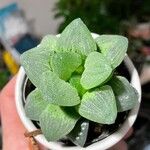
Haworthia pygmaea
Description
Source: leafsnapHaworthia pygmaea is a species of the genus Haworthia in the family Asphodelaceae, endemic to the Mossel Bay area of the Western Cape, South Africa.
Care Guide
💧 Water Every 2 weeks
Haworthia Pygmaea is well-suited to arid environments and can tolerate drought conditions when watered every two weeks. To ensure optimal health, it requires well-draining soil and a pot with drainage holes. This setup helps prevent root rot by replicating the natural drying cycles of its native habitat.
What should I do if I give my Haworthia Pygmaea too much or too little water?
Haworthia Pygmaea, a type of succulent, is capable of surviving long periods without water. However, if you forget to water it for a month or more, it may show signs of thirst or damage from lack of water. Identifying an underwatered Haworthia Pygmaea is easy - the plant will appear lacklustre and wrinkled, and some leaves may have dried up, turned brown and crispy, or fallen off. Additionally, the soil will be completely dried out. To rehydrate an underwatered plant, submerge the pot in water for 5-10 minutes until you feel moisture on the soil's surface. On the other hand, overwatering is dangerous for Haworthia Pygmaea and can lead to root rot, hindering nutrient and water absorption. Symptoms of overwatering include yellow, swollen, and translucent organs that may burst open. If left untreated, the plant may turn brown or black and the leaves may fall off easily. To address overwatering, improve air ventilation, adjust watering frequency, and check the soil for signs of excess moisture. Saving an overwatered plant is challenging, but if caught early, you can remove it from the pot, examine the roots, and rinse off any wet soil. If the roots are rotting, it may be difficult to save the entire plant. However, if only some roots are affected, you can remove the unhealthy roots, dip the remaining roots in fungicide, and repot the plant in fresh, well-draining soil. This process gives the plant a chance to recover and produce new growth in the next growing season.
How often do I need to water my Haworthia Pygmaea?
Determining how often to water Haworthia Pygmaea is not set in stone. The best approach is to observe the soil and only water when it is completely dry. You can assess the moisture level by either inserting your finger in the pot or using a moisture meter to check beneath the surface. In the case of a deep pot, you can also use a stick or chopstick to check. If it still feels slightly moist, give it a few days and test again. Typically, most people will need to water Haworthia Pygmaea around every two weeks during summer and once a month in winter. However, various factors can influence the frequency, which are outlined in the section below.
What do I need to think about when watering my Haworthia Pygmaea plant?
There are a few key environmental factors that will affect how you should water your Haworthia Pygmaea. These include the size of the container, the type of soil, the temperature, and the humidity. First, the container and soil you use will determine how often and how much you should water your plant. Make sure the container has good drainage so that any excess water can escape. If you have a small container, it will hold less moisture and will need to be watered more frequently. On the other hand, a larger pot will stay wet longer and require less frequent watering. It's important to avoid using an oversized pot, as this can easily lead to overwatering. When repotting, move to a container that is only one size larger than the current one. In terms of temperature and season, your Haworthia Pygmaea will need less water in winter when growth slows down and the plant doesn't require as much energy or water. In cooler winter air, evaporation is reduced and the soil stays wet for longer. This is important to consider in relation to the climate in your area as well. If you live in a humid location with frequent rainfall, you will need to water less often compared to a dry and arid climate. Keep in mind that seasonal variations and indoor heating/air conditioning can also impact the watering needs of your plant. If you have planted your Haworthia Pygmaea in the ground, once it has established a root system, it should receive enough water from precipitation and dew. However, during long dry periods, you may need to provide occasional supplemental water. For those growing Haworthia Pygmaea in containers, you can move the plant outside during the spring and summer, as long as the temperature is appropriate, and then bring it back indoors when temperatures start to drop. Keep in mind that a potted Haworthia Pygmaea kept outdoors will generally require more water due to increased sun exposure, even if it's on a shaded porch.
How do I water Haworthia Pygmaea?
To water Haworthia Pygmaea effectively, soak the plant thoroughly and allow it to dry out before watering again. This plant can tolerate drought, so you can let it become quite dry before watering. It is recommended to underwater rather than overwater this type of plant. When watering, make sure to thoroughly soak the soil throughout the entire pot. Avoid pouring water in just one spot, instead, water around the rim of the planter to ensure all sides of the plant get wet. The amount of water needed depends on the container size and soil absorption. Provide enough water for it to drain out from the drainage holes and let the drained water sit in the saucer for 20-30 minutes to be absorbed by dry pockets of soil. Remove any excess water in the saucer to prevent waterlogging of the soil. Bottom-watering is also an effective method for Haworthia Pygmaea. Place the pot in a saucer of water and allow the soil to absorb moisture through the drainage holes. The soil is adequately moistened when the top layer feels wet. This method takes a bit more time than top-watering but ensures even distribution of water throughout the pot. The natural habitat of Haworthia Pygmaea is relatively dry with infrequent rain, resulting in thoroughly moistened soil. You can imitate this environment by bottom-watering the plant when the soil is completely dry. Deep soil bathing is more beneficial than frequent light watering for Haworthia Pygmaea.
☀️ Light Full sun
Haworthia Pygmaea grows best when it receives warm sunlight for most of the day. However, it can tolerate periods of reduced light. Sunlight levels affect its growth and health and differ with each stage of development. Because it originates from a sunny habitat, the species can show signs of stress when it is deprived of light or exposed to too much.
How much sunlight does Haworthia Pygmaea need to grow? --> How much sun does Haworthia Pygmaea need to grow?
To ensure optimal growth, Haworthia Pygmaea should receive a minimum of 6 hours of daily sunlight, although it can benefit from more. The actual number of required hours depends on factors like sunlight intensity and the plant's surrounding environment. However, it is unlikely for the Haworthia Pygmaea to receive an excessive amount of sunlight, as it can tolerate up to 14 hours per day without any issues.
What kind of sunlight does Haworthia Pygmaea require?
Haworthia Pygmaea is a plant that loves bright sunlight. It can really flourish when provided with direct light or bright indirect sun since it is a full-sun plant. While some varieties may manage with partial sun, it is generally preferable to give them more sunlight.
Should I keep Haworthia Pygmaea out of direct sunlight?
Haworthia Pygmaea is well-suited to thrive in hot, sunny environments and does not require sun protection. However, if you want to move your Haworthia Pygmaea to a sunnier location, it is important to do so gradually to allow the plant time to adjust. Start by exposing the plant to a few hours of sunlight each day, gradually increasing the duration over time. Once fully adapted, most varieties of Haworthia Pygmaea can handle full sun exposure without issue.
What happens when Haworthia Pygmaea doesn't get enough sunlight?
If Haworthia Pygmaea does not receive sufficient sunlight, it will not be able to thrive and grow properly. Signs of inadequate sunlight include pale coloring, wilting leaves, and leaf drop. In addition, the plant may become leggy or stretched out as it tries to reach towards the light, resulting in a sparse look and weak stems.
What happens if Haworthia Pygmaea gets too much sunlight?
Haworthia Pygmaea may change colors to red, pink, or orange to protect themselves from too much sunlight. Many people intentionally stress these plants with mild sun exposure during the summer, which is not harmful. They will return to their normal coloring when there is less light from autumn to spring. However, if these plants are suddenly placed in direct sun, they can get sunburned. Sunburned leaves will have white or brown spots on the top, where they were most exposed to the sun. To treat a sunburned plant, move it to a shadier spot and water it if necessary. It is also possible to cut off the damaged leaves, as they will eventually be replaced by new growth.
🌡️ Temperature 20–37.8°C
Haworthia Pygmaea originates from habitats where temperatures range from 68 to 100 °F (20 to 38 ℃). It grows best within that range. When seasons change, adjusting the ambient temperature to match these conditions can help maintain optimal plant health.
What should I do to make sure my Haworthia Pygmaea is at the right temperature?
During the spring and summer, it's important to provide plants with more water and fertilizer to support their growth. However, it's crucial to ensure they don't receive excessive sunlight, so consider providing shade when needed. If the temperature gets exceptionally high, you can cool plants down by spraying water around them. Just remember to avoid getting water on their stem.
What temperature is best for your Haworthia Pygmaea?
To provide the best conditions for the Haworthia Pygmaea, it is recommended to maintain a specific temperature range. Ideally, temperatures should be between 75-90℉ (25-32℃). During the early winter season, it is important to ensure that the temperature does not drop below 75℉(25℃). If you choose to move the plant indoors during this time, it will receive better protection from extreme temperatures. Although the Haworthia Pygmaea can tolerate certain extreme temperatures, such as lows of 50℉ (15℃), it is not optimal for its growth. In anticipation of winter conditions, bringing the plant indoors is advised.
How do I change the temperature for my Haworthia Pygmaea at different stages of growth?
Haworthia Pygmaea goes through various stages of growth. Initially, the dormant seed develops into a seedling. In order for the dormant seeds to germinate, they require specific environmental conditions, with a temperature range of 75-90℉ (25-32℃). To promote vigorous growth, it is recommended to expose the plant to temperatures around 85℉ (30℃) during the summer. Therefore, during the hot summer months, it is advisable to move your Haworthia Pygmaea from indoors to a sunny location to ensure it receives sufficient sunlight.
How do I keep my Haworthia Pygmaea warm when it's cold outside?
To protect your Haworthia Pygmaea from harsh winter conditions, it's a good idea to bring it indoors. Some people choose to use grow lights to provide enough sunlight, but if your home is not very dark, you may not need these lights. Instead, try to position your plants where they can receive the most sunlight possible. In winter, there should be enough natural light to keep the Haworthia Pygmaea thriving. If you have multiple plants, make sure to rotate them so that they all get enough sunlight. However, if you live in northern areas with frigid weather, avoid placing your Haworthia Pygmaea too close to the window as the extreme cold could damage them.
What happens to my Haworthia Pygmaea when it gets too hot or too cold?
Your Haworthia Pygmaea thrives in warmer temperatures, particularly around 90℉ (32℃) during summer. However, it is important to shield the plant from extreme temperatures during hot climates. In contrast, during winter it is best to keep the plant dry. In temperate climates with temperatures ranging from 75-90℉ (25-32℃), Haworthia Pygmaea tend to do well. It is worth noting that some gardeners may expose their plants to extreme temperatures which can cause stress. Whilst temperatures between 90-95℉ (32-35℃) can enhance the plant's coloration, caution must be exercised when experimenting with such conditions. In the hot summer season, excessively high temperatures can lead to burning and damage to the stem and root system of the Haworthia Pygmaea. When temperatures reach their peak, it is advisable to relocate the plant to a shaded area or provide protection with a shade cloth.
💨 Humidity dry (<40%)
This plant prefers dry conditions, so don't mist it. However, watering it less often can also thrive in higher humidity.
🪴 Soil 6-7
🌱 Fertilizer
For Haworthia Pygmaea, light applications of fertilizer once or twice a year during the growing season are sufficient. Do not fertilize in winter or in summer when the plant is dormant. Use less fertilizer for repotted plants and wait a couple of months after repotting before applying fertilizer. Fertilizing helps maintain healthy growth and promotes blooms.
Why should I add fertilizer to my Haworthia Pygmaea plant?
Applying fertilizer to Haworthia Pygmaea during the growing season adds nutrients to the soil and supports healthy growth. While this plant does store water and nutrients, fertilizing can further enhance its growth and even promote blooming in mature specimens.
When should I fertilize my Haworthia Pygmaea for the best results?
For best results, provide additional nutrients to all plants, including Haworthia Pygmaea. However, unlike other plants, Haworthia Pygmaea only requires a light dose of fertilizer during the growing season. This means that fertilization should only occur 1-2 times a year. To optimize growth, it is recommended to fertilize your Haworthia Pygmaea in the spring and autumn, avoiding winter and summer when the plant is dormant. It is important to exercise caution when fertilizing repotted plants, as the amount of fertilizer should be reduced. Additionally, it is advisable to wait a couple of months after repotting before beginning fertilizer application.
When should I not add fertilizer to my Haworthia Pygmaea?
Haworthia Pygmaea, like many other plants, goes through a dormancy period when it stops growing. During this time, it's advisable to halt the use of fertilizer. This dormant period occurs in both summer and winter. Additionally, it's recommended to refrain from fertilizing for the first few months after repotting in the spring.
What kind of fertilizer does my Haworthia Pygmaea plant need?
To properly fertilize Haworthia Pygmaea, it is recommended to use a liquid plant food specifically made for succulents and cacti. Dilute the fertilizer by mixing it with water to make it half-strength. To avoid any fertilizer buildup in the soil, apply the diluted fertilizer to the base of the plant and water thoroughly. Make sure any excess moisture drains away from the container or soaks into the ground.
How should I feed my Haworthia Pygmaea?
When fertilizing Haworthia Pygmaea, liquid plant food is the easier option, but you can also use granules. Follow the instructions on the packaging and dilute liquid fertilizers to half-strength. Whether using granules or liquid plant food, remember to apply it to the soil. Cover granules with a thin layer of soil and water the plants, regardless of the type of plant food used.
🪴 Pot & Repot Every 2 years
When repotting Haworthia Pygmaea, pick a pot slightly larger than the current one that provides good drainage. Use a gritty, well-draining cactus or succulent mix. Gently remove the plant from its old pot, brush off excess soil, and place it back in at the same depth. Wait a few days before watering to allow any root injuries to heal. Repot in spring or fall and keep the plant in a brightly lit spot.
✂️ Pruning
🌿 Propagating
🐛 Diseases & pets
☠️ Toxicity
Characteristics
- Plant Type
- Succulent
- Life Cycle
- Perennial
- Genus
- Haworthia
- Family
- Asphodelaceae
- Hardiness Zone
- 10-11
- Mature Height
- 20 cm
- Mature Spread
- 10 cm
- Leaf Color
- Dark Green, Light Green
- Leaf Type
- Evergreen
- Flower Color
- White
- Flower Size
- 0.51 cm to 0.76 cm
- Bloom Time
- Summer
- Planting Time
- Spring, Summer
- Harvest Time
- Late summer, Early fall, Mid fall
- Native Area
- South Africa