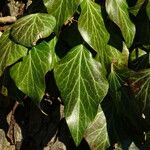
Hedera helix
English ivy · Common Ivy · Ivy · European Ivy · Iederă
Description
Source: leafsnapHedera helix, commonly known as English ivy, is an evergreen climbing vine native to Europe and western Asia. This popular ornamental plant adorns gardens and landscapes worldwide. It features dark green, glossy, and leathery leaves with a distinctive lobed shape. The leaves, arranged alternately on the stem, can grow up to 10 cm in length. English ivy is renowned for its climbing ability, using aerial roots to scale walls, trees, and other structures. If left unchecked, it can grow up to 30 meters long. In late summer or early autumn, the plant produces small greenish-yellow flowers, followed by black berries. Aside from its ornamental appeal, English ivy has been utilized for medicinal purposes for centuries due to its anti-inflammatory properties. However, it's important to note that the plant's berries are toxic if ingested. Overall, Hedera helix is an attractive evergreen vine with unique foliage, making it an excellent choice as an ornamental climbing plant for gardens or landscapes. However, it should be managed carefully to prevent it from becoming an invasive species in areas outside its native range.
💡 English ivy is the birth flower for those born on April 8, symbolizing influence. Before the sixteenth century in England, beer was brewed using English ivy. When combined with wheat, it transformed the wheat into beer, possibly explaining its association with influence. Individuals born with this flower are believed to possess great influence, whether as politicians or entrepreneurs. They also have a significant impact on their partners, subtly shaping them into what they desire.
🌳 English ivy provokes intense debate because it has conflicting characteristics. Some people appreciate its lush appearance in gardens, while others criticize it for spreading aggressively in areas where it is not native. Supporters also regard English ivy as a protector, with its foliage shielding walls from rain. However, opponents point out that its roots can trap moisture against walls and encourage water damage. This shows that English ivy’s value depends greatly on the context.
🎭 Affection, devotion, companionship, deep emotional bonds
Care Guide
💧 Water Every 7 days
English ivy thrives in consistently moist, well-draining soil, but it does not tolerate drought or overwatering. To maintain this balance, it's important to water it weekly. As an evergreen indoor plant, English ivy also benefits from higher humidity, which supports its healthy foliage and robust growth.
When Should I Water My English Ivy?
Watering your English Ivy correctly plays a crucial role in its health and growth. To decide when it's time to water, check the soil's moisture by inserting your finger about an inch into the soil - if it feels dry or just slightly moist, then it's time to water. Additionally, look out for signs like leaf wilting or curling, changes in leaf color to a lighter green or yellowish tone, and slow growth, as these may indicate the plant needs water. Be careful not to overwater, as this can be more harmful than underwatering, potentially leading to root rot which could kill your plant.
How Should I Water My English Ivy?
English Ivy thrives when watered correctly, which involves letting the top of the soil dry out before watering thoroughly. A bottom-watering technique is highly recommended to ensure the roots receive sufficient moisture without over-saturating the soil. Utilize tools like a moisture meter for accuracy in watering and avoid wetting the foliage directly to prevent diseases. Focus on watering the soil at the base and ensure any excess water is removed from the tray after watering to avoid root rot and leaf spot fungus.
How Much Water Does English Ivy Really Need?
English Ivy requires consistent but moderate watering, generally needing about 1 inch (2.5 cm) of water per week. This will help keep the topsoil moderately moist, catering to its shallow root system. Proper hydration is indicated by vibrant, deep green leaves and steady growth, whereas signs of under or over-watering can manifest as wilting, yellowing foliage, or root rot. To maintain optimal hydration, ensure well-draining soil and check soil moisture regularly.
What Kind of Water is Best for English Ivy?
Rainwater is ideal for English Ivy as it's soft and free of additives present in tap water. If rainwater is unavailable, distilled or filtered water are excellent alternatives. English Ivy can tolerate small amounts of chlorine; however, letting tap water sit out for 24 hours before use can evaporate the chlorine, making it safer for the plant. Avoid using water with high fluoride or mineral content to prevent leaf browning and reduced growth.
How Do English Ivy's Watering Needs Change with the Seasons?
The watering needs of English Ivy change according to seasons. In spring, water when the top inch of soil dries out, as new growth demands more moisture. Summer might require more frequent watering due to heat and vigorous growth. Reduce watering frequency in autumn and allow the soil to slightly dry out. Water minimally in winter, just enough to prevent the soil from completely drying out, as the plant is dormant and less able to use water, increasing the risk of fungal diseases.
☀️ Light Partial sun
English ivy is fairly adaptable to a broad range of light conditions, going from abundant sunshine to dim light. Although it performs well in semi-sunny settings, which resemble its homeland on the forest floor, it has the capacity to survive under both intense sunlight and total shade. However, too much exposure to sunlight or a shortage of light may hinder its development.
English ivy needs sunlight for how many hours in order to grow?
English ivy needs 3-6 hours of direct sunlight daily to thrive. However, it also requires some shade during the hottest parts of the day to avoid sun damage. The morning sunlight is the best for English ivy, but it can tolerate some afternoon sun if it's not too hot. To achieve the right amount of sunlight, consider planting English ivy in a spot with partial sun, like under a tree or on the east side of a building.
What happens if English ivy doesn't get enough sunlight?
English ivy can experience negative effects if it is exposed to excessive direct sunlight, such as yellowing, drying out, or burning of its leaves. Additionally, you may observe wilting or stunted growth of the plant. To avoid this sun damage, it's important to provide some shade for the English ivy during the hottest periods of the day. This can be achieved by using a shade cloth or by placing the English ivy near taller plants that can offer natural shade.
What can happen if English ivy gets too much sunlight?
If English ivy doesn't receive sufficient sunlight, it can grow tall and thin, with few leaves. The leaves may appear yellow or pale green, a sign that the plant lacks enough sunlight to produce chlorophyll. To fix this issue, you can either relocate the English ivy to a spot with more sunlight or trim nearby foliage to allow more light to reach the plant.
🌡️ Temperature 15–37.8°C
English ivy thrives naturally in areas with moderate climates, favoring conditions ranging from 15 to 38 ℃ (59 to100.4 ℉). It can withstand elevated temperatures in the summer while in the winter it prefers the chillier range of 5 to 10 ℃ (41 to 50 ℉). To help it adapt to year-round temperature fluctuations, relocate the plant to a less warm location or regularly spray it with water to maintain a cooler temperature.
What are the ideal growing temperatures for English ivy?
English ivy flourishes best in temperate regions, thriving in temperatures between 15 to 38°C (59 to 100.4°F). During the hot summer months, it can tolerate high temperatures within this range, but it prefers cooler temperatures between 5 to 10°C (41 to 50°F) in the winter. If the environment's temperature changes throughout the year, it's beneficial to move the plant to a cooler location or mist it regularly to maintain a cooler temperature. English ivy also has a strong resistance to cold, so it generally does not require special frost protection measures during the winter. However, ensuring the plant is well-watered before the first freeze can help it maintain moisture through the colder months.
How should I care for English ivy in extremely cold temperatures?
Although English ivy has strong cold tolerance, it's crucial to provide extra protection if winter temperatures are expected to drop below its tolerance threshold. This can be done by wrapping the plant's trunk and branches with non-woven fabric or cloth to help insulate it from the cold. Prior to the onset of the first freeze in autumn, water the plant abundantly to ensure the soil is moist and enters a frozen state, which helps prevent drought and water scarcity during winter and early spring.
What are the symptoms of extreme temperature effects on English ivy, and how can they be addressed?
English ivy demonstrates different symptoms when exposed to temperatures below or above its tolerance levels. In low temperatures, below its growth tolerance, there may not be noticeable changes during winter, but the branches might become brittle and dry by spring, failing to produce new shoots. In such cases, pruning dead branches that didn't sprout new leaves in spring is advisable. During high temperatures, above its optimum, the plant's leaves might lighten in color, and tips could become dry and withered, making the plant more susceptible to sunburn. To mitigate this, trim sunburned and dried parts away, relocate the plant to a shaded area during the midday and afternoon sun or use a shade cloth, and ensure the soil is kept moist by watering in the mornings and evenings.
💨 Humidity high (>60%)
This plant needs special care because it loves high humidity levels of 60-80% or more. The best way to achieve this is by placing a humidifier near the plant. Daily misting is also essential! Make sure the room has good ventilation.
🪴 Soil 6-7
🌱 Fertilizer
For encouraging robust growth, ensure to fertilize your English ivy at the beginning of spring. Fertilization on a regular basis boosts the plant's health, leading to sturdy growth, ability to withstand harsh conditions, and upgraded resistance against diseases and pests. Upholding a particular schedule for fertilizing your English ivy is essential for achieving intensely colored, lush-looking leaves.
Why should I put fertilizer on my English ivy?
No matter what type of English ivy you have, regularly fertilizing it will help it grow healthier. Giving it the right nutrients will make it grow stronger and better able to withstand tough growing conditions. It will also be more resistant to diseases and pests. The foliage of English ivy is one of its most attractive features, so it's important to keep it in good shape. This means creating and sticking to a regular fertilization schedule that is tailored to your specific ivy. By doing this, your ivy will develop leaves with rich color and an overall lush appearance.
When should I put fertilizer on my English ivy for the best results?
To properly fertilize your English ivy, start in late winter or early spring to provide all the necessary nutrients for healthy growth when the weather warms up. If you live in a warm climate region, it's also helpful to give your English ivy an extra round of fertilizer in early fall. This supplies the soil with added nutrients for the coming growing season and helps the plant withstand the cold winter without damaging its foliage. By fertilizing earlier, you ensure that new branches have enough time to grow and withstand the winter chill.
When is it best to not fertilize my English ivy?
There are a few times of the year when you should avoid fertilizing your English ivy. The first is in the early and mid-winter months when the plant is dormant and doesn't need any feeding. It is also not recommended to fertilize during late spring and summer, when the weather is hotter and drier. These conditions can have a negative impact on the ivy if it is fertilized. To avoid any issues, it's best to stick to a fertilization schedule that only includes feeding in early spring and early fall.
What kind of plant food does my English ivy need?
English ivy primarily requires nitrogen as its most essential nutrient, although phosphorus and potassium should not be overlooked. A well-rounded fertilizer with a balanced ratio of 10-10-10 can be effective for your English ivy's overall needs. However, a more specialized nutrient ratio often promotes the best growth results. In many cases, fertilizers higher in nitrogen, such as a ratio of 10-6-4, tend to work better. You can choose between a granular or liquid-based fertilizer when applying it to your English ivy.
How should I feed my English ivy?
To fertilize your English ivy, you have two options: using granular fertilizer or liquid fertilizer. With granular fertilizer, simply sprinkle it on the soil at the right time. The nutrients will slowly release into the soil over time. It's a good idea to lightly water your ivy before applying the fertilizer. On the other hand, liquid fertilizer is less common but still an option. Mix the fertilizer with water and pour it around the base of your ivy. Before fertilizing, it's helpful to do a soil test to check if any pH adjustments are needed.
🪴 Pot & Repot 2-3 years
Reposition the English ivy at the beginning of spring. Choose a pot that is only marginally bigger than its current one, and make sure it has good drainage. Use a potting mix that drains well and make sure the root ball remains at the same height as it was previously. Carefully detangle any roots that are root-bound. Following repotting, water it abundantly and put it in a warm, shadowy spot. Regular trimming aids in controlling size and encourages fresh growth.
✂️ Pruning
English ivy is a vigorous climbing or trailing plant with evergreen leaves. To encourage growth and control its size, prune it in early spring. Be sure to trim back the vigorous shoots and remove any dead stems. Regular maintenance is crucial to prevent the ivy from becoming invasive and to support its healthy development.
🌿 Propagating
🐛 Diseases & pets
☠️ Toxicity
Characteristics
- Plant Type
- Vine
- Life Cycle
- Perennial
- Genus
- Hedera
- Family
- Araliaceae
- Hardiness Zone
- 7-11
- Mature Height
- 20.12 m to 29.87 m
- Mature Spread
- 0.91 m to 14.94 m
- Leaf Color
- Green, White, Yellow, Variegated
- Leaf Type
- Evergreen
- Flower Color
- Green, Yellow, White
- Flower Size
- 3.05 cm to 5.08 cm
- Bloom Time
- Mid summer, Late summer
- Planting Time
- Spring, Autumn
- Harvest Time
- Early spring, Mid spring, Fall, Winter
- Native Area
- Libya, Turkey, Austria, Sweden, Slovakia, Croatia, Slovenia, Morocco, Belarus, Germany, Estonia, Romania, Latvia, Belgium, Moldova, Portugal, France, Netherlands, Tunisia, Czech Republic, Cyprus, Bulgaria, Poland, Armenia, Greece, North Macedonia, Ukraine, Lebanon, Lithuania, Norway, Syria, Italy, Spain, Switzerland, Bolivia, Vietnam, Bosnia and Herzegovina, Israel, Iran, Albania, Ireland, United Kingdom, Hungary, Ecuador, Algeria