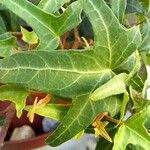
Hedera nepalensis
Himalayan ivy
Description
Source: leafsnapHedera nepalensis, commonly known as Nepal ivy, is an evergreen climbing vine belonging to the Araliaceae family. Native to the Himalayan regions of Nepal and India, it is widely cultivated as an ornamental plant in gardens and landscapes. This plant features glossy, dark green, heart-shaped leaves with pointed tips, arranged alternately on long stems that can grow up to 20 meters in length. The stems are equipped with aerial roots, enabling them to climb walls or other surfaces efficiently. In late summer or early autumn, Hedera nepalensis produces small greenish-white flowers, followed by black berries. However, it is important to note that these berries are toxic if ingested by humans or animals. The plant thrives in moist soil with good drainage and can tolerate anything from partial shade to full sun exposure. While it is adaptable to a wide range of temperatures, it prefers cooler climates. In addition to its ornamental value, Hedera nepalensis possesses several medicinal properties. When applied topically, it has anti-inflammatory effects on skin conditions such as eczema and psoriasis. Its antifungal properties are effective against Candida albicans, the fungus responsible for oral thrush infections. Overall, Hedera nepalensis is an attractive climbing vine that provides ornamental appeal with its glossy foliage and rapid wall coverage. It also offers some medicinal benefits when used appropriately under medical supervision.
Care Guide
💧 Water Every 7 days
Himalayan ivy flourishes in environments that are consistently moist and moderately humid. It prefers soil that is evenly moist but not waterlogged. For optimal health, especially when grown indoors, it should be watered weekly. This helps maintain its evergreen foliage throughout the year.
How should I water my Himalayan ivy?
To water the Himalayan ivy effectively, it is important to use filtered water at room temperature. Tap water may have harmful particles, so filtered water is preferred. The Himalayan ivy originates from a warm environment, so it is best to avoid using cold water, as it may shock the plant. Additionally, it is not recommended to water the plant from above, as this can cause problems with the foliage. Instead, pour filtered room temperature water directly onto the soil until it is saturated. This helps nourish the roots and enables them to absorb the necessary nutrients to grow.
What should I do if I give my Himalayan ivy too much or too little water?
Taking care of your Himalayan ivy requires finding the right balance of watering. While both overwatering and underwatering can harm the plant, overwatering is more common. Overwatering can cause wilting, yellowing leaves, and even diseases like root rot. Underwatering is less common, but still possible, resulting in brittle, brown leaves. It's important to spot signs of overwatering early and adjust your watering schedule accordingly. If the soil drains poorly, replace it. If you notice signs of underwatering, simply water the plant more regularly.
How often do I need to water my Himalayan ivy?
If you have a potted plant, the best way to determine if your Himalayan ivy needs water is by sticking your finger in the soil. If the top two to three inches of soil are dry, it's time to water it. If your Himalayan ivy is planted outside, you can use the same method. When the first few inches of soil have dried out, it's time to water. In the spring and early fall, you'll likely need to water the plant about once a week. However, during very hot weather, you may need to water it twice a week or more. However, it's important to note that mature, established Himalayan ivy can tolerate drought well.
How much water does my ivy from the Himalayas need?
When watering your Himalayan ivy, be generous with the amount of water you give. Make sure the first two to three inches of soil are dry before watering. It's best to thoroughly soak the soil, adding enough water so that it drains through the holes at the bottom of the pot. If you don't see excess water draining, you may not have given enough water. However, be careful not to let water accumulate in the soil, as this can harm the plant. On the other hand, if water doesn't drain properly, it may be due to poorly draining soil, which can also negatively affect the plant's health. If the plant is outside, it generally requires about 1 inch of rain per week.
How do I water my Himalayan ivy as it grows?
The water needs of the Himalayan ivy can vary depending on different growth stages. In the first few years or when transplanting to a new location, it requires more water because it focuses on developing new roots to support future growth. These roots need extra moisture for optimal performance. However, after a few seasons, the ivy requires less water. Another growth stage that requires increased watering is during the bloom period when flower development relies on a significant amount of moisture.
☀️ Light Full sun
Himalayan ivy grows best with ample sun but can tolerate lower light levels similar to a woodland shrub understory or deep forest shade. Total shade prevents optimal growth, yet because the species originates from varied landscapes it is able to cope. Sunlight helps drive the healthy, abundant growth of its glossy green leaves.
What are the sunlight requirements for Himalayan Ivy?
Himalayan ivy requires full sun exposure, meaning it should receive more than 6 hours of sunlight daily for optimal growth. However, it can also grow in partial sun to full shade conditions, where it would receive about 3-6 hours of sunlight. Despite this adaptability, the plant's health is closely tied to the light it receives. Indoor plants, in particular, may need artificial lighting to supplement natural light, especially in less sunny environments or during winter. Light from LED lights, at appropriate wattage and distance, can support plant health by simulating natural sunlight conditions.
How do inadequate lighting conditions affect Himalayan Ivy?
When Himalayan ivy receives insufficient light, it exhibits several signs such as small leaves, leggy or sparse growth, faster leaf drop, slower or no new growth, and lighter-colored or chlorotic leaves. These symptoms indicate the plant's struggle to adapt to poor lighting conditions. Additionally, excessive sunlight can cause symptoms like sunscald, leaf curling, wilting, and leaf scorching, which harm the plant's health and growth capacity.
What are the solutions for Himalayan Ivy suffering from poor lighting?
For indoor Himalayan ivy, gradually moving the plant to a sunnier location or using artificial lighting can improve growth. Outdoor plants should also be moved to better-lit areas gradually to prevent shock. Minimizing shadow-casting obstructions can increase sunlight exposure, and for small plants, transplanting them during their dormant period can rejuvenate their growth. Notably, while parts of the plant that suffered might not recover, new growth should be healthy once light conditions are improved.
🌡️ Temperature 5–37.8°C
Himalayan ivy is naturally adapted to a wide temperature range, doing well between 41 to 100°F (5 to 38℃). Native to areas with variable climates, it can withstand both heat and cold. If you want to mimic its natural conditions, modify temperatures seasonally as needed.
What is the ideal temperature range for Himalayan ivy?
Himalayan ivy, known botanically as Hedera nepalensis, is adaptable to a broad temperature range, thriving in conditions from 41 to 100°F (5 to 38°C). It originates from regions with fluctuating climates, allowing it to tolerate both warm and cool conditions. To mimic its native environment, it's beneficial to adjust temperatures seasonally. Although Himalayan ivy possesses strong cold resistance and special frost protection measures aren't usually necessary, if winter temperatures are expected to drop below -20°C (-4°F), some cold protection by covering the plant with soil or straw may be needed. It's also advised to water the plant abundantly before the first freeze in autumn to keep the soil moist through winter.
What symptoms indicate temperature distress in Himalayan ivy, and how can they be addressed?
Himalayan ivy shows different symptoms when exposed to temperatures outside its comfort zone. For low temperatures below -25°C, there may not be visible distress during winter, but it could lead to reduced sprouting or no sprouting in spring. The remedy for this is to remove any parts that fail to sprout as spring arrives. For high temperatures above 43°C, symptoms include leaves becoming lighter in color, curling, sunburn, and the plant wilting and drying out. Solutions include trimming away sunburned and dried parts, moving the plant to a shaded location or using a shade cloth to protect it from midday and afternoon sun, and watering the plant in the morning and evening to maintain soil moisture.
💨 Humidity high (>60%)
This plant needs special care because it loves high humidity levels of 60-80% or more. The best way to achieve this is by placing a humidifier near the plant. Daily misting is also essential! Make sure the room has good ventilation.
🪴 Soil 6-7
🌱 Fertilizer
One fertilizer application in spring is generally enough for Himalayan ivy, though multiple feedings can maximize growth. Apply fertilizer every month to month and a half. Fertilizing improves the leaves' appearance and function, encouraging even color and a healthy texture. It also promotes root development and nutrient uptake, supporting the plant's long-term health.
Why is it important to add fertilizer to my Himalayan ivy?
Himalayan ivy relies heavily on its leaves for structure, and fertilization is key to keeping them looking good and functioning well. Proper fertilization promotes consistent leaf color and a healthy texture. It also works beneath the soil's surface, helping the plant grow new roots and maintain existing ones. This not only promotes current plant health, but also prepares it for better nutrient absorption in the future.
When should I fertilize my Himalayan ivy?
If you grow your Himalayan ivy outdoors each year, it will send out new growth in early spring. When you see the leaves emerge, it's a sign to start fertilizing. Typically, one application of fertilizer in the spring is enough for the ivy to thrive. However, if you want to maximize its growth, you can fertilize multiple times during spring and early summer. If you decide to do this, you can feed the ivy every month to a month and a half.
When is the best time to not fertilize my Himalayan ivy?
During late fall and winter, your Himalayan ivy goes through a dormant phase and stops producing new growth. It's best to avoid fertilizing during this time. In spring and summer, if you choose to fertilize multiple times, gradually reduce the amount of fertilizer as summer approaches and the ivy's growth rate slows. Avoid fertilizing when the weather is unseasonably hot or the soil is very dry, as this can stress the ivy and cause it to die prematurely.
What kind of fertilizer should I use for my Himalayan ivy?
Choosing the best fertilizer for a Himalayan ivy is fortunately a straightforward task. These plants thrive on a general-purpose garden fertilizer with equal amounts of nitrogen, phosphorus, and potassium. A fertilizer with a ratio of 10-10-10 or something similar is highly effective. To minimize any confusion, avoid fertilizers with high levels of nitrogen. Granular fertilizers are generally the best choice, especially slow-release options that are easy to apply to the soil. Additionally, feeding your Himalayan ivy with organic soil amendments like compost can be beneficial.
How can I give nutrients to my Himalayan ivy plant?
To ensure proper fertilizer application for your Himalayan ivy, wait until it starts sprouting its first leaves in early spring. Once the leaves are visible, use a granular, slow-release fertilizer with a balanced formula on the soil surrounding the base of the plant. You can repeat this process later in the season, if desired. When reapplying fertilizer, make sure to target the soil near the plant's base and not the actual plant. You may need to move some leaves aside to access the soil above the roots. Additionally, it's beneficial to water your Himalayan ivy before and after fertilizing.
🪴 Pot & Repot Every 12 months
To ensure Himalayan ivy thrives and remains healthy, it requires excellent drainage in its pots. Good drainage is crucial as it helps prevent root rot and other moisture-related problems, making it essential for the plant's well-being.
✂️ Pruning
Himalayan ivy benefits from yearly pruning in early to late spring. This practice helps control its growth, improves its density, and maintains its shape. To promote the plant's health and appearance, use clean, sharp tools to remove overgrown and weak stems, which helps prevent disease.
🌿 Propagating
🐛 Diseases & pets
☠️ Toxicity
Characteristics
- Plant Type
- Herb, Vine
- Life Cycle
- Perennial
- Genus
- Hedera
- Family
- Araliaceae
- Hardiness Zone
- 5-12
- Mature Height
- 29.87 m
- Mature Spread
- 4.88 m to 10.06 m
- Leaf Color
- Green
- Leaf Type
- Evergreen
- Flower Color
- Yellow, Green
- Flower Size
- 0.51 cm to 1.02 cm
- Bloom Time
- Early fall, Mid fall
- Planting Time
- Spring, Summer, Autumn, Winter
- Harvest Time
- Winter
- Native Area
- Nepal, Afghanistan, India, Myanmar, Bhutan, Laos, Pakistan, Thailand