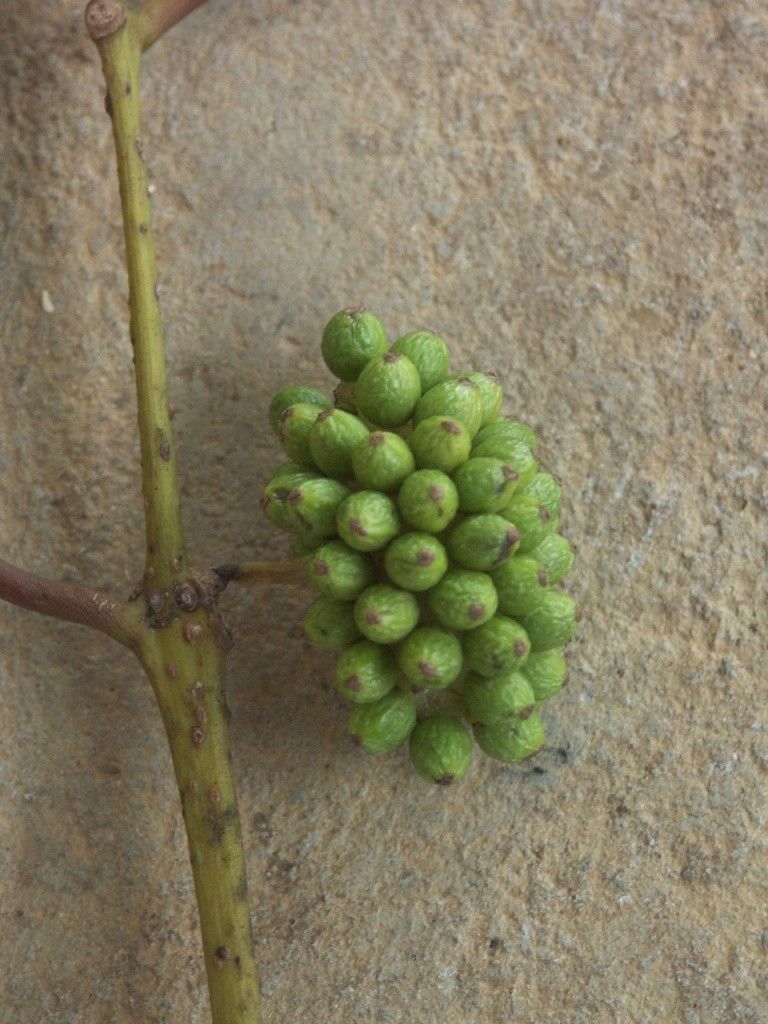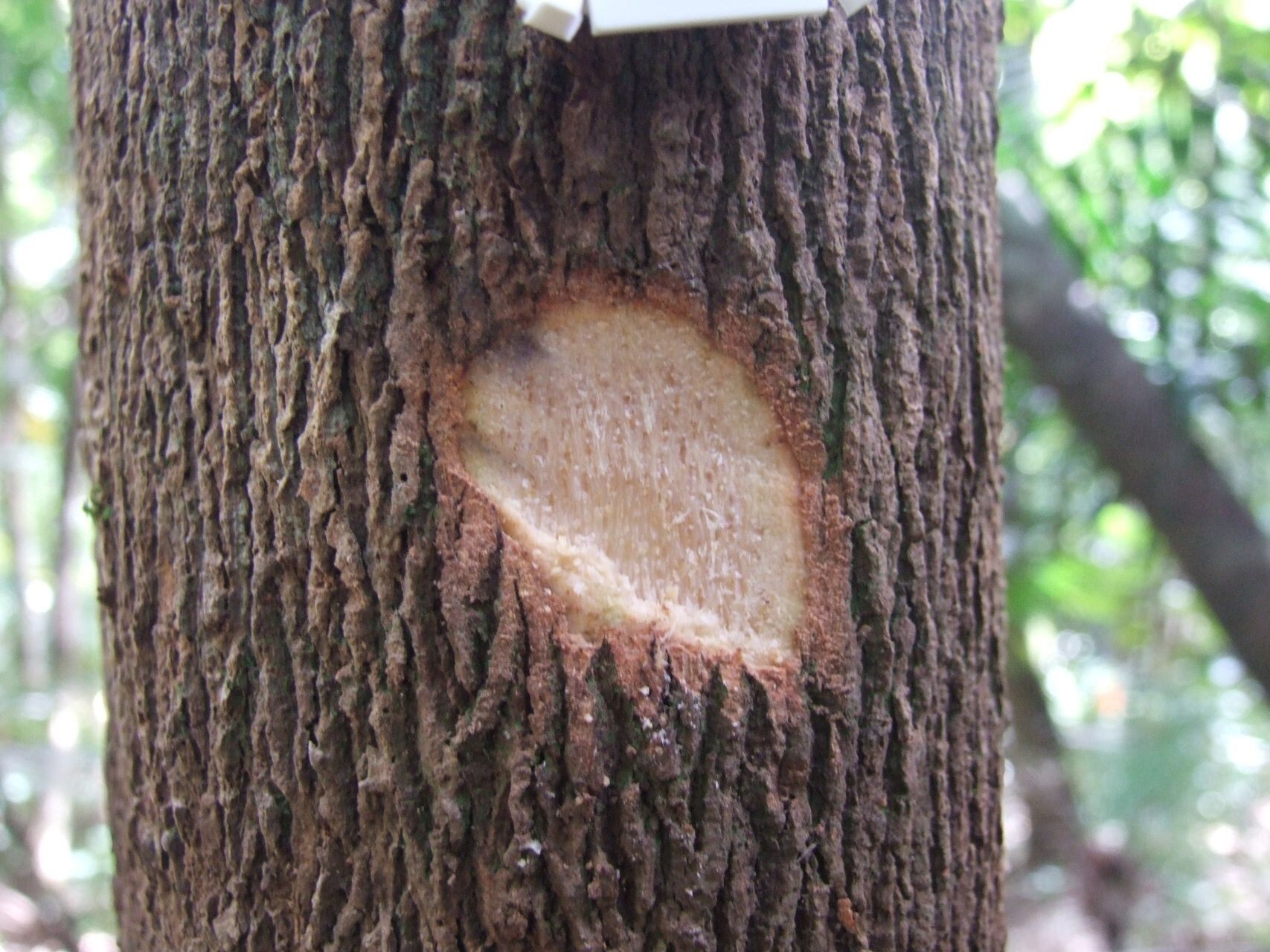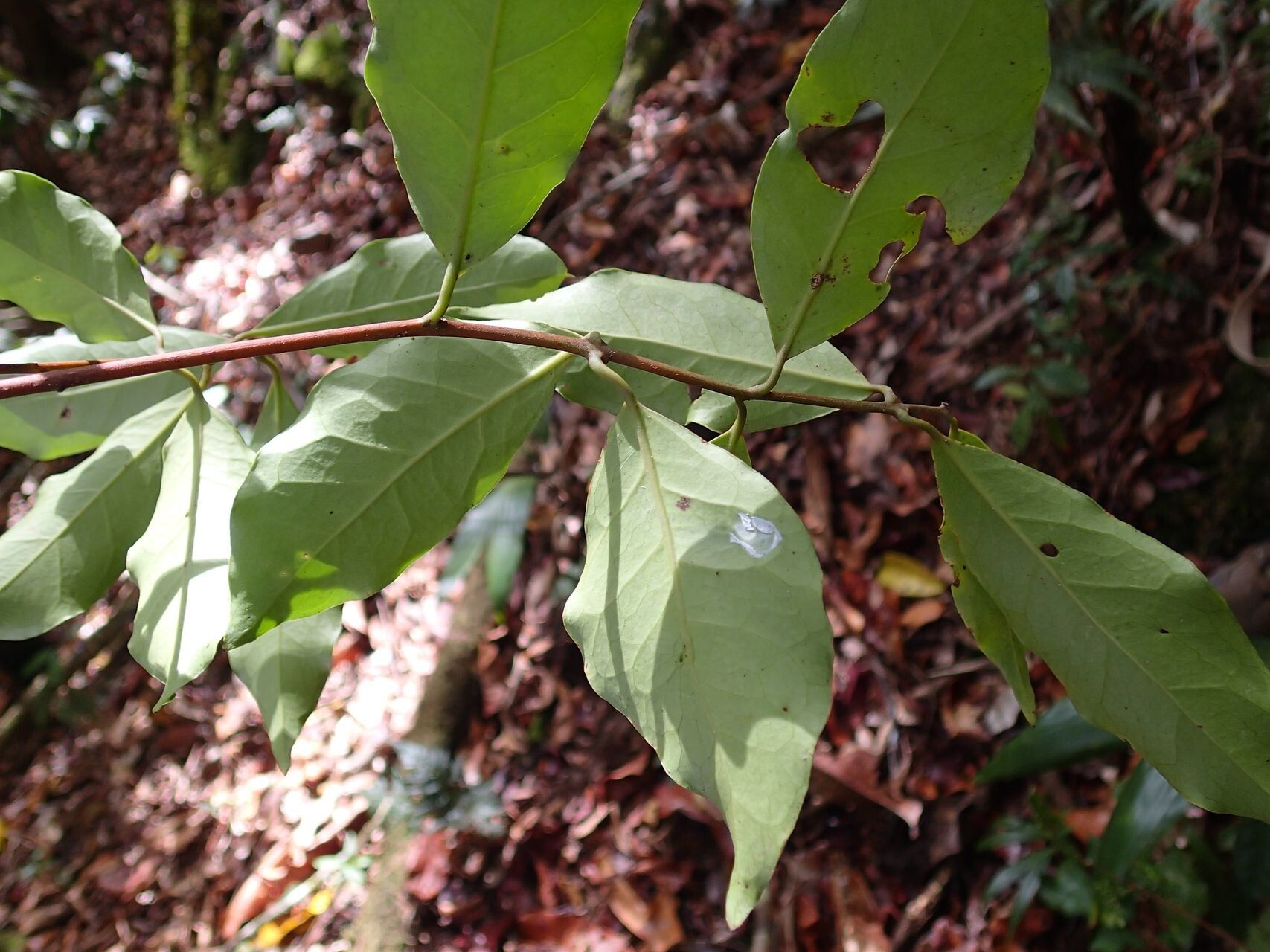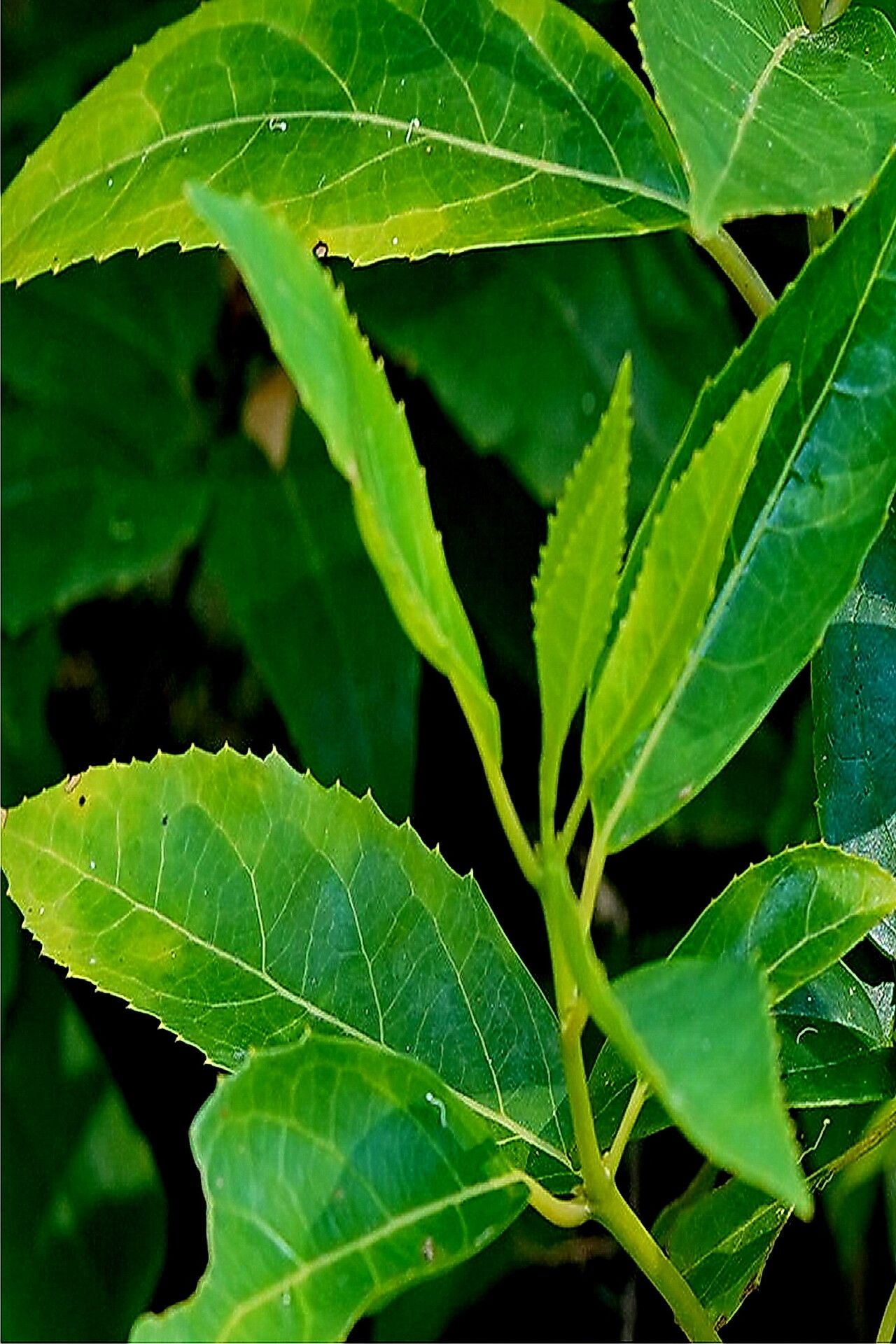
Hedycarya angustifolia, commonly known as native mulberry, Australian mulberry, or djelwuck is a species of flowering plant in the family Monimiaceae, and is endemic to eastern Australia. It is a shrub or small tree with elliptic or egg-shaped to lance-shaped leaves and male and female flowers on separate plants. Male flowers are borne in branched clusters of 5 to 16 and have 8 tepals and about 50 stamens and female flowers have about 12 tepals and 40 to 50 carpels. The fruit is a more or less spherical, tightly clustered yellow or orange drupes.
The Australian mulberry shows strong resistance to disease and is generally not susceptible to illnesses. Regarding care, this plant is fairly low-maintenance. When grown outdoors it needs little watering, and larger specimens typically do not require pruning. Smaller specimens, however, should be pruned after they finish flowering. The Australian mulberry is appropriate for anyone with outdoor space, like a garden or deck, and does not demand extensive gardening experience.
How to keep Hedycarya Angustifolia.
Light
Australian mulberry originates from habitats like forest understories or rocky sites where it grows in natural shade. It favors partial sun but can adjust to either full sun or full shade, showing its adaptable and hardy character.
Temperature
Australian mulberry is highly adaptable to a wide range of climates, from very hot summers to cold winters. Still, it has a preferred temperature range for growth. If temperatures rise too much, the plant can suffer from heat and humidity stress, which may kill it. In areas where temperatures approach the lower limit of its cold tolerance, it is important to provide insulation to protect the plant.
Fertilizer
Fertilize your Australian mulberry in early spring to encourage healthy growth. Regular fertilizing improves overall health, producing vigorous growth, better resilience in harsh conditions, and greater resistance to diseases and pests. Maintain a consistent fertilization schedule for your Australian mulberry to achieve vibrant, deeply colored foliage and a lush appearance.
Botanical profile.
- Plant Type
- Tree
- Life Cycle
- Perennial
- Genus
- Hedycarya
- Family
- Monimiaceae
- Hardiness Zone
- 9-11
- Mature Height
- 4.88 m to 10.06 m
- Mature Spread
- 3.05 m to 4.88 m
- Leaf Color
- Dark Green
- Leaf Type
- Evergreen
- Flower Size
- 0.51 cm to 0.76 cm
- Bloom Time
- Mid fall, Late fall, Early winter
- Planting Time
- Spring, Summer
- Harvest Time
- Late winter, Early spring, Mid spring