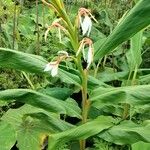
Hedychium spicatum
Spiked ginger-lily · White ginger lily · Garland flower · Butterfly lily · Butterfly ginger
Description
Source: leafsnapHedychium spicatum is a plant species native to China (Guizhou, Sichuan, Tibet, Yunnan), the Himalayas, Myanmar, Thailand and Ethiopia.Hedychium spicatum is a small, hardy perennial that grows to around 1 m (3 ft 3 in), with green leaves and large orange and white flowers. It is also commonly known as spiked ginger lily, or perfume ginger.
🎭 Affection, Wealth, Achievement
Care Guide
💧 Water
☀️ Light Full sun
White Ginger Lily does best with plenty of light and can tolerate some shade. Such light exposure promotes healthy growth. Native to bright habitats, White Ginger Lily can be harmed by too little or too much light, which affects its vital functions and overall health.
What are the sunlight requirements for Spiked ginger lily (Hedychium spicatum)?
The Spiked ginger lily, or Hedychium spicatum, thrives in different sunlight conditions depending on the specific needs. For plants that require full sun, they need above 6 hours of sunlight daily. Those that prefer partial sun do well with about 3-6 hours of sunlight. It's important to observe the way sunlight moves through your garden throughout the day. Choosing the right spots that offer an optimal balance of light and shade will ensure your plants remain healthy and happy.
🌡️ Temperature 15–37.8°C
White Ginger Lily is native to temperate climates and does best in temperatures between 68 and 100°F (20 and 38℃). To help it prosper, regulate its temperature—especially in winter—so it remains within that range.
What are the ideal temperature conditions for Spiked ginger lily?
Spiked ginger lily prefers moderate temperatures, akin to those comfortable for humans, thriving in environments that are neither too hot nor too cold. High temperatures can pose a risk of sunburn, so providing shade during hot summer days is advisable. In colder temperatures, the plant enters a dormant state. For continuous growth through winter, maintaining temperatures above 20°C (68°F) is beneficial, ensuring that temperatures stay above freezing to prevent damage. When the outdoor temperature nears -5°C (23°F), it's recommended to either bring the plant indoors or protect it using a temporary greenhouse or wraps like plastic film or fabric.
How does low temperature affect Spiked ginger lily and what are the solutions?
Spiked ginger lily has a moderate tolerance to low temperatures, best thriving between 20°C and 38°C (68°F to 100°F). It should be kept above 0°C (32°F) during winter. Exposure to temperatures below -5°C (23°F) may cause the leaves to darken, and in severe cases, lead to water-soaked necrosis, wilting, drooping, and browning of leaves. To mitigate frost damage, the following steps should be taken: trim the frost-damaged parts, move the plant indoors to a warm location, preferably near a south-facing window to ensure it receives enough sunlight. If sunlight is insufficient, supplemental lighting can be used.
What should be done if Spiked ginger lily experiences high temperatures?
During summer, it's crucial to keep Spiked ginger lily's temperature below 38°C (100°F). Exposure to temperatures exceeding 43°C (109°F) can slow down the plant's growth, lighten the color of its leaves, and increase the risk of sunburn. To care for a plant affected by high temperatures, trim away the sunburned and dried parts, and relocate it to an area with afternoon shade. Watering the plant in the morning and evening helps keep the soil moist and supports its recovery from heat stress.
💨 Humidity
🪴 Soil 6-7
🌱 Fertilizer
One fertilizer application in spring is typically enough for White Ginger Lily, though repeated feedings can maximize growth. Apply fertilizer every month to month and a half. Fertilizing improves the leaves’ appearance and function, helping maintain even color and a healthy texture. It also encourages root development and nutrient uptake, supporting the plant’s long-term health.
🪴 Pot & Repot 2-3 years
When repotting White Ginger Lily, select a pot 1–2 inches (2.5–5.1 cm) larger with ample drainage. Use a well-draining potting mix. Repot in spring or fall, making sure the root ball sits slightly lower than the rim of the flower pot. Water thoroughly after repotting and place in a warm spot with indirect sunlight.
✂️ Pruning
The spiked ginger lily is known for its long spikes of fragrant flowers and large leaves. To keep the plant healthy, prune it between early and late spring by removing any dead stems to encourage new growth. Cutting back old stalks will also promote blooming. Additionally, thinning out crowded areas will improve airflow, enhancing the plant's vigor and helping to control its size.
🌿 Propagating
🐛 Diseases & pets
☠️ Toxicity
Characteristics
- Plant Type
- Herb
- Life Cycle
- Perennial, Annual
- Genus
- Hedychium
- Family
- Zingiberaceae
- Hardiness Zone
- 7-11
- Mature Height
- 0.91 m to 3.05 m
- Mature Spread
- 61 cm to 91 cm
- Leaf Color
- Green
- Leaf Type
- Deciduous
- Flower Color
- White
- Flower Size
- 4.06 cm to 7.62 cm
- Bloom Time
- Mid summer, Late summer
- Planting Time
- Spring
- Harvest Time
- Mid summer, Late summer, Early fall
- Native Area
- Nepal, India, Vietnam, Myanmar, Bhutan, Laos, Thailand, China