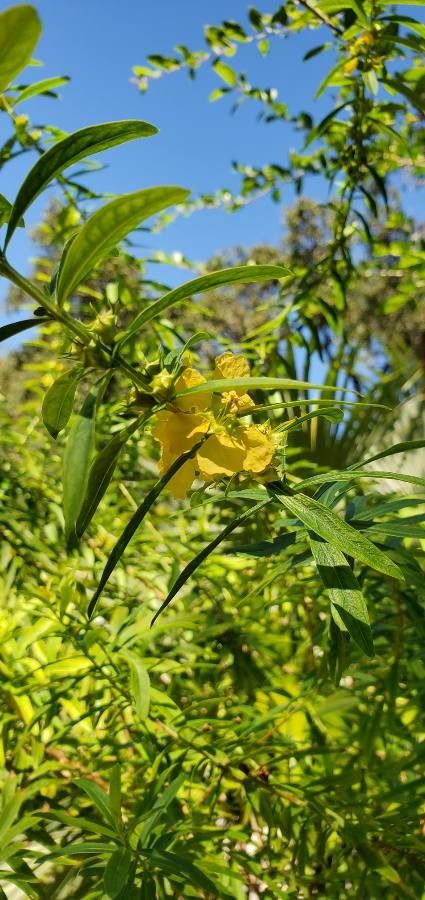
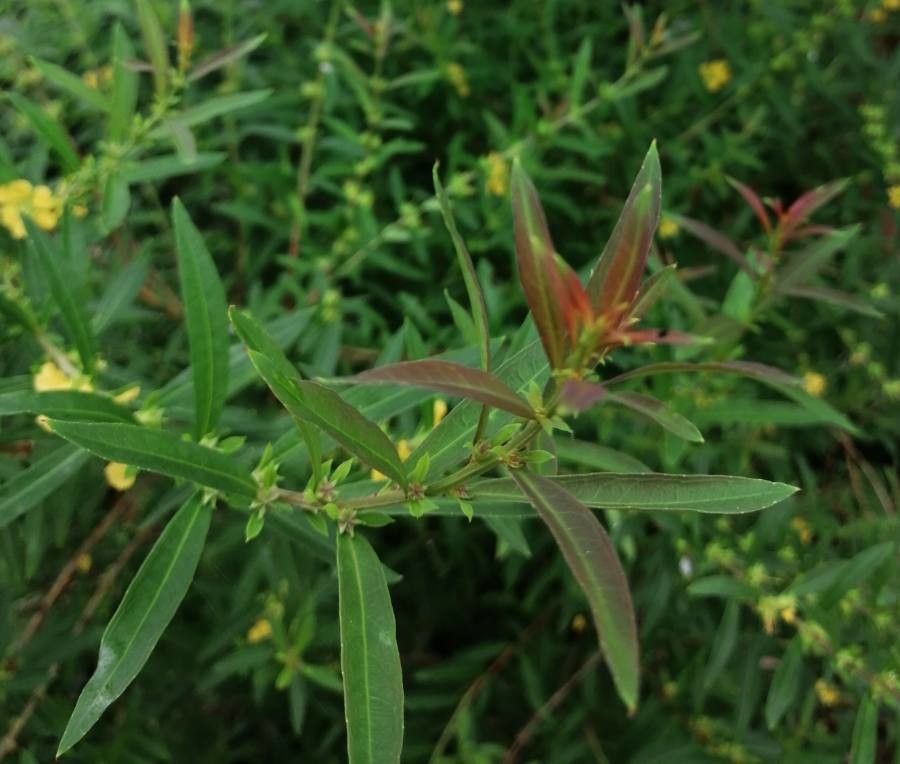
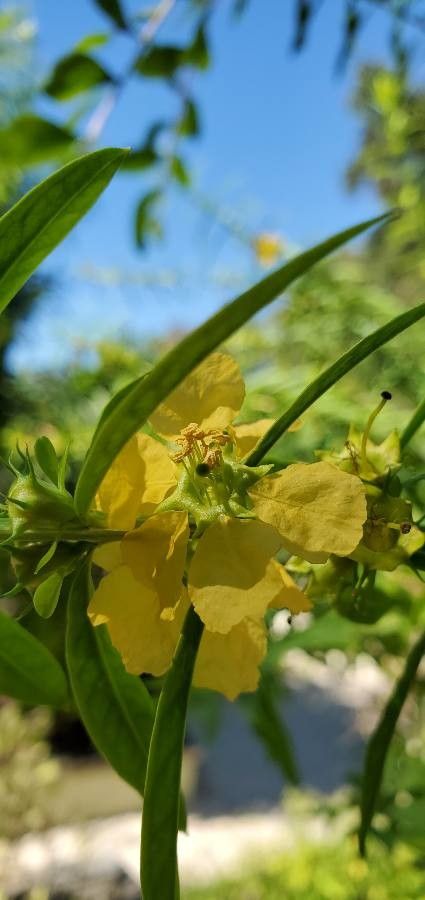
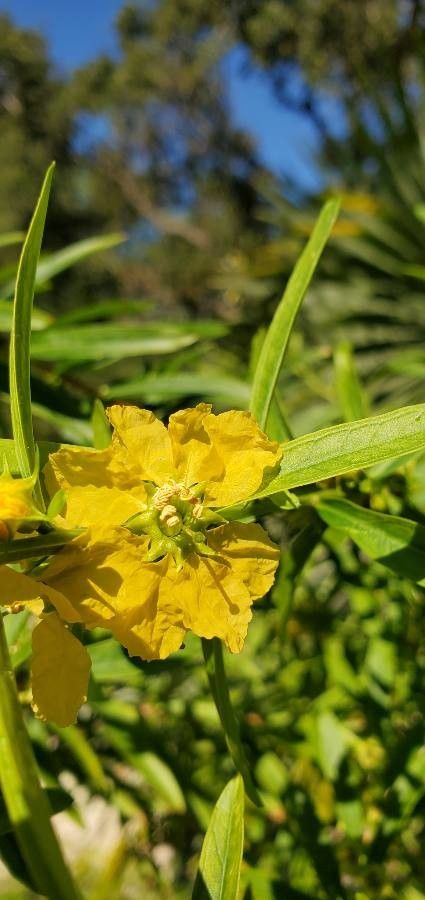
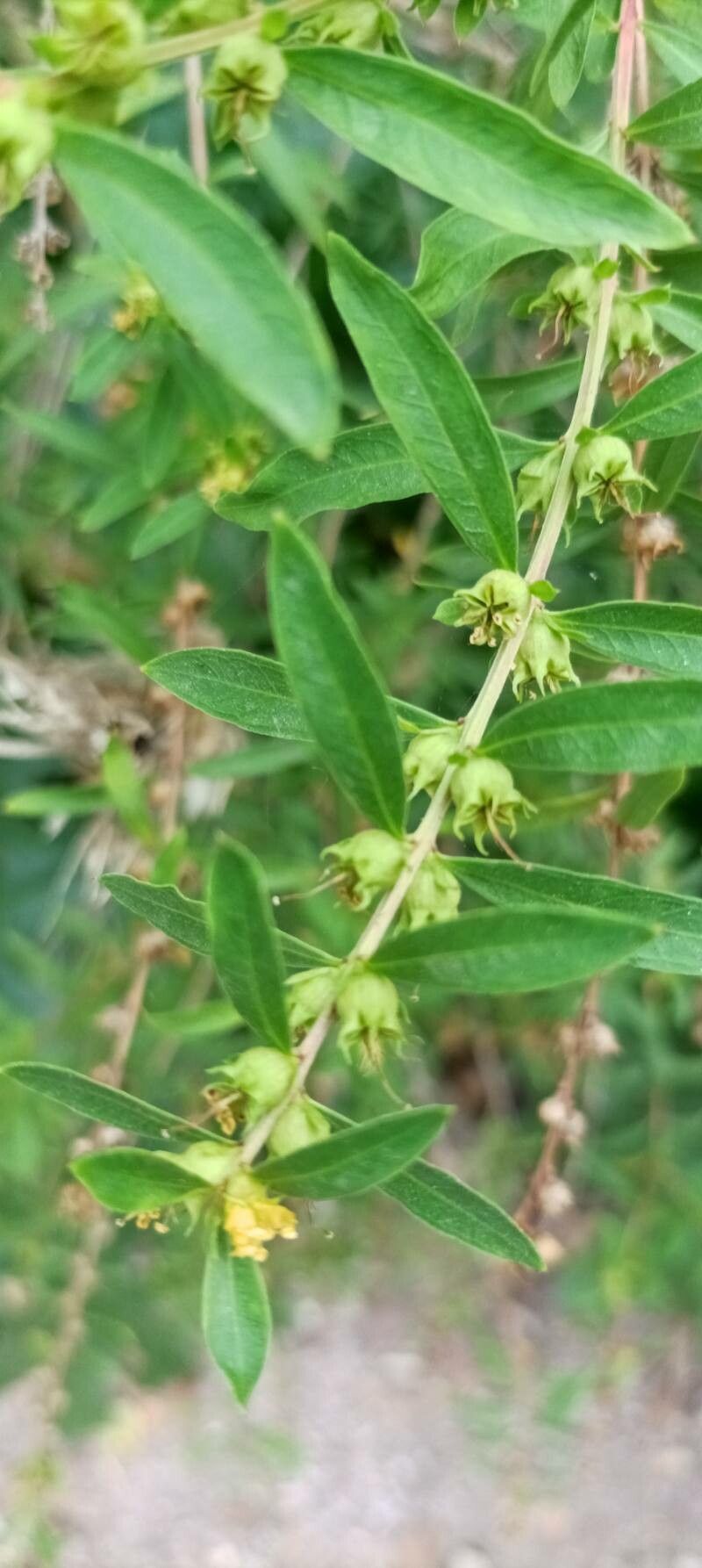
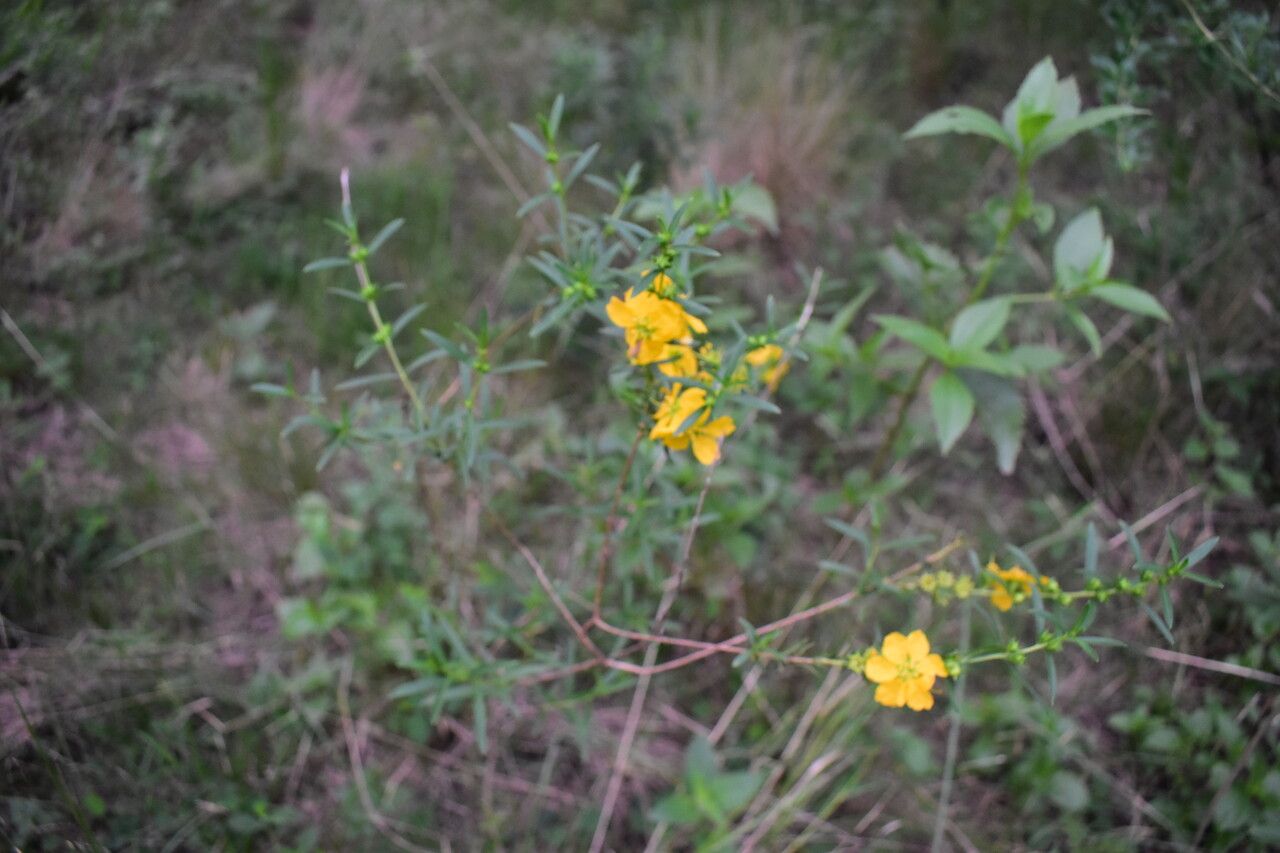
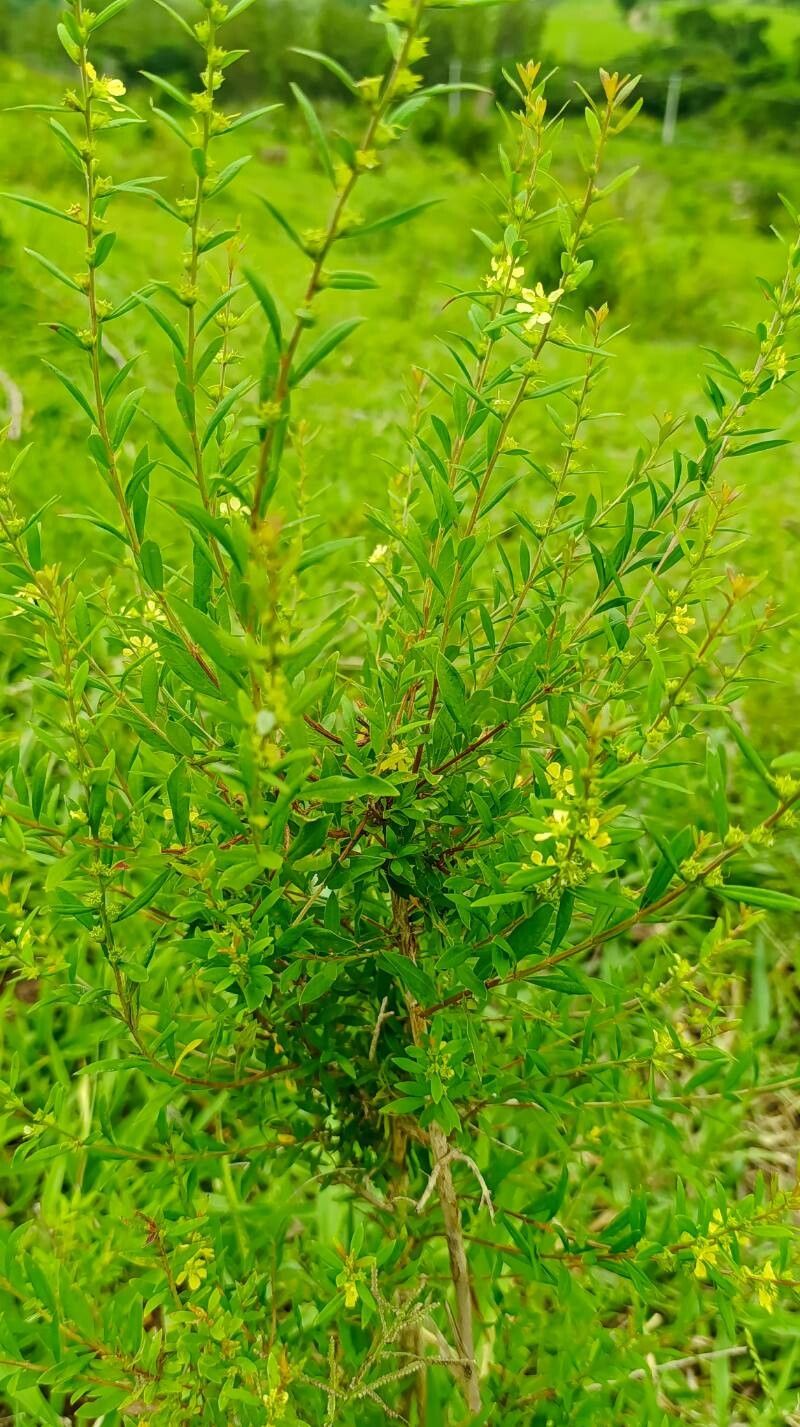
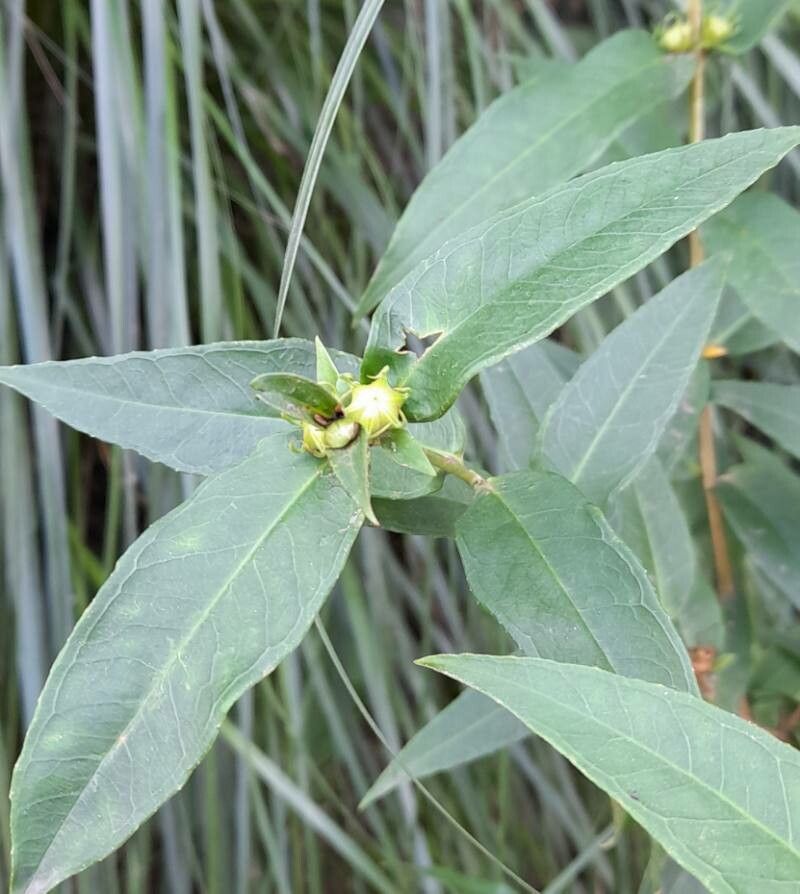
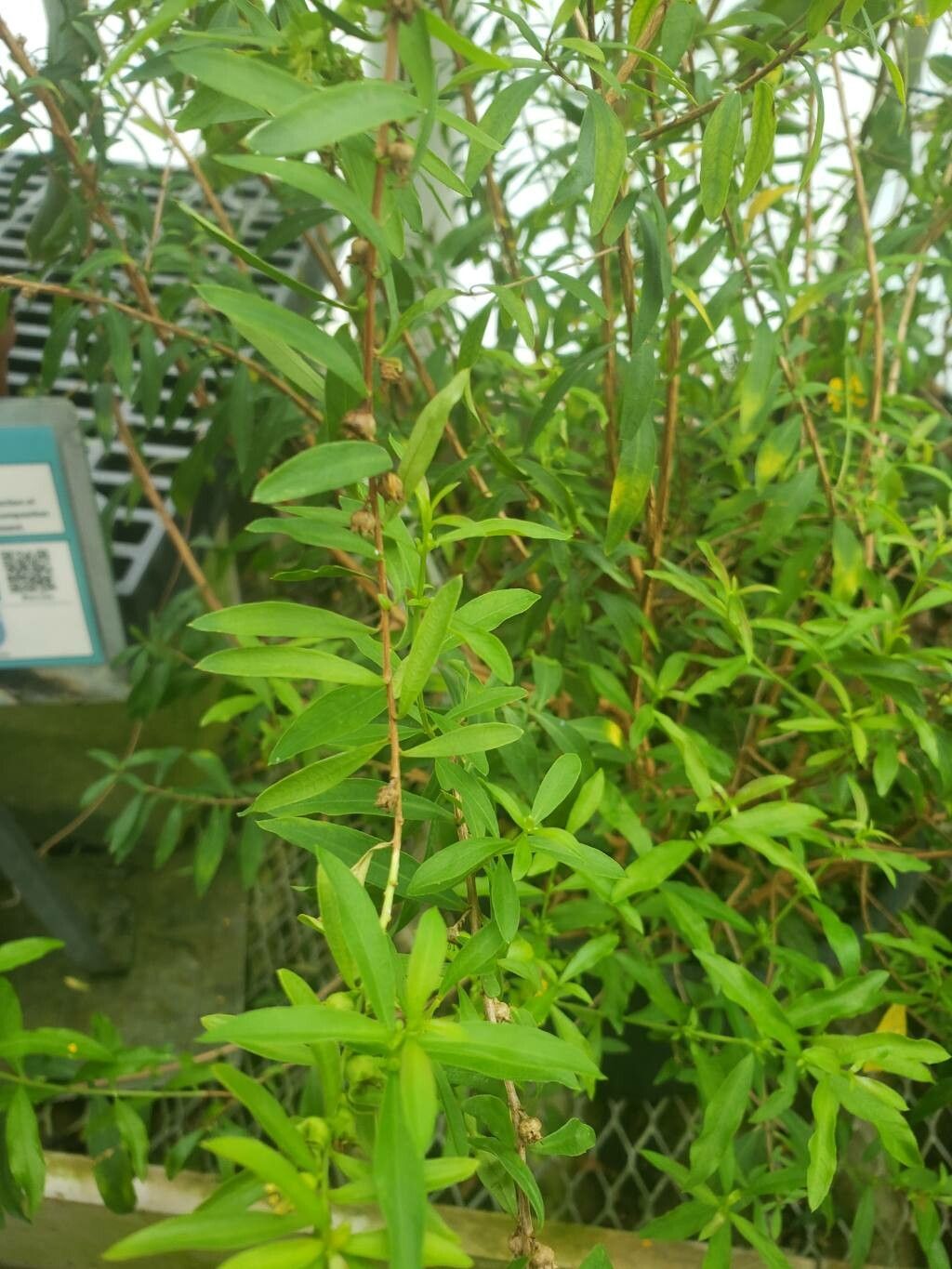
Heimia salicifolia is a species of flowering plant in the Loosestrife family, Lythraceae. It is native to the Americas, ranging from the southwestern United States (Texas and New Mexico) through Mexico and Central America to Argentina. Common names include shrubby yellowcrest, sinicuichi, sun opener, willow-leaf heimia, sini. The plant has been used for shamanic purposes by native peoples in Central America and Mexico.
Shrubby yellowcrest shows good resistance to disease and is generally not highly susceptible. However, it can be affected by pests and diseases present in its surroundings. These problems are generally not serious. In terms of care, this plant requires a moderate level of maintenance. It needs regular pruning to keep a tidy appearance and promote healthy growth. Fertilizing can also help encourage flowering. Shrubby yellowcrest is suitable for anyone with an outdoor area, such as a garden or patio, and does not demand extensive gardening experience. It may need more attention when grown indoors.
How to keep Heimia Salicifolia.
Light
Shrubby yellowcrest performs best when it gets a substantial amount of sunlight each day. It can, however, tolerate reduced light levels. Excessive exposure without proper light filtering can lead to stress or drying, while inadequate light can restrict its growth, reflecting the abundant sun of its native habitat.
Water
The shrubby yellowcrest thrives in humid environments where there is consistent moisture, but it cannot tolerate waterlogged conditions. To support its growth, it should be watered weekly. Although it is commonly grown outdoors, its growth season is closely tied to the availability of water and fluctuations in temperature. Therefore, understanding these factors is crucial for providing optimal care.
Temperature
Shrubby yellowcrest grows best in areas where temperatures range between 68 and 100°F (20–38°C). To encourage optimal growth, provide a moderate environment that mirrors its native habitat. Seasonal adjustments might be necessary depending on local climate conditions.
Fertilizer
Proper fertilization is essential for Shrubby yellowcrest's health and appearance. Fertilize Shrubby yellowcrest in summer, repeating the application monthly throughout summer. Nutrients provide the resources for growth and the upkeep of the plant's parts. Fertilizing improves Shrubby yellowcrest's flower display, ensuring the best blooms.
Pruning
The shrubby yellowcrest is known for its vibrant yellow flowers and bushy appearance. To encourage denser growth and more blooms, prune the plant from early to late spring. Make sure to prioritize good airflow and adequate light exposure, and be careful not to over-prune, as this can stress the plant. Regular pruning promotes strong growth and enhances the plant's visual appeal.
Pot & Repot
Repot your shrubby yellowcrest every 2 to 3 years during early spring to promote better growth. Choose a pot that is one size larger and ensure it has proper drainage to prevent waterlogging. After repotting, place the plant in a location with bright, indirect light and keep the soil consistently moist to help the plant adjust and grow optimally.
Botanical profile.
- Plant Type
- Herb
- Life Cycle
- Perennial
- Genus
- Heimia
- Family
- Lythraceae
- Hardiness Zone
- 9-11
- Mature Height
- 1.83 m to 3.05 m
- Mature Spread
- 1.52 m to 2.44 m
- Leaf Color
- Green, Blue
- Leaf Type
- Deciduous
- Flower Color
- Yellow
- Flower Size
- 2.54 cm
- Bloom Time
- Summer, Early fall, Mid fall
- Planting Time
- Spring, Autumn
- Harvest Time
- Late summer, Fall, Early winter
- Native Area
- Mexico, Bolivia, Brazil, El Salvador, Jamaica
Other names.
Reader questions.
How should I water my Shrubby yellowcrest plant?
When watering the Shrubby yellowcrest, it is important to use filtered water at room temperature. Tap water can contain particles harmful to this plant's health, so filtered water is preferred. The water should be at room temperature or slightly warmer because the Shrubby yellowcrest is accustomed to a warm environment and cold water can be shocking to it. Avoid overhead watering as it can cause foliage problems. Instead, apply filtered room temperature water directly to the soil until it is completely soaked. This helps moisten the roots and allows them to spread through the soil and collect essential nutrients.
Why do I have to put fertilizer on my Shrubby yellowcrest?
Fertilizers and soil nutrients are like fuel for your Shrubby yellowcrest, helping it grow healthy. Plants use these nutrients from the soil to develop new material and maintain their existing components. For the Shrubby yellowcrest, fertilization is especially important for achieving beautiful flowers, which are its main attraction. Most gardeners will want to ensure the flowers look their best, and fertilization is a reliable method for achieving this.
How much sunlight does Shrubby yellowcrest need to grow?
Shrubby yellowcrest plants require at least 6-8 hours of direct sunlight daily. If you're growing them outdoors, find a spot with full sunlight all day long. If you're growing them indoors, place them near a south-facing window or another sunny spot. However, avoid exposing them to direct sunlight during hot temperatures (over 35°C or on hot summer afternoons) as it can damage the leaves. To protect the plant, use sheer curtains or blinds to filter the intense sunlight or move it to a shadier location.
What is the best temperature for Shrubby yellowcrest?
To help your tropical plants thrive, it's best to maintain a temperature range of 75℉ to 90℉ (25-32℃). While different species can tolerate temperatures outside this range, sticking within a few degrees of these limits will ensure optimal growth. However, there are extreme temperature limits to be aware of. Anything below 50℉ (10℃) or above 95℉ (35℃) can hinder growth and cause issues with the leaves and stems. Low temperatures are particularly damaging, as even a light frost can lead to the death of your tropical plants. In fact, cellular death can occur rapidly, with some species dying within 12 to 24 hours.
What should I do if I give my Shrubby yellowcrest too much water or not enough water?
Overwatering is a more common issue for the health of your Shrubby yellowcrest. When this plant receives too much water, its stems and leaves may wilt and turn yellow. Over time, excessive watering can lead to diseases like root rot, mold, and mildew, which can be fatal to the plant. On the other hand, underwatering is less common but can still happen. When it occurs, the leaves of your plant become brittle and brown. It's important to notice the signs of overwatering early on because some of the resulting diseases may be irreversible if not addressed promptly. If you see early signs, reduce your watering schedule and check the soil's drainage. If it drains poorly, replace it with a loose, well-draining potting mix. If you notice signs of underwatering, simply water the plant more regularly until the signs disappear.
When should I fertilize my Shrubby yellowcrest?
The Shrubby yellowcrest goes through two main phases each year. First is the dormant phase during winter, when the plant has minimal new growth. The second phase is the active growth phase, occurring in spring and fall. It is important to fertilize your Shrubby yellowcrest during this time. Start fertilizing in spring and repeat monthly during spring and most of the summer. As fall approaches, you can gradually decrease the fertilization rate.
What will happen if Shrubby yellowcrest doesn't get enough sunlight?
When your Shrubby yellowcrest doesn't get enough sunlight, it can have trouble growing and become weak and leggy. You'll notice the leaves turning yellow, which means the plant isn't getting enough sunlight to make chlorophyll. In the worst cases, the plant might die.
Does Shrubby yellowcrest need different temperatures at different stages of growth?
Shrubby yellowcrest does not need changes in temperature to transition between growing phases. However, it is important to maintain consistency in temperature. Large temperature fluctuations can slow down its growth at any phase, so it is best to keep it in a controlled environment. The optimal temperature range for this plant is between 75℉ and 90℉ (25-32℃), with a priority to stay above the lower limit. Although going above 90℉ (32℃) is not ideal, this tropical plant can tolerate it reasonably well. On the other hand, temperatures below 50℉ (10℃), especially below 40℉ (5℃), will start to directly harm this heat-loving plant species.
How often should I water my Shrubby yellowcrest plant?
If your Shrubby yellowcrest is in a pot, you can determine if it needs water by checking the soil. Simply stick your finger into the soil and if the top two to three inches are dry, it's time to water. The same method can be used if you have your Shrubby yellowcrest planted in the ground. When the top few inches of soil are dry, it's time to water. Typically, you'll need to water once a week in the spring and early fall. However, during extremely hot weather, you may need to water twice or more per week. It's important to note that mature, well-established Shrubby yellowcrests are able to tolerate drought conditions quite well.
When is the best time to not put fertilizer on my Shrubby yellowcrest?
If you want to help your Shrubby yellowcrest grow, but also want to avoid root burn, it's important to pay attention to the plant's growth cycle. During the spring and summer, when the plant is actively growing, it's beneficial to provide extra nutrients. However, in the fall and winter when the plant enters its dormant stage, it's necessary to stop fertilizing.
What will happen if Shrubby yellowcrest gets too much sunlight?
Shrubby yellowcrest requires full sunlight, but too much direct sunlight should be avoided. If the plant is exposed to intense sunlight for a long time, it can get sunburned, which is indicated by brown or scorched leaves. To prevent this, keep an eye on the plant and relocate it to a shadier area if needed.
Does Shrubby yellowcrest require varying temperatures depending on the season?
Shrubby yellowcrest is a plant that doesn't require different temperatures for different seasons. The crucial aspect of taking care of it is to maintain the ideal temperature range, which is why it's recommended to keep it indoors. By doing so, you have control over the temperature regardless of the outside climate. Another important consideration for tropical species like shrubby yellowcrest is light, specifically a partial side level of sun exposure. This means the light they receive should be dappled or filtered, with bright but indirect light being the best choice when growing them indoors. Exposing the plant to too much direct sunlight can harm its leaves and inhibit growth.