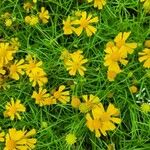
Helenium amarum
American Sneezeweed · Bitter Sneezeweed · Bitterweed · Five-leaf Sneezeweed · Yellowdicks
Description
Source: leafsnapHelenium amarum, commonly known as bitter sneezeweed, is a perennial herbaceous plant that belongs to the Asteraceae family. Native to North America, it is primarily found in the central and eastern regions of the United States. This plant typically reaches a height of 2 to 3 feet and has a bushy appearance with numerous branches. The leaves of Helenium amarum are narrow, lance-shaped, and have a grayish-green color. The flowers are yellow or orange with dark brown centers that resemble buttons. They bloom from mid-summer through fall. Helenium amarum prefers well-drained soils and thrives in full sun or partial shade conditions. Although it can tolerate drought, it requires regular watering during prolonged dry spells. Bitter sneezeweed has been used for medicinal purposes by Native Americans for centuries, as it contains compounds with anti-inflammatory properties. However, it is important to note that all parts of this plant are toxic if ingested by humans or animals. Overall, Helenium amarum is an attractive ornamental plant with bright yellow flowers that add color to gardens in the late summer and fall. It also has medicinal properties when used appropriately under professional guidance.
🎭 Gentleness and tears
Care Guide
💧 Water Every 7 days
Bitter sneezeweed is an excellent choice for low-maintenance, drought-resistant gardening due to its high drought tolerance and minimal care requirements. This outdoor plant thrives in dry conditions and only needs to be watered once a week. Its robust root system allows it to survive in well-draining soil, making it a reliable and resilient option for your garden.
How should I water my Bitter sneezeweed?
Bitter sneezeweed can be watered using various tools such as a garden hose with a spray nozzle, a watering can, or other common watering tools. This plant is not too particular about its water source and can thrive with rainwater, tap water, or filtered water. It is recommended to avoid watering from above to prevent damage to the leaves and flowers and reduce the risk of disease. A drip irrigation system is often the best option for watering Bitter sneezeweed as it provides even and direct water to the soil. If you have a container-grown Bitter sneezeweed, you can use a cup, watering can, or tap water to water it directly into the soil.
What should I do if I give my Bitter sneezeweed too much or too little water?
To remedy underwatering Bitter sneezeweed, simply water it regularly when you notice it lacks moisture. Overwatering, however, is a more serious issue that can lead to diseases and plant decline. To prevent this, choose a sunny location with good drainage to help dry the soil and avoid water pooling. If you overwater a potted Bitter sneezeweed, consider changing the pot to one with better drainage and using loose soils during repotting.
How frequently should I water my Bitter sneezeweed?
Bitter sneezeweed requires regular watering throughout the growing season. In spring, it should be watered once a week. As the weather gets warmer, the watering rate may need to increase to two to three times per week. However, watering the plant excessively can harm it. It is important to keep the soil moist but not wet, regardless of the watering frequency. When it comes to potted Bitter sneezeweed, the soil in the pot dries out faster, so it will generally need to be watered more frequently. In most cases, container-grown Bitter sneezeweed should be watered a few times per week, compared to just once per week for an in-ground plant.
How much water does my Bitter sneezeweed require?
Determining how much water to give your Bitter sneezeweed can be done in a few ways. One option is to feel the soil to gauge its moisture level and water until the top six inches are moist. Another approach is to use a set measurement, such as giving about two gallons per week depending on temperature and soil dryness. However, be cautious with rigid guidelines as they may lead to overwatering if your plant needs less. When growing Bitter sneezeweed in a container, a different method is required. Moistening all the layers of dry soil is recommended, which can be tested by sticking a finger into the soil or allowing a slight trickle of excess water to exit the pot's drainage holes.
How can I know if I am giving enough water to my Bitter sneezeweed?
Avoiding overwatering your Bitter sneezeweed can be a bit challenging. These plants have deep roots, so they need to be watered regularly to keep the soil moist. However, Bitter sneezeweed is prone to root rot, which can be caused by excessive watering. Overwatering can also lead to browning of the plant. Underwatering is less likely, as Bitter sneezeweed can survive without additional watering for some time. However, if you go too long without watering, the plant may wilt and its leaves may become dry.
☀️ Light Full sun
Bitter sneezeweed performs best with abundant sunlight, which is its preferred growing condition. It can also tolerate some shade. Its different growth stages likewise prosper in sunlight. Both excessive and inadequate light can damage the plant's health. Typically, it reflects the sunlit conditions of its native habitat.
What are the sunlight requirements for Bitter sneezeweed?
Bitter sneezeweed requires full sun to partial sun exposure to thrive properly. Full sun means the plant should receive above 6 hours of sunlight, while partial sun refers to about 3-6 hours of sunlight. It's important to watch how sunlight moves through your garden to choose spots that provide a perfect balance of light and shade, ensuring the plants' health and happiness.
What are the essentials for growing Bitter sneezeweed?
Bitter sneezeweed thrives in ample sunlight, which is essential for its growth at different stages. It can tolerate some shade but mimics its original, sun-lit habitat conditions. Inadequate or excessive sunlight can harm the plant. If natural sunlight is insufficient, particularly during winter or in less sunny spaces, artificial lighting can be a vital solution, promoting healthier growth. Choosing the right type of artificial light, determining the appropriate distance from the plant, and setting the correct duration of light exposure are crucial steps for indoor plants.
What symptoms indicate Bitter sneezeweed is getting insufficient sunlight?
Symptoms of insufficient sunlight in Bitter sneezeweed include smaller new leaves, leggy or sparse growth, faster leaf drop, slower or no new growth, and lighter-colored new leaves. Additional symptoms could be chlorosis, where leaves lose their green color and turn yellow, sunscald that appears as pale or necrotic areas on the plant, leaf curling as a defense mechanism, wilting from excessive water loss, and leaf scorching characterized by brown, dry edges on leaves.
How can I address sunlight-related issues with Bitter sneezeweed?
To address sunlight-related issues, gradually move plants to sunnier locations each week until they get at least 6 hours of direct sunlight daily for indoor plants. Use south-facing windows and keep curtains open during daylight. If moving the plant isn't feasible, consider using artificial light sources, such as desk or ceiling lamps for at least 8 hours daily, or invest in professional grow lights. For outdoor plants, avoid sudden changes in light intensity by slowly moving them to sunnier spots. Minimize obstructions if necessary by pruning trees or moving smaller plants to sunnier locations. Note that parts of the plant affected by insufficient sunlight may not recover, but new growth can be healthy with improved light exposure.
🌡️ Temperature 0–35°C
Bitter sneezeweed can tolerate a wide range of temperatures, but its distribution may still be restricted by different combinations of moisture and heat conditions. It performs best in warm summer climates with sufficient rainfall or irrigation. Extended periods of cloudy, rainy weather, as well as prolonged high temperatures, can raise the chance of Bitter sneezeweed dying. In winter, providing proper protection from cold can increase the plant's survival rate.
💨 Humidity
🪴 Soil 6-7
🌱 Fertilizer
When most of Bitter sneezeweed’s blooms have opened to full size, resume fertilizing. Around peak bloom production, fertilize every three to four weeks, weather permitting. Then, once the plant begins to produce fewer new blooms, stop fertilizing; there’s no need to feed it when it can’t produce additional flowers.
Why should I put fertilizer on my Bitter sneezeweed?
Plants, including Bitter sneezeweed, require nutrients to survive. This is common knowledge among gardeners, regardless of their experience. Without proper nourishment, Bitter sneezeweed will die shortly after its first pollination. To maintain its blooming season and produce beautiful flowers, it is crucial to provide the right nutrients in appropriate amounts. Fertilizer is particularly beneficial for Bitter sneezeweed as it helps develop a strong and healthy root system. Since the plant's root structure is naturally thin and easily susceptible to damage, fertilizing during planting helps establish a solid foundation. This not only provides stability but also enhances the plant's ability to produce stunning flowers. When fertilizer is applied at the right time, it can significantly extend the flowering period of Bitter sneezeweed.
When should I fertilize my Bitter sneezeweed plant?
Bitter sneezeweed grows rapidly after the threat of frost has passed. The best time to fertilize is during planting, whether it's in the ground or in planters. This initial dose of fertilizer is sufficient until the blooms are fully developed later in the year. Once the flowers are in full bloom, it's time to resume fertilizing. Fertilize every three to four weeks when the blooms are at their peak. However, once the plant starts producing fewer new blooms, stop fertilizing since it won't be able to produce more blooms.
When is it not a good time to fertilize my Bitter sneezeweed?
Regular fertilizing is crucial for Bitter sneezeweed, but it is essential to apply it at the right time. There are certain situations, often related to climate or controllable factors, when it is necessary to hold back on fertilizing. When there are issues with the plant, soil, or climate, it is best to wait until these problems have been resolved and the plant has recovered. For example, if there are sudden severe weather changes like a cold snap in the middle of summer, it is advisable to wait until the weather warms up again before fertilizing. Similarly, if the soil is too dry or compacted to absorb any fertilizer, it is better to wait until the soil conditions improve. When temperatures are extremely high, especially during the hottest parts of the day, avoid applying fertilizer. This is because fertilizer can break down at different speeds depending on temperature, and hot temperatures can cause it to break down too quickly. It is also important to address any pests or diseases before reapplying fertilizer.
Which fertilizer should I use for my Bitter sneezeweed?
Most types of Bitter sneezeweed require a balanced nutrient intake from fertilizer. It is recommended to use a fertilizer specifically designed for high-yield blooming plants. The best option is a fertilizer with a higher phosphorus level, indicated by a higher P number in the NPK number (e.g. 10-30-10). There are several fertilizer brands that offer fertilizers suitable for blooming plants like Bitter sneezeweed, providing an easy and hassle-free way to ensure the right nutrients are provided. If you opt for a pre-mixed fertilizer, make sure to follow the package instructions to avoid over or under fertilizing Bitter sneezeweeds, as this can negatively affect their growth and potentially cause wilting.
How can I make my Bitter sneezeweed grow better?
To properly fertilize Bitter sneezeweed, follow these general tips. When planting, mix the recommended amount of fertilizer into the soil and water the Bitter sneezeweed. For subsequent fertilizing, the method may vary. For pellet fertilizers, mix them into the top inch of soil around the plant's outer edge and water them well initially, followed by regular watering. Other fertilizers can be mixed with water and applied like a regular watering. Refer to fertilizer packaging for specific instructions, but aim for fertilizing every three to four weeks for consistency.
🪴 Pot & Repot
✂️ Pruning
Bitter sneezeweed is known for its yellow, daisy-like flowers and bushy growth habit. To promote healthy growth and improve airflow, prune the plant from early to late spring, removing any dead or weak stems. Regular pruning helps prevent the plant from becoming leggy. Additionally, mulching can help conserve moisture and suppress weeds. Be sure to use clean, sharp tools when pruning.
🌿 Propagating
🐛 Diseases & pets
☠️ Toxicity
Characteristics
- Plant Type
- Herb
- Life Cycle
- Annual, Biennial, Perennial
- Genus
- Helenium
- Family
- Asteraceae
- Hardiness Zone
- 3
- Mature Height
- 30 cm to 61 cm
- Mature Spread
- 25 cm to 40 cm
- Leaf Color
- Green, Blue
- Leaf Type
- Deciduous
- Flower Color
- Yellow, Gold
- Flower Size
- 2.54 cm
- Bloom Time
- Early summer, Mid summer
- Planting Time
- Spring
- Harvest Time
- Mid summer, Late summer
- Native Area
- Mexico, Dominican Republic