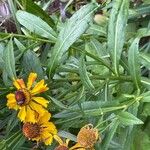
Helenium autumnale
Sneezeweed · Common sneezeweed · Fall Sneezeweed · Mountain Sneezeweed · Swamp Sunflower
Description
Source: leafsnapHelenium autumnale, commonly known as sneezeweed, is a perennial plant native to North America. Part of the Asteraceae family, it can reach heights of up to 5 feet. The plant showcases bright yellow or orange-red flowers with dark brown centers, which bloom from mid-summer through fall. Its leaves are lance-shaped, toothed, and have a rough texture. Sneezeweed thrives in full sun or partial shade and prefers moist soil conditions, though it can tolerate drought once established. Due to its attractive flowers that draw butterflies and bees, it makes an excellent addition to wildflower gardens, meadows, or naturalized areas. The name "sneezeweed" originates from the traditional use of its dried leaves as snuff by Native Americans to treat colds and sinus congestion. However, it is important to note that the plant contains toxic compounds that can cause skin irritation if handled improperly. Overall, Helenium autumnale is an easy-to-grow perennial with showy flowers that add color and interest in late summer gardens while providing important habitat for pollinators.
🌳 Sneezeweed has a significant, though often overlooked, role in restoring pollinator habitats. Its bright flowers attract a range of insects, making it useful in ecological projects aimed at increasing populations of bees, butterflies, and other pollinators. It has also been researched for its potential in phytoremediation, where the plant's traits may help remove contaminants from soil.
🎭 Gentleness, weeping
Care Guide
💧 Water Every 3 days
Sneezeweed thrives in moist, streamside environments, where it prefers consistent moisture without experiencing drought or excessive humidity. To encourage vibrant blooms and strong growth during its active season, water sneezeweed weekly, as its flowering depends on proper hydration.
How should I water my Sneezeweed properly?
When watering the Sneezeweed, it's best to use filtered water at room temperature. Tap water may contain harmful particles for the plant's health. The Sneezeweed is accustomed to warm environments, so avoid using cold water, which can shock its system. Additionally, overhead watering should be avoided to prevent foliage issues. Instead, apply filtered room temperature water directly to the soil until it is fully soaked. This method benefits the plant by providing moisture to the roots and supporting their growth and nutrient absorption.
What should I do if I give my Sneezeweed too much water or not enough water?
Overwatering is a more common problem for Sneezeweed compared to underwatering. When Sneezeweed receives too much water, it may wilt and its green leaves may turn yellow. Overwatering for a long time can also lead to diseases like root rot, mold, and mildew that can kill the plant. Sneezeweed has good drought tolerance, so underwatering is less common. However, when it happens, the leaves become brittle and brown. To care for your Sneezeweed, it's important to recognize the signs of overwatering early. Diseases like root rot may not be fixable if you wait too long. So, reduce watering if you notice the early signs of overwatering and consider the soil quality. If the soil drains poorly, replace it with a loose, well-draining potting mix. If there are signs of underwatering, water more regularly until the signs go away.
How often do I need to water my Sneezeweed plant?
If your Sneezeweed is in a pot, the best way to know if it needs water is by checking the soil with your finger. If the top two to three inches of soil are dry, it's time to water it. For Sneezeweed that is grown outside in the ground, you can use the same method to test the soil. If the top few inches of soil are dry, it's time to water it. During the spring and early fall, you'll likely need to water this plant about once a week using this method. In really hot weather, you may need to water it twice a week or more. However, mature Sneezeweed that is well-established can handle drought well.
How much water does my Sneezeweed require?
To properly water your Sneezeweed, make sure you give it enough water without being shy. Wait until the top two to three inches of soil are dry before watering. Give it a thorough watering that completely soaks the soil. The water should be enough to make excess water flow out of the drainage holes at the bottom of the pot. If you don't see any excess water draining, it means you haven't given enough water. However, be careful not to let water accumulate in the soil, as it can be harmful to the plant. It's also important to have well-draining soil to prevent water from getting stuck in the pot. If the plant is outside, about 1 inch of rain per week should be sufficient.
How should I water my Sneezeweed as it grows?
The water needs of the Sneezeweed can vary depending on its growth stages. In the first few years or after transplanting, it requires more water due to active root development. Young Sneezeweed puts a lot of energy into growing new roots, which need extra moisture to support future growth. However, as the plant matures, its water requirements decrease. Another stage that may require increased watering is during blooming, as flower development utilizes a significant amount of moisture.
☀️ Light Full sun
Sneezeweed does best when it gets plenty of light for most of the day, though it tolerates a few hours of shade. Coming from habitats with abundant light, it can persist in lower-light conditions, but that can restrict ideal growth and affect its overall health. Both excessive and insufficient light can leave the plants stressed and unhealthy.
What are the sunlight requirements for Sneezeweed (Helenium autumnale)?
Sneezeweed requires full sun, defined as above 6 hours of sunlight daily, to thrive optimally. It can also grow under partial sun conditions, which means about 3-6 hours of sunlight. However, the placement should be carefully considered to ensure the plant receives the right balance of light and shade throughout the day for its well-being. Excessive or insufficient sunlight can stress the plant, leading to poor health or growth.
How does artificial lighting benefit indoor Sneezeweed plants?
Artificial lighting is essential for indoor Sneezeweed plants, especially when natural sunlight is insufficient. It's vital during winter or in spaces that don't receive enough natural light. LED lights are recommended due to their efficiency and ability to provide specific light wavelengths needed by plants. For full sun plants, 30-50W/sq ft of artificial light is needed, partial sun plants require 20-30W/sq ft, and full shade plants need 10-20W/sq ft. The artificial light source should be placed 12-36 inches above the plant to mimic natural sunlight, ensuring the plant receives 8-12 hours of light per day for optimal growth.
What are the symptoms of incorrect lighting for Sneezeweed?
Sneezeweed shows several symptoms when the lighting is inadequate or too intense. Symptoms of insufficient light include small leaves, leggy or sparse growth, faster leaf drop, and slowed or stalled growth. Leaves may also appear lighter in color or exhibit chlorosis (yellowing) due to a lack of chlorophyll. Excessive sunlight can cause symptoms like sunscald, leaf curling, wilting, and leaf scorching. These issues indicate the plant is struggling with its lighting conditions, affecting its overall health.
How can I adjust the lighting conditions for my Sneezeweed plant?
To optimize Sneezeweed's growth considering its light needs, gradually acclimate it to the desired light level. For indoor plants, gradually move them to a sunnier spot or use artificial lighting, such as a lamp or grow lights, for at least 8 hours daily. Outdoor plants should be moved gradually to more suitable locations, avoiding drastic changes to prevent sunburn. Minimize obstructions by pruning nearby trees for outdoor plants or choosing a better spot indoors. If necessary, transplant smaller plants during their dormant period to a location with better light and drainage.
🌡️ Temperature 0–32.2°C
Sneezeweed is native to areas where average temperatures are 68 to 95 °F (20 to 35 ℃). It prefers warmer climates and may require temperature adjustments during cooler seasons.
What is Sneezeweed and where does it originate from?
Sneezeweed, botanically known as Helenium autumnale, originates from environments where the temperature averages between 68 to 95 °F (20 to 35 °C). It prefers warmer climates, which suggests its natural habitat is conducive to growth within these temperature ranges. Despite its preference for warmth, Sneezeweed possesses strong cold resistance, enabling it to withstand cooler seasons without requiring special frost protection measures.
How should Sneezeweed be cared for in winter?
During winter, Sneezeweed is capable of withstanding cold temperatures thanks to its strong cold resistance. However, if winter temperatures are expected to fall below the growth temperature limit (not specified in the data provided), it is important to take steps to protect the plant from the cold. This includes covering the plant with insulating materials such as soil or straw. Additionally, watering the plant abundantly before the first freeze of autumn to keep the soil moist is recommended, as this can help prevent drought and water scarcity for the plant during the winter and early spring months.
What are the signs of temperature stress in Sneezeweed?
Sneezeweed shows signs of stress under extreme temperature conditions. During colder months, it can tolerate low temperatures but thrives best above a certain minimum (not specified in the data provided). If temperatures fall below its growth temperature limit, there might be a decrease in sprouting or no sprouting at all in spring. In contrast, during hot summer months, if the temperature exceeds its maximum tolerance (also not specified), the leaves may become lighter in color, curl, become susceptible to sunburn, and in severe cases, the plant may wilt and dry up.
How can temperature-related issues in Sneezeweed be addressed?
To address temperature-related issues in Sneezeweed, different measures can be taken depending on whether the problem is due to low or high temperatures. For issues related to low temperatures, such as a decrease in sprouting, removing any parts that have failed to sprout in spring is recommended. For high temperature stress, including sunburn and drying, trimming away the affected parts and providing shade during the midday and afternoon sun are effective strategies. Additionally, watering the plant in the morning and evening can help keep the soil moist and reduce stress on the plant.
💨 Humidity
🪴 Soil 6-7
🌱 Fertilizer
The ideal time to fertilize a Sneezeweed is in early spring, when it is coming out of dormancy and starting active growth. Fertilization supplies essential nutrients for healthy growth. Although Sneezeweed has relatively low fertilizer requirements, applying fertilizer annually can improve its survival and encourage better, longer-lasting flowers.
Why should I add fertilizer to my Sneezeweed?
Fertilization is beneficial to the Sneezeweed for various reasons. It provides essential nutrients for the plant's growth both above and below ground. Although Sneezeweed's fertilization requirements are generally low, it can still survive without fertilization. However, annual fertilization can greatly benefit the Sneezeweed by promoting its survival and improving the quality and longevity of its flowers. Therefore, regular fertilization is recommended for those wishing to enhance the appearance of their Sneezeweed.
When should I fertilize my Sneezeweed for the best results?
The best time to fertilize a Sneezeweed is in late winter to early spring when it is transitioning from dormancy to active growth. Fertilizing at this time promotes healthy growth and ensures a great start to the season. While early spring is generally preferred, fertilizing in the fall is also acceptable. However, it is not recommended to fertilize in the summer or winter seasons.
When is not a good time to add fertilizer to my Sneezeweed?
To avoid overfertilization and complications, it is best to only fertilize your Sneezeweed in late winter and early spring. It only needs one annual feeding. However, if you missed fertilizing in spring, you can also fertilize in fall. It is important not to fertilize during the rest of the growing season or winter when the plant is in a dormant phase and not experiencing new growth.
What kind of fertilizer does my Sneezeweed need?
To ensure the best results for your Sneezeweed, any general-purpose fertilizer with a balanced amount of the three main plant nutrients will suffice. However, there are specific nutrient blends that can be even more advantageous. Some gardeners believe that higher levels of phosphorus lead to stronger roots and better flower production, making a phosphorus-rich fertilizer ideal for Sneezeweed, considering it is a flowering plant. Whether you choose a granular or liquid form, as long as the fertilizer contains an ample supply of nutrients, it will work well. In addition to manufactured fertilizers, you can also utilize organic methods to enhance the soil for your Sneezeweed. Compost, manure, and similar materials are excellent options for creating a healthy growing medium.
How can I make my Sneezeweed grow better?
To fertilize a Sneezeweed, the most common method is to use granular or pellet fertilizer applied to the soil surrounding the plant. It is important to remember that the best time to fertilize is when the plant is transitioning from a dormant winter phase to active growth. So, in early spring, wait for the plant to start sending shoots through the soil before applying the fertilizer. Alternatively, some people prefer to use a liquid fertilizer. In this case, dilute the fertilizer with water before applying. No matter which type of fertilizer you choose, it is recommended to moisten the soil before, during, and after fertilization.
🪴 Pot & Repot 2-3 years
When repotting Sneezeweed, select a flower pot 1–2 inches (2.5–5.1 cm) larger with ample drainage. Use a well-draining potting mix. Repot in spring or fall, making sure the root ball sits slightly lower than the rim of the flower pot. Water thoroughly after repotting and place it in a warm location with indirect sunlight.
✂️ Pruning
Sneezeweed produces vibrant yellow and orange flowers, thriving best with careful pruning from early to late spring. To maintain its shape and health, key techniques include deadheading, trimming back leggy stems, and pruning after flowering. These practices help prevent disease, improve air circulation, and enhance the plant's overall vigor.
🌿 Propagating
🐛 Diseases & pets
☠️ Toxicity
Characteristics
- Plant Type
- Herb
- Life Cycle
- Perennial, Annual
- Genus
- Helenium
- Family
- Asteraceae
- Hardiness Zone
- 3-8
- Mature Height
- 0.3 m to 1.22 m
- Mature Spread
- 61 cm to 91 cm
- Leaf Color
- Green
- Leaf Type
- Deciduous
- Flower Color
- Gold, Orange, Red
- Flower Size
- 2.54 cm to 7.62 cm
- Bloom Time
- Mid summer
- Planting Time
- Spring
- Harvest Time
- Mid summer, Late summer